Cruelty-Free vs Vegan Beauty: What the Labels Mean
Cruelty-free vs vegan beauty is not a word game. It is the difference between two checks: whether animal testing is part of the standard, and whether animal-derived ingredients are in the formula.
A bathroom shelf can look reassuring before you know what the words are doing. Lip balm with a bunny-ish mark, shampoo that says not tested on animals, a botanical serum, and a gentle-looking mascara can all feel like the same kind of yes. They are not.
A product can be cruelty-free, vegan, both, or neither. A cruelty-free lip balm can still contain beeswax or lanolin. A vegan cleanser can still leave the animal-testing question unanswered. The useful habit is simple: read the claim, read the ingredients, and choose the clearer product.
Key Takeaways
- Cruelty-free usually speaks to animal testing, not necessarily animal-derived ingredients.
- Vegan usually speaks to the ingredient list, but a vegan claim does not automatically prove a product was never animal-tested unless the standard covers both.
- The FDA says cruelty-free and not-tested-on-animals claims have no legal definition in U.S. cosmetic labeling.
- Beauty shoppers should ask two questions: what is the animal testing claim, and does the product contain animal-derived ingredients?
- Common non-vegan beauty ingredients include beeswax, honey, lanolin, carmine, shellac, keratin, collagen, elastin, gelatin, and some milk or silk proteins.
Why the Words Get Blurry
Cruelty-free vs vegan beauty gets blurry because beauty language is soft on purpose. Cruelty-free, clean, conscious, botanical, ethical, gentle, natural, plant-powered. These words can sit together on a package until the whole thing feels like one large yes. But the legal and practical reality is less tidy.
The U.S. Food and Drug Administration says there are no legal definitions for “cruelty-free” or “not tested on animals” in cosmetic labeling, and the agency also notes that some companies may apply those claims only to finished products while relying on suppliers or labs for ingredient testing behind the scenes in its cosmetic labeling guidance on cruelty-free claims. That matters because a phrase on the front of the bottle may not tell the whole story.
For the bigger version of this habit, Cruelty-Free Is Not Vegan separates the two questions without making beauty feel impossible. The aisle gets easier when the claims stop collapsing into one soft blur.
Cruelty-free is about testing. Vegan is about ingredients. A brand may avoid animal testing but still use beeswax in lip balm, lanolin in a balm, carmine in a blush, or keratin in hair care. Another product may contain no animal-derived ingredients but have no strong third-party cruelty-free assurance. The overlap is common, but it is not automatic.
Once you see that, the decision gets smaller. You stop asking, “Is this a good brand?” and start asking, “What does this exact product claim, and what does this exact ingredient list say?”
The Clean Difference in Cruelty-Free vs Vegan Beauty
Cruelty-free asks: was this product, or its ingredients, tested on animals under the standard being used?
Vegan asks: does this product contain animal-derived ingredients?
Those are related, but not interchangeable. A vegan shopper usually wants both answers. The trouble is that packaging often gives you only one, or gives you a pretty version of one.
The Vegan Society’s definition of veganism is broad, but the beauty version is practical: lipstick, cleanser, razor strips, nail products, hair masks, and body balm all count as places where animal-derived ingredients can show up.
Certifications can help, but they still need to be read precisely. The Vegan Society’s Vegan Trademark overview and Vegan Action’s Certified Vegan certification standards both show why a published standard is more useful than a vague leaf, bunny, heart, or “kind beauty” icon. The shopper’s question is not whether the package feels nice. It is what the standard actually covers.
The practical version is simple:
- If a product says cruelty-free, still read the ingredients.
- If a product says vegan, still look for the testing claim or certification standard.
- If a product says natural, clean, botanical, or conscious, treat that as atmosphere, not proof.
- If a product is unclear and there is a clearer option beside it, choose the clearer one.
That last point is underrated. You do not owe a $7 lip balm a ten-minute investigation if another one says vegan clearly and has a simpler ingredient list.
Beauty Ingredients That Quietly Change the Answer
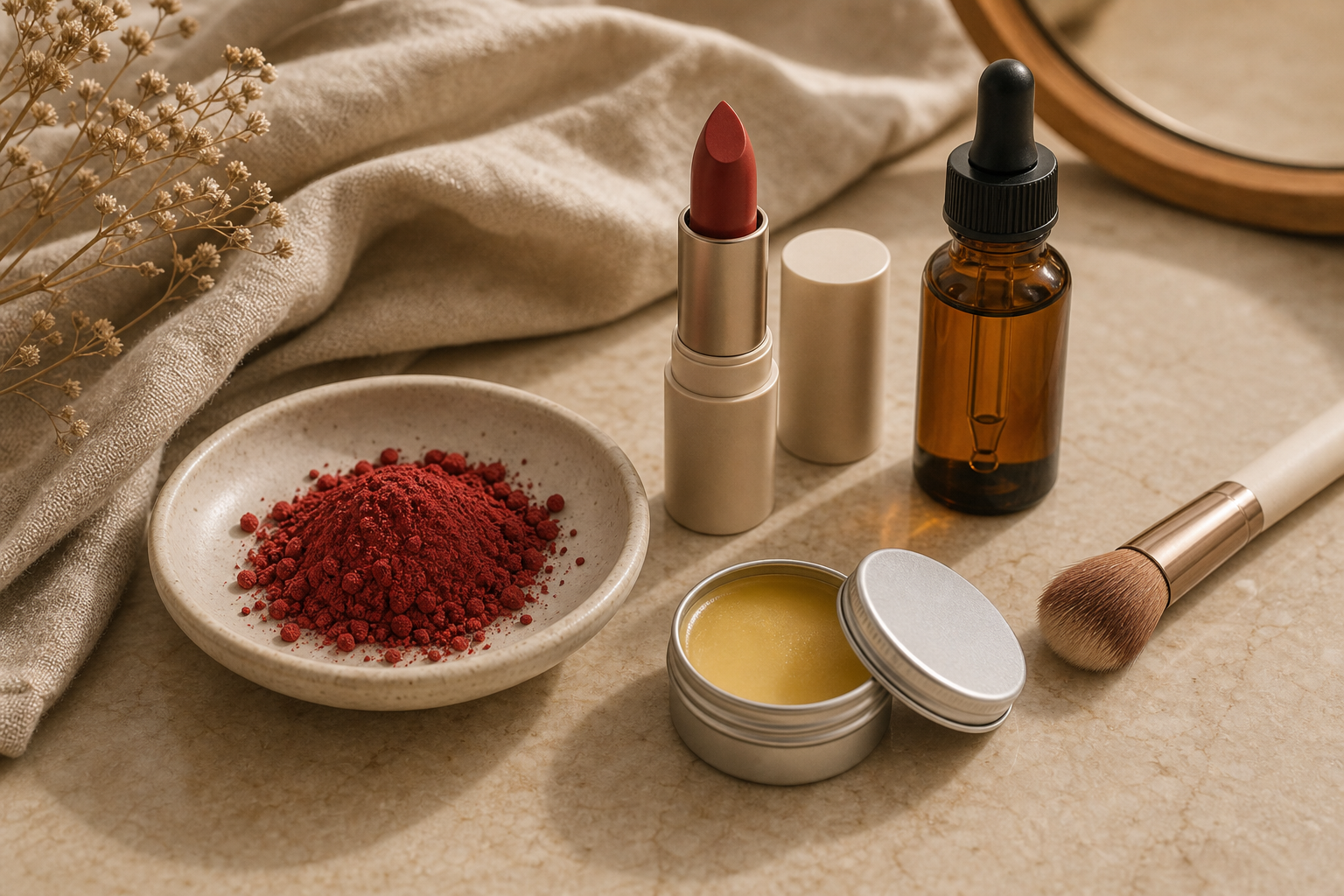
Animal-derived ingredients in beauty often sound soft, traditional, or vaguely luxurious. That is part of why they slip past people. The issue is rarely a scary-looking chemical name. It is usually something familiar.
Beeswax shows up in lip balms, glosses, mascara, brow products, creams, salves, and sticks. It helps with texture and structure, especially in products that need to hold their shape. For vegan shoppers, beeswax is not vegan. The same goes for honey, propolis, and royal jelly, which often appear in masks, balms, body care, and “nourishing” formulas.
Lanolin is a waxy substance from sheep’s wool. It is common in heavy balms, lip treatments, nipple creams, hand creams, and barrier products. It can make a product feel plush and protective, but it is animal-derived. A lip product can be cruelty-free and still use lanolin.
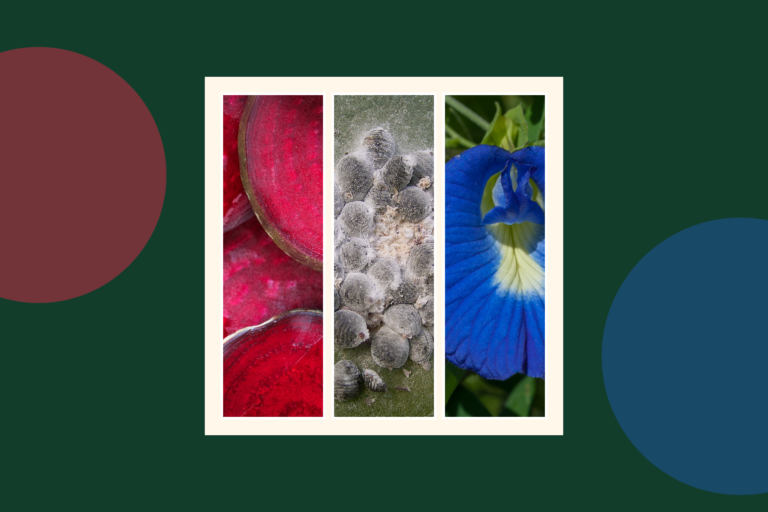
Carmine, also called cochineal or CI 75470, is a red pigment made from insects. It can appear in red, berry, rose, coral, and pink makeup, especially lipstick, blush, eyeshadow, and some tinted products. It is one of the most important ingredients to know because it can hide inside colors that otherwise feel modern and polished.
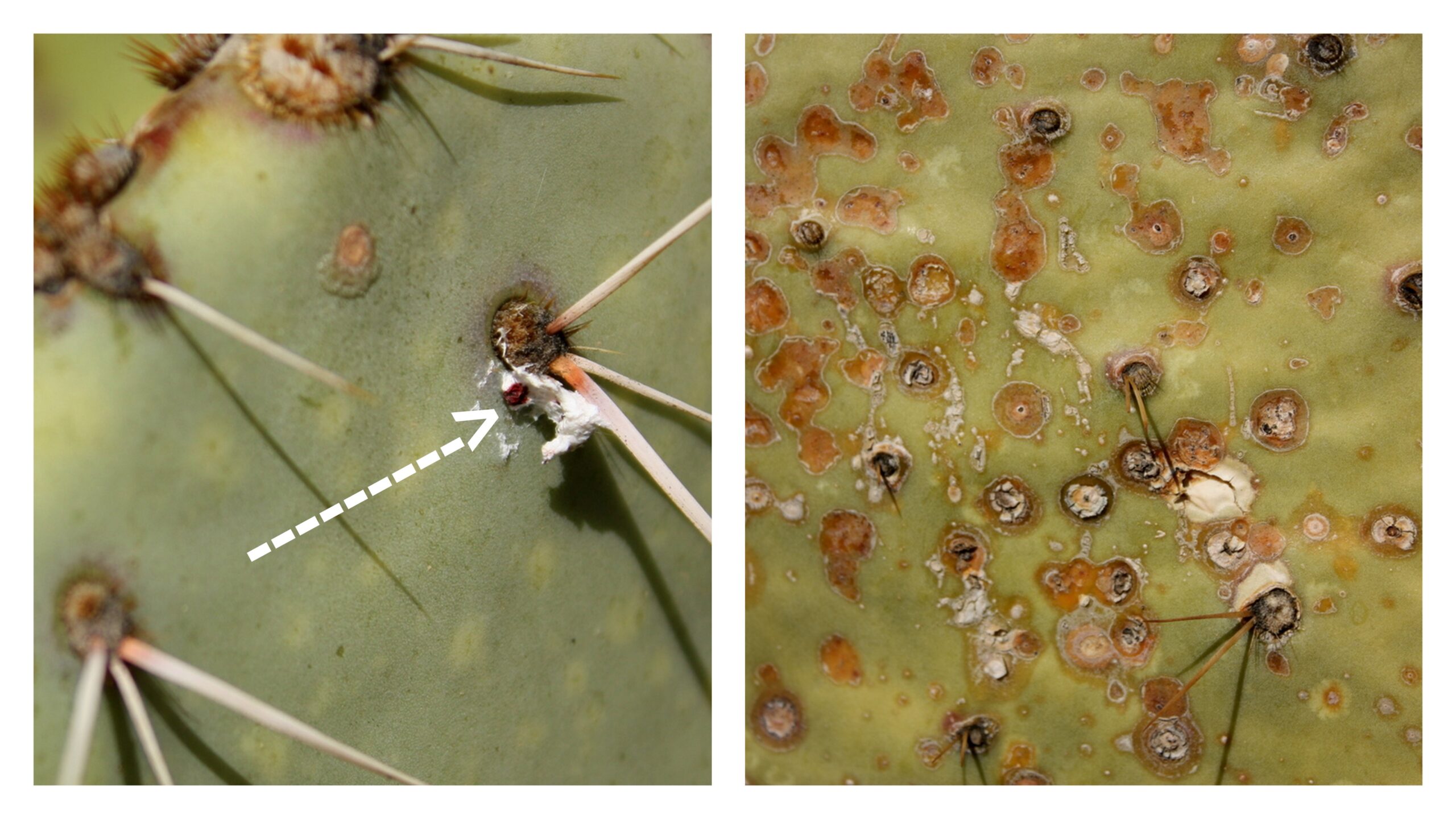
Shellac is another insect-derived ingredient. In beauty, it may appear in nail products, hair products, mascara, or glossy finishes. If the product is promising shine, hold, or a lacquered effect, shellac is worth scanning for.
Keratin, collagen, and elastin often appear in hair repair, lash, nail, and skin care claims. They can be animal-derived unless the brand clearly says otherwise. Vegan versions and plant-derived alternatives exist, but the ingredient name alone is not always enough to assume.
Gelatin can show up in masks, capsules, supplements adjacent to beauty, or certain textures. Milk proteins, silk proteins, and pearl powder can also appear in skin care and hair care. A formula can sound elegant and still not be vegan.
Lanolin, gelatin, beeswax, and honey are common enough to show up in broad vegan and cruelty-free beauty ingredient checks. Treat them as automatic scans. The beauty counter is not only about brands. It is about the ingredient list in your hand.
The Labels and Logos Worth Knowing
A good logo can save time, but only if you know what it is actually telling you.
A vegan certification is meant to help answer the ingredient question. Depending on the certifier, it may also include standards around animal testing. A cruelty-free certification is meant to help answer the testing question. Depending on the certifier, it may not mean the formula is vegan.
That distinction is the whole point. Do not let a bunny symbol do the job of a vegan label. Do not let a leaf symbol do the job of an animal-testing policy. Do not let a brand’s own cute icon replace a real standard.
For the everyday bathroom shelf, use labels this way:
- Strongest: a product clearly marked vegan and backed by a credible cruelty-free standard.
- Good: a product with a clear vegan ingredient claim and transparent brand animal-testing policy.
- Usable with checking: a product with no obvious animal-derived ingredients but no certification.
- Skip when there is an easier option: vague “ethical,” “clean,” or “conscious” language with no ingredient clarity.
The best habit is to treat a logo as a shortcut, not a substitute for judgment. If the logo is from a third-party program you recognize, let it save you time. If the logo is a brand-created bunny, leaf, heart, halo, or “kind beauty” mark, treat it as packaging design until the brand explains the standard. A self-made icon may be perfectly honest, but it is not the same thing as an outside certification with published rules.
This is also where Reading a Personal-Care Label is the better longer-term habit. The front label gets your attention. The back label earns your trust.
How to Check a Product in Sixty Seconds
The two-question method keeps beauty shopping from becoming a spiral.
First, read the front and identify the claim. Does it say cruelty-free? Vegan? Not tested on animals? Plant-based? Clean? If the claim is not specific, do not give it more credit than it deserves.
Second, read the ingredient list for the obvious animal-derived ingredients. Beeswax, honey, propolis, royal jelly, lanolin, carmine, cochineal, shellac, keratin, collagen, elastin, gelatin, milk proteins, silk proteins, and pearl ingredients are the ones to know first. You do not have to memorize every possible derivative to make better choices. Start with the common ones.
Third, check the brand page or certification database when the product matters. If it is a sunscreen, daily moisturizer, hair product, foundation, mascara, or lip balm you will repurchase, it is worth a deeper check. If it is an impulse mini at checkout and the answer is fuzzy, skip it.
Fourth, be careful with retailer filters. They are useful for narrowing options, but they are not a moral authority. A product can be filtered incorrectly, reformulated, or described with sloppy language. The package and the brand’s current statement matter more than a shopping-site tag.
Fifth, take the easy yes. Vegan beauty shopping gets much nicer when you stop rewarding unclear products with your time. There is no prize for decoding a vague balm when another one says vegan, lists plant waxes clearly, and has a transparent testing policy.
The sixty-second check is especially good for products you buy casually: lip balm at the register, a travel-size hand cream, a nail color, a body wash because the scent is beautiful, a mascara because your old one finally gave up. For those purchases, the standard does not need to be perfect scholarship. It needs to be good enough to keep unclear animal-derived ingredients and weak claims from sliding into your routine by accident.
This is the routine:
- Claim: what does the front say?
- Ingredients: what animal-derived ingredients are present?
- Standard: is there a certification or brand policy that answers the missing question?
- Category: is this a product type where animal-derived ingredients are common?
- Decision: clear yes, clear no, or not worth the effort.
Category-by-Category Check
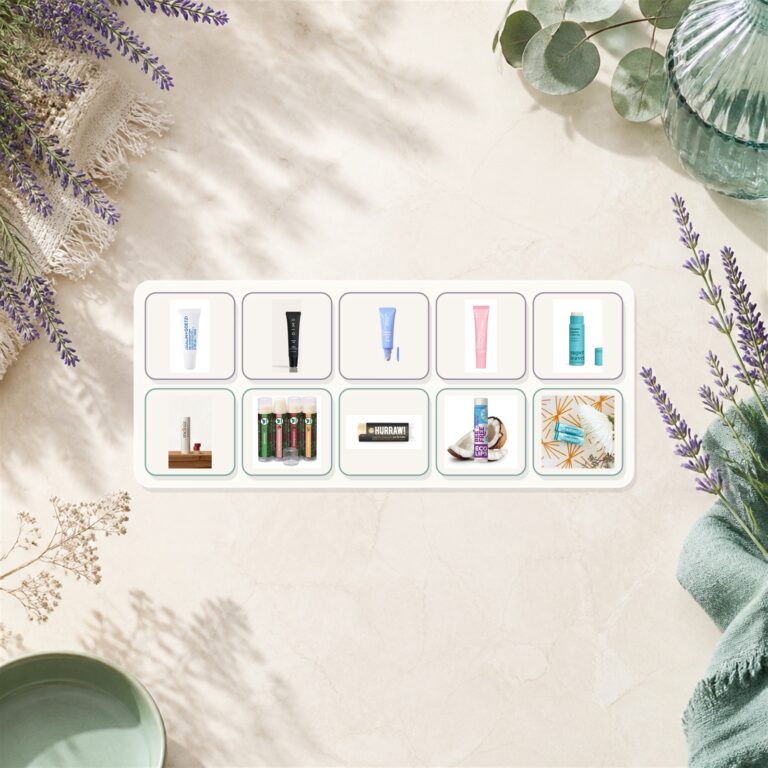
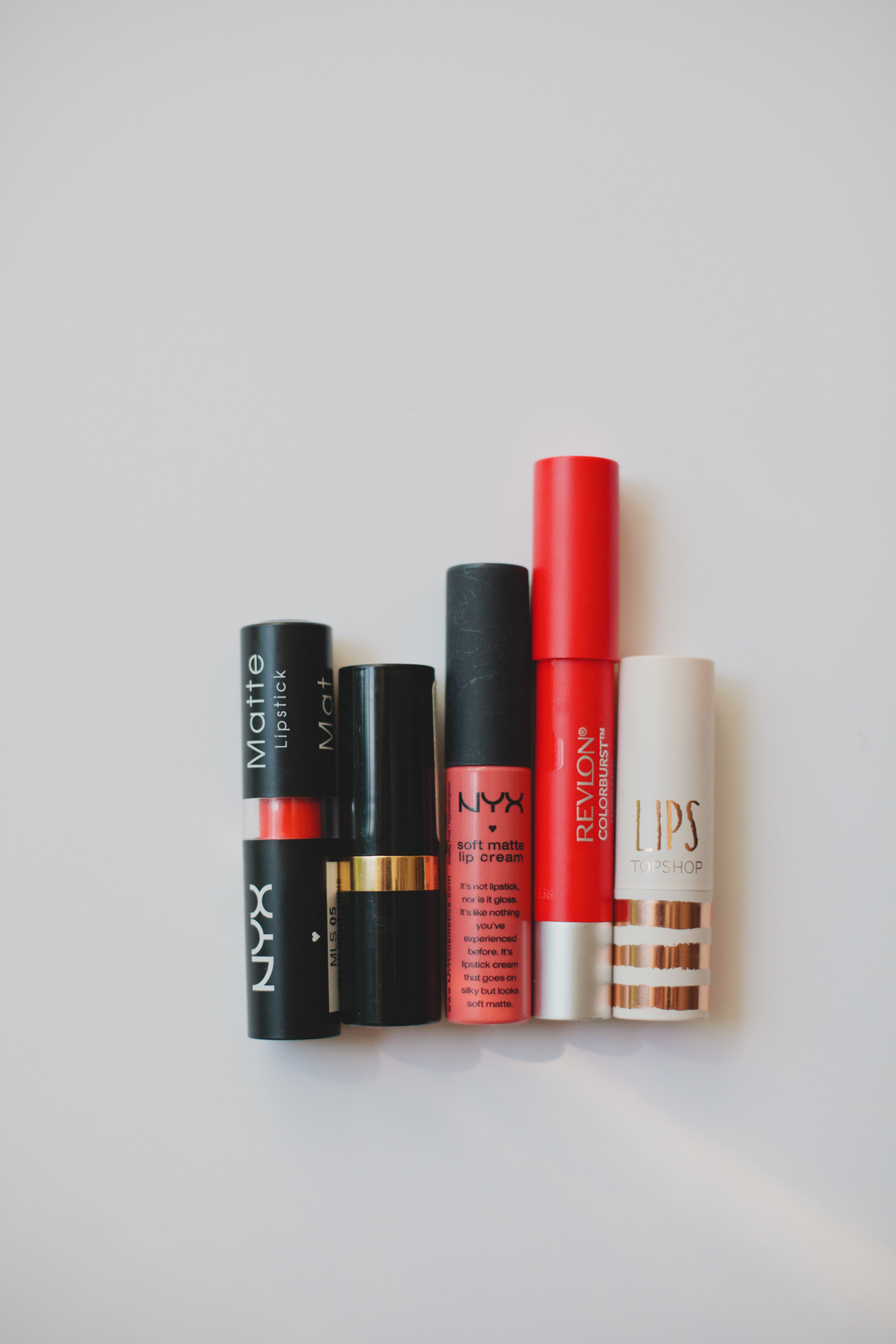
Lip products deserve the most attention because they are small, habitual, and often wax-based. Lip balm, lipstick, gloss, liner, and tinted balm can contain beeswax, lanolin, carmine, honey, or shellac. Vegan lip products exist in every price tier, so unclear ones are easy to replace.
Mascara and brow products are another wax zone. Beeswax and shellac can show up for structure, hold, and shine. If a mascara is cruelty-free but not vegan, this may be why. Look for vegan claims on the specific mascara, not just the brand.
Red and pink makeup is where carmine matters. Lipstick, blush, eyeshadow, color correctors, and tinted balms can use carmine for color. If you love berry, rose, coral, red, or mauve shades, make carmine one of your automatic scans.
Moisturizers and barrier creams often use lanolin, beeswax, collagen, elastin, milk derivatives, honey, or propolis. A rich cream is not suspicious by default, but richness is where animal-derived ingredients often hide. Look for plant oils, butters, ceramides, synthetic waxes, and vegan-positioned formulas when you want a clearer answer.
Hair repair products love words like keratin, silk, collagen, and protein. Some are vegan. Some are not. The word “repair” is not the problem. The source is. If the brand says vegan keratin or plant protein, good. If it does not say, do not assume.
Nail products can involve shellac, guanine, carmine, or other animal-derived color and shine ingredients, depending on the product. Vegan nail polish is widely available, so this is another category where clarity is worth choosing.
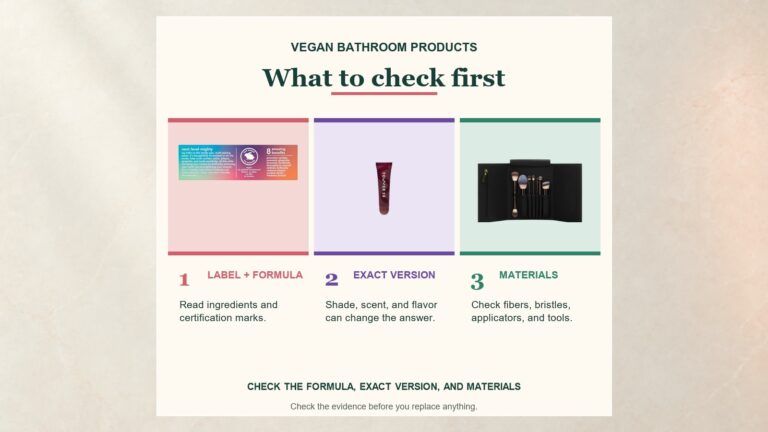
Body care, fragrance, and tools are the quieter checks. Lotions and washes may lean on honey, milk, lanolin, beeswax, or yogurt language. Perfumes, body sprays, scented oils, and candles may need brand-level vegan statements because fragrance formulas are not always transparent. Brushes and applicators may use animal hair or other materials that are not “ingredients” but still matter. Synthetic bristles, plant-based sponges, and clearly labeled vegan tools are easy enough to find that there is usually no reason to make this complicated.
Prioritize the categories that touch your mouth, eyes, and hair first when you are cleaning up an existing shelf. Lip products because beeswax, lanolin, honey, and carmine are common. Mascara and brow products because wax and shellac claims matter. Hair repair because keratin, collagen, silk, and protein language can get slippery. Then work outward into polish, body care, fragrance, and tools as you repurchase. A vegan routine does not have to be rebuilt in a single afternoon.
What to Choose When the Answer Is Unclear
The most elegant vegan beauty habit is not decoding every brand. It is knowing when to move on.
Choose the clearer product when:
- The front label gives only vague language.
- The ingredient list includes a term you cannot verify quickly.
- The brand says cruelty-free but refuses to clarify vegan products.
- The product category commonly uses animal-derived ingredients.
- A certified vegan option is sitting beside it.
Choose a simpler formula when you can. A clear plant-wax lip balm is easier than one built from a long list of waxes and extracts with no vegan claim. A clearly vegan mascara is easier than one that says “not tested on animals” and leaves the waxes unexplained. A vegan-marked moisturizer is easier than a barrier cream with lanolin and a soft-focus sheep-free fantasy on the front.
For a product you already own, the decision can be calmer. If you bought it before you knew the distinction, use your own judgment. Some people finish what they have and replace it with a clearer vegan option next time. Some people give away unopened products that are not right for them. Some people move faster in categories that feel more personal, like lip products, and more slowly with things such as shampoo or polish. The point is not to stage a dramatic purge. The point is to make the next purchase cleaner than the last one.
For a product you are about to buy, use a stricter standard. Money is a vote for the next version of your shelf. If two products do the same job and one gives you a clearer vegan and cruelty-free answer, buy that one. If a brand makes you dig through three FAQ pages and still leaves you unsure, that is useful information too.
Here is the simplest decision path:
| If the product says | Then check | Best next move |
|---|---|---|
| Cruelty-free | Ingredients for animal-derived materials | Buy only if the formula also looks vegan |
| Vegan | Animal-testing policy or certification | Buy if the testing answer is clear enough for you |
| Clean, natural, botanical, conscious | Both ingredients and testing | Treat the front label as mood, not proof |
| Certified vegan by a credible third party | What the certifier covers | Usually a strong yes if the product suits you |
| Nothing specific | Ingredient list, brand page, better alternatives | Skip if a clearer product is available |
This does not mean your bathroom shelf has to become plain. Vegan beauty is not a beige punishment. The best shelves still have lipstick, gloss, fragrance, body oil, hair cream, sunscreen, polish, and ridiculous little luxuries. They just have fewer claims doing work they did not earn.
The point is not to make beauty smaller. It is to make the product yes feel cleaner, easier, and more deserved.
For more beauty and personal-care decisions, use the Ready room. When the question is more ingredient detective than routine-building, Check is the better place to keep going.
Want better vegan buying shortcuts? Subscribe for smart finds, useful updates, and a free copy of The Things Nobody Tells You.
Conclusion
The cruelty-free vs vegan difference is close enough to be confusing and important enough to check. Cruelty-free points toward animal testing. Vegan points toward animal-derived ingredients. Beauty packaging often blurs the two because soft language sells better than precise language.
The fix is not suspicion. It is a better habit. Read the claim. Read the ingredients. Look for the standard. Decide whether this exact product deserves space on your shelf.
Once you shop that way, the routine gets cleaner in the best sense: not sterile, not joyless, just more honest.
FAQ
Does cruelty-free mean vegan?
No. Cruelty-free usually refers to animal testing, while vegan refers to animal-derived ingredients. A cruelty-free lip balm can still contain beeswax or lanolin. A cruelty-free blush can still contain carmine. You need to check both the testing claim and the ingredient list.
Does vegan mean cruelty-free?
Not automatically. Vegan usually means the product does not contain animal-derived ingredients, but that does not always prove the product or its ingredients were never animal-tested under a strong standard. Look for both a vegan claim and a credible cruelty-free policy or certification.
What animal-derived ingredients should I look for in makeup?
Start with beeswax, lanolin, carmine, cochineal, shellac, honey, propolis, royal jelly, keratin, collagen, elastin, gelatin, milk proteins, silk proteins, and pearl ingredients. Carmine is especially common to check in red, pink, berry, and coral makeup.
Is beeswax vegan in lip balm?
No. Beeswax is animal-derived, so it is not vegan. Many lip balms use plant waxes or synthetic waxes instead, so this is one of the easier swaps to make once you start checking labels.
Are third-party certifications worth trusting?
They can be very useful, especially when they clearly state what they cover. The important thing is to know whether the certification is answering the vegan ingredient question, the cruelty-free testing question, or both. A logo is helpful when the standard behind it is specific.