Vegan Halloween Candy: What to Buy and What to Check on the Package
A good Halloween candy bowl needs something chocolatey, something fruity, and a few things people are happy to see. Vegan choices can cover all three. The complications usually come from a familiar name attached to a different candy: a chocolate assortment with one milk-based filling, a gelatin gummy beside a fruit chew, or candy corn whose ingredients have little to do with corn.
Our starting Halloween candy picks are YumEarth’s fruity variety box, Original Smarties, and one chocolate option chosen for the people eating it. Free2b fills the sunflower-butter-cup role; UNREAL suits coconut fans; No Whey adds a crunchy pretzel; Choco Yums supplies candy-coated chocolate. Below, we explain the differences that make each worth considering, alongside four familiar candies whose published formulas support an ingredient-based vegan choice.
These are US products. Direct-store prices and listings were checked October 14, 2026; prices exclude shipping and tax. Recommendations are based on ingredients, manufacturer disclosures, format, and value, rather than a firsthand taste test.
Key takeaways
- Choose the texture you want: fruit chews, hard candy, chocolate cups, coconut bars, or a chocolate-covered crunch.
- A plainly vegan ingredient list can support a purchase without a certification logo.
- Added milk, gelatin, honey, and shellac rule a candy out. Possible cross-contact is a separate question.
- A mixed bag can contain both vegan and non-vegan products. Its most appealing wrapper does not speak for the assortment.
- Our simplest combination is a fruity base plus a chocolate you actually want to eat.
Six Halloween candy buys with a useful reason to choose them
These picks have a manufacturer vegan statement or a product-level vegan claim. That makes them convenient choices; it does not mean every other candy needs the same label to qualify. We have kept the list varied so the decision is about the candy you want, rather than six versions of the same substitute.
YumEarth Halloween Variety Box: a fruity mix in one purchase
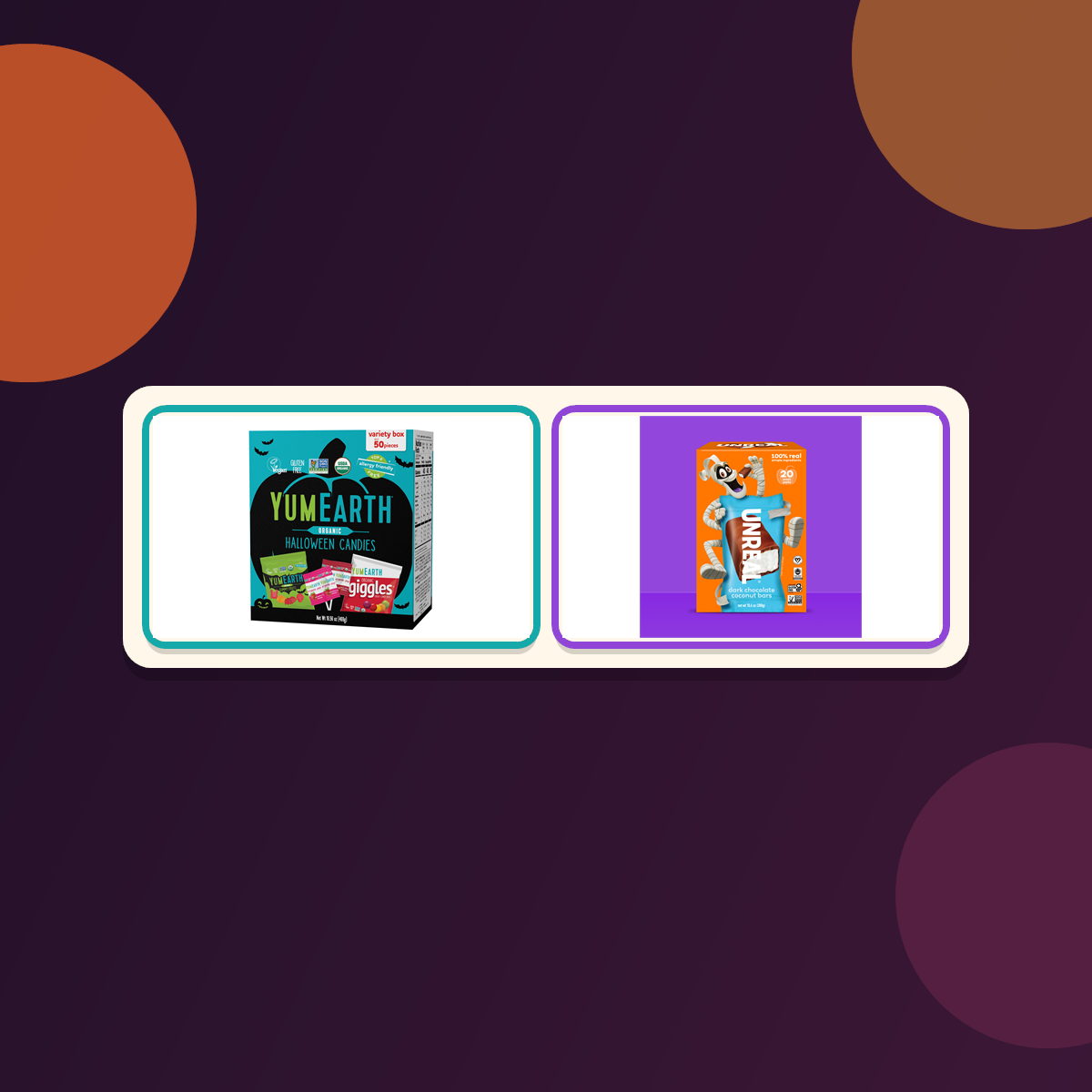
The 50-count Halloween Variety Box contains individually wrapped Giggles, Gummy Fruits, and Pops. YumEarth identifies the box as vegan and lists the ingredients for each format. The assortment can vary, so the purchase buys a mixture of chews, gummies, and lollipops rather than a promised number of a particular flavor. The direct price is $29.99.
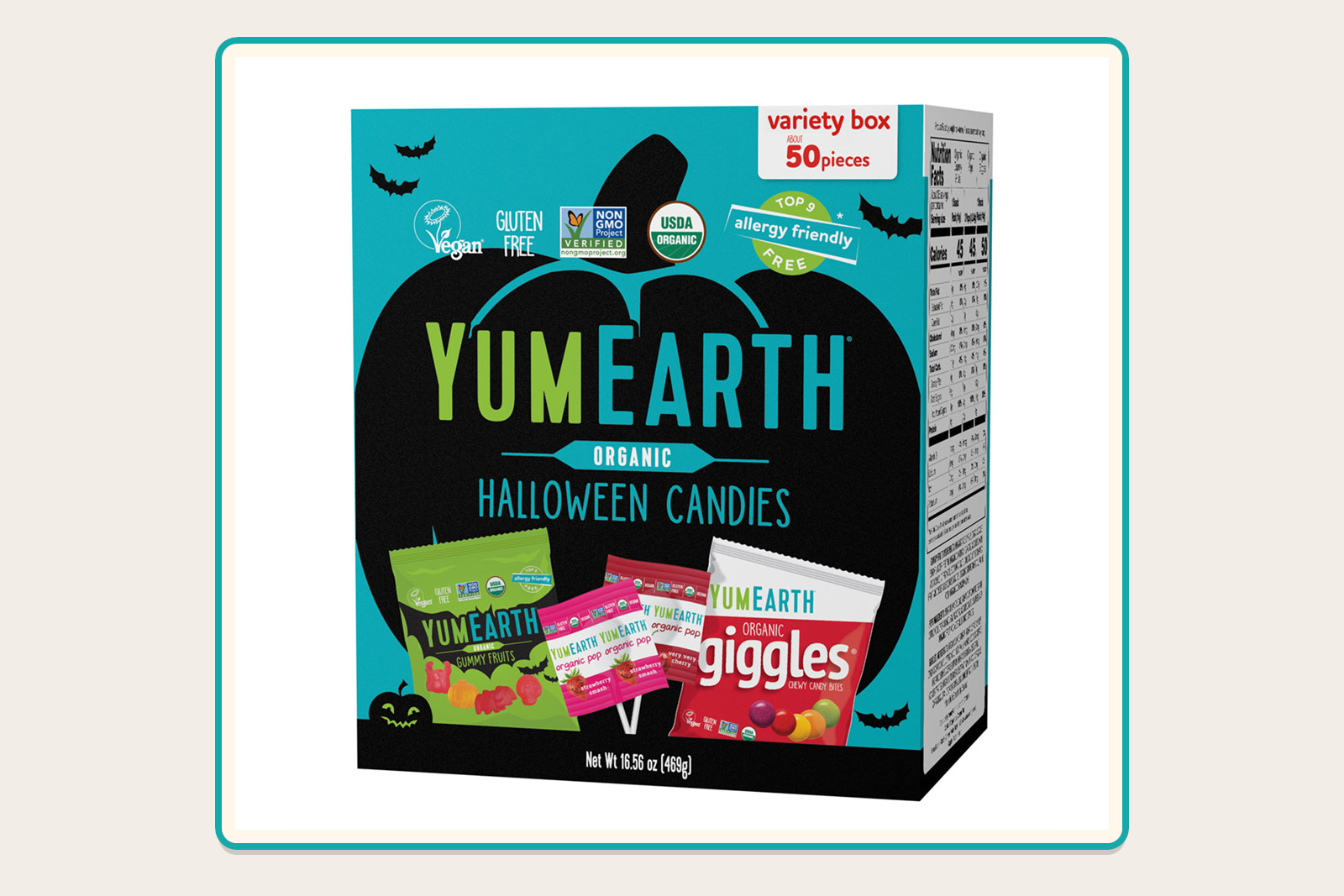
This is our first choice when variety matters more than getting the lowest price per sweet. One box covers several preferences, and a mix of textures gives it more range than a bag of identical chews. At roughly 60 cents per wrapped item before shipping, though, it is a premium option for a busy doorstep.
The variety box also makes more sense than buying three separate specialty bags just to obtain a mix. If everyone you are buying for already prefers gummies, that convenience is less valuable: choose that format instead. Its strongest role is a small-to-medium mixed selection, with chocolate added separately if wanted.
No Whey Bag of Terror: a chocolate-covered crunch
No Whey’s Bag of Terror contains about 14 individually wrapped, chocolate-covered pretzels in a 2.8-ounce bag. The pumpkin shapes and orange sprinkles make this a seasonal sweet rather than ordinary candy in an orange sack. It is vegan, and the current direct price is $11.95.
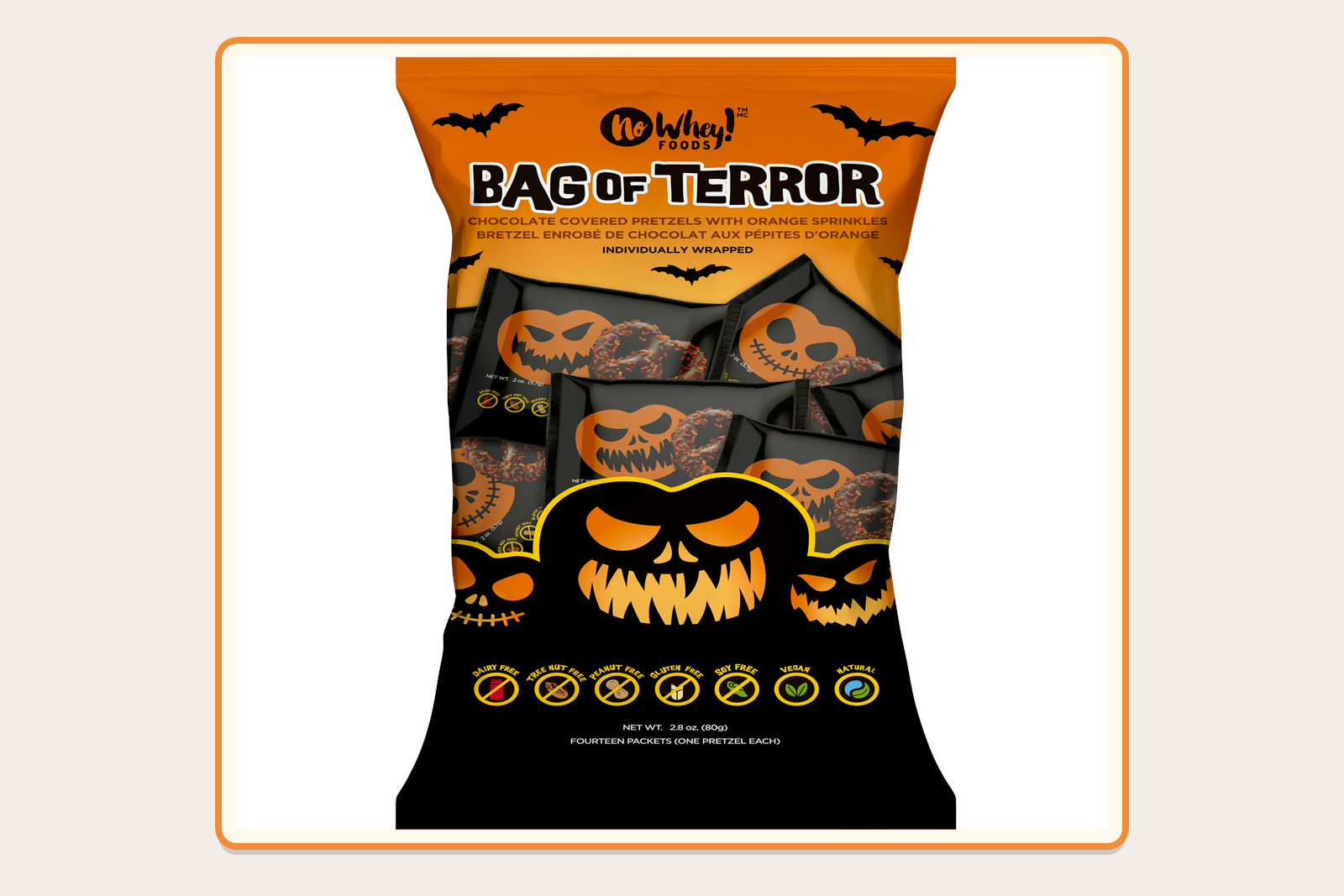
We would choose it for someone who wants chocolate with a crisp, salty element. That gives it a different role from another soft chocolate cup. It also belongs in a small party selection or a special treat bag, where the pumpkin shape has a chance to be appreciated. At about 85 cents per pretzel before shipping, it is an expensive way to fill a large communal bowl.
No Whey lists chickpeas in the recipe and makes the product in a facility dedicated to avoiding the top nine common allergens. That combination is useful information: a familiar wheat-pretzel expectation does not describe this formula, and a top-nine-free claim does not mean every ingredient suits every person.
UNREAL Halloween Dark Chocolate Coconut Bars: for people who want coconut
UNREAL’s Halloween Coconut Bars come in boxes of 20 individually wrapped bars. The two-box order is $30.98, or roughly 77 cents per bar. The product is Certified Vegan; its ingredient list combines coconut and cassava syrup with dark chocolate.
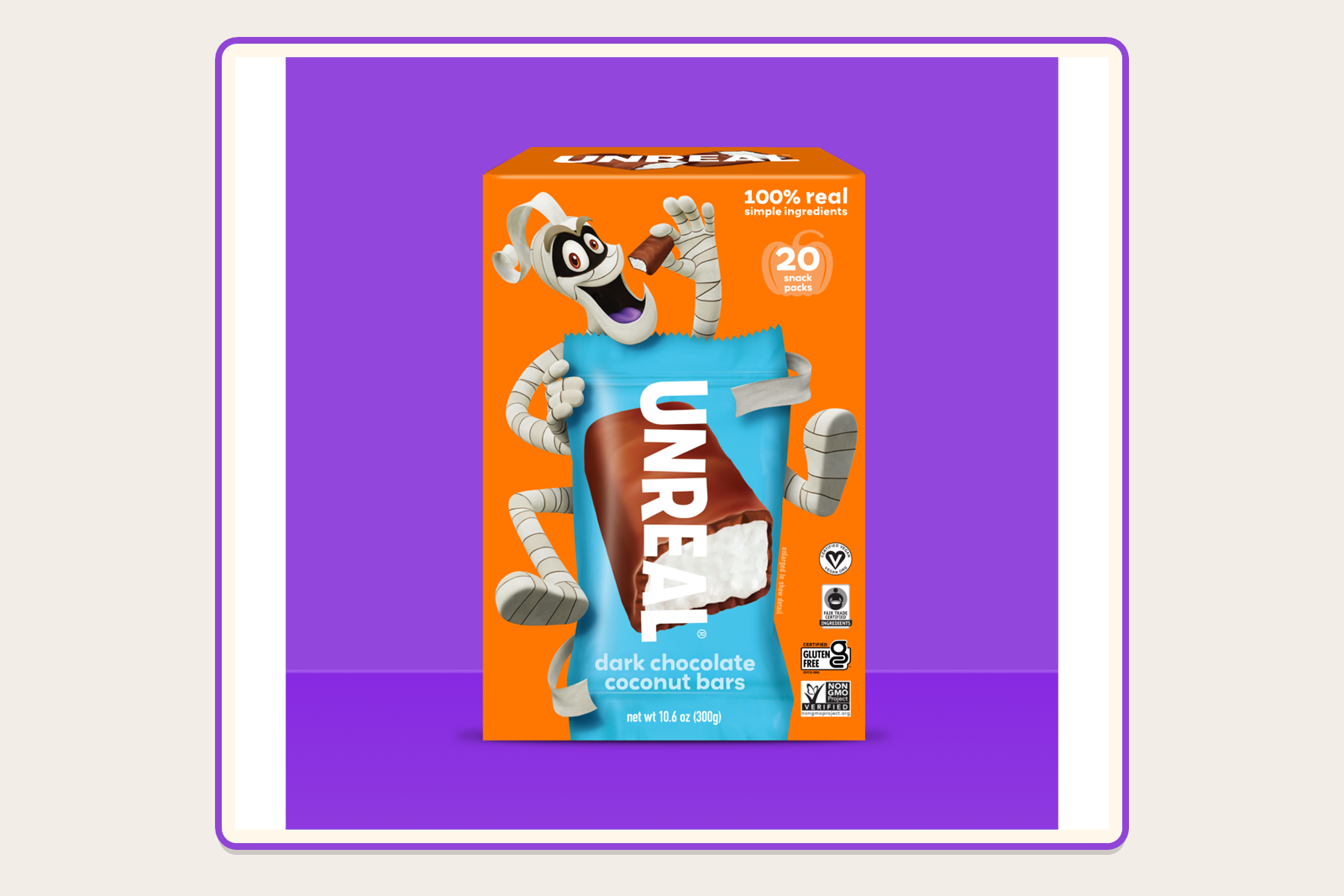
This is the most focused pick here. Choose it because a chewy coconut center under dark chocolate sounds good. It offers less variety than YumEarth, but considerably more chocolate-bar character than a tiny handful of fruit candy. We would rather buy a single filling we want than an assortment containing several compromises.
The limitation is equally straightforward: coconut is the point of the product. It will not satisfy someone looking for a plain chocolate square or a peanut-butter filling. UNREAL also discloses equipment shared with milk chocolate and a facility handling other allergens. The bars can be vegan while still being unsuitable for someone avoiding milk traces because of an allergy. The single-product coconut box is the purchase recommended here; UNREAL’s mixed Halloween pack is discussed below.
Free2b Bag O’ Treats: sunflower butter in a chocolate cup
Free2b’s Bag O’ Treats contains 20 individually wrapped Sunflower Butter Sun Cups for $18.99, with limited availability on the direct store. The recipe uses sunflower seeds and dairy-free chocolate. Free2b also states that all its products are vegan.
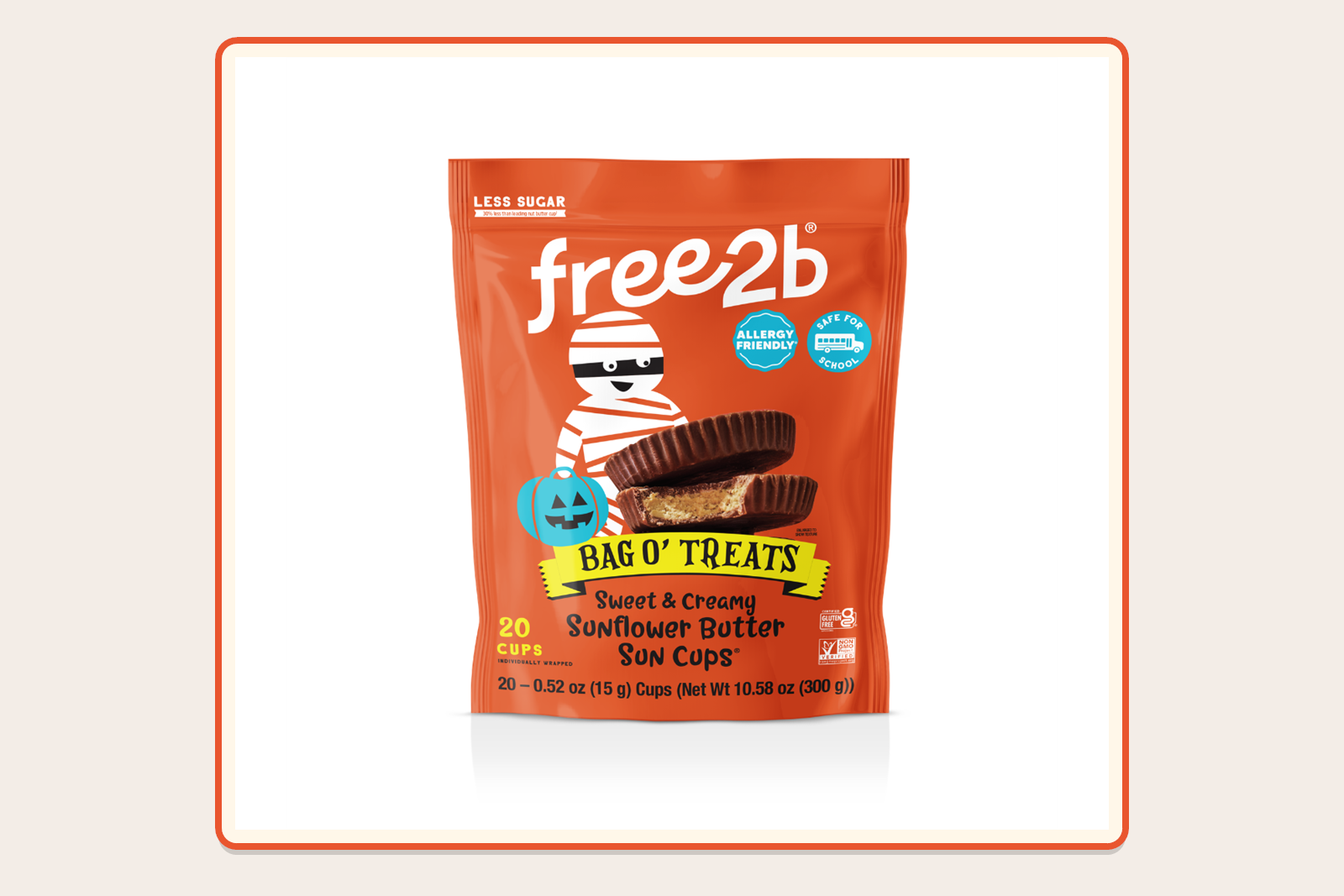
This is the useful choice when you want the filled-chocolate-cup format without buying a peanut-butter cup. The filling still gives the sweet a purpose beyond a plain piece of chocolate. We would choose it for a group where peanuts and tree nuts are being avoided, provided its ingredients suit the people involved, rather than treating every vegan chocolate as interchangeable.
At about 95 cents per cup before shipping, this is another specialty purchase. It earns its place through the particular format and ingredient profile, not bulk value. If those features do not matter to you, the lower-priced fruity choices are a more economical base. For someone who specifically misses filled cups, however, a bag of lollipops is not a very convincing replacement.
Original Smarties: a familiar, economical base
Smarties Candy Company confirms that its own candies are vegan, including the plant origin of their calcium stearate and the absence of animal-derived processing ingredients. Squashies are an exception: they are made by another manufacturer and contain gelatin.
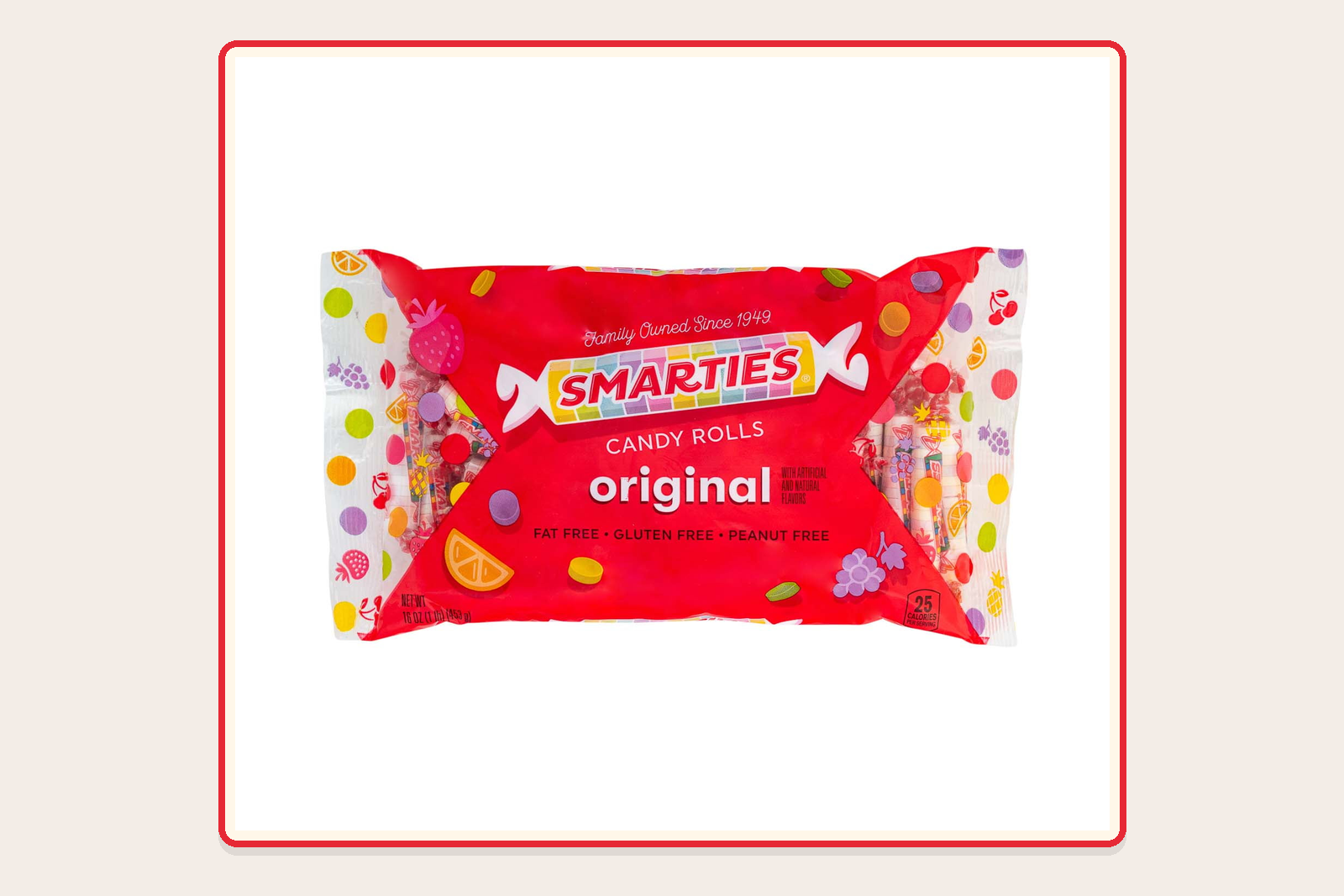
Original rolls are our practical base when specialty prices are doing too much of the shopping budget. They provide a tart, compressed-candy texture that contrasts with soft chews and chocolate. They are also an intentionally modest sweet; choose something else if you want a substantial chocolate treat rather than a nostalgic handful of little tablets.
Walmart lists a manufacturer-branded one-pound bag; pickup, delivery, and shipping depend on location. Smarties’ own statement distinguishes manufacturer-packed bags from third-party repacking: a UPC beginning 0 11206 identifies packing in its facilities. That distinction concerns the applicability of its factory and allergen assurances, not a reason to declare every repacked Original roll non-vegan.
YumEarth Halloween Choco Yums: candy-coated chocolate
Halloween Choco Yums provide a different chocolate option: small, candy-coated pieces in a 20-count seasonal bag, currently $24.49. Its ingredient list names semisweet chocolate, a colored coating, and carnauba wax. They fall within YumEarth’s vegan product statement, whose stated exception is assorted-flavor Gummy Bears.
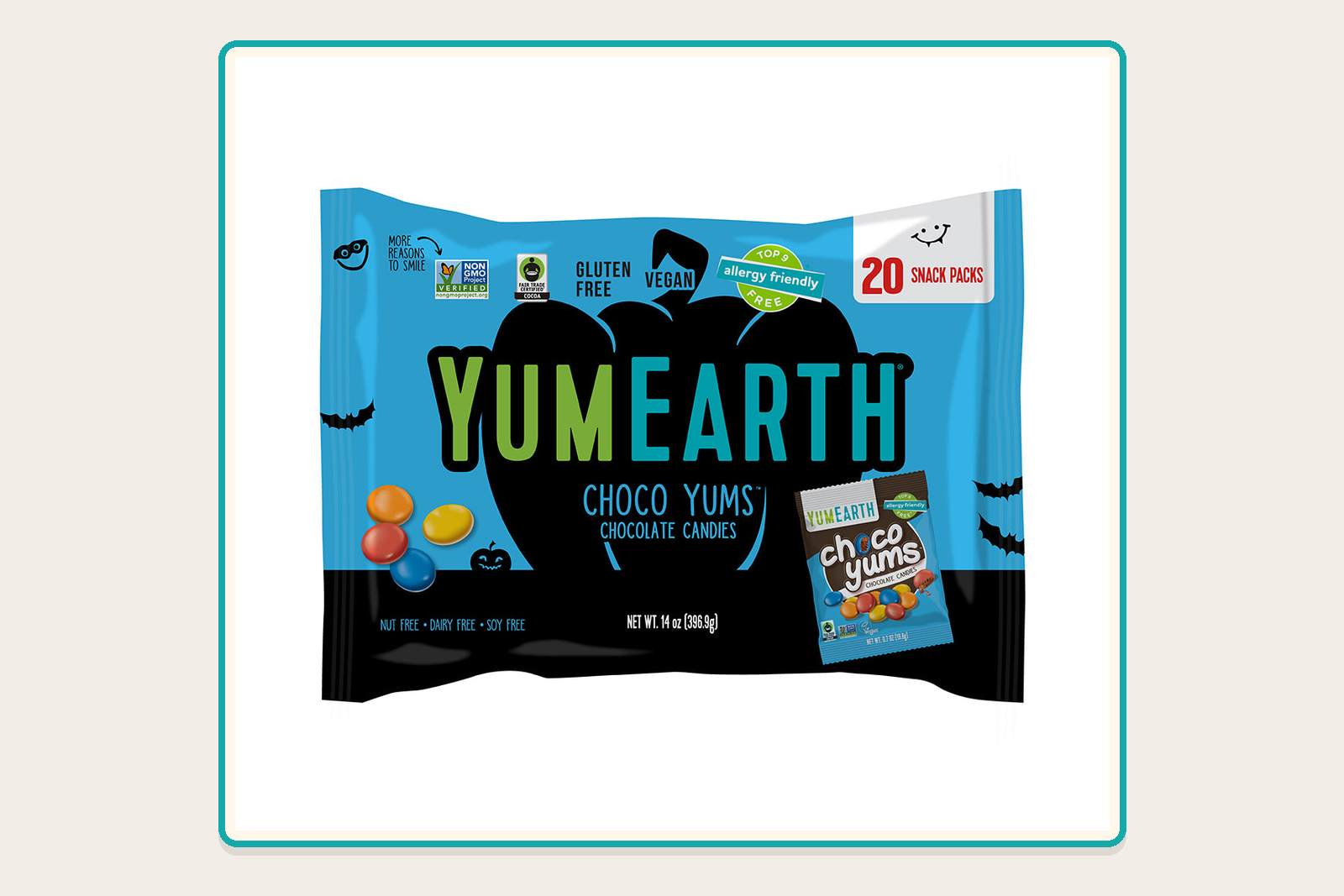
Choose these when you want coated chocolate pieces rather than a filled bar. Their role is closer to the little chocolate candies people scatter over desserts or eat by the handful; the seasonal packets also work as a distinct chocolate addition to a fruit-heavy bowl.
The tradeoff is price. At about $1.22 per packet before shipping, these sit at the expensive end of this list. We would pay that premium for the format or the dairy-free recipe, rather than simply to buy another Halloween wrapper. If you already have Free2b or No Whey, Choco Yums is optional variety, not a necessary third chocolate purchase.
Four familiar candies with vegan-friendly ingredient lists
A logo can make shopping quicker, but its absence does not turn an ordinary sugar-and-starch candy into a mystery. The following published US formulas contain no named animal ingredients and are reasonable vegan choices. Their familiar formats can make as much sense as the specialist picks, especially when the aim is an affordable selection rather than a particular filled chocolate.
Dum Dums Original Mix: the straightforward bulk option
Spangler’s Dum Dums Original Mix lists sugar, corn syrup, acids, salt, artificial flavor, and added colors. It contains no named animal ingredient. The manufacturer sells a 600-count pack for $49.95, supplied as two 300-count bags, and says the pops are made on dedicated equipment free of the major allergens it identifies.
We would buy this formula for a simple, inexpensive lollipop option. The direct bulk price works out to a little over eight cents per pop, so it serves a very different budget from specialty chocolate. Six hundred is also a serious commitment to one format. A smaller retail bag makes more sense for a modest gathering, even if its unit price is higher.
We would use the bulk pack for a high-volume event where familiar lollipops are welcome. For a small party with a dessert table, a modest bag alongside another texture offers more interest than a mountain of one candy.
Airheads Minis: a chewy alternative to gelatin fruit chews
The manufacturer’s current SmartLabel for the 12-ounce Airheads Minis bag lists sugar, corn syrup, maltodextrin, dextrose, corn starch, palm oil, acids, artificial flavors, and colors. It lists neither gelatin nor dairy. We would buy these Minis when a soft fruit chew is what you want.
The bar format matters here. Airheads sells several different candies, and its FAQ singles out Pops as a product that may contain dairy. The Minis label does not establish the formula of everything carrying the Airheads name.
For a bowl built around hard candy, Minis add a different kind of chew. They are a useful alternative to buying both Smarties and another small hard sweet, which can make a selection feel repetitive despite the different wrappers. We would pair them with a chocolate option if the aim is variety, or choose a sour-coated candy if sharpness is the missing element.
SOUR PATCH KIDS Original snack packs: a sour choice without gelatin
SOUR PATCH KIDS Original, in the 24-snack-pack format, lists sugars, corn syrup, modified corn starch, acids, flavorings, and colors. Gelatin is absent from the published formula. The snack packs are a useful format when you want the sour-then-sweet candy as a handout rather than one open sharing bag.
Its softness is not a reason to assume gelatin: the listed starch-based formula is the relevant distinction.
This is the pick for a bowl that is already heavy on sweet chocolate and needs a sharper contrast. It also shows why a useful vegan candy guide should go beyond specialist brands. Plenty of people want their familiar sour candy, and the published ingredients give a sensible basis for choosing it without an invented certification requirement.
SWEDISH FISH Original red candy: another starch-based chew
The US eight-ounce SWEDISH FISH Soft & Chewy formula lists sugar, invert sugar, corn syrup, modified corn starch, citric acid, white mineral oil, flavorings, Red 40, and carnauba wax. It does not list gelatin. We would include this candy in a vegan selection, despite the word gummy in its product description.
The eight-ounce sharing bag is useful for a party table or movie night; it is a different purchase from individual snack packets for handouts. That format distinction matters more than whether the front has Halloween artwork. Buy the bag for how you plan to serve the candy.
For a table that already has SOUR PATCH KIDS, this may be more chewy fruit candy than you need. We would choose between the two according to whether sour coating is wanted, then spend the remaining budget on a contrasting chocolate or crunchy sweet. A useful selection need not contain every familiar vegan-friendly candy.
Four products we would skip for a vegan bowl
These products contain animal-derived ingredients in their current published formulas. The useful distinction is the recipe, including a filling or coating that a broad product name can conceal.
Brach’s Classic Candy Corn
Brach’s Classic Candy Corn lists confectioner’s glaze identified as shellac, gelatin, and honey. That is enough to rule it out. The lack of a milk ingredient does not make this candy corn vegan, and its familiar shape does not tell you which sweeteners or coatings were used.
We would choose another seasonal sweet rather than make ordinary candy corn the centerpiece of a vegan selection. Pumpkin-shaped chocolate pretzels or fruit candy in Halloween packets can supply the seasonal fun without imitating candy corn. If candy corn itself is the craving, a specifically vegan alternative needs its own supporting ingredients; the category name cannot establish that.
SKITTLES Original Gummies
SKITTLES Original Gummies contain gelatin. The brand’s page names it in the current ingredient list, so these are a skip. By contrast, US SKITTLES Original Fruity Candy lists sugars, palm-kernel oil, starch, acids, flavors, colors, and carnauba wax, without a named animal ingredient. We would make an ingredient-based vegan choice of that formula.
This is the clearest example of why the word gummy is sometimes important and sometimes unhelpful. It identifies a different SKITTLES product with a different formula; it does not mean every soft candy contains gelatin. SOUR PATCH KIDS and the SWEDISH FISH formula above demonstrate the other side of that distinction.
US STARBURST Original Fruit Chews
The US STARBURST Original Fruit Chews formula contains gelatin. We would leave it out of a vegan purchase. Fruit flavor and an absence of obvious milk chocolate do not resolve the ingredients in the chew itself.
Airheads Minis or the chews in YumEarth’s variety box offer a more useful direction when that is the texture you want. There is no need to give up chewy fruit candy; choose a formula that achieves it without gelatin. Advice about STARBURST sold in another country should not override the US recipe linked here.
UNREAL’s mixed Halloween Dark Chocolate Variety Pack
UNREAL’s Halloween Dark Chocolate Variety Pack combines coconut bars, peanut-butter cups, and caramel peanut nougat bars. The nougat bars contain whey protein and identify milk as an allergen. That makes this mixed pack unsuitable as an all-vegan purchase, even though two of its components are labeled vegan.
We would buy the single-product coconut boxes above, or a separately verified vegan cup, instead. Dark chocolate describes the coating; it does not settle what is inside. A mixed assortment is only as useful to an all-vegan bowl as its full contents, and this one creates an avoidable mismatch.
What the ingredient list tells you
The most useful label knowledge is a short set of distinctions, not a requirement to memorize every additive. Start with ingredients that actually change the decision.
Milk includes more than the word milk. Whey, casein, and sodium caseinate are milk proteins, as FDA’s label guide explains. They matter in chocolate fillings and coatings as much as a bar sold as milk chocolate. A plant-based sweet can have cocoa butter without having dairy butter; the named ingredient and the full ingredient list are what count.
Gelatin is animal-derived. It comes from collagen, which is why it rules out the gummies and chews named above. The USDA technical report on collagen and gelatin describes that origin. A stretchy or soft texture alone cannot tell you whether a candy uses gelatin, starch, or another setting ingredient.
Confectioner’s glaze can mean shellac. Shellac is derived from the lac insect’s resinous secretion; the USDA shellac report also lists names such as candy glaze and resinous glaze. It is an ingredient worth noticing on shiny sweets, including the candy corn discussed here.
Carnauba wax is different from beeswax. Carnauba comes from a palm; beeswax comes from honey bees. A glossy coating is not automatically non-vegan. The name in the ingredient list makes the distinction.
Carmine and cochineal are names to avoid. Vegan Action identifies them among animal-derived ingredients, and FDA requires them to be declared by name on US food labels. Red candy is not automatically made with either; the color of a sweet does not replace its ingredient list.
Honey also rules out a vegan formula. None of these questions is settled by organic, gluten-free, or fruit-flavored wording on the front. For other ingredients that crop up beyond the Halloween aisle, our Hidden Animal Ingredients guide covers the wider pattern.
What certified vegan adds
A Certified Vegan mark provides third-party checks extending beyond a quick ingredient list. Vegan Action’s standard excludes animal ingredients and animal-derived processing inputs, including sugar filtered with bone char. It certifies products rather than every product sold by a company.
That is useful if processing information is part of your purchasing criteria. It is also useful when you want to choose quickly from a specialist shelf. But Vegan Action explicitly notes that the logo is not on every vegan product. We would not turn a missing mark into a presumption of hidden animal ingredients in an otherwise plainly vegan candy.
For a product whose formula leaves a meaningful ambiguity, a manufacturer vegan statement or certification can resolve it. For a candy that clearly lists honey or gelatin, neither green packaging nor natural-food branding rescues it. Our guide to knowing whether something is vegan develops that distinction across everyday purchases.
Cross-contact is a different question from the recipe
An ingredient list naming milk means milk is part of the product. A statement that it may contain milk, or shares equipment with milk chocolate, describes possible cross-contact. FDA explains that advisory labels address unintended allergen presence.
For vegan shopping, that possibility does not turn milk into an intended ingredient. For a milk allergy, it can be consequential. Vegan Action permits shared equipment under documented cleaning rules and warns that its certified vegan logo is not a food-allergy label.
That is why UNREAL’s vegan coconut bars and Free2b’s allergy-focused cups can both belong here while serving different needs. A certified vegan chocolate is not automatically the right choice for someone with an allergy, and an allergen statement is not a complete vegan ingredient check. The two labels answer different questions.
Choose a combination that earns its price
For a busy trick-or-treating night, we would put the budget into quantity first and specialty chocolate second. Original Smarties or Dum Dums can provide a familiar base; a separate chocolate choice supplies the part of the bowl that fruit candy cannot. There is no reason to make every sweet a dollar-plus specialty packet just to achieve a vegan selection.
For a smaller gathering, the YumEarth variety box is a more appealing starting point if you want several textures without a collection of leftover bulk bags. Add UNREAL if coconut is popular, Free2b if the filled-cup format and sunflower-butter recipe suit the group, or No Whey for a crisp chocolate-covered sweet. Those are different reasons to spend, rather than a ranking that pretends everybody wants the same candy.
For a movie night or dessert table, sharing formats can be the better buy. The eight-ounce SWEDISH FISH bag has a clear use there; individual handout packets offer less advantage. Choco Yums is worth considering when candy-coated chocolate is the missing texture, but we would not buy it merely to make a chocolate selection look larger.
The clearest seasonal choice is usually the one people actually want to eat. Pumpkin shapes, mummies, and bright wrappers can add fun; they should not justify an unsuitable recipe or an expensive format you do not need. Our Hosting a Mixed Table guide takes the same approach to the rest of a party: make the food desirable, then choose the details around the people coming.
Conclusion: A bowl worth coming back to
We would start with the candy people want: familiar fruit sweets, something sour or chewy, and a chocolate that earns its place. The six buys above offer different reasons to spend; the four ordinary formulas keep a vegan purchase from becoming an unnecessarily expensive specialty-shop project.
The important exclusions are concrete: animal ingredients in a coating, chew, or filling, and an assortment whose contents do not all qualify. Once those are resolved, choose for flavor, texture, budget, and the occasion. Halloween candy should still feel like a treat.
For seasonal guides, smart finds, and a free copy of The Things Nobody Tells You, subscribe to Vegan Viviendo.
Frequently asked questions
Does vegan Halloween candy have to be certified vegan?
No. Vegan Action notes that its logo is not on every vegan product. Certification provides useful verification, including processing requirements that may not appear on an ingredient list. A manufacturer vegan statement is another useful basis. Plainly vegan ingredients can also support a sensible choice, which is why the four familiar formulas above remain options. Choose a certified vegan product if that additional verification matters to you; an absent logo does not establish an animal ingredient.
Is candy corn vegan?
The Brach’s Classic Candy Corn covered here is not: its published ingredients include honey, gelatin, and shellac. Other candy corn would need a different recipe to qualify. The seasonal shape and color do not establish vegan status, and dairy-free wording would not address those three ingredients. If what you want is simply a fun autumn sweet, another pumpkin-shaped or Halloween-packaged vegan candy is an easier purchase than insisting on that particular confection.
Are gummies always made with gelatin?
No. The ingredient list determines the answer. SKITTLES Gummies contain gelatin, while the SOUR PATCH KIDS Original and SWEDISH FISH formulas above use modified corn starch and do not list it. Texture words such as gummy and chewy are descriptions of the sweet, rather than guarantees about the setting agent. The published formula gives you a useful answer without ruling out an entire candy category.
Does a may-contain-milk warning make candy non-vegan?
It identifies possible cross-contact rather than milk added as an ingredient. Vegan certification can allow shared machinery with cleaning controls, so a vegan claim and that advisory statement can coexist. An allergy introduces a separate safety requirement; the vegan label does not establish that a product is suitable. If you are buying for someone avoiding milk traces, choose according to their allergy needs and the manufacturer’s relevant information, rather than using vegan as a substitute for allergy guidance.