Does “No Artificial Colors” Mean Vegan? Check for Carmine
No. “No artificial colors” does not mean vegan. Under the FDA’s February 2026 policy, the phrase can appear on a food that contains no certified colors from 21 CFR Part 74, even if the food contains another authorized added color. Carmine and cochineal extract are insect-derived colors listed in Part 73, so vegans still need to read the ingredient list. That conclusion comes from reading the FDA’s claim policy alongside the federal regulation for carmine and cochineal extract.
The front of the package answers one narrow question about color. Turn it over and look for the words carmine and cochineal extract. Then finish the normal vegan ingredient check, because a dye-free food can still contain gelatin, dairy, egg, honey, shellac, beeswax, or another animal-derived ingredient.
Key Takeaways
- The FDA is working with companies toward a voluntary end-of-2027 target for six widely used certified food colors. Those six have not been banned through that initiative.
- Red No. 3 follows a separate binding order, with different compliance dates for food and ingested drugs.
- A “no artificial colors” claim now points to the absence of Part 74 certified colors. It does not establish vegan status.
- Carmine and cochineal extract come from the same insect. They are related color preparations, and neither is vegan.
- U.S. ingredient lists must name
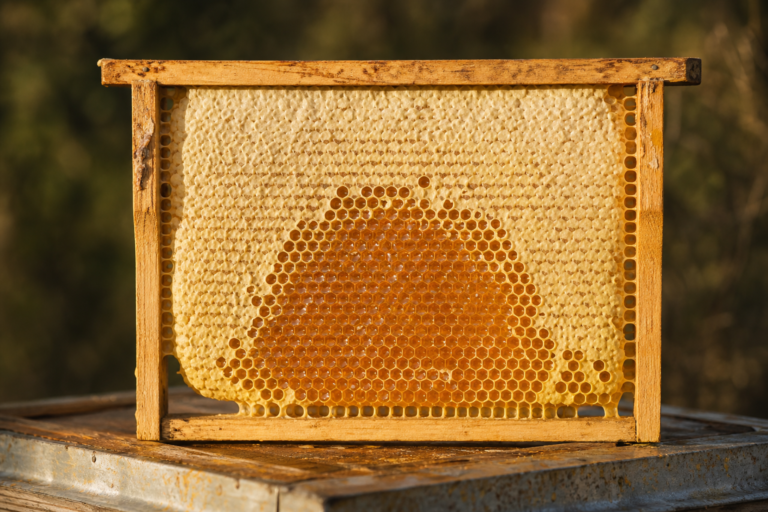
carmineorcochineal extractdirectly. - Shellac, confectioner’s glaze, candy glaze, and beeswax matter to vegans, but they are coatings or other food ingredients rather than additional U.S. insect-derived colors.
What Changed in the Federal Food-Dye Push
Several federal actions are moving at the same time, and headlines often flatten them into one “ban.” The distinctions matter when you are trying to understand what may change on a package.
The six-color target is pledge-driven
As of August 10, 2026, the FDA says it is working with manufacturers, retailers, and trade groups to eliminate six certified colors by the end of 2027: FD&C Green No. 3, Red No. 40, Yellow No. 5, Yellow No. 6, Blue No. 1, and Blue No. 2. The agency’s industry tracker records company promises and their progress. It does not revoke the legal authorization for those six colors.
That current 2027 date also explains why older stories can look inconsistent. The April 2025 announcement described a faster transition, while the live tracker now uses the end of 2027. For shopping purposes, use the current tracker and the current package. A company may reformulate earlier, later, or only within certain brands and product lines.
Red No. 3 has binding compliance dates
Red No. 3 is different. The FDA revoked its authorization for use in food and ingested drugs in January 2025. Food manufacturers have until January 15, 2027, and manufacturers of ingested drugs have until January 18, 2028, to reformulate, according to the FDA’s Red No. 3 notice. A revocation order with future compliance dates is a legal action. A company pledge to remove one of the six other colors is voluntary.
The phrase “phasing out artificial dyes” can therefore describe several different events: a federal revocation, a request for faster action, a retailer standard, or a company commitment. Check which one a headline is discussing before assuming a color has already disappeared from shelves.
What “No Artificial Colors” Now Tells You
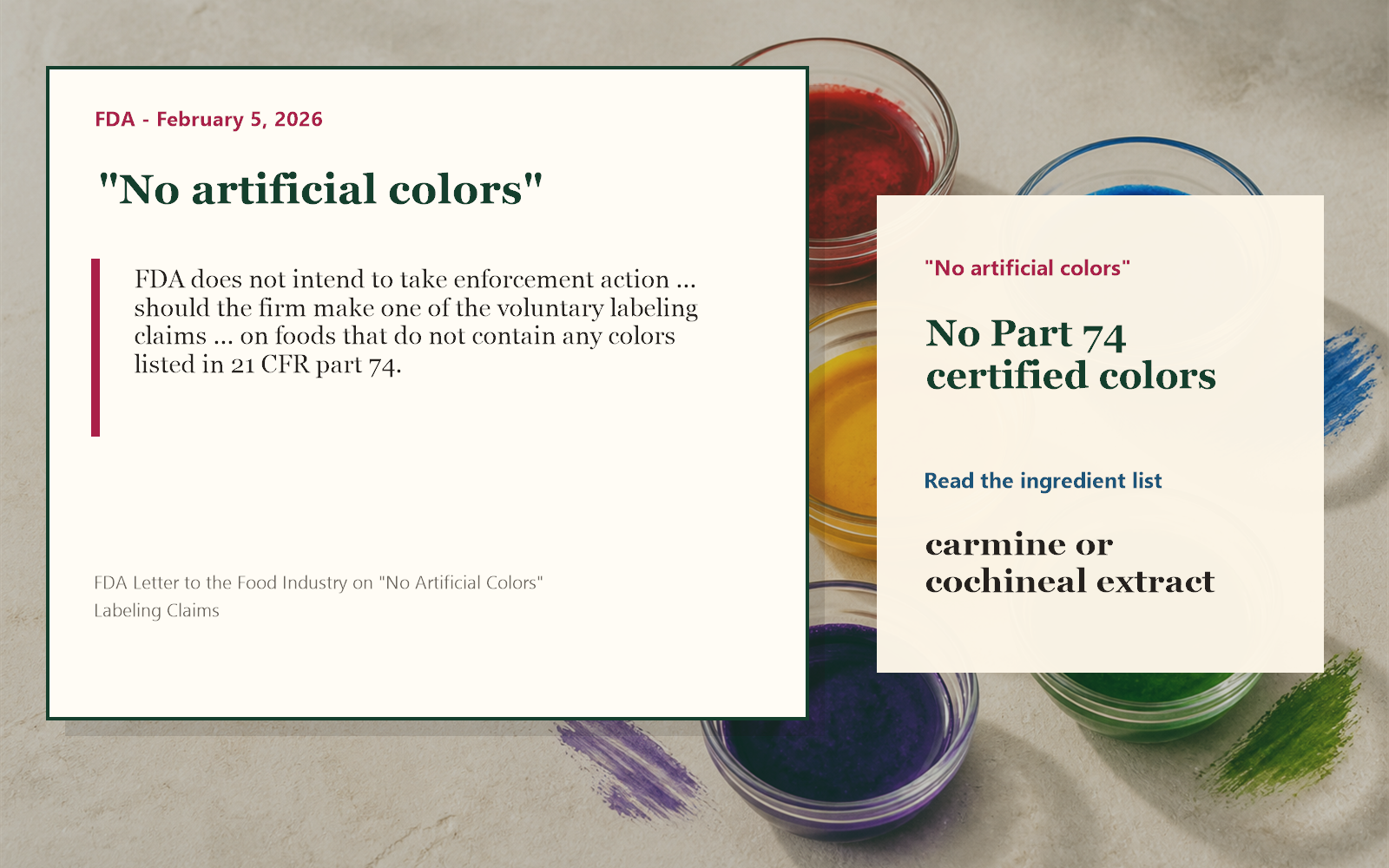
On February 5, 2026, the FDA told food manufacturers that it intends to exercise enforcement discretion for three voluntary claims: “Made without artificial food colors,” “No artificial color,” and “No added artificial color,” including their plural variations. The policy applies when a human food contains no certified colors listed in Part 74 and when the claim complies with the rest of the law, including the rule against false or misleading labeling. The FDA letter describes an enforcement position. It did not rewrite the statutory definition of every color additive.
The claim tells you that the product has no Part 74 certified color. It does not tell you that the food has no added color at all. It also says nothing about whether the food contains animal-derived ingredients.
Part 74 and Part 73 answer a regulatory question
Part 74 contains colors subject to FDA batch certification. FDA describes these as generally synthetic organic dyes, lakes, or pigments. Part 73 contains colors exempt from batch certification. Many certification-exempt colors come from plant, algae, or mineral sources. FDA still authorizes them and sets identity, purity, labeling, and use conditions. “Exempt” refers to batch certification, not exemption from regulation. The FDA’s consumer explanation of food colors identifies cochineal extract and its lake, carmine, as the insect-derived exception among these colors.
For a package check:
| Package or regulation term | What it establishes | What it does not establish |
|---|---|---|
| No artificial colors | No Part 74 certified colors under the FDA’s current enforcement policy | No animal-derived ingredients |
| Part 74 color | The color is subject to batch certification | The complete food is or is not vegan |
| Part 73 color | The color is exempt from batch certification and authorized for stated uses | The color is plant-derived or vegan |
| Vegan certification | The exact product was evaluated under that certifier’s standard | That every flavor, size, or future formula is identical |
Carmine creates a direct label-reading consequence
Carmine and cochineal extract appear in Part 73, while the 2026 letter bases its enforcement discretion on the absence of Part 74 colors. Reading those documents together, a food colored with carmine or cochineal extract and no Part 74 color appears able to carry one of the covered “no artificial colors” claims, provided the claim is otherwise lawful and not misleading.
The FDA letter leaves carmine unmentioned. The conclusion here is a regulatory inference from the letter’s Part 74 test and carmine’s placement in 21 CFR 73.100. FDA has issued no separate announcement directing companies to use insect color. The two rules together explain why the front claim cannot serve as a vegan shortcut.
Carmine and Cochineal Extract Share One Insect Source
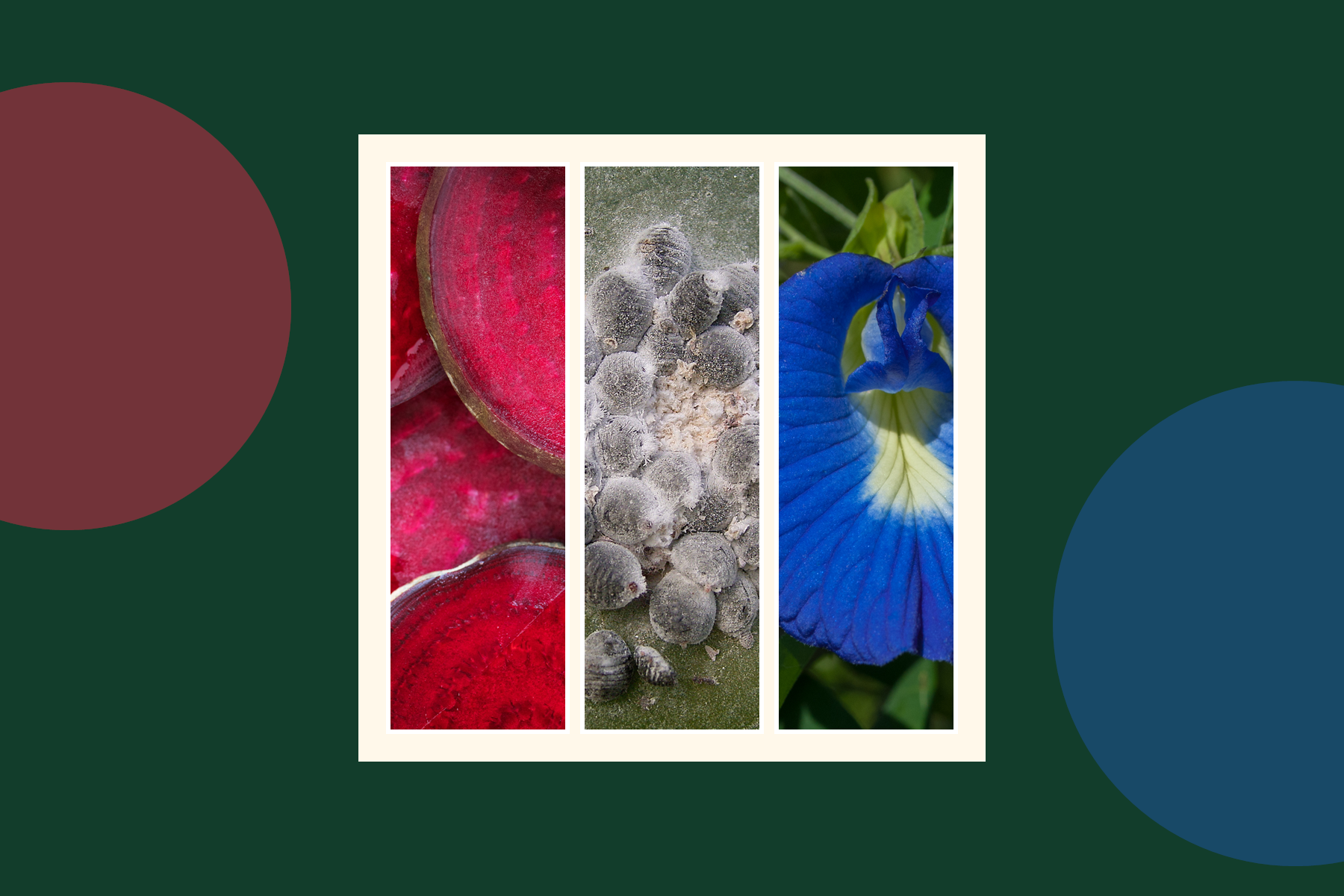
Carmine and cochineal extract are often treated as synonyms in vegan ingredient guides. That shorthand leads to the correct shopping decision, because both come from the cochineal insect, Dactylopius coccus. The preparations are technically different.
The federal definition describes cochineal extract as a concentrated extract whose coloring principle is chiefly carminic acid. Carmine is an aluminum or calcium-aluminum lake made from the coloring principles obtained through an aqueous extraction of cochineal. Both definitions appear in 21 CFR 73.100. In plain language, they are two related forms from one insect-derived red-color family.
For a vegan screen, the distinction does not change the verdict:
cochineal extract: insect-derived, so skip itcarmine: insect-derived, so skip it
The same source can also appear under different naming systems outside the United States. In the European Union, E120 refers to carminic acid and carmine under the EU food-additive specifications. On a U.S. food label, start with the two names the FDA requires: carmine and cochineal extract.
U.S. labels must name the ingredient
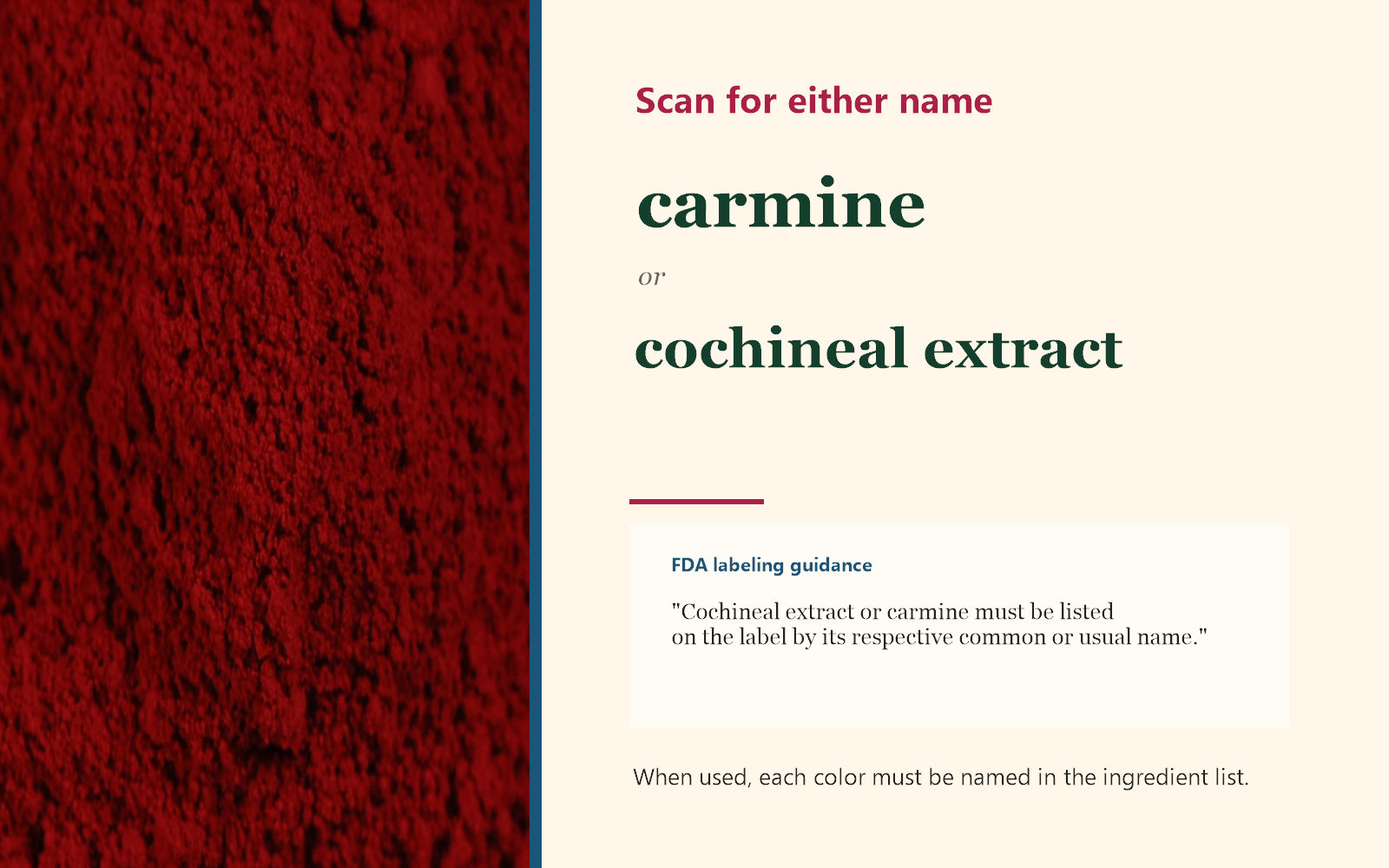
The front claim may be broad, but the ingredient-list rule is specific. Food containing either color must list its respective common name, carmine or cochineal extract, in the statement of ingredients. The FDA’s labeling guidance says these colors cannot be declared only as “Artificial Color,” “Artificial Color Added,” or “Color Added.”
That rule makes a U.S. package easier to check than many online warnings suggest. You do not have to assume that every phrase such as “vegetable juice for color” secretly means insects. If carmine or cochineal extract is present as a color in an FDA-regulated food, the ingredient list must say so by name.
Use This 20-Second Vegan Label Check
A familiar box can change while the product name stays the same. Use the current package, especially when the front announces a new formula or a switch away from artificial colors.
1. Translate the front claim narrowly
Read “no artificial colors” as “no Part 74 certified colors under the FDA’s current claim policy.” Do not extend it to the rest of the formula. “Naturally colored,” “made with colors from natural sources,” and “no FD&C colors” also describe color choices, not vegan status.
2. Find the ingredient list
Skip the nutrition panel and marketing copy for this check. Read the statement of ingredients on the exact flavor, size, and country version you are holding. Formulas can differ across related products, and a new package design does not prove every version changed at once.
3. Scan for the two U.S. insect-color terms
Look for:
carminecochineal extract
They may appear late in the list or after a phrase such as “contains 2% or less.” A red, pink, or purple product deserves an especially careful scan, but color alone cannot identify the source.
4. Finish the full vegan check
Keep reading for milk ingredients, gelatin, egg, honey, shellac or confectioner’s glaze, beeswax, and any other ingredient relevant to that food. Our guide to hidden animal ingredients covers the terms that sit outside the color question.
Kraft Heinz introduced JELL-O Simply as a line with no FD&C colors while describing part of the range as ready-to-eat gelatin and gelatin mixes in the company’s May 2026 announcement. For vegan shoppers, the word gelatin settles those products even though the color claim can be accurate.
5. Give a vegan certification more weight
A credible vegan certification on the exact product addresses a broader question than a color claim. Check that the certification applies to the flavor and package in your hand. Our guide to labels and logos explains which front-of-package statements carry useful verification and which ones simply describe one product feature.
6. Ask a precise question when the label is unclear
Contact the company with the product name, flavor, size, UPC, and lot information if available. Ask: “What is the source of each added color in this exact formula, and does it contain carmine or cochineal extract?” If the surface is glossy, add shellac, confectioner’s glaze, candy glaze, and beeswax to the question.
Carmine Is the Main U.S. Insect-Color Check
The FDA’s current food-color guidance identifies one insect-derived color family: cochineal extract and its lake, carmine. Those are two preparations from one insect source, not two unrelated insect colors. For ordinary U.S. grocery shopping, there is no second long list of insect dyes to memorize. The FDA food-color overview states this directly.
Several insect-derived food ingredients get mixed into the color discussion because they can appear on candy, supplements, and glossy foods. They still matter to vegans. They simply perform a different job.
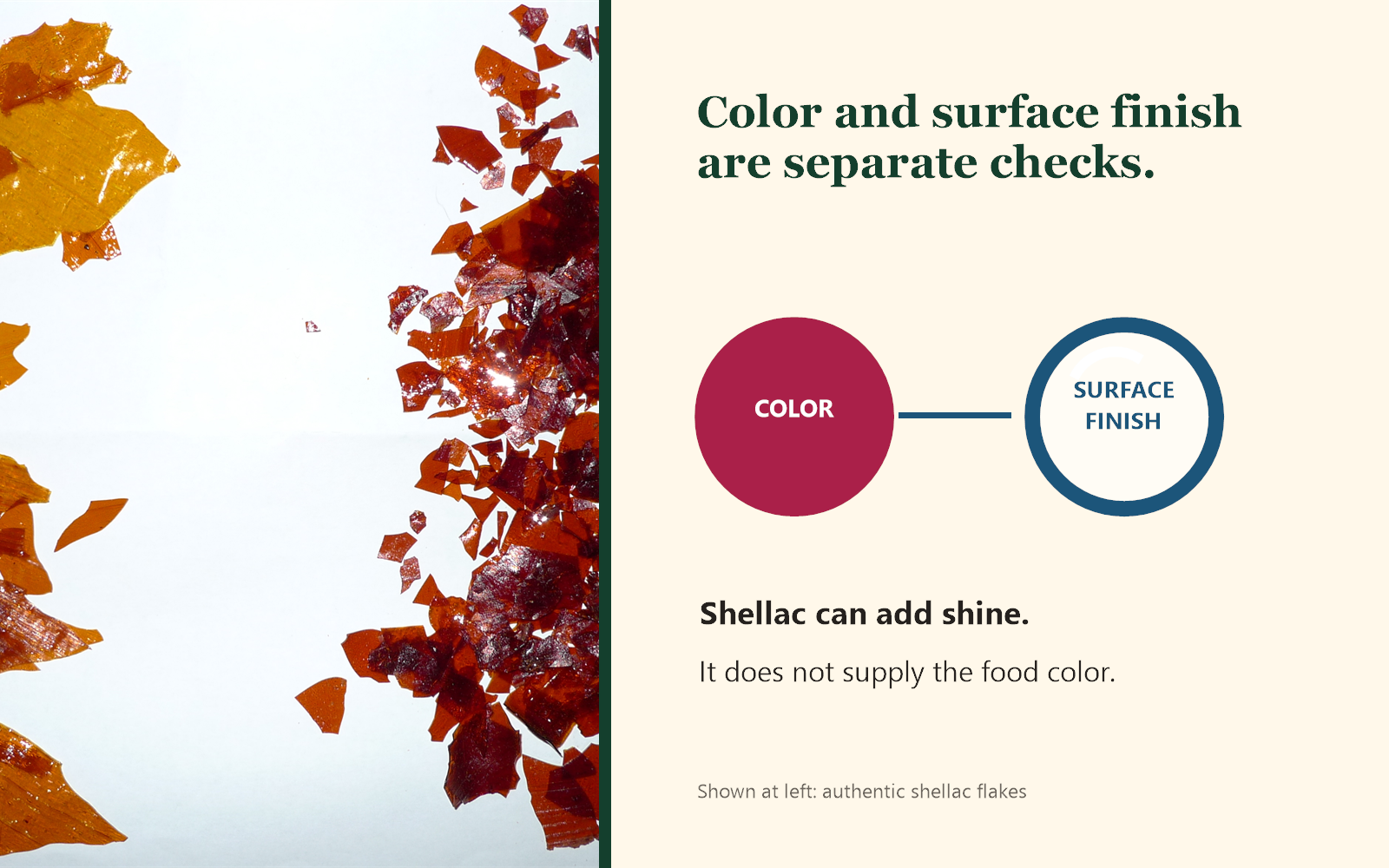
Shellac is a finish or glaze
The FDA’s food-substance inventory lists purified shellac under names including shellac, lacca, candy glaze, confectioner’s glaze, gum lac, and lac resin. Its listed technical effects include surface finishing, processing, drying, and anti-caking functions. It is not listed there as a food color. See the FDA entry for purified shellac.
That means a shiny red candy could raise two separate questions. One ingredient may create the red shade. Another may create the polished shell. Check the color and the coating instead of treating “bug-derived” as one catch-all function.
Beeswax is also separate from color
The FDA lists beeswax as a flavoring adjunct, lubricant or release agent, and surface-finishing agent in its food-substance inventory. Vegans may avoid it because it comes from bees. It does not add another insect-derived food color to the U.S. list.
Japan also permits lac colour
Food-additive rules differ by country. Japan’s official existing-additives list includes lac colour, described as laccaic acids obtained from lac scale insects. That is a distinct insect-derived color in the Japanese list. U.S. FDA rules cover a different list, so recheck labels when traveling or buying imported products.
Companies Are Publicly Naming Other Replacements
Carmine is a technically available red, so the insect reference in news coverage is grounded in a permitted ingredient. That does not show that major food companies are broadly moving to carmine.
The FDA’s pledge tracker records which companies and product groups plan to remove certified colors, but most entries do not name every replacement source. The company statements reviewed here point to fruit and vegetable sources, color removal, and changed shades.
WK Kellogg said in August 2026 that it had identified fruit- and vegetable-based juices for cereals such as Froot Loops and Apple Jacks, according to the Associated Press report on the company’s accelerated timeline. PepsiCo says specified Fruit Punch, Lemon Lime, and Orange Gatorade products will use colors from fruits and vegetables when their FD&C colors are removed, according to the company’s April 2026 announcement.
Kraft Heinz describes three routes: remove a color when it is unnecessary, replace it with an option such as fruit juice, or change the shade when a direct replacement does not work. Its June 2026 reformulation update also explains why heat, light, shelf life, and the food itself can make a color swap difficult.
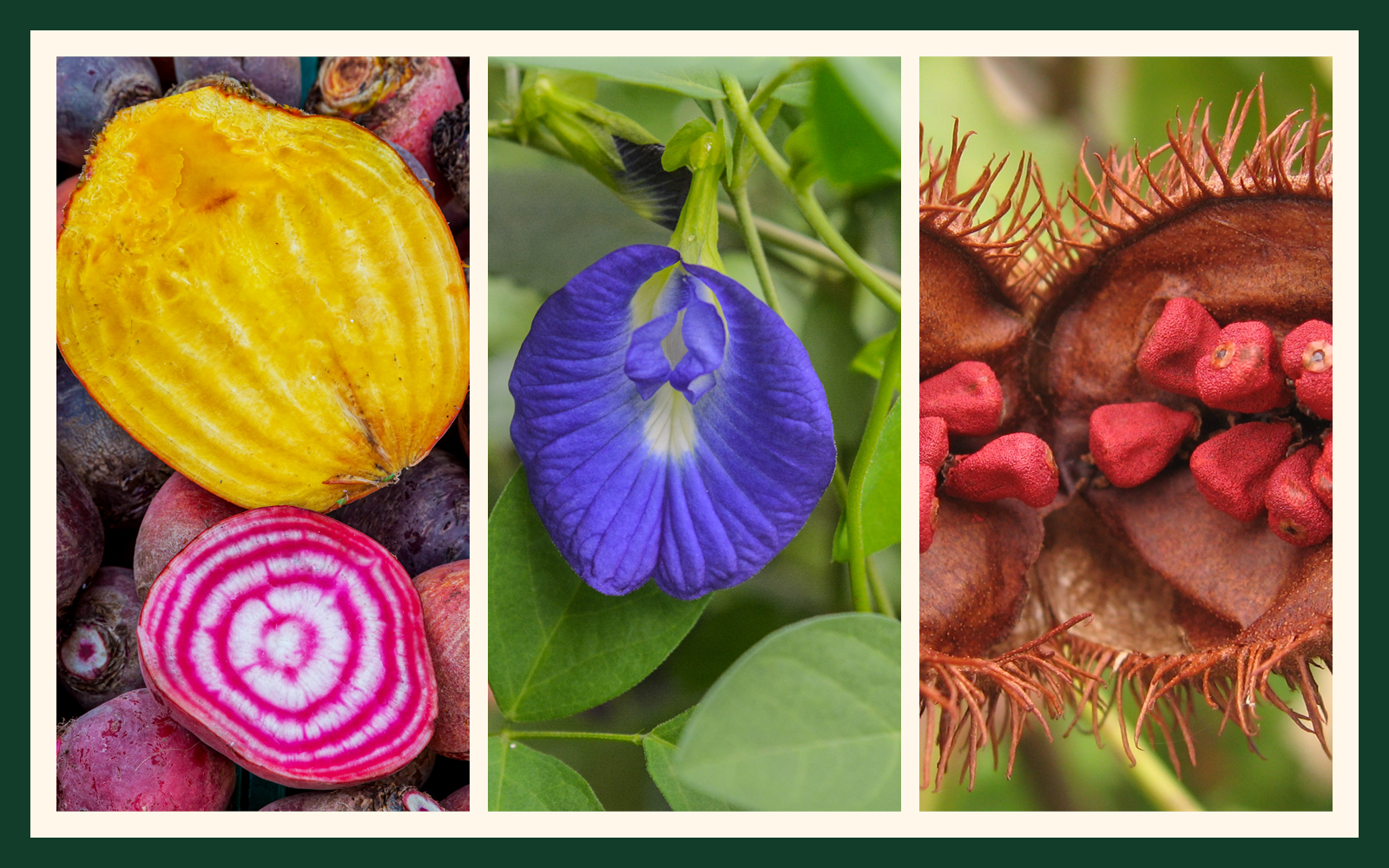
FDA approvals have expanded the non-insect palette too. Effective 2025 actions added Galdieria extract blue from red algae, expanded butterfly pea flower extract, authorized calcium phosphate for certain white-color uses, and later added gardenia blue. The details and permitted uses appear in the FDA’s May 2025 announcement and July 2025 gardenia-blue announcement.
None of the major-company disclosures reviewed here names carmine or cochineal extract as the chosen replacement. Manufacturers may still use or test it without public disclosure. The available evidence supports a narrower conclusion: carmine is a possible option, while the current company announcements point mainly elsewhere. Read the new package when it reaches your store.
How to Handle a Reformulated Favorite
Start with the exact package instead of a viral list. Ingredient databases, old product photos, and retailer pages can lag behind a reformulation. If a familiar food has a new “no artificial colors” burst on the front, compare the old and new ingredient lists when both are available.
If you are buying for someone else, send a clear photo of the current ingredient list instead of relying on the product name from memory.
If you see carmine or cochineal extract, the vegan decision is settled. Choose another product or contact the company to ask whether a different version uses a non-animal color. You do not need to debate the safety of synthetic dyes to make that choice. Carmine’s animal source is enough.
If neither term appears, do not invent an insect source behind a specifically named plant color. Finish the rest of the ingredient check. “Vegetable juice for color,” beta-carotene, annatto, butterfly pea flower extract, and other named non-animal color sources can answer the color question, while milk, gelatin, honey, or a glaze elsewhere in the formula can still change the vegan answer.
For an unfamiliar claim, use the same order every time: ingredient list, exact product, credible certification, then a company question if something remains unclear. The broader Is It Vegan? guide gives the same approach for foods, personal care, clothing, and household products.
Keep the allergy question separate from the vegan screen. FDA’s 2009 final rule documents severe allergic reactions, including anaphylaxis, in sensitive consumers. Carmine and cochineal extract are not on the FDA’s current list of nine major food allergens, so do not rely on a separate “Contains” statement to flag them. Read the ingredient list. Anyone with an allergy concern should follow advice from their own clinician.
Sources
- Letter to the Food Industry on “No Artificial Colors” Labeling Claims, FDA
- Tracking Food Industry Pledges to Remove Petroleum-Based Food Dyes, FDA
- FDA to Revoke Authorization for the Use of Red No. 3 in Food and Ingested Drugs, FDA
- 21 CFR 73.100, Cochineal Extract and Carmine, eCFR
- Color Additives in Foods, FDA
- Declaration by Name of Cochineal Extract and Carmine, FDA
- EU Regulation on Carminic Acid and Carmine, EUR-Lex
- Purified Shellac, FDA Food-Substance Inventory
- Beeswax, FDA Food-Substance Inventory
- List of Existing Food Additives, Japan Food Chemical Research Foundation
- WK Kellogg Says It Is Removing Artificial Dyes from Cereals, Associated Press
- Gatorade Artificial-Colors Transformation, PepsiCo
- Inside Kraft Heinz’s Work to Remove FD&C Colors, Kraft Heinz
- JELL-O Simply Launch Announcement, Kraft Heinz
- FDA Approves Three Food Colors from Natural Sources, FDA
- FDA Approves Gardenia Blue, FDA
- Food Allergies: What You Need to Know, FDA
- Cochineal Extract and Carmine Declaration Final Rule, FDA
Conclusion
“No artificial colors” does not mean vegan. It tells you that a food has no Part 74 certified colors under the FDA’s current enforcement policy. Carmine and cochineal extract remain the two U.S. ingredient-list terms to know for insect-derived color.
Company announcements reviewed here point to fruit and vegetable sources, color removal, and changed shades. FDA’s newer approvals add algae- and mineral-derived options. The reviewed company statements do not show a broad switch to insects. Read the current ingredient list and finish the full check.
Subscribe for new posts, seasonal guides, smart finds, and a free copy of The Things Nobody Tells You.
FAQ
Is carmine the same as cochineal extract?
They share the same insect source and lead to the same vegan decision, but they are different preparations. Cochineal extract is a concentrated extract whose main coloring principle is carminic acid. Carmine is a lake pigment made from the same cochineal coloring principles. Both are covered by 21 CFR 73.100.
Can a food with carmine say “no artificial colors”?
It appears possible under the FDA’s February 2026 policy if the food contains no Part 74 certified color and the claim meets all other legal requirements. This is an inference from the FDA letter’s Part 74 test and carmine’s listing in Part 73. The FDA did not issue a carmine-specific ruling.
Can carmine be hidden as “natural color” on a U.S. ingredient list?
No. A U.S. food containing carmine or cochineal extract must name the respective color in the ingredient list. The FDA labeling guidance says a generic declaration such as “color added” cannot replace the required name.
Is E120 vegan?
No. E120 is the European additive number associated with carminic acid and carmine. The EU regulation describes the color as derived from cochineal insects. On U.S. food labels, look first for carmine and cochineal extract.
Does “no artificial colors” mean no color was added?
No. Under the FDA’s February 2026 enforcement policy, the claim can be used when a food contains no certified color from Part 74. The formula may still include an authorized Part 73 color, such as a named plant-derived color or insect-derived carmine. Read the ingredient list if you want to know whether the manufacturer added color and where it came from.
Is carmine one of the nine major food allergens?
No. Carmine and cochineal extract are not on the FDA’s current list of nine major food allergens, so they may not appear in a separate “Contains” statement. FDA’s 2009 final rule documents severe reactions, including anaphylaxis, in sensitive consumers and requires foods to name carmine or cochineal extract in the ingredient list.
Is confectioner’s glaze a red food dye?
No. Confectioner’s glaze is another name for purified shellac, an insect-derived surface finish. It may make candy or another food glossy, but it is separate from the ingredient that supplies color. Vegans should still avoid it.
Are major food companies replacing synthetic dyes with insects?
The public disclosures reviewed for this article do not show a broad switch to carmine. Named plans from WK Kellogg and Gatorade emphasize fruit and vegetable sources, while Kraft Heinz describes fruit juice, color removal, and changed shades among its approaches. Some company disclosures leave the replacement source unspecified. Check each reformulated product rather than assuming every company made the same choice.
Does “natural colors” mean vegan?
No. “Natural colors” is not a vegan certification. The source could be plant, algae, mineral, or insect, and the rest of the food may contain unrelated animal ingredients. Read the ingredient list and use a credible vegan certification when one is available for the exact product.