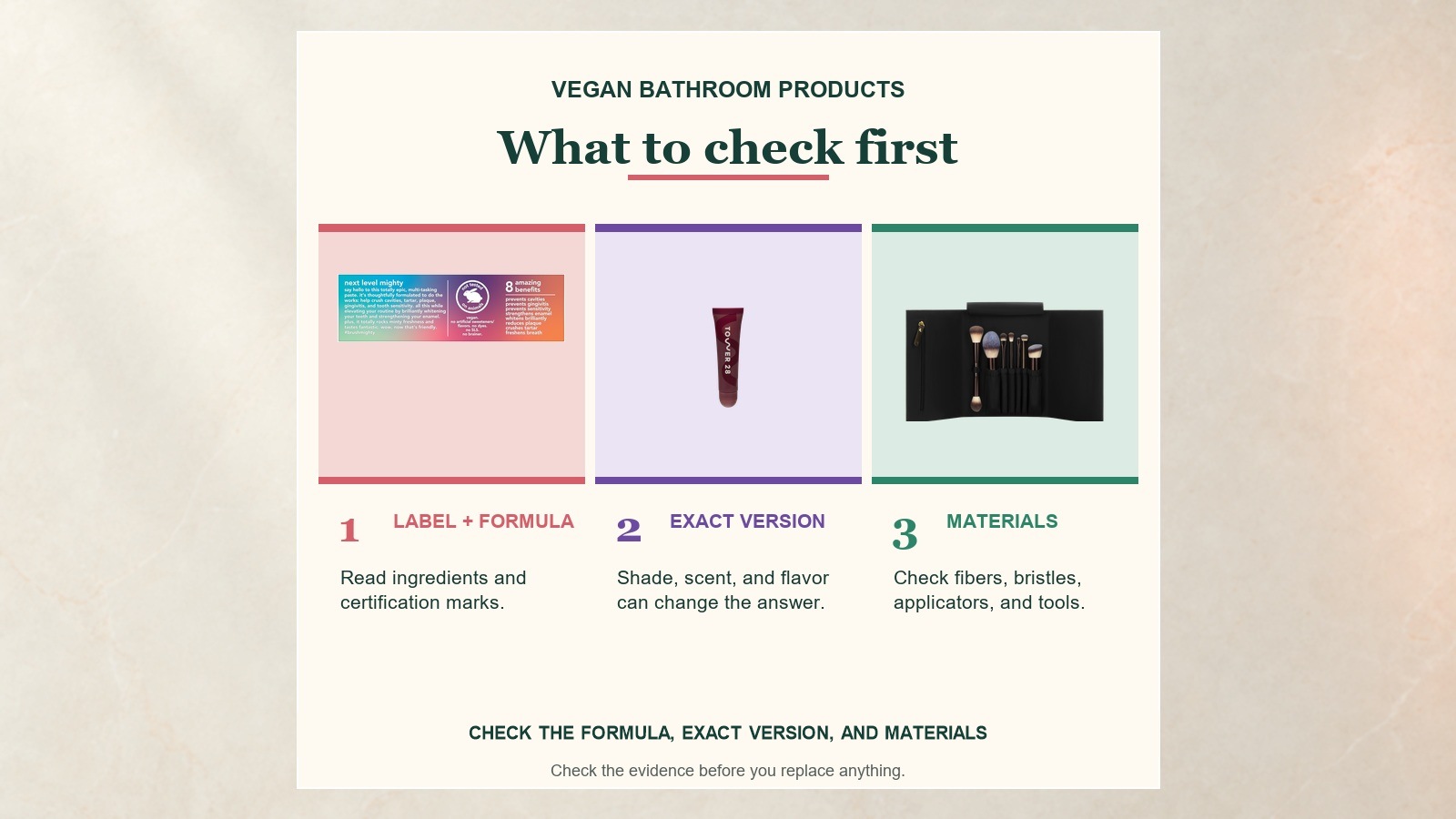
Vegan Bathroom Products: What to Check First on Your Shelf
A shelf full of vegan bathroom products can include lip balm, toothpaste, deodorant, face cream, shampoo, razors, and six products you bought long enough ago that you no longer remember what the label said. Checking all of it at once sounds exhausting. Start with the products that give you the fastest answers: lip products, color cosmetics, heavy balms, and hair repair treatments. Then check fragrance, daily basics, and bathroom tools.
Each product needs two answers. First, is the formula free of animal-derived ingredients? Second, does the animal-testing policy meet your standard? A cruelty-free claim may answer only the second question, and a vegan claim may cover only one product or shade. Work through one shelf, save the evidence you find, and turn future shopping into a short recheck instead of a fresh investigation.
Key Takeaways
- Check vegan bathroom products by exact product, shade, and scent. A brand-level claim may not cover every formula.
- Confirm vegan formula status and animal-testing policy separately.
- Start with lip products, tinted cosmetics, heavy balms, and hair repair treatments.
- Treat carmine, cochineal extract, lanolin, beeswax, honey, and shellac as formula stops.
- Ask for product-level source confirmation when a label lists glycerine, stearic acid, squalene, hyaluronic acid, collagen, elastin, keratin, or another ingredient that can have different sources.
- Sort the shelf into confirmed, unclear, and replace. Record the evidence and date for confirmed products.
How to Check Vegan Bathroom Products
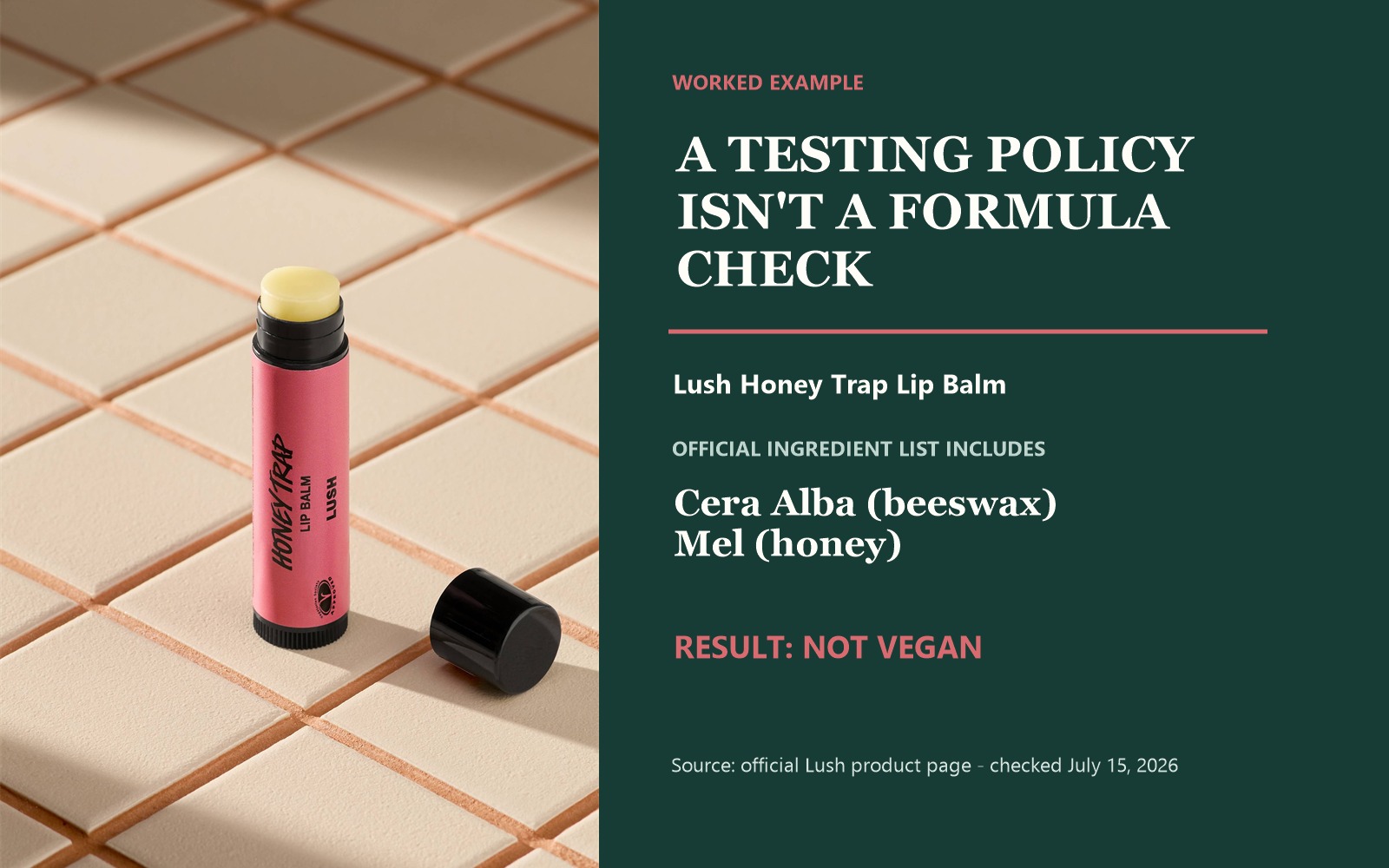
Vegan personal care products need two current facts: formula status and animal-testing status. The word “vegan” should answer a formula question. You want to know whether the exact product contains animal-derived ingredients and whether its manufacturing process fits the standard behind the claim. The words “cruelty free” usually address animal testing. Those are connected concerns, but one claim does not automatically settle both.
This matters because U.S. law does not define “cruelty free” or “not tested on animals.” The FDA says a company may apply such a claim only to its finished product, even when suppliers or contract laboratories have conducted testing connected to ingredients. A self-written package claim gives you less information than a certification that reviews suppliers and manufacturers.
The Vegan Society’s Vegan Trademark standards cover animal-derived ingredients and animal testing initiated by the company, conducted on its behalf, or conducted by parties under its effective control. The certification is attached to registered products with a traceable supply chain. That makes the sunflower trademark strong evidence for both questions within its stated scope.
Vegan Action’s Certified Vegan program also approves individual products rather than every product made by a company. It requires the approved formula and manufacturing process to exclude animal ingredients and by-products. Its animal-testing documentation standard covers ingredients and finished products from 2009 forward. A logo on one moisturizer does not certify the cleanser beside it unless that cleanser is also an approved product.
Leaping Bunny addresses the testing question through company, manufacturer, and supplier controls. Its Corporate Standard of Compassion for Animals uses a fixed cut-off date after which covered products and ingredients cannot be tested on animals by the company or the relevant manufacturers and suppliers. The standard does not exclude animal-derived formula ingredients. Put Leaping Bunny in the testing column, then confirm the formula through a vegan certification, a product-level statement, or the ingredient and source checks below.
A generic leaf, heart, rabbit, or “conscious” badge does not carry a published standard by itself. Look up the certifier’s name and confirm that the brand or product appears in the certifier’s current directory. For cruelty-free products, verify the animal-testing standard and then check the formula. If the package uses the word vegan without third-party certification, check whether the claim applies to the exact product and whether the brand explains its animal-testing policy.
For a deeper comparison of the two terms, the Vegan Viviendo guide to why cruelty-free is different from vegan covers the distinction without requiring you to memorize every logo.
Use the Label for What It Can Prove
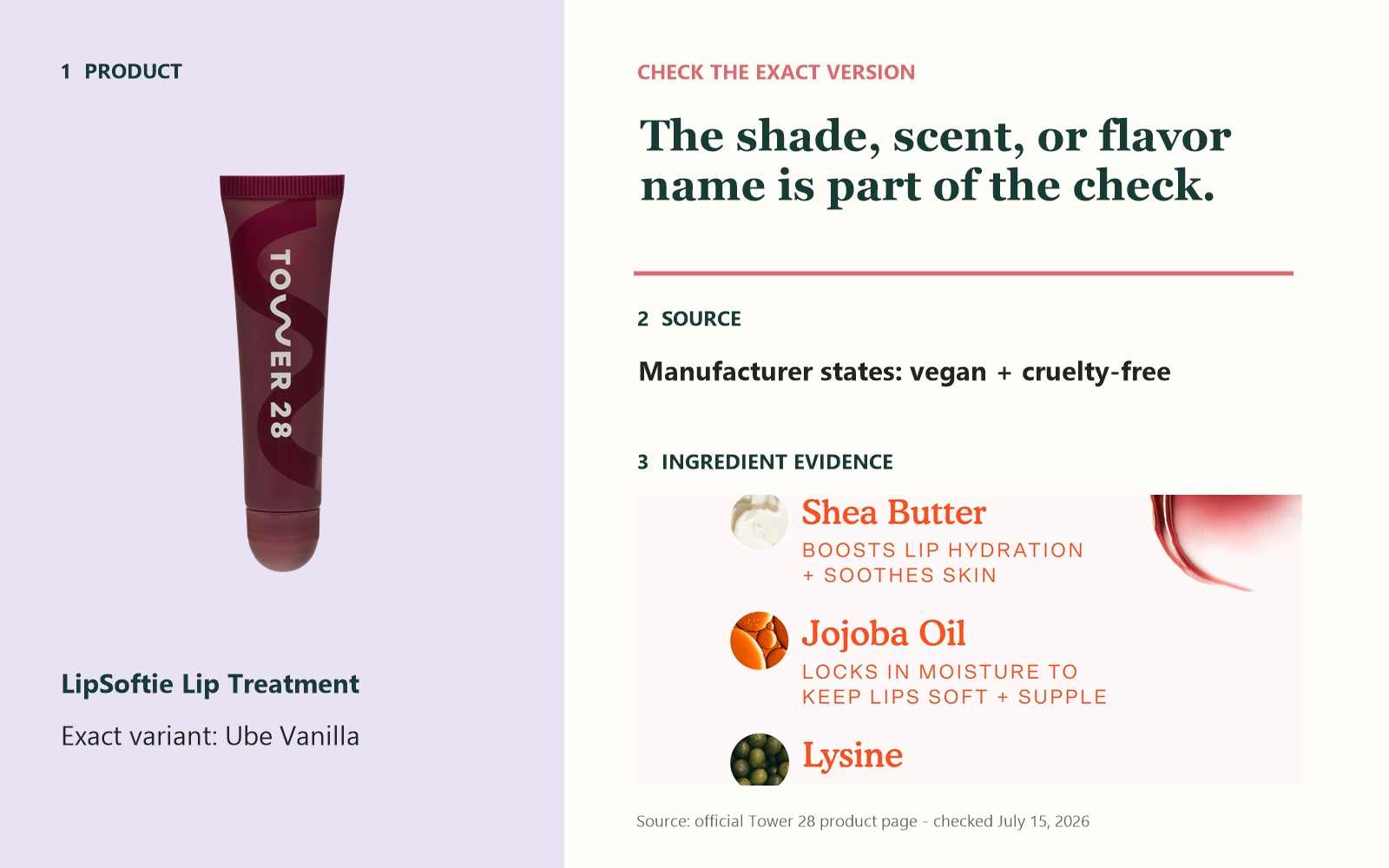
Labels on vegan bathroom products can settle obvious ingredient questions. They can also show you where the answer stops.
Start with the full product identity. Record the brand, product name, shade or scent, and package size if the line contains several versions. Then read the ingredient panel on the package and compare it with the current product page. If the two lists differ, treat the formula as unclear until the company explains which list matches the item in your hand.
The FDA requires retail cosmetics to list ingredients by their common or usual names, generally in descending order of predominance. Some products, such as moisturizers with SPF claims, are both cosmetics and over-the-counter drugs and follow additional active-ingredient labeling rules. When a package has separate active and inactive sections, check both.
The order has limits. Under the FDA Cosmetics Labeling Guide, ingredients present at one percent or less can appear in any order after higher-concentration ingredients. Color additives can also appear after other ingredients in any order. The first five names deserve attention, but the end of the list can still contain an ingredient that changes the vegan answer.
Shade ranges add another complication. A lipstick, eye shadow palette, or blush line may use one shared color list. Colors that appear after “may contain” may be used in only some shades. Seeing carmine in that shared list should prompt an exact-shade check. It does not prove that every shade contains carmine.
Carmine still deserves an early look. The FDA identifies cochineal extract and its lake, carmine, as insect-derived. Under the FDA's cochineal extract and carmine labeling guidance, U.S. cosmetics containing either color additive must declare it by name. Check red, pink, purple, coral, brown, and warm-toned products, while remembering that color alone cannot tell you which pigment the formula uses.
Lanolin is equally clear. The National Library of Medicine’s PubChem record describes lanolin as wool wax obtained from sheep’s wool. It appears in ointments, lotions, lip products, and other formulas designed to soften skin or seal in moisture. A label that names lanolin answers the formula question without an email to the brand.
Other ingredient names require source information. Vegan Action lists glycerine, stearic acid, squalene, hyaluronic acid, collagen, elastin, keratin, shellac, gelatin, and other ingredients as names that may be animal-based. Some can also come from plant, mineral, fermentation, or synthetic sources. Treat the name as a question, then look for product-level certification or ask the manufacturer about that exact formula.
Fragrance creates a different limit. The FDA permits the components of a fragrance or flavor mixture to appear simply as “Fragrance” or “Flavor”. You cannot prove every component’s source from that one word. Use a product-level vegan confirmation for scented products instead of trying to reverse-engineer the mixture.
The Vegan Viviendo guide to reading a personal-care label can help with label order and claim placement. For a longer source-check list, use Hidden Animal Ingredients, then return to the exact product rather than judging a formula from one ambiguous name.
When you need to contact a brand, keep the question short:
Is this exact product and shade free of animal-derived ingredients? Please confirm the source of [ingredient] and whether your answer applies to the current formula.
Ask about testing in a separate sentence if the brand does not have a current third-party certification:
Do you, your manufacturers, or your ingredient suppliers conduct or commission animal testing for this product or its ingredients?
A vague reply such as “we love animals” does not answer either question. Keep the product in the unclear column until the company gives a direct answer.
Check These Bathroom Products in This Order
The checking order for vegan bathroom products below favors items that can reveal a clear animal-derived ingredient quickly, followed by categories that need more source confirmation. Use it to decide where to start on your own shelf; the mix varies by bathroom.
1. Lip Balm, Lip Color, and Tinted Balm
Among vegan bathroom products, check the lip products you use most often. A drawer with twelve old lipsticks can wait. Start with the balm on your nightstand, the color in your bag, and the tint you apply every morning.
Look for beeswax, lanolin, honey, carmine, cochineal extract, and shellac. Beeswax may appear as beeswax, cera alba, or cera flava. Honey can appear as honey or mel. Lanolin may appear under its own name or in a clearly named lanolin derivative. Carmine and cochineal extract are direct stops. Shellac is insect-derived and can appear in glossy or film-forming products.
An uncolored balm avoids the shade-list complication, but it can still contain beeswax, lanolin, or honey. A tinted balm combines both checks. Creamy lip products may rely on waxes and emollients; red and pink shades also need a pigment check.
Use this decision order:
- Look for a recognized vegan certification on the exact product.
- Check the product page for an exact vegan statement.
- Read the ingredient panel for direct stops.
- Confirm the shade if the panel uses “may contain.”
- Ask about any source-ambiguous wax, fatty ingredient, color, or flavor.
Do not infer that an entire lipstick line is vegan because one shade appears in a vegan collection. Shade formulas can differ. Save the exact shade name with the answer.
2. Salves, Ointment-Style Balms, Cuticle Products, and Heavy Creams
In a vegan bathroom products audit, formulas that promise a thick seal, rich conditioning, or an ointment texture deserve an early check. Look at cuticle balm, heel balm, lip treatment, nipple balm, tattoo aftercare, hand salve, and the dense cream you use on dry patches.
Lanolin is common enough in ointment-style products to justify looking for it first. Beeswax and honey also appear in products built around a simple oil-and-wax base. Collagen, milk derivatives, and gelatin may appear in formulas marketed around firming, repair, or a cushiony texture. Glycerine, stearic acid, and other fatty ingredients need a source answer when the product has no vegan certification.
Read every panel, including a small jar sold inside a kit. The vegan status of the cleanser or serum in the same line does not settle the balm. If the product page says “vegan ingredients” without defining the claim, ask whether the exact formula contains any animal-derived ingredient or processing aid.
Keep performance and health needs in the decision. A medicated balm, prescription ointment, or product recommended for wound care needs an appropriate replacement. Speak with a clinician or pharmacist before stopping a prescribed or medically necessary product. The shelf audit can record the item as “needs alternative” without asking you to go without treatment.
3. Blush, Eye Color, Concealer, and Other Color Cosmetics
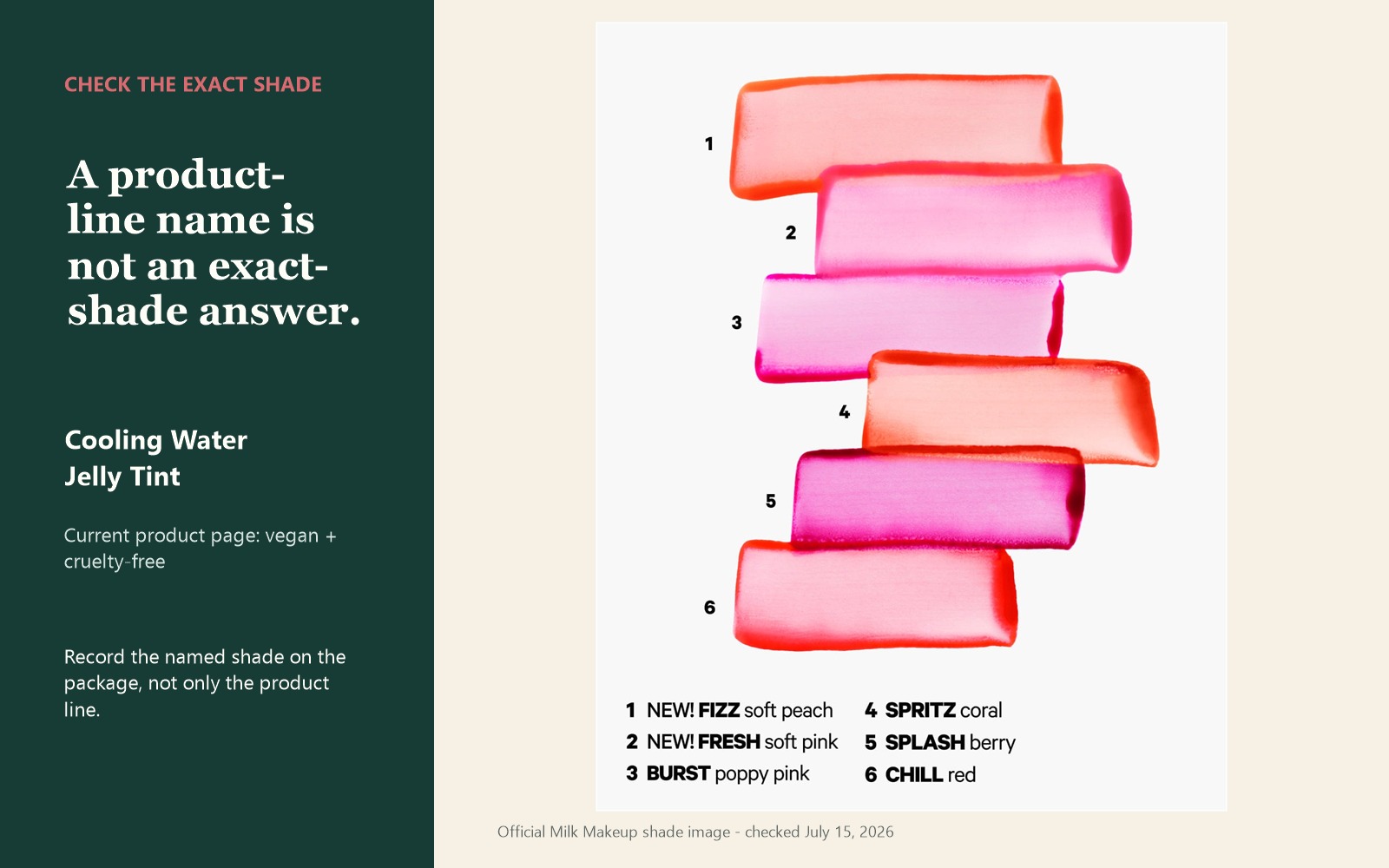
When checking vegan bathroom products that add red, pink, purple, coral, brown, or warm color, look for carmine first. Many formulas use mineral or synthetic colors instead. The label or an exact product confirmation decides the answer.
For vegan cosmetics, shade-specific evidence matters. A claim attached to one color may not cover the rest of the range.
For lipstick, blush, eye shadow, and palettes, find the ingredient list for the exact shade. If the package uses one shared list after “may contain,” check the company’s vegan shade list or ask directly. A vegan beige or blue shade does not establish the status of a red shade beside it.
Cream and stick formulas also need a wax check. Look for beeswax and lanolin. Mascara, nail products, and other film-forming formulas may list shellac. Concealer and cream complexion products can contain source-ambiguous fatty ingredients even when the shade contains no carmine.
Use this compact checklist when the print is tiny:
- Photograph the front, shade label, and ingredient panel.
- Enlarge the photo instead of trying to read the package in store lighting.
- Search the current product page by full product and shade name.
- Confirm any certification in the certifier’s directory.
- Save the answer with the shade name and date.
Treat a retailer filter as a candidate finder. Confirm the product claim with the manufacturer and certifier.
4. Hair Repair, Conditioner, Masks, and Styling Products
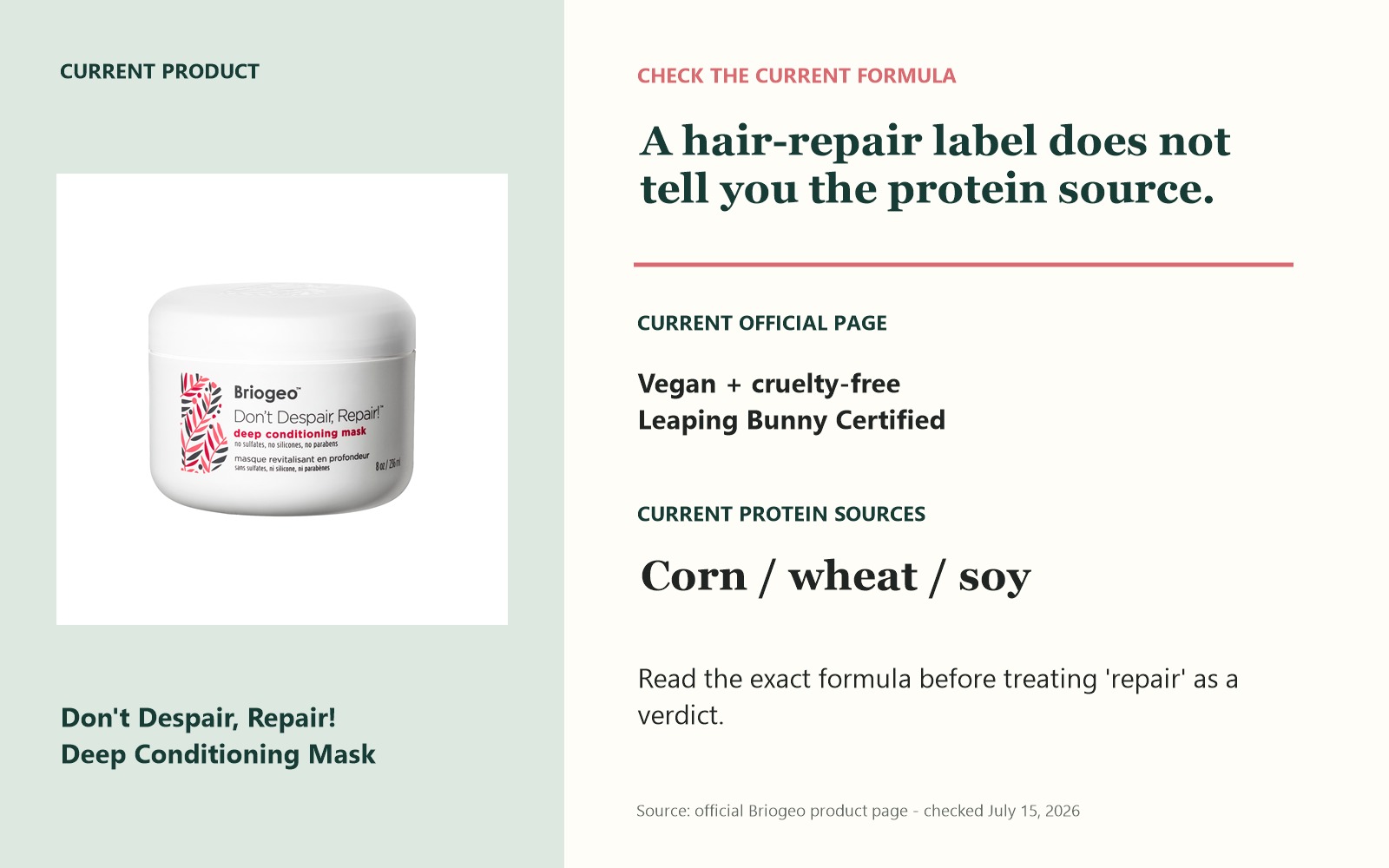
When you check vegan bathroom products for hair, start with treatments marketed for repair, strength, smoothing, gloss, or intensive conditioning. Those claims often foreground protein or conditioning ingredients, which makes the source check easier to target.
Look for keratin, collagen, elastin, silk, silk amino acids, and source-ambiguous fatty or protein ingredients. These names do not all behave the same way. Some indicate an animal-derived material directly, while others can be produced from more than one source. A brand may use fermentation-derived hyaluronic acid or plant-derived glycerine, for example, but the label usually does not tell you the manufacturing source.
Ask about the exact formula. “Is your keratin vegan?” can produce a general marketing reply. “What is the source of the hydrolyzed keratin in [full product name], and is the current formula free of all animal-derived ingredients?” asks for a product answer.
Check masks, leave-in conditioners, heat protectants, smoothing creams, edge products, hair oils, and bond-marketed treatments. Then check the basic shampoo and conditioner you buy repeatedly. If the entire product is certified vegan, you do not need a separate investigation for every unfamiliar chemical name on the panel.
Hair brushes also belong in the tool section below. A vegan conditioner does not make a boar-bristle brush vegan, and synthetic bristles do not answer the formula question for a conditioning spray.
5. Fragrance, Aftershave, and Scented Body Products
Perfume, cologne, body mist, aftershave, fragranced lotion, and scented hair products can list a complex mixture as “fragrance.” The label cannot show you every component’s source.
Start with a product-level vegan claim or a certification that covers the formula. Then check testing status separately if the vegan standard does not cover it. A brand statement that says only “our fragrances are vegan” may apply to the scent formulas while leaving other ingredients in a lotion or aftershave unaddressed. Confirm the finished product.
Avoid two shortcuts. “Natural fragrance” does not establish an animal-free source, and “synthetic fragrance” does not establish the testing policy. Both descriptions leave a separate evidence question.
If you have fragrance allergies or sensitivities, keep that requirement separate from vegan status. A vegan fragrance can still irritate your skin or trigger a sensitivity. Choose a product that meets both needs rather than treating one label as proof of the other.
6. Toothpaste, Deodorant, Soap, Cleanser, Shampoo, and Body Wash
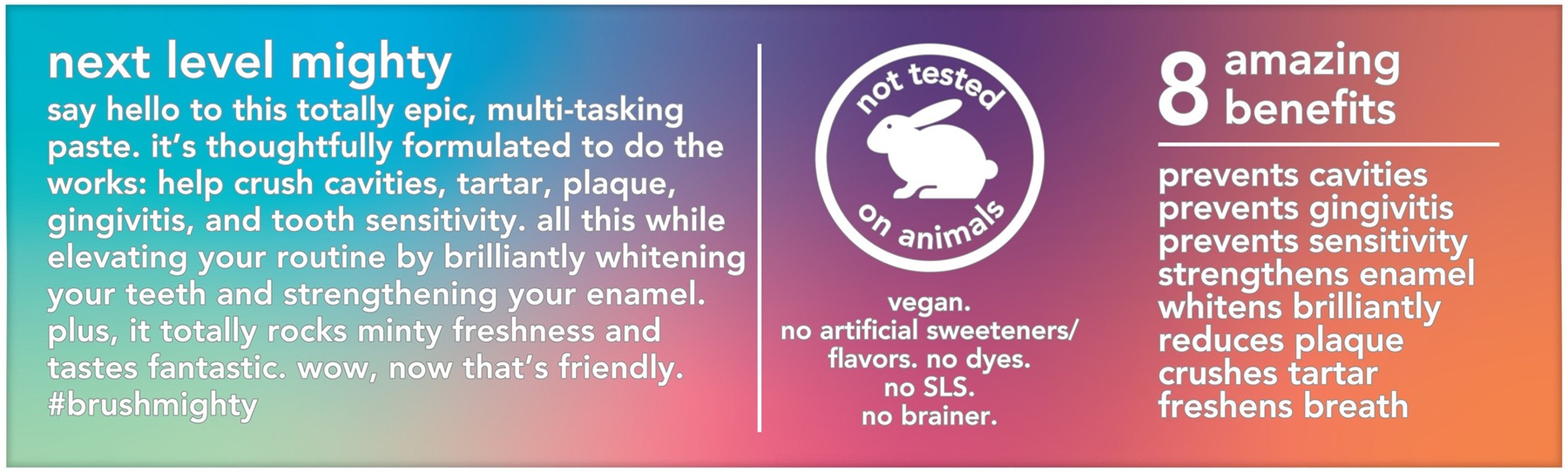
Daily vegan bathroom products can look less complicated than a color palette, yet their labels still contain source questions. Check toothpaste, mouthwash, deodorant, antiperspirant, bar soap, face cleanser, shampoo, conditioner, and body wash after the quicker lip, balm, color, and treatment checks.
Look for a current product-level vegan claim first. Then scan for beeswax in stick products, honey or milk derivatives in soaps and washes, and source-ambiguous glycerine, stearic acid, fatty acids, flavors, fragrance, or protein additives. A certified product can spare you from chasing the origin of every fatty acid or flavor component.
Toothpaste deserves a performance check alongside the formula check. Confirm that the replacement meets your dental needs, including fluoride or sensitivity requirements discussed with your dentist. The same rule applies to mouthwash and other oral-care products. A vegan label does not make a product suitable for every person’s dental plan.
Deodorant and antiperspirant do different jobs. Deodorant controls odor; antiperspirant reduces sweat. Match the replacement to the job you want. A vegan deodorant that leaves you missing the sweat control you expected is a poor replacement for an antiperspirant.
Check bar soap by exact formula. Some bars use plant oils and clearly documented vegan ingredients. Others may use animal fats, milk, honey, or source-ambiguous fatty acids. A handmade appearance or a short ingredient list does not settle the source.
For vegan personal care products you buy repeatedly, save the confirmed formula rather than reopening the research each time the bottle runs out. Recheck cleanser, shampoo, conditioner, and body wash when the package or ingredient list changes. If the online list and bottle disagree, ask the company which formula is current.
Skin treatment comes first when acne products, medicated shampoo, sunscreen, or another bathroom product addresses a health need. Find a suitable alternative before switching. Product status can be recorded clearly without turning access or medical care into a pass-fail test.
7. Razors, Shaving Brushes, Makeup Brushes, and Bathroom Tools
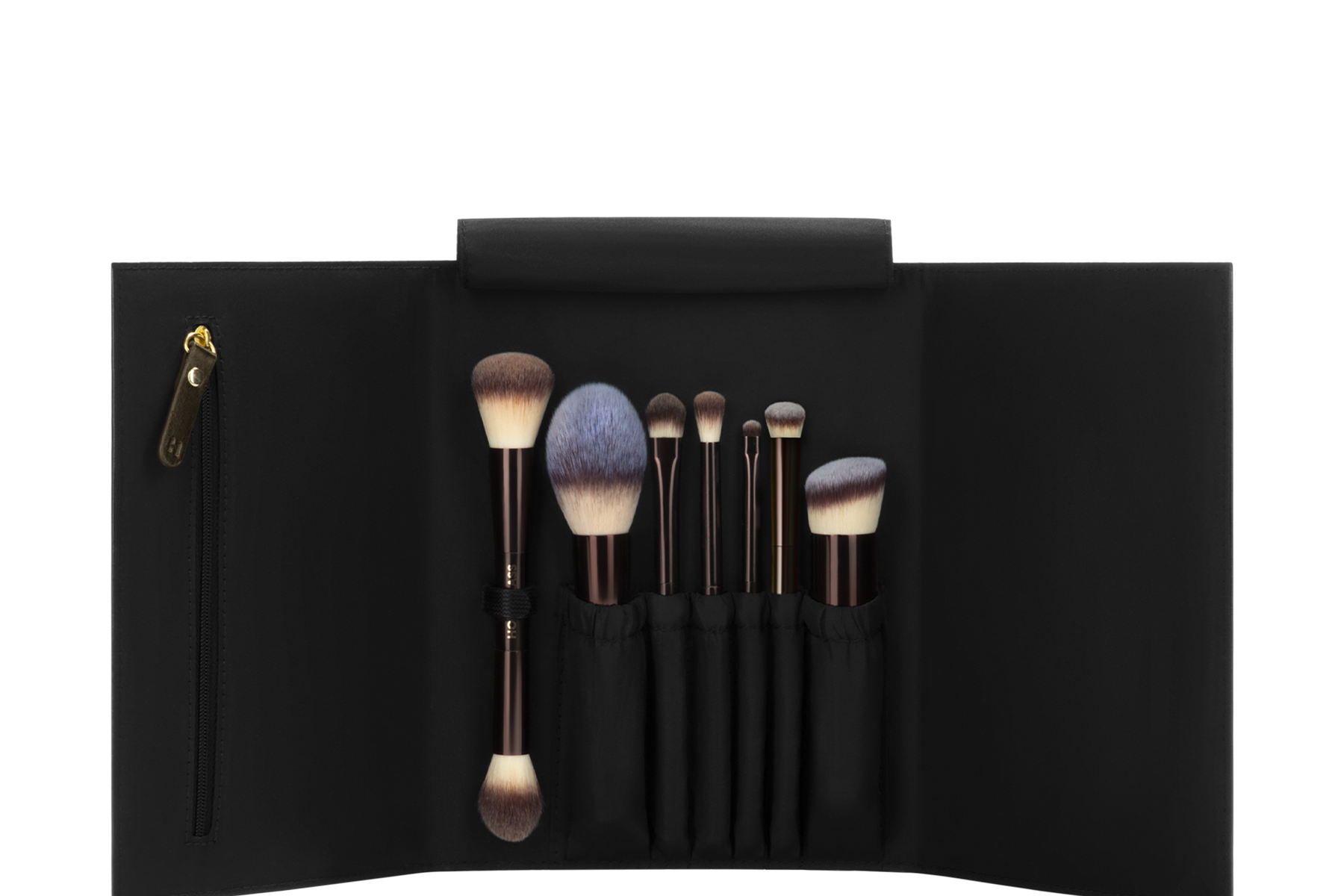
Vegan bathroom products also include tools with material questions instead of standard cosmetic ingredient panels. Check shaving brushes, makeup brushes, razors, pumice or foot tools, cases, and accessories.
Look for animal hair in brush fibers and leather, shell, horn, or other animal material in handles and cases. “Synthetic bristles” answers the fiber question for a brush. It does not establish the material used in the handle, glue, or travel case.
Razors can include lubricating or conditioning strips. Check whether the manufacturer publishes the strip formula or confirms the razor as vegan. The same applies to shave soap included with a brush set. A metal safety razor with a plain replaceable blade can reduce the number of hidden formula questions, but you still need a vegan shaving soap, cream, or oil.
When a manufacturer does not disclose glues or strip materials, ask a narrow question. Record the tool as unclear if the answer stays vague. You do not need to research the steel composition of a plain blade when the material disclosure already answers the animal-derived question.
Put Every Product in Confirmed, Unclear, or Replace
Three columns keep one unanswered email from holding up the whole shelf. Use a note, spreadsheet, or piece of paper. The record only needs enough detail to prevent repeat work.
Confirmed
Put a product here when you have enough current evidence for the formula and testing policy. Record:
- Brand and exact product name
- Shade, scent, or version
- Vegan evidence and source
- Animal-testing evidence and source
- Date checked
- Any condition, such as “only shades 01 through 08”
Save a screenshot or link when the answer comes from a current product page, certification directory, or direct brand email. Certification pages can change, and product formulas can change. The date tells you whether a saved answer is fresh enough for the next purchase.
Recheck when the package design, ingredient list, shade name, owner, certification, or policy changes. After a small package redesign, compare the old and new panels before concluding that the formula changed.
Unclear
Use this column when one answer is missing. Common examples include:
- A vegan formula claim with no animal-testing information
- A cruelty-free certification with no vegan formula confirmation
- Glycerine, stearic acid, keratin, or another source-ambiguous ingredient
- A shared “may contain” list with no exact-shade answer
- Fragrance with no product-level vegan confirmation
- A brand reply that repeats marketing language without answering the question
Write the next action beside the item: check certification directory, send email, compare new package, or replace when empty. Limit the first round to one or two brand questions. Seven open customer-service conversations will make the audit feel larger than it is.
You can keep using an unclear product, pause it, or replace it now according to your own threshold and circumstances. Keep the evidence label accurate. “Unclear” means the available information has not settled the answer.
Replace
Put a product here when the label names an animal-derived ingredient, the brand confirms a conflict, or the available evidence does not meet your standard.
Match the replacement to the same job. Record price range, scent or fragrance-free preference, skin or scalp needs, shade, dental requirement, sweat control, and local availability. This prevents a vegan claim from becoming the only buying criterion.
Buy one replacement and see whether it works before buying backups. A product can meet a strong vegan standard and still pill under makeup, dry out your hair, irritate your skin, taste unpleasant, or fail in humid weather. Performance decides whether it earns a permanent place on the shelf.
A Ten-Minute Shelf Audit
Choose one shelf or drawer. Pull out seven items:
- Two lip products
- One heavy balm or cream
- One color cosmetic
- One hair repair or styling product
- One oral-care or deodorant product
- One cleanser, shampoo, or body wash
Photograph each label. Put obvious animal-derived formulas in replace. Put certified or fully confirmed products in confirmed. Put the rest in unclear with one next action. Send no more than two questions. Save the confirmed answers before you stop.
That first pass gives you a working list of vegan bathroom products without forcing you to finish the whole bathroom. Repeat with another shelf when you have ten minutes.
What to Do With Products You Already Own
You can replace products on your own timetable. The evidence can stay clear even when cost, waste, access, allergies, or medical needs affect the timing.
Three common options work:
- Finish the product, then buy a confirmed replacement.
- Give an unopened product to someone who wants it.
- Stop using the product now and replace it.
Follow hygiene rules. Do not share used eye makeup, lip products, mascara, razors, or anything that can spread bacteria or infection. Donation programs and shelters set their own acceptance rules, so check before dropping off opened or partially used toiletries.
Separate preference products from medical and dental products. A lipstick or body mist can be replaced without affecting treatment. A prescription ointment, medicated shampoo, acne treatment, fluoride toothpaste, or sensitivity product may need a planned alternative. Ask the relevant clinician, dentist, or pharmacist for help finding an option that meets the same need.
Keep “use until empty” items on the replace list. That label records the next purchase and prevents the same product from returning to the shelf by habit.
Make the Next Bathroom Purchase Easier
Start from a credible certification directory or a brand’s current vegan collection, then confirm the exact product, shade, and scent. The Vegan Viviendo guide to labels and certification logos explains what a mark can establish and why the issuer’s current directory matters.
Keep a short personal list of vegan bathroom products you rebuy: toothpaste, deodorant or antiperspirant, shampoo, conditioner, cleanser, moisturizer, lip balm, shaving supplies, and any treatment product. Record one or two acceptable backups for items that are hard to find locally.
Check the package again after a long gap. Ingredient lists, shade ranges, ownership, and certification status can change. A sixty-second comparison protects the work you already did.
Want better vegan buying shortcuts? Subscribe for smart finds, useful updates, and a free copy of The Things Nobody Tells You.
Conclusion
Start with lip products and color cosmetics, then check heavy balms, hair treatments, fragrance, daily basics, and tools. For every vegan bathroom product, record formula status and animal-testing status separately.
Use the label to catch carmine, lanolin, beeswax, honey, shellac, and other clear animal-derived ingredients. Use product-level certification or direct manufacturer confirmation when the label cannot identify an ingredient’s source or disclose a full fragrance mixture.
Choose one shelf today. Sort seven products into confirmed, unclear, and replace. Save the confirmed answers, send one or two focused questions, and let the replace column guide the next shopping trip.
FAQ
Does cruelty-free mean vegan?
No. Cruelty-free products address animal testing according to the standard behind the claim. Vegan formula status addresses animal-derived ingredients and, depending on the certification, manufacturing inputs. A cruelty-free product can contain beeswax, lanolin, carmine, honey, or another animal-derived ingredient.
Check the exact standard behind each claim. Some vegan certifications cover both ingredients and animal testing. Leaping Bunny covers animal testing through company and supplier controls, so its logo still needs a separate formula check.
Does a Leaping Bunny logo mean the ingredients are vegan?
No. Leaping Bunny is evidence for animal-testing controls. Its standard does not exclude animal-derived ingredients from the formula.
Pair it with a recognized vegan certification, a product-level vegan statement, or an ingredient and source check. Confirm the exact product when the brand sells both vegan and non-vegan formulas.
Is glycerine vegan?
The name alone does not establish the source. Glycerine can come from different feedstocks and manufacturing processes. Look for a product-level vegan certification or ask the manufacturer to confirm the source used in the exact formula.
The same caution applies to stearic acid, squalene, hyaluronic acid, and several other personal-care ingredients. Treat them as source questions rather than automatic approvals or rejections.
Is carmine vegan?
No. Carmine is derived from insects. It may appear as carmine or cochineal extract on a U.S. label.
Check the exact cosmetic shade. A shared ingredient panel can list colors after “may contain” even when a particular color is used only in some shades. A product-level vegan claim or direct shade confirmation settles that uncertainty.
Do I need to throw away non-vegan bathroom products immediately?
No single timetable fits everyone. You can finish a product and replace it, give an unopened hygienic product to someone who wants it, or stop using it now.
Keep prescriptions, medicated products, dental products, and other health needs separate. Find an appropriate alternative with a clinician, dentist, or pharmacist before stopping something medically necessary.
How often should I recheck a bathroom product?
Recheck when the ingredient list, package, shade, scent, ownership, certification, or animal-testing policy changes. Compare the label again after a long gap between purchases.
Save the product name, evidence, and date. A dated record turns the next check into a quick comparison.