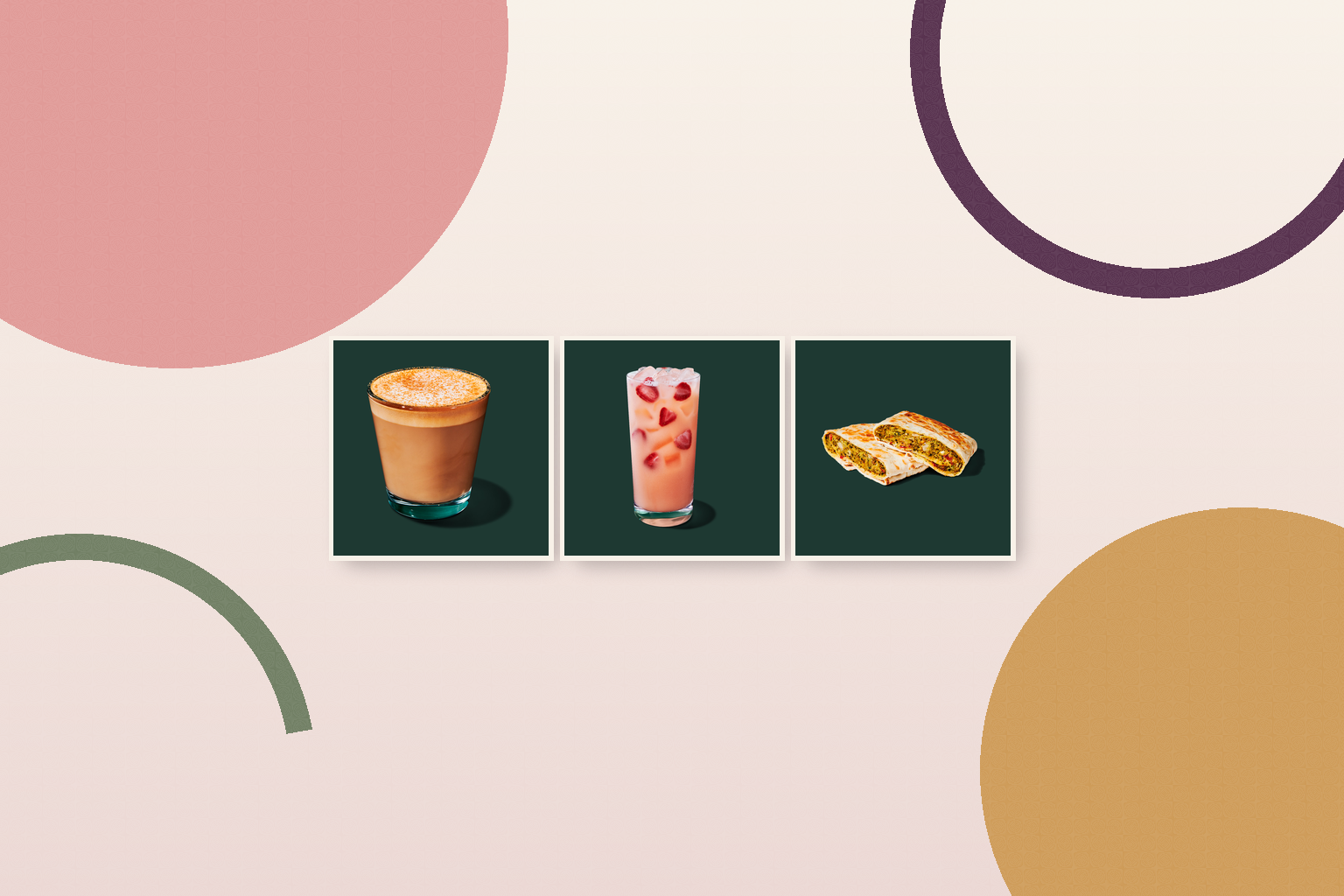
What to Order at Starbucks When You’re Vegan
The most useful vegan Starbucks order depends on what you want in the cup. A short, hot espresso drink, an iced coffee with a little cream, and a sweet coconut-and-fruit drink serve different cravings. There are good starting points for each, plus a savory food option that comes vegan as a complete item.
Our U.S. picks are the Brown Sugar Oatmilk Cortado, Iced Brown Sugar Oatmilk Shaken Espresso, Nondairy Vanilla Sweet Cream Cold Brew, Mango Dream, a Caffè Mocha with two changes, and the Spicy Falafel Pocket. Four drinks already have suitable ingredient lists. The mocha keeps its chocolate flavor after changing the milk and removing the whip; some seasonal drinks lose their defining flavor when the animal ingredients go.
These choices are based on Starbucks’ current recipes and the kind of drink or food they offer, rather than a firsthand taste test. We checked the U.S. menu in October 2026. Local stock varies, and this guide covers the café menu rather than Starbucks grocery products or menus in other countries.
Key takeaways for a vegan Starbucks order
- Choose the Brown Sugar Oatmilk Cortado for a small hot espresso drink, or the Iced Brown Sugar Oatmilk Shaken Espresso for the same flavor direction over ice.
- Nondairy Vanilla Sweet Cream Cold Brew is the vanilla-and-cream choice. Mango Dream brings strawberry, mango, and coconut, with a choice of caffeine levels.
- A Caffè Mocha needs nondairy milk and no whipped cream. Its regular chocolate sauce can stay.
- The Spicy Falafel Pocket is the savory vegan food pick. A bagel with avocado is a simpler alternative.
- Pumpkin sauce contains milk, chai contains honey, and protein foam contains whey. Changing the base milk leaves those ingredients in place.
Brown sugar and cinnamon, hot or iced
Brown Sugar Oatmilk Cortado: a small hot coffee with three shots
The Brown Sugar Oatmilk Cortado brings together oatmilk, espresso, brown sugar syrup, and cinnamon. Its ingredient list names no animal-derived component. There is no whipped cream or sweet-cream topping to remove, so the standard recipe is a useful starting order for this flavor combination.
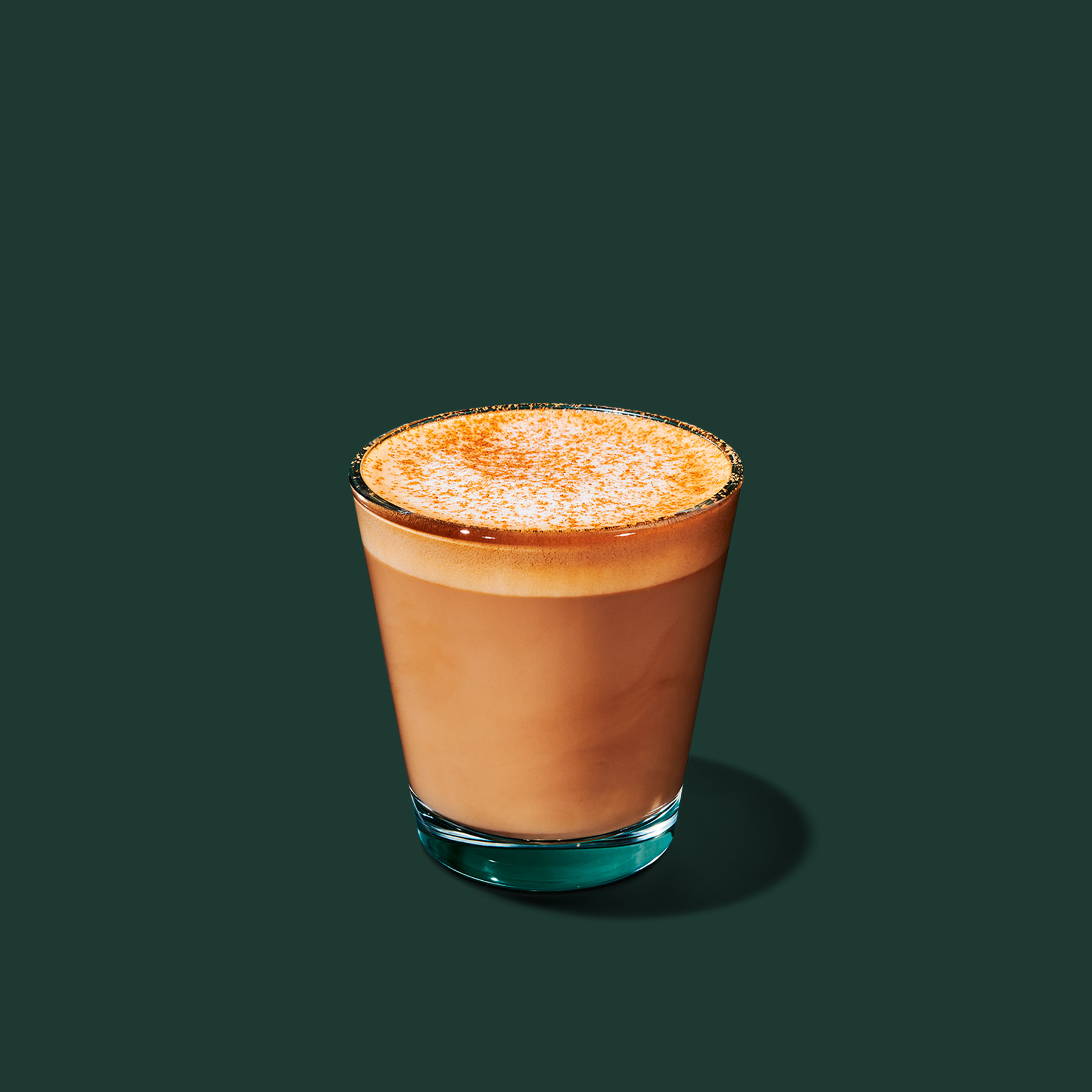
Starbucks built its cortado around three ristretto shots of Blonde Espresso, with an 8-ounce serving. That is the reason to choose it: a compact coffee break, with steamed milk supporting the espresso. It is a different proposition from a large latte you want to sip through a long meeting.
The listed caffeine is approximately 230 milligrams. For someone choosing between this and the Grande shaken espresso below, the hot drink offers a much smaller serving with a fairly similar caffeine dose. Temperature and the proportion of coffee to milk are more useful deciding factors here than cup size alone.
We would choose the cortado when we want hot espresso with some sweetness and warm spice, without a big milky drink. If the pleasure of your usual latte is having plenty of steamed milk, keep the latte format and use nondairy milk instead. There is little advantage in choosing a short, espresso-led recipe and then trying to make it behave like a larger one.
Iced Brown Sugar Oatmilk Shaken Espresso: the iced espresso pick
The Iced Brown Sugar Oatmilk Shaken Espresso uses the same brown sugar and cinnamon direction, with oatmilk and no listed animal ingredient. Starbucks shakes the espresso and flavorings with ice, then adds the milk. A standard Grande lists approximately 255 milligrams of caffeine and 15 grams of sugar.
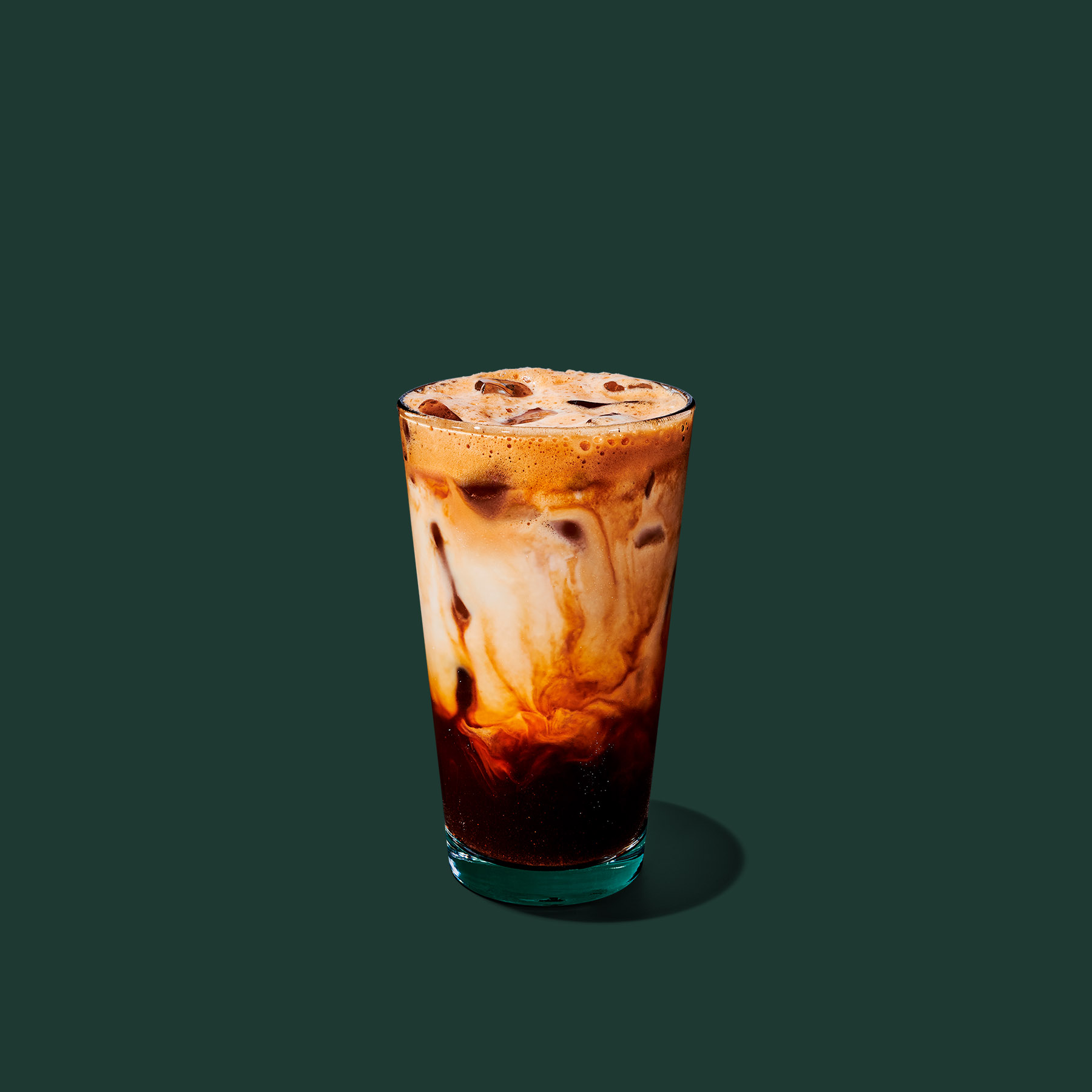
We would choose it over the cortado when we want an iced drink with more volume. The milk is a finish to the shaken coffee, so this is also the more appealing direction if your complaint about flavored iced lattes is that the coffee disappears beneath the milk and syrup.
Reducing the brown sugar syrup is a reasonable preference adjustment if you want less sweetness. It preserves the drink’s basic idea: espresso, oatmilk, and cinnamon. Removing the syrup entirely also removes the ingredient that gives this version its brown-sugar identity, so we would start with a reduction if that flavor is the reason for ordering it.
These two brown-sugar drinks make an especially useful autumn alternative to the pumpkin menu. They offer warm spice without requiring pumpkin sauce. Choose between them for temperature and format; there is no need to treat the iced one as a consolation prize when you would prefer iced coffee anyway.
Nondairy Vanilla Sweet Cream Cold Brew: for vanilla and a creamy finish
The Nondairy Vanilla Sweet Cream Cold Brew combines brewed coffee, ice, vanilla syrup, and nondairy sweet cream. The cream contains both soymilk and oatmilk, with no animal ingredient named in the recipe. A standard Grande lists 13 grams of sugar and approximately 185 milligrams of caffeine.
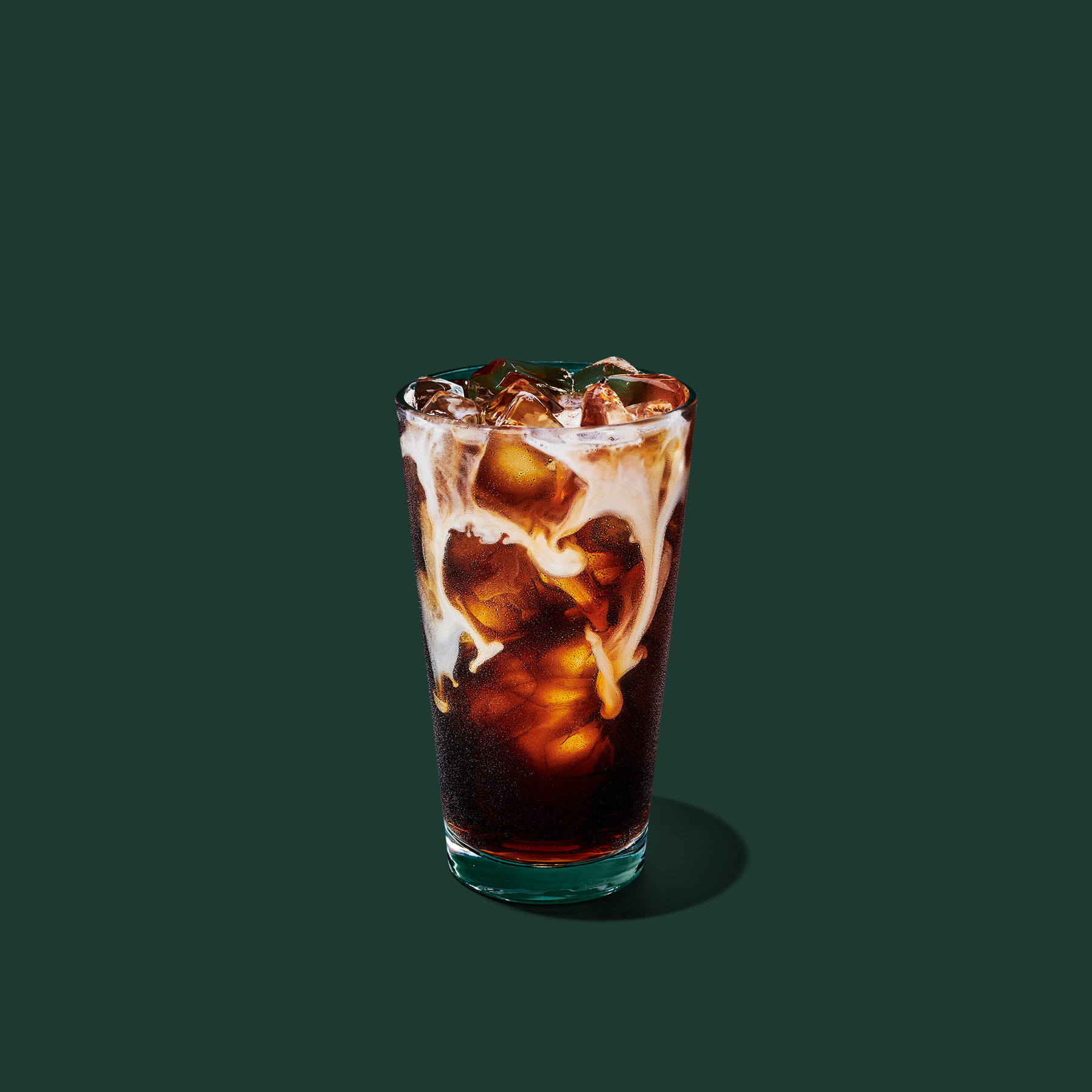
This would be our pick when vanilla and a creamy finish matter more than the brown sugar and spice in the shaken espresso. It also keeps cold brew at the center of the order. You are adding a little richness to coffee rather than choosing a milk-heavy chocolate drink.
There are two distinctions worth keeping. Ordinary vanilla sweet cream contains dairy, while this menu item uses a separate nondairy blend. Nondairy cream also contains soy; someone avoiding soy needs another choice even though the recipe suits an ingredient-based vegan order. Oatmilk in another drink does not imply that every nondairy topping is made only from oats.
For a thicker topping, Starbucks also lists Cold Brew with Nondairy Vanilla Sweet Cream Cold Foam. That is a separate drink, with a foamed topping and a different recipe total. We would stay with the sweet-cream version for coffee with a creamy accent, and choose the foam version when the topping is part of the appeal. Both descriptions are more useful than assuming all cold brew with something pale on top is the same order.
Mango Dream: strawberry, mango, and coconut
Mango Dream is the fruit choice: strawberry açaí base, coconutmilk, mango syrup, ice, and strawberry pieces. The published recipe lists no animal ingredient. Its coconutmilk gives it a different direction from a lemonade Refresher, making it the pick here for someone who wants sweet fruit with a creamy element.
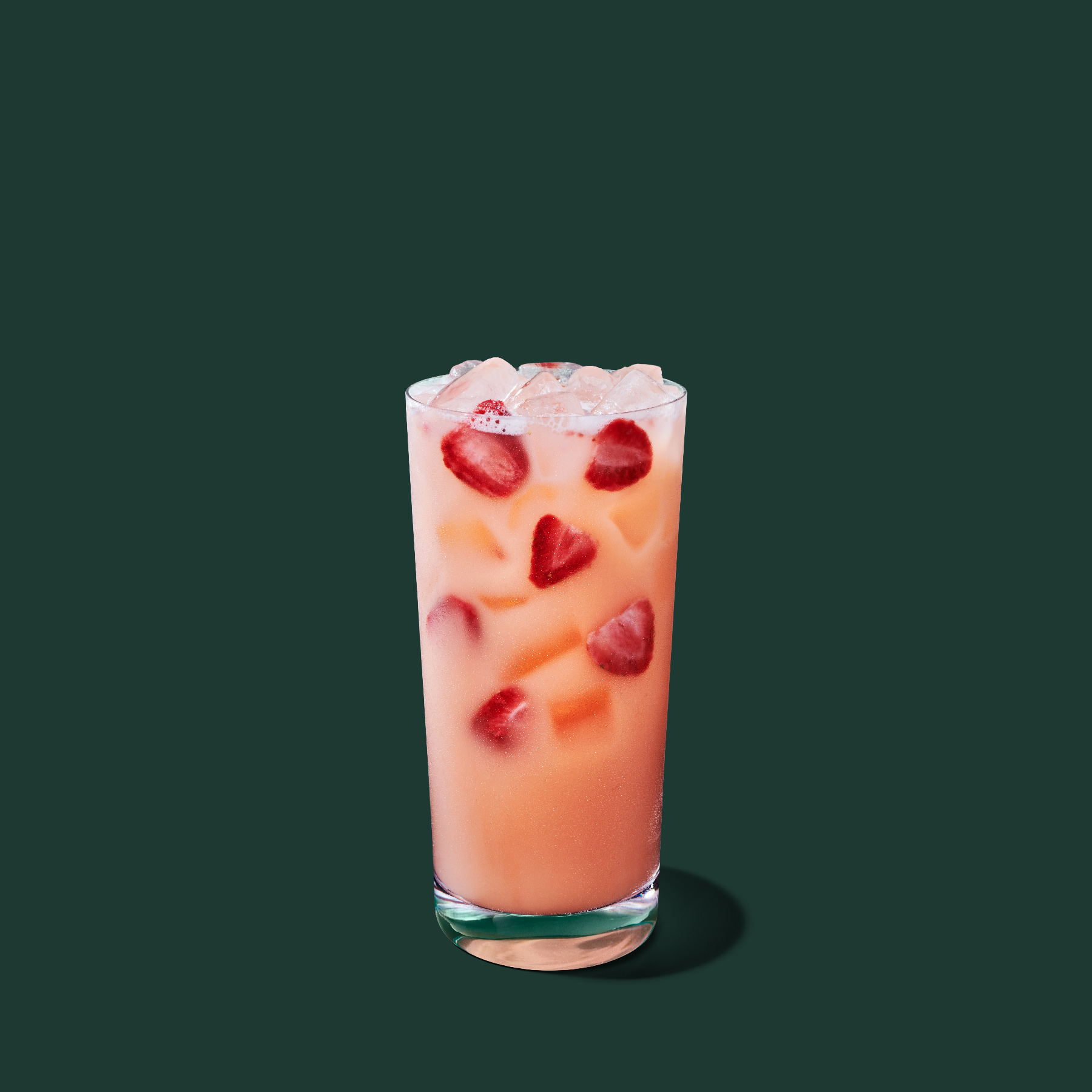
The standard Grande has 32 grams of sugar. We would treat it as a sweet drink to enjoy for its flavor, rather than choose it on the assumption that fruit makes it a lighter alternative to the coffee drinks. Someone who wants very little sweetness would be better served by an unsweetened coffee or tea than by trying to remove most of this drink’s character.
The caffeine choice is more flexible than it used to be. Starbucks’ 2026 Refreshers update offers no caffeine, light caffeine, or Energy versions. The light-caffeine Grande lists about 50 milligrams, while the Mango Dream Energy recipe lists approximately 125 milligrams. That is a meaningful choice for an afternoon drink or for someone who wants fruit without a coffee-sized caffeine dose.
We would choose Mango Dream when coconut is part of what sounds good. If you wanted a sharp, lemonade-style refreshment instead, the creamy version is the wrong format to begin with. The appeal here is the combination of mango, strawberry, and coconut, not its resemblance to any of the espresso options.
Caffè Mocha: keep the chocolate, change the milk and whip
A Caffè Mocha is worth customizing because its central flavor can stay. The hot mocha ingredient list gives the sauce as water, sugar, cocoa, and natural flavor. The dairy ingredients are the milk and whipped cream. Choose oatmilk, or another suitable nondairy milk, and remove the whip.
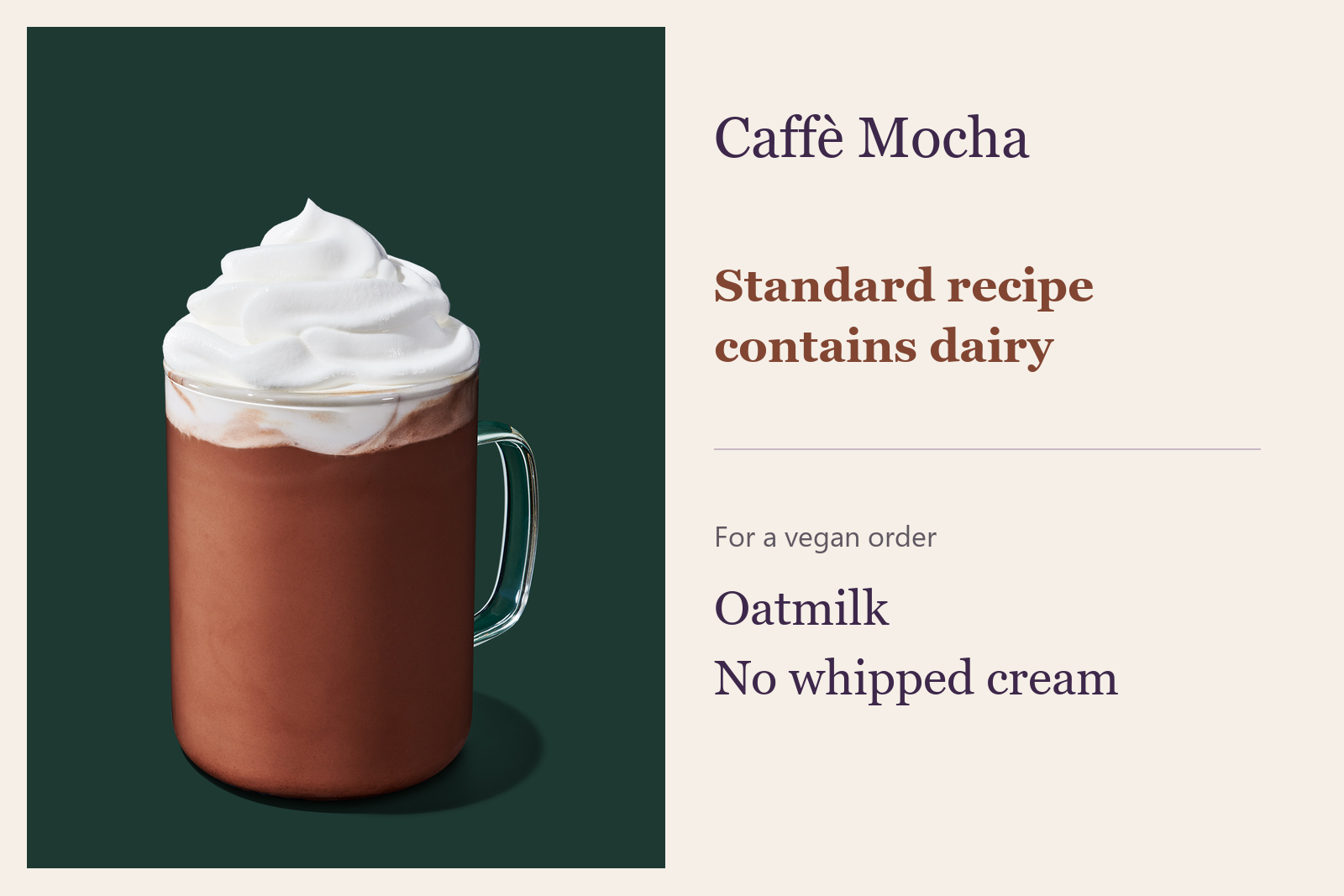
The iced mocha has the same two dairy components to change. Hot or iced, the resulting order is still chocolate and espresso. We would choose it when that combination is the craving, rather than try to make a vanilla cold brew do the work of a chocolate drink.
Oatmilk is our starting suggestion because it keeps this order close to the oat-based coffee choices elsewhere in the guide. If you prefer another plant milk, the chocolate sauce does not require you to use oats. Sweetness can be adjusted through the amount of mocha sauce, though reducing it also makes the drink less chocolate-forward.
This is a useful example of customization that earns its effort. Two changes remove dairy while retaining the main flavor. Compare that with taking pumpkin sauce out of a Pumpkin Spice Latte: once the defining component has gone, ordering a different drink makes more sense.
Vegan food: the Spicy Falafel Pocket earns the first look
The Spicy Falafel Pocket is the savory vegan food choice we would start with. Starbucks fills toasted lavash with falafel, hummus, roasted red pepper, pickled onions, and spicy herb sauce. The whole item carries a vegan label, and its launch identified it as certified vegan. This is a complete recipe rather than a meat-and-cheese sandwich with its fillings removed.
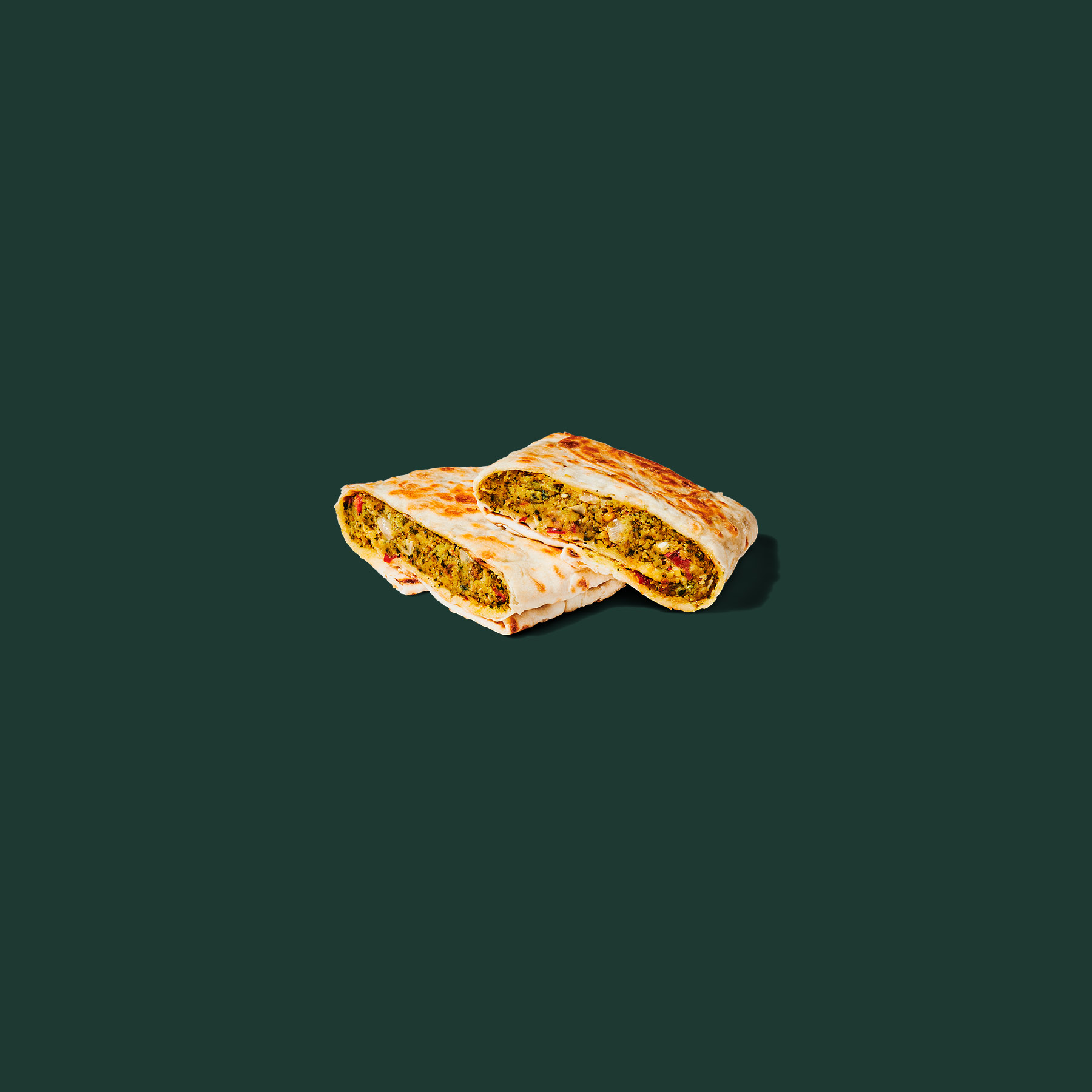
What earns it the first look is the contrast within the filling: creamy hummus, a pickled element, peppers, and herbs alongside the falafel. That is a more interesting basis for a coffee-shop bite than bread carrying one remaining ingredient after several removals. We would choose it with a coffee when we want something savory rather than sweet.
The menu lists it at 230 calories, so we would regard it as a modest bite rather than assume one pocket will meet every lunch appetite. Its appeal is convenience and a ready-made savory filling. If you need a substantial meal, a coffee stop with one small vegan option may still leave you wanting more food.
For a different sort of breakfast, both the Plain Bagel and Everything Bagel carry vegan labels. Pair one with Avocado Spread, made with avocado, lime, onion, garlic, jalapeño, and salt. Leave the separate butter or cream cheese out of that pairing.
We would choose Everything when its garlic, onion, and seed topping is part of the appeal. Plain is the quieter option with a strongly flavored coffee or when you want the avocado to lead. Either gives you a simpler bread-and-spread breakfast than the filled pocket; it does not replace the pocket’s vegetables, hummus, or spice.
The food choice is narrower than the drink choice, and that should shape expectations. There is little value in calling a café a vegan lunch destination because one suitable hot item exists. It can be a useful stop with a satisfying option for a particular appetite. Our How to Eat Well Anywhere guide covers the broader question of finding a meal when a coffee shop’s food case is too limited.
Fall flavors that need a different choice
Pumpkin spice sauce contains milk
The current U.S. Pumpkin Spice Latte recipe contains condensed skim milk within the pumpkin spice sauce. A nondairy milk change and no whipped cream leave that sauce untouched. Removing the sauce removes the pumpkin component, so we would choose another drink rather than call the remaining coffee a vegan PSL.
The dry pumpkin spice topping is different: the recipe lists cinnamon, ginger, nutmeg, and cloves. That distinction makes a spiced coffee possible, but it does not make the pumpkin sauce suitable. Brown sugar and cinnamon in the cortado or shaken espresso offer an autumn flavor direction that already works without dairy.
Starbucks’ fall 2026 menu announcement also describes the Iced Pumpkin Cream Shaken Espresso as oatmilk topped with pumpkin cream cold foam. The oatmilk is only one part of that drink. We would keep the ordinary brown-sugar version above when the goal is a vegan iced espresso order.
The chai concentrate contains honey
Starbucks’ premium chai introduced in March 2026 still contains honey. Classic syrup is added separately, which allows sweetness adjustments without changing the chai blend itself. The current Iced Chai Latte ingredients list honey within the concentrate.
For a vegan who excludes honey, choosing oatmilk or removing classic syrup does not make this a suitable chai. The spice and tea mixture arrives with honey already incorporated. This is a reason to choose a different base drink, not a reason to keep negotiating its milk.
We would choose brown sugar and cinnamon for a warm-spice coffee, or a different tea whose recipe fits. Neither has to imitate chai perfectly. The better order is the one whose actual flavor appeals, without preserving a name after the ingredient that defines it has gone.
Banana bread toppings add more than banana flavor
The fall Banana Bread Latte combines banana syrup with milk, brown sugar cream cold foam, and cinnamon dolce topping. That topping is not simply cinnamon: the Cinnamon Dolce Latte ingredient list identifies butter extract from milk in the topping, while its cinnamon dolce syrup has no listed dairy ingredient.
For a banana-flavored coffee, a plant-milk latte with banana syrup and without the cream foam or cinnamon dolce topping is a more reasonable direction than keeping the standard finish. The syrup lists no animal ingredient. It will be a simpler drink; do not expect removing two toppings to reproduce the original dessert-like texture.
The Iced Banana Bread Chai recipe adds honey-containing chai to those dairy components. Removing its dairy would still leave honey. We would skip that version rather than turn it into an elaborate approximation of a drink whose base recipe does not suit us.
Protein cold foam uses whey
Starbucks’ protein-drink information identifies whey from cow’s milk in its protein additions. Protein-boosted milk always combines dairy milk and whey; Starbucks says it cannot be made with a different milk. Protein cold foam also uses whey.
These additions do not belong on a vegan Starbucks order. A nondairy coffee can become unsuitable when dairy protein foam is added, even if the coffee underneath stays the same. Choose the nondairy cream option for a creamy finish rather than treating the word “protein” as a sign of plant ingredients.
Choose nondairy milk for the drink you want
Starbucks offers soy, oat, almond, and coconut milk, and removed the extra charge for nondairy substitutions at company-operated U.S. stores. Its 2026 customization guidance continues to describe that policy. The company-operated scope matters: it is not a promise about the pricing of every licensed café inside another business.
For these picks, we would begin with the milk the suitable standard recipe already uses. Oatmilk is part of both brown-sugar coffees, while coconutmilk helps define Mango Dream. A substitution is still a preference you can make, but it changes what attracted you to that recipe.
Sweetness deserves the same distinction. Less vanilla syrup can make sense in cold brew when you want coffee to lead. Less mocha sauce also means less chocolate, and less mango syrup changes the fruit balance. Make the change for a flavor you prefer, rather than assuming every drink improves when reduced to the same coffee-and-milk formula.
Sauce, syrup, cream, and topping are separate ingredients with separate jobs. For example, the Caramel Frappuccino ingredient list names no animal ingredient in caramel syrup, while its caramel sauce contains butter, cream, and milk powder. Caramel syrup can provide a flavor that dairy caramel drizzle cannot. Our Hidden Animal Ingredients guide explores similar distinctions beyond this menu.
One preparation limit matters for allergies: Starbucks uses shared equipment and does not guarantee its unpackaged café items are allergen-free. Its beverage and allergen guidance also distinguishes drinks made without animal ingredients from certified-vegan beverages. An ingredient-based vegan choice is not an allergy-safety guarantee; an allergy requires a separate discussion about ingredients and preparation.
What we would choose for this stop
For a hot coffee and a savory bite, we would start with the cortado and falafel pocket. Both offer a complete existing recipe, and the small coffee format suits a short break. If you want a larger, milk-led hot drink, the customized mocha is the more natural direction.
For iced coffee, the choice is between brown sugar and cinnamon in shaken espresso or vanilla with nondairy cream in cold brew. We would pick the former when the espresso and spice are the attraction, and the latter when we want vanilla and a creamy finish. A preference for chocolate points straight to the iced mocha with its two dairy changes.
Mango Dream earns a separate place for fruit and coconut. It does not need to compete with coffee on coffee’s terms. Choose it when that flavor combination sounds better, with the caffeine option that fits the stop. For food, the bagel-and-avocado pairing is a useful breakfast alternative when the filled pocket is more than, or different from, what you want.
Conclusion: choose the flavor you can keep
A good vegan Starbucks order retains the part you wanted. Oatmilk already belongs in the brown-sugar coffees, nondairy sweet cream gives cold brew its creamy finish, and a mocha can keep its chocolate after two dairy changes. The falafel pocket offers a complete savory vegan food recipe.
Pumpkin spice sauce and honey-containing chai ask for a different decision because the animal ingredient is built into the defining component. We would choose a drink we want as it comes, or with a worthwhile adjustment, instead of preserving a seasonal name through a long series of removals.
For more everyday vegan choices, subscribe for new posts, seasonal guides, smart finds, and a free copy of The Things Nobody Tells You.
FAQ
Can you make a Pumpkin Spice Latte vegan in the U.S.?
The current U.S. pumpkin spice sauce contains condensed skim milk, so the drink cannot keep that sauce and become vegan through a milk substitution. Removing whipped cream is also insufficient. The dry spice topping is a separate component without milk in its listed ingredients. For coffee with an autumn spice direction, we would choose brown sugar and cinnamon rather than remove the pumpkin sauce and present the remaining drink as a PSL.
Is Starbucks caramel syrup vegan?
The current caramel syrup ingredient list names no animal-derived ingredient. Caramel sauce is different: its recipe includes butter, cream, and milk powder. A drink using syrup and a dairy caramel drizzle therefore has two separate components to consider. This distinction is useful for choosing a caramel-flavored coffee, but it does not make every caramel drink suitable or turn sauce into something that a plant-milk substitution can change.
Is nondairy sweet cream the same as nondairy cold foam?
They are different preparations and separate menu choices. The Nondairy Vanilla Sweet Cream Cold Brew uses a cream addition, while the cold-foam version has a foamed topping and its own recipe total. The nondairy cream includes both oatmilk and soymilk. We would choose between them for the finish we want, and use a different option if avoiding soy. Ordinary dairy sweet cream and whey-based protein foam are separate again.
What vegan food would you order at Starbucks?
The Spicy Falafel Pocket is our first savory pick because the whole item is vegan and its filling includes falafel, hummus, vegetables, and herb sauce. It is a modest portion rather than a guarantee of a substantial lunch. A Plain or Everything Bagel with avocado spread is a simpler breakfast or snack. Butter and cream cheese are separate additions to leave out of that pairing.
Does nondairy milk cost extra?
Starbucks removed the nondairy-milk surcharge at company-operated U.S. stores. That policy does not establish the price at every licensed location, and other changes can still affect a drink’s cost. For the standard oatmilk and coconutmilk drinks in this guide, plant milk is already part of the recipe. The mocha is the featured drink that needs a base-milk change, along with removal of whipped cream.