The Vegan Pantry That Makes Dinner Feel Expensive
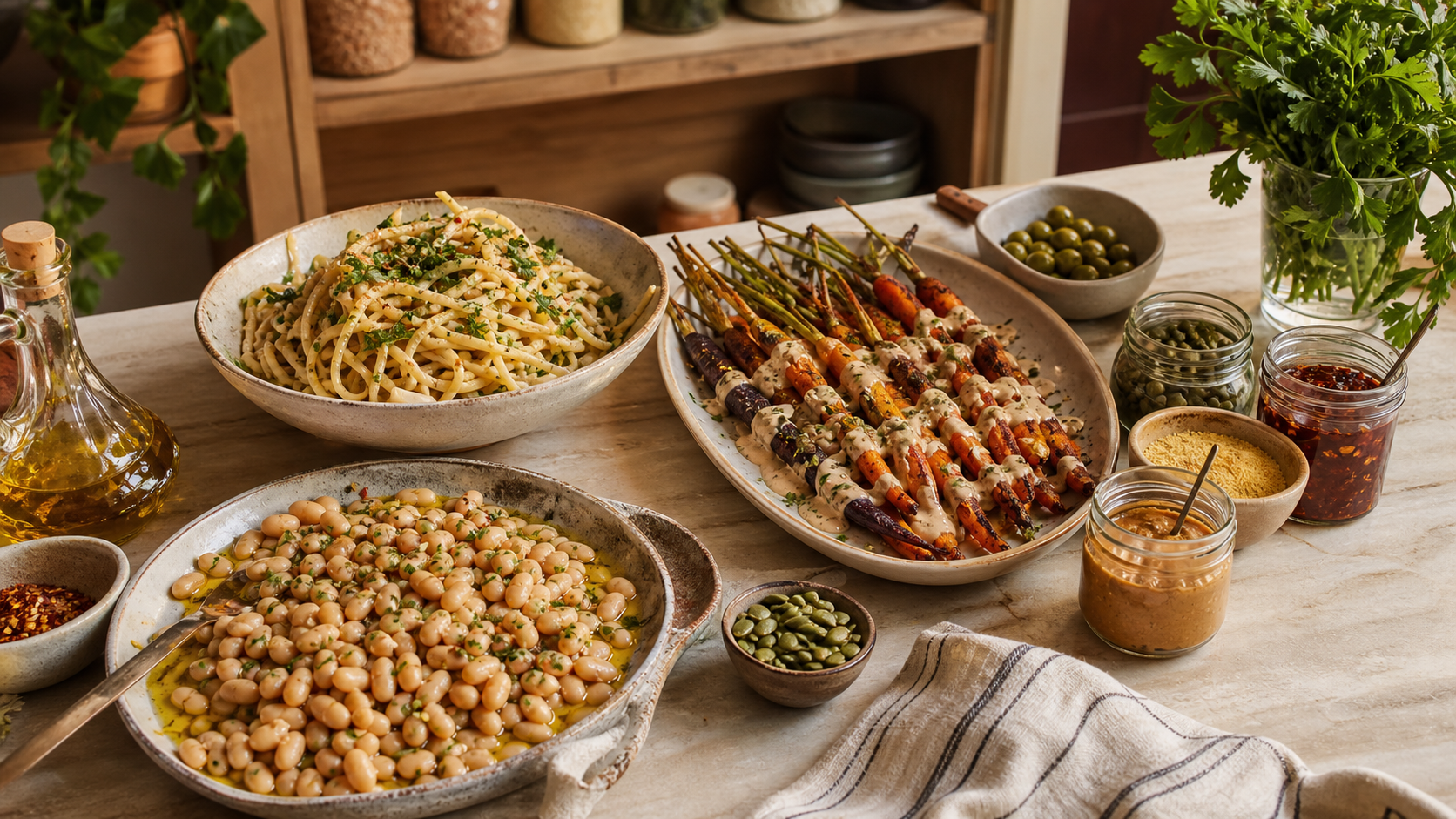
Some dinners feel expensive before you even sit down. Not because they required a reservation, and not because the ingredients were especially rare. It is the shine on the beans, the spoonful of something briny tucked into pasta, the sesame sauce that drapes over roasted carrots, the chile oil that stains a bowl of rice red at the edges. It is the feeling that someone finished the plate.
That is the quiet luxury of a good vegan pantry. It turns the practical dinner, the can of chickpeas, the rice you already made, the frozen broccoli, the half box of pasta, into something with shape. The pantry trick is not owning every jar in the international aisle. It is keeping a few high-impact ingredients that give dinner depth, gloss, acidity, heat, brine, and crunch.
If your vegan dinners sometimes taste earnest but unfinished, this is the pantry to build. Start small, use the jars often, and let ordinary food become a little more dressed.
Key Takeaways
- Expensive-tasting vegan dinners usually come from six pantry moves: savoriness, gloss, acidity, heat, brine, and texture.
- The best vegan pantry ingredients work across many meals, not just one recipe.
- Beans, lentils, rice, pasta, potatoes, toast, and frozen vegetables can become polished dinners when the finish is right.
- Miso, tahini, olive oil, vinegar, nutritional yeast, capers, chili crisp, tomato paste, and crunchy toppings are more useful than a crowded shelf of novelty sauces.
- Buy slowly and keep the ingredients visible enough that you actually use them.
The Expensive Feeling Is Mostly Finish
A vegan pantry starts to feel powerful when you stop thinking of it as backup food and start thinking of it as a finishing kit. Dinner does not need to begin with a special recipe. It can begin with something plain and become interesting in the last five minutes.
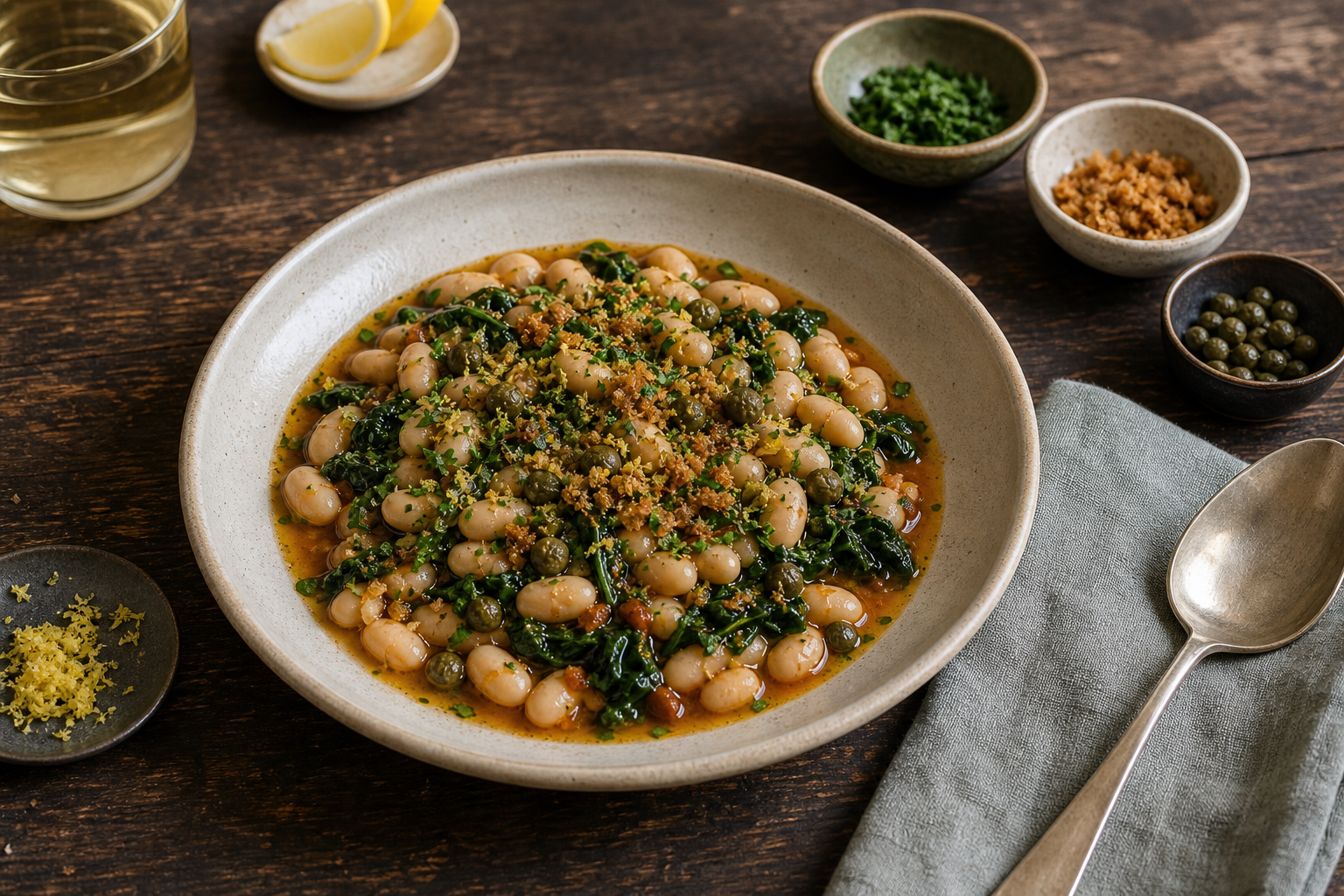
White beans with olive oil, sherry vinegar, capers, and toasted breadcrumbs feel like dinner. Pasta with tomato paste, miso, chile flakes, and nutritional yeast feels rounder than pasta with red sauce alone. Roasted vegetables with tahini, lemon, and smoked paprika feel composed enough for a platter. Rice with chili crisp, cucumber, sesame, and rice vinegar becomes a bowl with personality.
That is the useful vegan dinner pattern: no apology, no pile of substitutes, just clear flavor architecture. Something savory. Something rich. Something sharp. Something bright or hot. Something with crunch. For more everyday vegan cooking, start in the Eat room.
The useful pantry is not enormous. In fact, an enormous pantry can make weeknight cooking feel more chaotic. You want the ingredients you reach for without thinking: the jar of miso that makes broth taste deeper, the tahini that turns into sauce with water and lemon, the vinegar that wakes up lentils, the olives that make a tomato pasta feel less flat.
The point is to build a small shelf of ingredients that do a lot of work. Each one should earn its space. If a jar cannot improve beans, pasta, rice, vegetables, or toast, it may not belong in the front row.
Build the Savory Shelf First
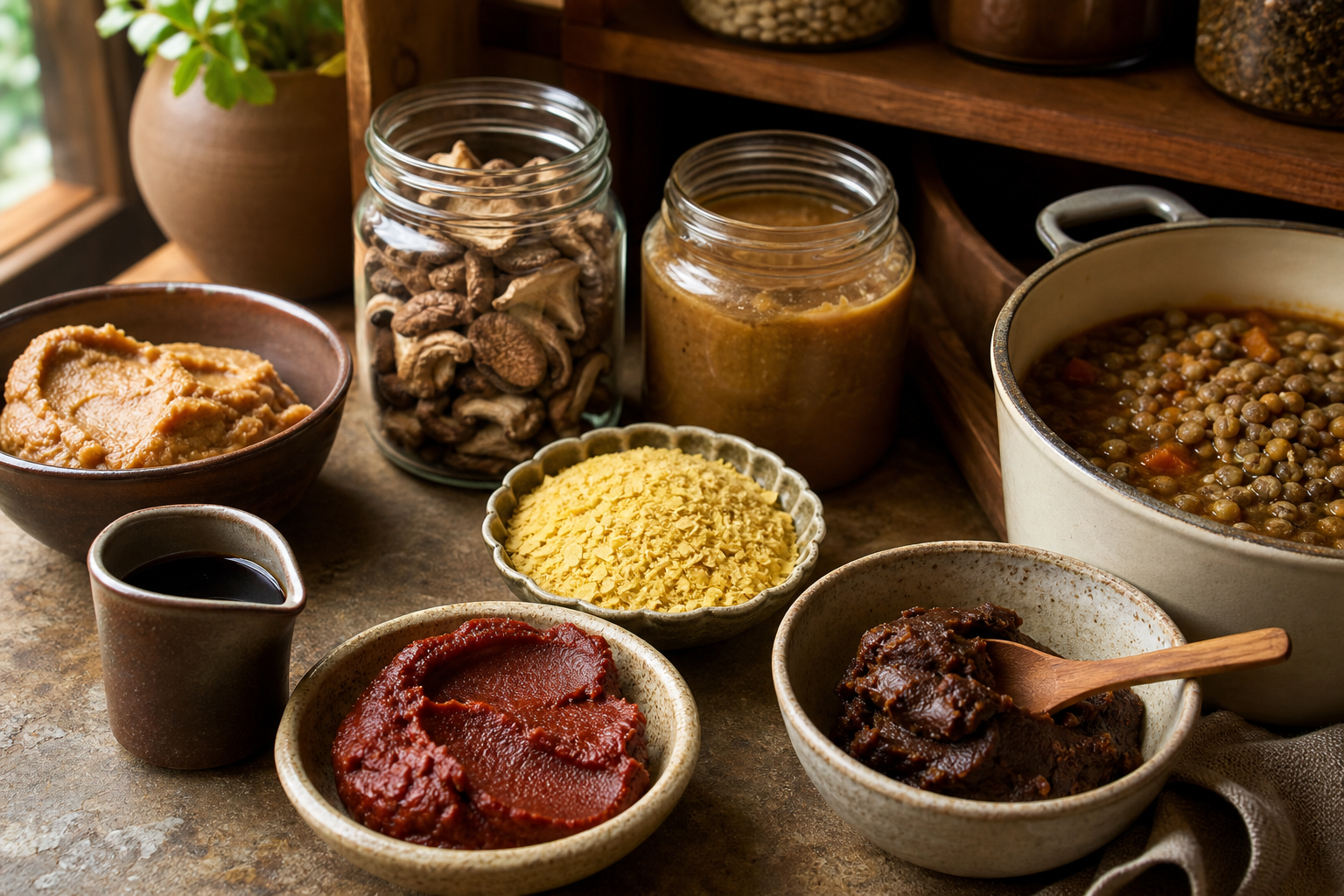
The first pantry shelf to build is the savory one, because vegan dinners often need depth before they need more toppings. Miso, tamari or soy sauce, tomato paste, dried mushrooms, nutritional yeast, and a good vegan bouillon can make simple food taste as though it simmered longer than it did.
This is not just a mood. The Umami Information Center explains that glutamate appears naturally in foods such as tomatoes, garlic, onions, soy sauce, miso, potatoes, broccoli, and dried tomatoes, while guanylate is found in mushrooms including dried shiitake on its umami foods guide. That is the science behind why a spoonful of miso, a splash of tamari, or a little dried mushroom powder can make a vegan dinner feel deeper without making it heavier.
Miso is the elegant one. Keep a tub in the refrigerator and use it like a savory paste rather than a soup-only ingredient. Whisk it into tahini dressing. Stir a little into tomato sauce after the heat is lowered. Mash it with softened vegan butter for corn, potatoes, or toast. Add it to brothy beans when the pot is off the boil so the flavor stays round.
Tamari or soy sauce is the quick-darkening move. A few drops in mushrooms, lentils, gravy, fried rice, or soup can make the dish taste less thin. It does not need to announce itself. In many dinners, the right amount is the amount no one can identify.
Tomato paste is the pantry ingredient that behaves like it has been waiting to be taken seriously. Bloom it in olive oil until it darkens slightly, then add beans, canned tomatoes, lentils, pasta water, or broth. It gives red sauces a cooked-all-afternoon feeling, even when dinner started twenty minutes ago.
Dried mushrooms are for the nights when you want depth without chopping a lot of fresh vegetables. Soak them in hot water, strain the soaking liquid if there is grit, then use the liquid in soup, risotto, beans, or noodles. Chop the softened mushrooms and fold them back in. A small amount can make a pot of lentils feel quieter and more expensive.
Nutritional yeast is often treated like a cheese substitute, but it is more useful than that. The Vegan Society notes that fortified nutritional yeast is one way many vegans increase B12 intake, while also emphasizing that fortified foods and supplements are the only reliable vegan B12 sources on its vitamin B12 guidance. For dinner, think of nutritional yeast as a savory finishing dust. It is lovely on mushrooms, popcorn, beans, greens, rice, and breadcrumbs. If you are buying it for B12, check the label to confirm it is fortified.
For more help making vegan flavor feel full rather than improvised, use Make It Taste Incredible.
Keep One Beautiful Fat for Gloss
The second pantry shelf is about richness. Expensive-tasting food usually has gloss. It catches light. It coats the spoon. It makes vegetables feel less austere and beans feel less like homework.
Olive oil is the easiest place to begin. You do not need the rarest bottle in the shop, but you do need one you enjoy enough to taste. Use everyday olive oil for cooking and a more fragrant bottle for finishing. Drizzle it over beans, lentils, tomato toast, soup, roasted peppers, or warm potatoes. Real Simple, citing storage advice from food experts, notes that heat, light, air, and time can degrade cooking oil quality and recommends storing oils in a cool, dark, dry place away from heat and direct sunlight in its guide to storing cooking oil. That means the bottle looks romantic next to the stove, but it is happier in a cabinet.
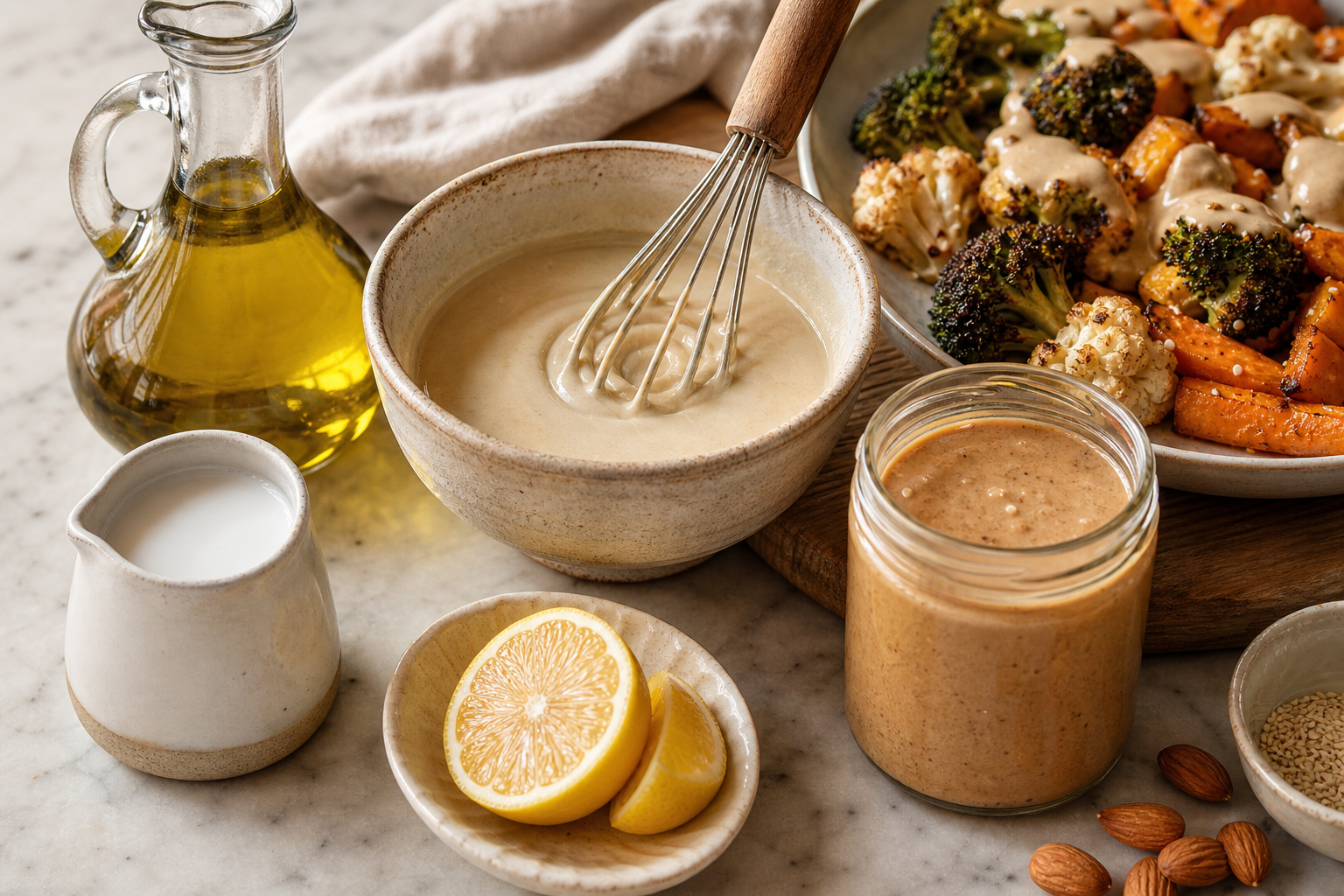
Tahini is the creamy one. It is sesame paste, and it has the rare ability to make a vegan sauce feel plush without tasting like a dairy imitation. Simply Recipes describes tahini as a paste that can be thinned with water into a cream-like ingredient for salads, soups, and mac and cheese in its vegan pantry guide. For the weeknight version, whisk tahini with lemon juice, water, salt, and a little garlic. It will seize at first, then loosen into a smooth sauce. Add miso if you want more depth. Add maple or agave if the dish needs softness. Add chile if dinner needs a pulse.
Soom describes its tahini as silky-smooth and useful across sweet and savory cooking on its tahini collection page, which is exactly the quality to look for. A pourable tahini can become dressing, dip, drizzle, noodle sauce, toast spread, or the creamy base for a potato salad that does not need mayonnaise.
Coconut milk is the pantry richness for lentils, rice, chickpeas, and quick vegetable curries. Keep one or two cans, not a tower. It is best when it has a job: softening tomato, rounding spice, or making a brothy dinner feel more lush. Coconut milk with red lentils, tomato paste, garlic, ginger, and chile flakes is the kind of dinner that tastes more considered than the effort suggests.
Nut and seed butters are also sauce architecture. Peanut butter with soy sauce, rice vinegar, chile, and water becomes a noodle sauce. Almond butter can enrich a soup. Sunflower seed butter can make a creamy dressing without nuts. The guiding question is simple: can this fat turn a dry or plain base into something that coats the fork?
Add Brine So Dinner Does Not Taste Flat
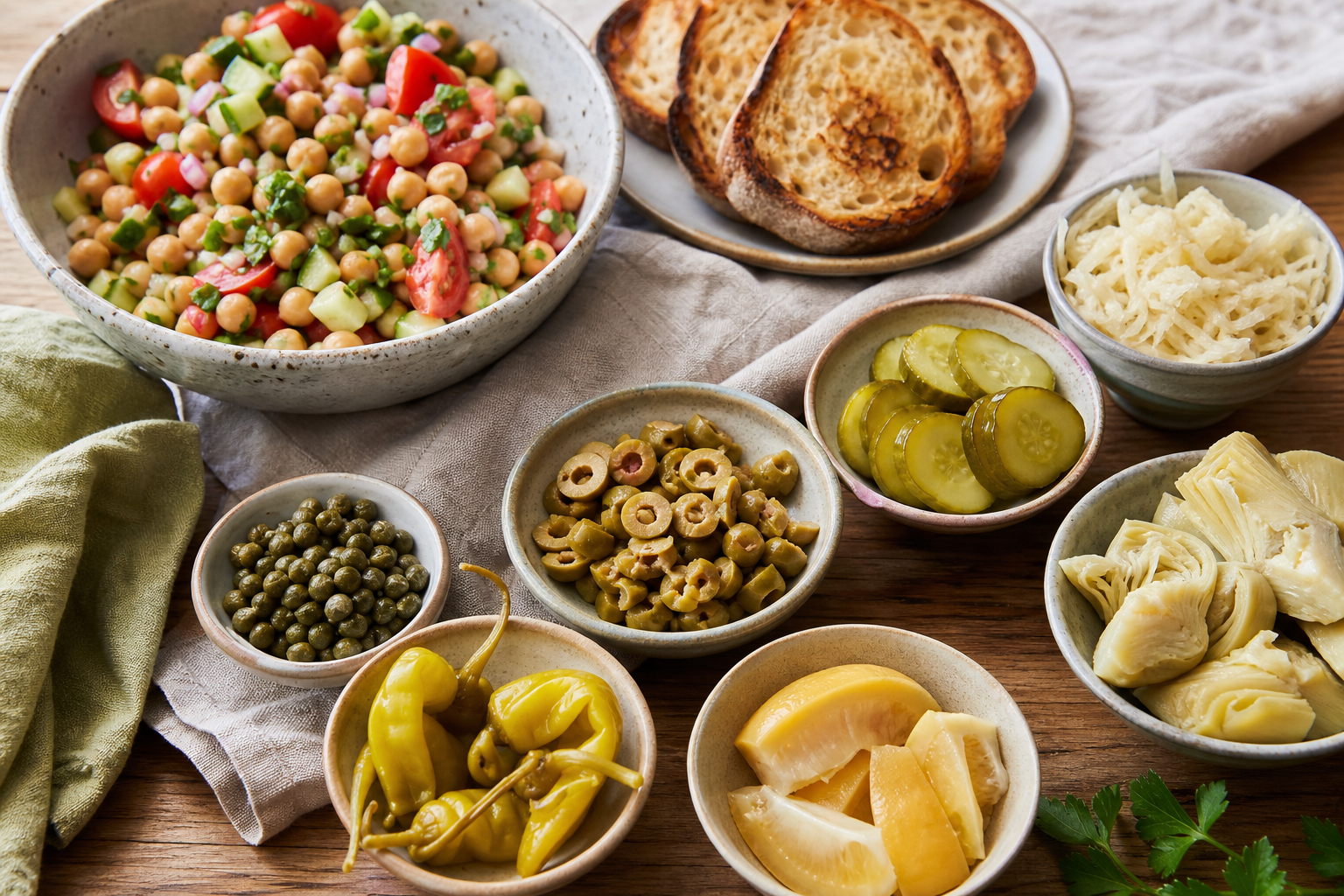
Briny pantry ingredients make food feel awake. They are the reason a simple pasta suddenly tastes like it came from a kitchen with opinions. Capers, olives, pickles, pepperoncini, artichokes, sauerkraut, and preserved lemon all do a similar kind of work: they interrupt softness.
Capers are tiny, but they carry a lot of drama. Chop them with parsley, lemon zest, and olive oil for a fast relish. Fry them briefly in oil until they open and scatter them over cauliflower, pasta, or potatoes. Stir them into white beans with garlic and vinegar. They make quiet food taste like it has a destination.
Olives are more generous and more visible. A handful of chopped green olives can rescue canned tomatoes. Kalamatas make lentils feel darker and richer. Castelvetrano olives, if you like them, bring a buttery feeling without butter. The only real rule is to chop them. Whole olives can feel like snacks sitting on top of dinner, while chopped olives become seasoning.
Pickles and pepperoncini are pantry brightness with crunch. They belong in chickpea salads, potato salads, grain bowls, sandwiches, and chopped salads. Pickle brine is a useful dressing ingredient, especially when whisked with mustard and olive oil. If a bowl of potatoes tastes too soft, pickle brine knows what to do.
Fermented vegetables can be excellent, but this is where label reading matters. Some kimchi includes fish sauce, shrimp, or other seafood ingredients, while some brands are fully vegan. When in doubt, use the method in Is It Vegan? How to Actually Know: read the ingredient list, look for clear vegan labeling when available, and recheck if the product changes.
Artichokes are the dinner-party jar. They make pasta, toast, salads, and white beans feel more abundant. Preserved lemon, if you have it, is even more specific: salty, citrusy, fragrant, and intense. A little chopped preserved lemon can make couscous, lentils, roasted carrots, or tahini sauce feel deliberate.
Brine is also the easiest way to avoid the most common vegan dinner problem: everything tastes soft. Beans are soft. Rice is soft. Roasted vegetables can be soft. Sauces are soft. A spoonful of capers or pickles adds edges.
Choose Heat With Personality
Pantry heat is not only about spice level. It can be smoky, floral, numbing, oily, fruity, crisp, or slow. The vegan pantry gets more interesting when you keep heat with personality instead of relying on one bottle of hot sauce for everything.
Chili crisp is the most efficient example because it brings heat, oil, crunch, and savoriness in one spoonful. Fly By Jing describes its Original Sichuan Chili Crisp as vegan and lists ingredients including dried chili pepper, preserved black bean, garlic, sesame oil, mushroom powder, Sichuan pepper, and seaweed powder on the Original Sichuan Chili Crisp page. That ingredient list also shows why labels matter for allergens and preferences: this one contains soy and sesame.
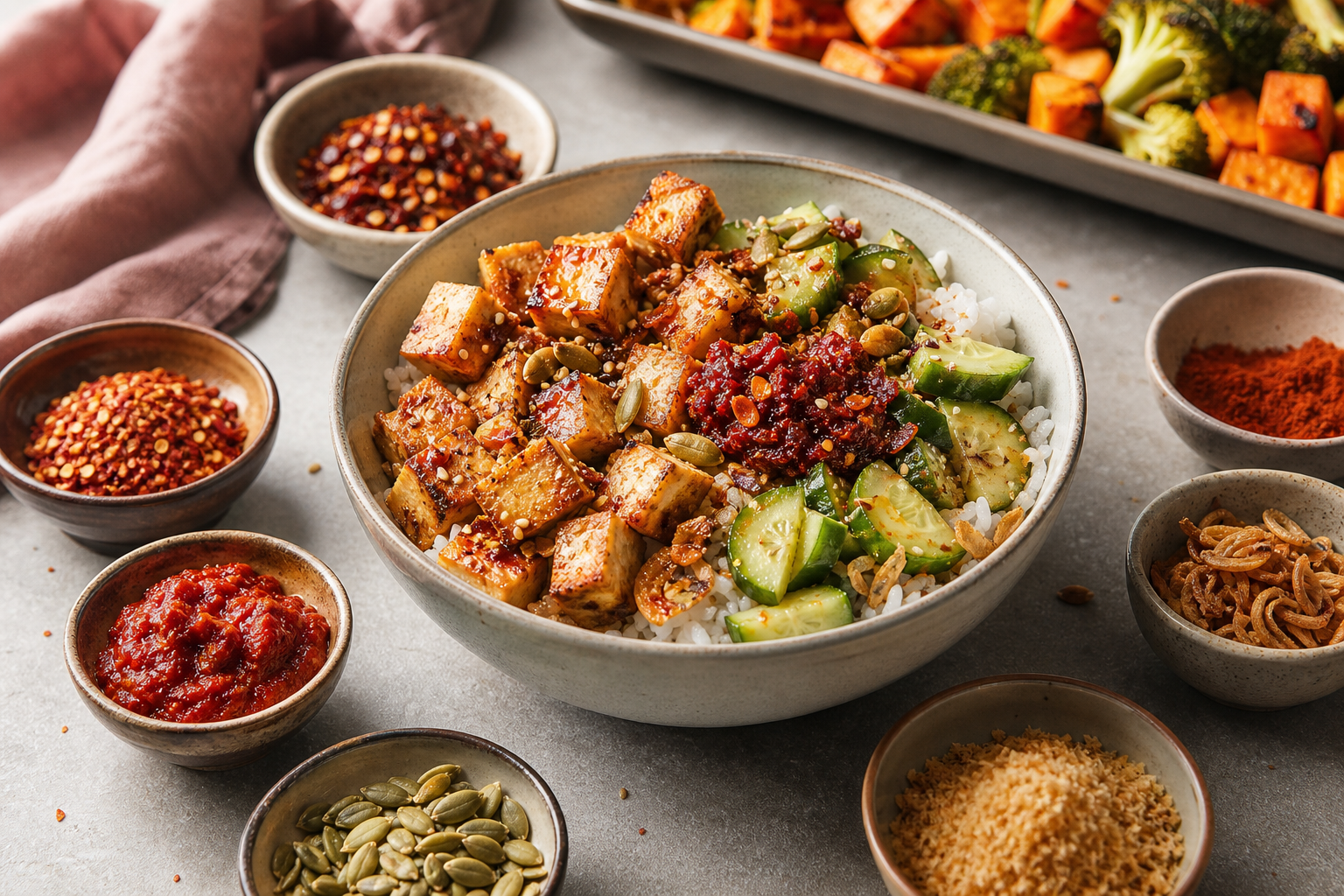
Use chili crisp on rice, noodles, tofu, roasted broccoli, cucumbers, potatoes, dumplings, and soups. It is especially good when the rest of dinner is plain. A bowl of rice with steamed vegetables and tofu can feel unfinished until the spoon hits the jar.
Harissa is warmer and more stew-friendly. Stir it into lentils, chickpeas, tomato sauce, roasted carrots, or coconut milk. It gives a dish a red, spiced depth that feels generous. Calabrian chile paste is brighter and more Italian-leaning. It belongs in pasta, white beans, tomato toast, and roasted vegetables.
Smoked paprika is the quiet pantry hero when you want depth without adding wet sauce. Bloom it in oil before adding chickpeas or potatoes. Stir it into breadcrumbs. Add it to tomato paste. It gives a campfire edge to dinners that might otherwise taste too clean.
Chile flakes still matter. They are simple, but they become better when warmed in olive oil with garlic. Pour that over beans, pasta, greens, or bread. It is a small thing, but it creates the feeling that dinner has been finished by hand.
Keep Acid Where You Can Reach It
Pantry acid is the correction that makes rich food taste polished instead of heavy. If a vegan dinner tastes dull, it may not need more salt. It may need vinegar, lemon, lime, or brine.
Sherry vinegar is beautiful with beans, mushrooms, and roasted vegetables. Rice vinegar is softer and excellent with cucumbers, tofu, noodles, and sesame sauces. Balsamic is useful with lentils, tomatoes, onions, and roasted squash. Apple cider vinegar works well in slaws, potato salad, and quick dressings. Lemon belongs almost everywhere tahini goes.
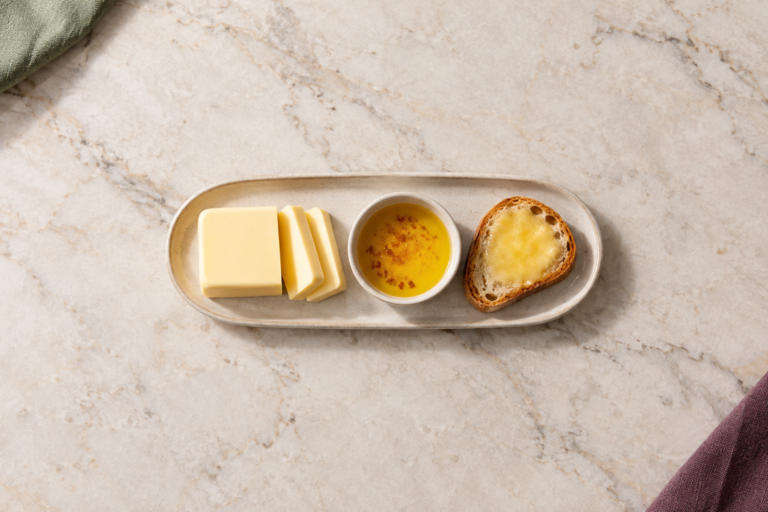
Keep the acid visible. If the vinegars are hidden behind baking supplies, you will forget them. A small tray with olive oil, one everyday vinegar, flaky salt, and chile flakes can change how often you finish dinner properly.
The best time to add acid is often at the end. Beans simmered with vinegar too early can taste muddled, while beans finished with vinegar taste lifted. Tahini without lemon can feel heavy, while tahini with lemon feels clean. Coconut milk with lime tastes brighter. Lentils with sherry vinegar taste more adult.
Pickle brine counts. Olive brine counts. The liquid from pepperoncini counts. These are not waste products. They are sharp, salty pantry tools. Use a spoonful in dressing before reaching for another bottle.
Texture Is the Dinner-Party Trick
Pantry texture makes dinner feel intentional. It is also the pantry category people forget until the plate is already on the table. Keep a few crunchy things and your food will look and taste more finished.
Breadcrumbs are the most versatile. Toast panko or fresh breadcrumbs in olive oil with garlic, smoked paprika, nutritional yeast, or lemon zest. Scatter them over pasta, beans, roasted cauliflower, soups, or greens. Suddenly the dish has a top note.
Nuts and seeds are the faster version. Toasted almonds, walnuts, pistachios, pumpkin seeds, sunflower seeds, sesame seeds, and hemp seeds all add texture. They also make a simple vegetable dish feel less bare. Roasted carrots with tahini and pistachios are a different dinner from roasted carrots alone.
Crispy onions or shallots are worth keeping if you use them often. They can finish rice bowls, green beans, soups, mashed potatoes, and salads. Check labels, since some packaged crispy toppings include dairy or are fried in shared facilities, depending on the brand.
Roasted chickpeas are useful when you want crunch with more substance. Make them from canned chickpeas if you have time, or keep a bag if you genuinely eat them. They are good on salads, soups, and bowls, especially with lemony dressing.
Even crushed chips or crackers can be elegant in the right context. Tortilla chips over black bean soup, potato chips beside a chickpea salad sandwich, seeded crackers crushed over tomato soup. The point is not fuss. The point is contrast.
The Base Ingredients That Let the Pantry Work
The expensive vegan pantry only works if the base ingredients are humble. Otherwise it becomes a lifestyle performance, and nobody needs that at 7:30 on a Tuesday.
Beans and lentils are the center. The current Dietary Guidelines for Americans name beans, peas, lentils, legumes, nuts, seeds, and soy as plant-sourced protein foods, which matches the way a good vegan pantry works: they can carry dinner. Keep canned chickpeas, white beans, black beans, and lentils if you use them. Keep dried lentils because they cook quickly. Keep one special bean if it makes you excited to cook.
Pasta is the easy canvas. A box of rigatoni with tomato paste, miso, chile flakes, olive oil, and nutritional yeast can feel like a restaurant pasta without cream. Smaller shapes are good with beans and greens. Long noodles are good with tahini, peanut sauce, chili crisp, and sesame.
Rice is the quiet base that loves contrast. It wants something oily, something sharp, and something crunchy. Chili crisp, cucumbers, tofu, sesame seeds, rice vinegar, and scallions can do a lot. So can lentils, pickles, tahini, and herbs.
Potatoes are more elegant than they get credit for. Boiled potatoes with olive oil, vinegar, capers, herbs, and mustard are beautiful. Baked potatoes with tahini sauce, chile oil, scallions, and pickles are a full dinner. Roasted potatoes with smoked paprika and a lemony dressing do not need much else.
Bread is dinner infrastructure. Toast with white beans and olive oil. Toast with mushrooms and nutritional yeast. Toast with tomato, chile, and good salt. Toast with tahini, roasted carrots, and herbs. A good vegan pantry makes toast feel like a choice.
Frozen vegetables belong here too. They are not glamorous in the bag, but peas, spinach, broccoli, corn, and mixed vegetables become useful when the pantry is strong. Peas with olive oil, lemon, and mint. Broccoli with chili crisp and sesame. Spinach folded into coconut lentils. Corn with smoked paprika and lime.
For the steadier version of this shelf, use The Pantry We Cook From as the backbone.
What to Buy First
The mistake is trying to build the whole pantry in one grocery trip. That is how you end up with six jars you admire and never open. Build in tiers instead.
Start with the small pantry. Buy olive oil, miso, tahini, capers or olives, one vinegar you like, nutritional yeast, and one heat source such as chili crisp, smoked paprika, or chile flakes. With that alone, you can make beans, pasta, vegetables, rice, toast, and potatoes taste more finished.
The small pantry is for nights when dinner needs to improve immediately. White beans get olive oil, vinegar, capers, and nutritional yeast. Roasted broccoli gets tahini, lemon, and chile. Pasta gets miso, tomato paste if you already have it, olive oil, and nutritional yeast. Potatoes get tahini sauce and pickles.
The weeknight pantry adds tomato paste, dried mushrooms, coconut milk, pickles or pepperoncini, toasted seeds, and a vegan broth concentrate. Now you can make deeper soups, faster lentils, better grain bowls, and more interesting pasta. This is the level where dinner stops feeling like a collection of sides.
The dinner-party pantry adds preserved lemon, good toasted nuts, artichokes, harissa or Calabrian chile paste, one excellent vinegar, and a pasta shape you love. These are not emergency ingredients. They are the things that make a simple meal feel hosted.
Do not buy all three tiers at once. Buy the small pantry, cook with it for two weeks, and notice what you reach for. If you keep making tahini sauce, buy better tahini. If you keep adding capers to everything, buy the larger jar. If chili crisp sits unopened, you do not need three more chile condiments.
The expensive-feeling pantry is personal. It should reflect the dinners you actually make, not the dinners you imagine for a person with more counter space and a calmer evening.
How to Turn the Pantry Into Dinner
Once the shelves are built, dinner gets easier because you are not starting from zero. You are assembling a base, a sauce, a sharp thing, and a finish.
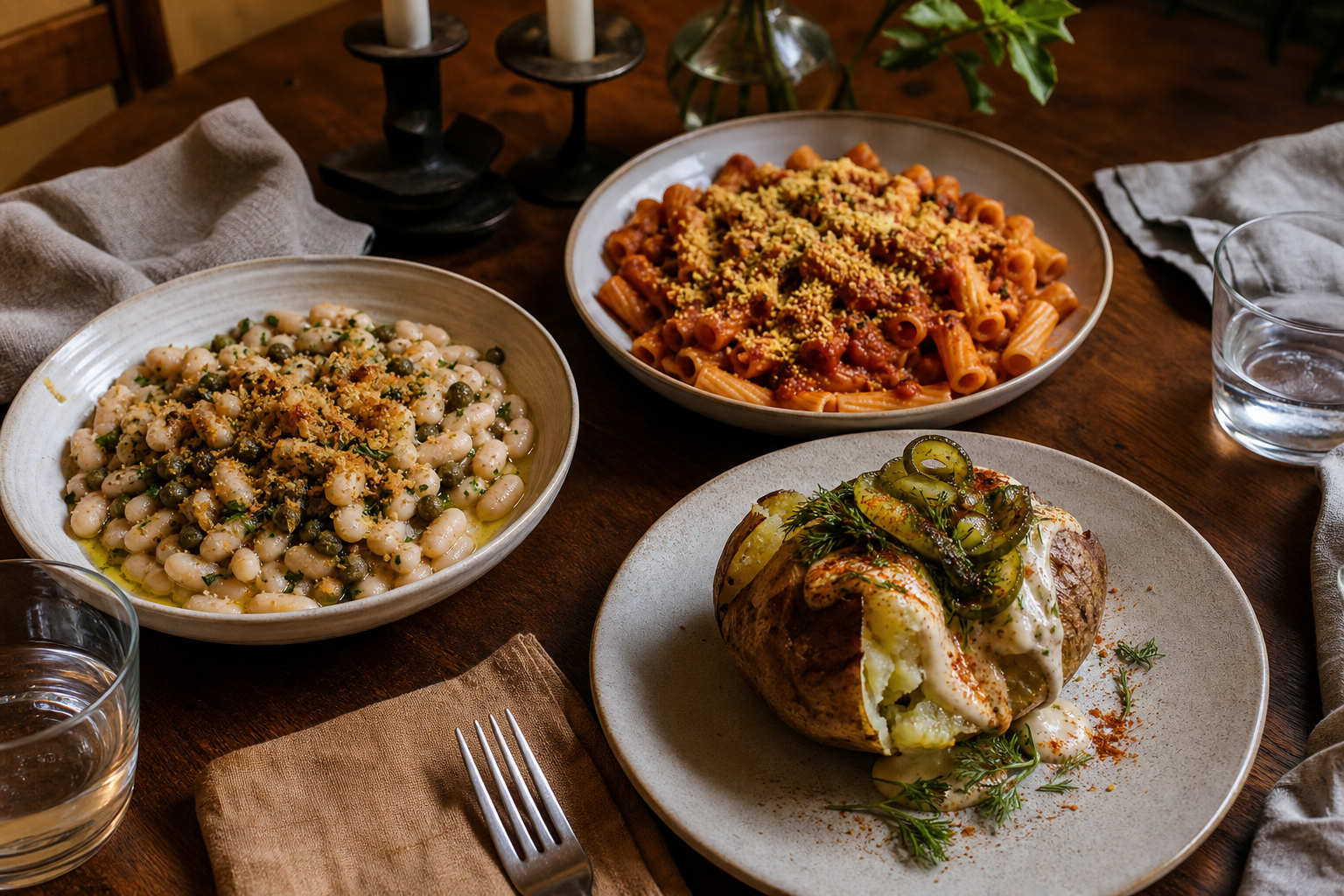
For beans, warm white beans with garlic and olive oil. Finish with sherry vinegar, capers, parsley, and toasted breadcrumbs. If you want more depth, stir in a little miso or tomato paste. Serve with toast. It feels like a bistro dinner, but it is mostly pantry.
For pasta, bloom tomato paste in olive oil with garlic and chile flakes. Add a spoonful of miso, pasta water, and the cooked pasta. Finish with nutritional yeast and breadcrumbs. Add olives or capers if the sauce needs a sharper edge.
For rice, make a bowl that knows what it is doing. Rice, tofu or lentils, cucumbers, chili crisp, sesame seeds, rice vinegar, and scallions. Add avocado if you have it. Add steamed broccoli if that is what dinner is. The pantry does the styling.
For potatoes, boil small potatoes until tender, then crush them slightly. Toss with olive oil, vinegar, mustard, pickles, herbs, and smoked paprika. Or split a baked potato and spoon over tahini sauce, chili crisp, and scallions. Potatoes are very willing to look expensive.
For roasted vegetables, make a sauce first. Tahini, lemon, water, salt, garlic, and miso. Roast carrots, cauliflower, broccoli, squash, or sweet potatoes. Spoon the sauce over the warm vegetables and finish with nuts, seeds, herbs, or chile oil. The difference between plain vegetables and a dish is usually sauce plus crunch.
For toast, mash chickpeas or white beans with olive oil, lemon, salt, and nutritional yeast. Pile onto toasted bread. Add pickles, olives, tomatoes, roasted peppers, or capers. Finish with black pepper and more olive oil. Toast is not a compromise when the pantry is doing its job.
For swaps that keep these dinners flexible, especially when you are out of eggs, dairy, or the exact ingredient a recipe asks for, The Only Swaps You Need is the useful next stop.
If you like practical, taste-first vegan living, subscribe for new guides, smart finds, and a free copy of The Things Nobody Tells You.
Conclusion
The vegan pantry that makes dinner feel expensive is not a museum of beautiful jars. It is a working shelf. Olive oil that gets used. Miso with a spoon mark in it. Tahini that turns into sauce on a Tuesday. Vinegar close enough to grab. Capers, chili crisp, nutritional yeast, and breadcrumbs ready to make plain food feel considered.
Start with the ingredients that change dinner fastest: one savory paste, one beautiful fat, one sharp vinegar, one briny jar, one heat source, and one crunchy finish. Put them where you can see them. Use them before you save them.
That is how a bowl of beans starts to feel like dinner with the lights low. Not extravagant. Just finished.
FAQ
What are the first vegan pantry ingredients worth buying?
Start with olive oil, miso, tahini, capers or olives, one vinegar, nutritional yeast, and one heat source such as chili crisp, smoked paprika, or chile flakes. Those ingredients improve the widest range of dinners: beans, pasta, rice, potatoes, roasted vegetables, toast, and bowls.
Is nutritional yeast necessary in a vegan pantry?
No, but it is useful. Nutritional yeast adds savory, nutty, lightly cheesy flavor to mushrooms, beans, popcorn, greens, breadcrumbs, pasta, and rice. If you are buying it for vitamin B12, check the label because only fortified nutritional yeast should be treated as a B12 source.
How do I make beans taste less plain?
Treat beans like a base, not a finished dish. Warm them with olive oil, garlic, tomato paste, miso, or broth. Finish with vinegar or lemon, then add capers, olives, herbs, chili crisp, nutritional yeast, or toasted breadcrumbs. Beans need contrast and finish more than they need complexity.
What pantry ingredients make vegan food creamy?
Tahini, coconut milk, nut butters, seed butters, blended beans, and soaked cashews can all make vegan food creamy. For the fastest weeknight sauce, whisk tahini with lemon juice, water, salt, and garlic until it loosens into a pourable dressing.
How do I avoid buying pantry items I never use?
Buy in tiers. Start with seven ingredients and cook with them for two weeks before adding more. Notice what disappears fastest. If you keep reaching for vinegar, upgrade the vinegar. If you use tahini twice a week, buy the better jar. If a condiment stays unopened, let it be information, not guilt.