
Eat
Build the shelf that saves dinner.
A good pantry turns plain ingredients into dinner on the nights when you do not want to think very hard.
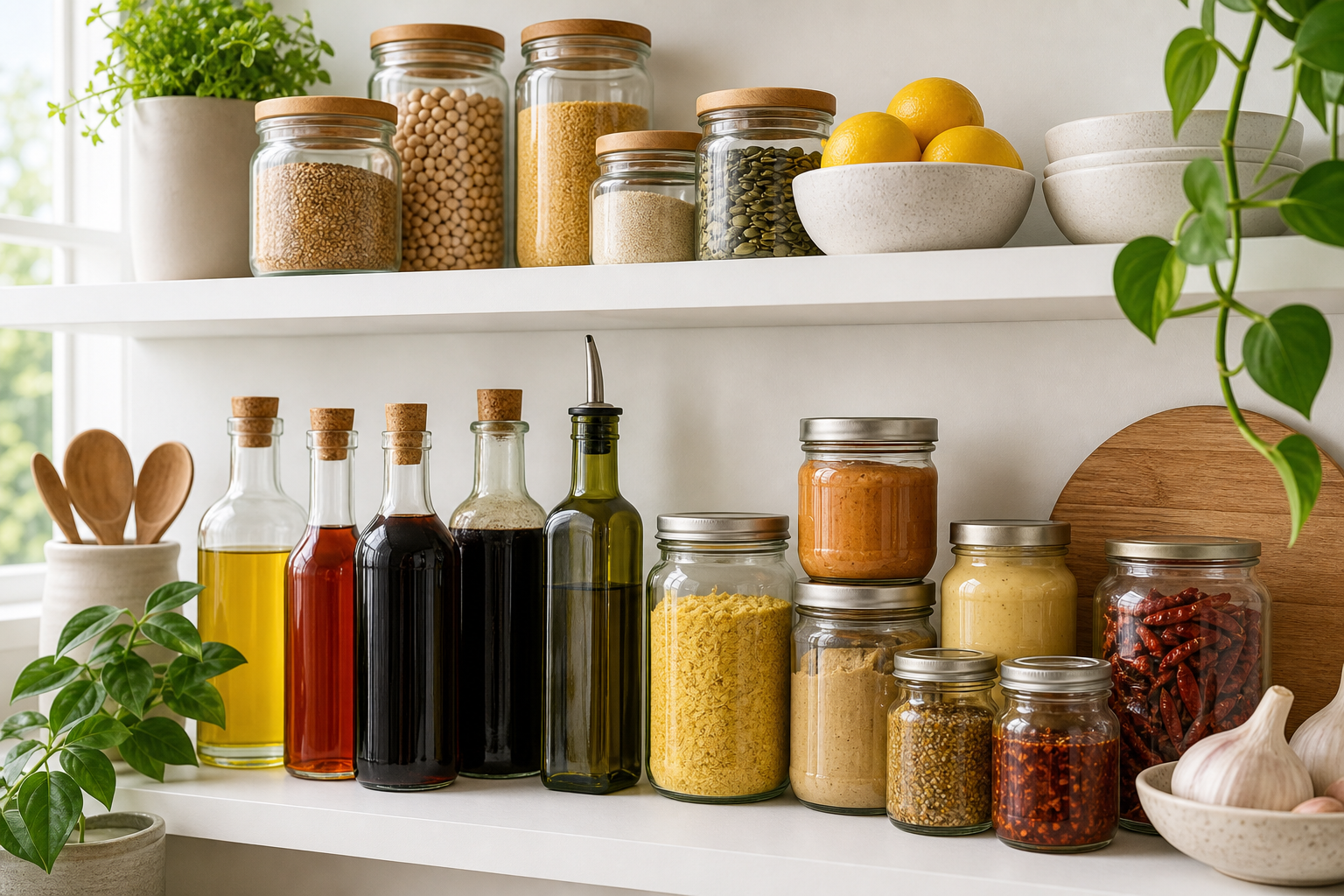
The flavor backbone.
Start with the things that change the whole dish: soy or tamari, miso, nutritional yeast, a good vinegar, Dijon, and real olive oil. If you keep nothing else, keep these.
The point is not to own every specialty ingredient. It is to keep enough depth, fat, acid, protein, and texture around that a plain ingredient can become dinner without a store run.
A pantry should answer ordinary nights. What goes over rice? What turns toast into lunch? What makes a can of beans feel deliberate? What finishes roasted vegetables so they do not taste abandoned? Build for those questions before you build for special projects.
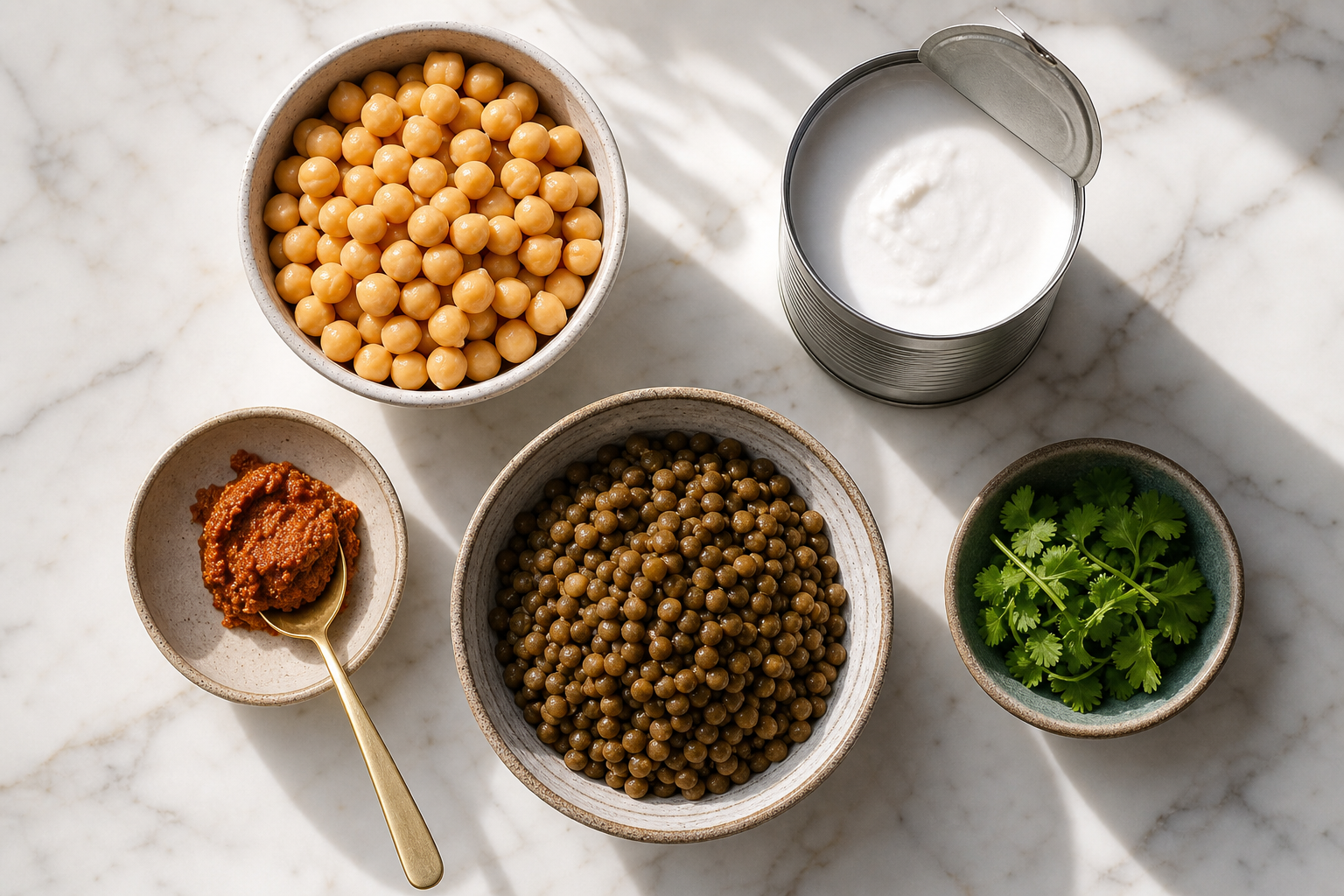
Think in combinations, not inventory. Lentils plus coconut milk plus curry paste is one direction. Beans plus olive oil plus vinegar plus herbs is another. Noodles plus sesame oil plus soy plus something crisp is another. The pantry works when the parts start turning into meals.
What belongs on the shelf.
Each shelf should have a job. You want fast protein, depth, brightness, fat, and a few things that make tired food feel intentional.
Fats that carry flavor
Neutral oil for heat, toasted sesame for finishing, coconut milk for richness, tahini for sauces, and a vegan butter you actually like. These help food taste complete.
Protein to build on
Canned beans for tonight, lentils that cook fast, firm tofu, tempeh, and vital wheat gluten if you want to make seitan. Keep both fast options and project options.
The depth shelf
Dried mushrooms, tomato paste, miso, soy sauce, seaweed, smoked paprika, curry paste, and nutritional yeast. These are the things that make simple food taste cooked.
Acid and brightness
Lemons, limes, vinegars, pickles, capers, hot sauce, and kimchi liquid make rich food feel awake. A dull bowl often needs acid, not more salt.
Nuts, seeds, and the freezer
Cashews, pumpkin seeds, walnuts, frozen herbs, frozen fruit, peas, and good bread save more dinners than most novelty products. The freezer is part of the pantry.
What to skip
Do not buy every vegan replacement just because it exists. Keep what solves a repeat problem, and skip the rest until it solves a real problem.
Look closer
Let the shelf suggest dinner.
The easier it is to see lentils, grains, jars, and sauces, the less dinner depends on inspiration arriving at the perfect time. A visible pantry changes the question from what can I possibly make to beans and rice, noodles, toast, soup, or a bowl.
The dinner test.
Before adding another jar or bag, ask whether it helps one of these meals happen faster.
Beans into dinner
You need acid, fat, salt, and something savory: miso, tomato paste, soy sauce, vinegar, olive oil, or a crunchy finish.
Tofu into dinner
You need heat, seasoning, and texture: a marinade or sauce, a hot pan, cornstarch if crispness matters, and a finishing sauce.
Vegetables into dinner
You need a base and a finish: grains, noodles, bread, beans, hummus, tahini, herbs, nuts, or pickles.
No energy dinner
You need the emergency shelf: frozen rice, canned beans, jarred sauce, noodles, frozen vegetables, and one thing that makes it feel like dinner.
Latest
Latest on this topic.
New notes, finds, and updates connected to this guide.
Oct 1, 2026
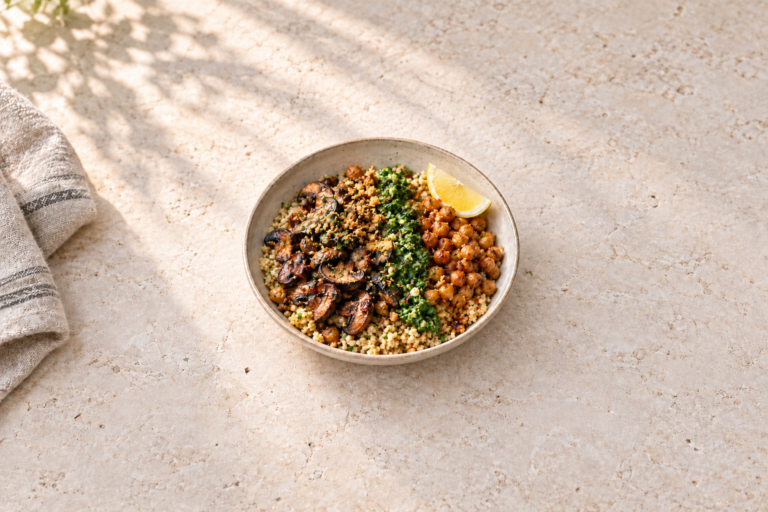
10 Vegan Flavor Hacks
Ten vegan flavor hacks for beans, pasta, tofu, and vegetables. Brown mushrooms, bloom spices, use nutritional yeast, and finish with acid or…
Read post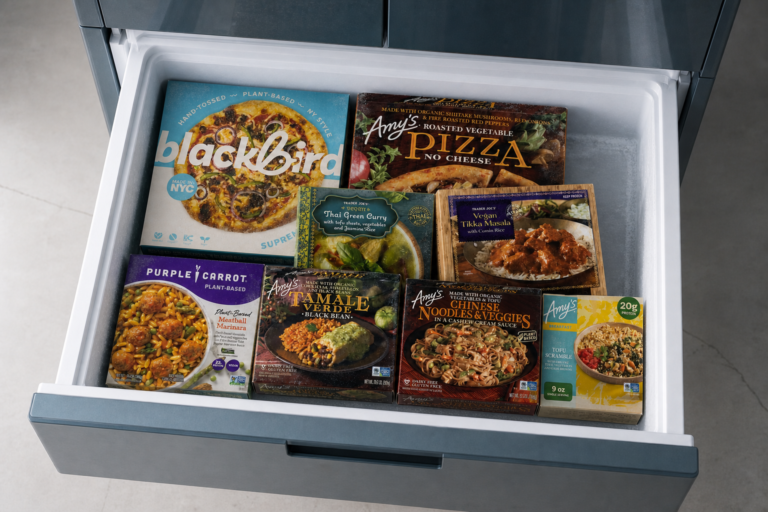
Aug 25, 2026
8 Vegan Frozen Dinners Worth Buying Again
Eight vegan frozen dinners worth buying for curry, pizza, noodles, tamales, meatballs, and breakfast, with preparation and allergen caveats.
Read post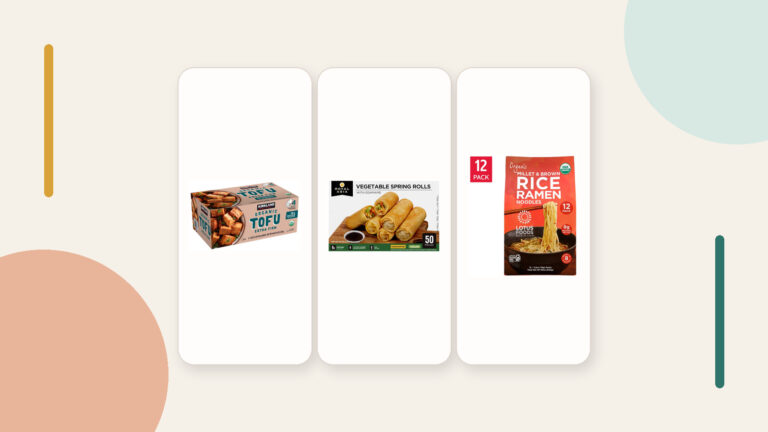
Jul 30, 2026
10 Vegan Costco Products Worth Buying Right Now
These 10 vegan Costco products earn their place through a Kirkland-only format, a strong unit price, or a club package that solves…
Read postGet the good vegan stuff.
Subscribe for new posts, seasonal guides, smart finds, and a free copy of The Things Nobody Tells You.
Read next.
Stay in the Eat room and follow the next useful door.
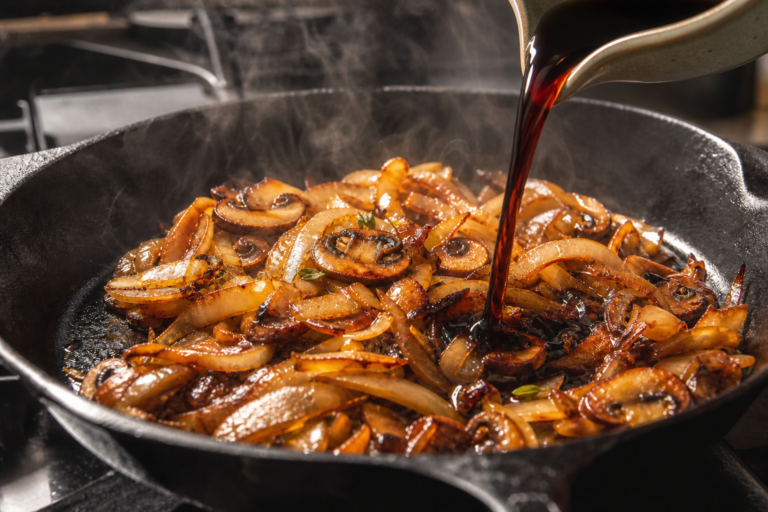
Make It Taste Incredible
Fix flat food, dull tofu, bland beans, and dinners that need one more move.
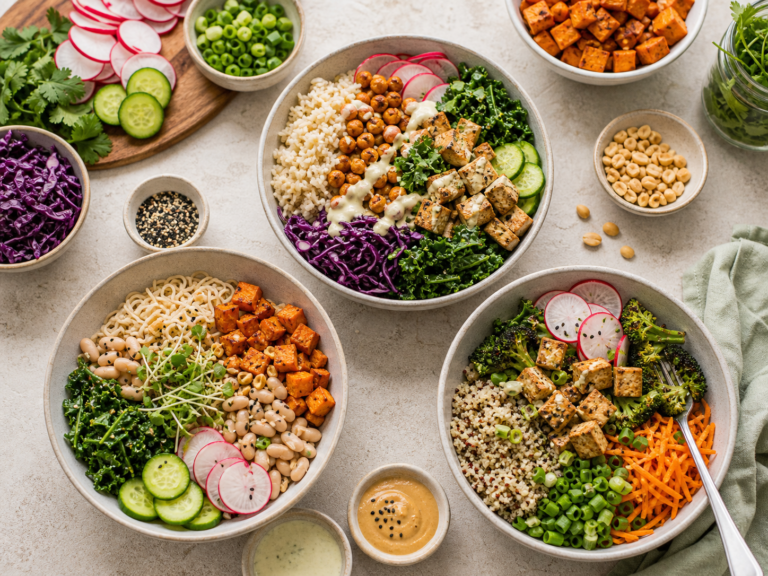
Dinners You Do Not Need a Recipe For
A formula that turns whatever is on hand into a real meal.
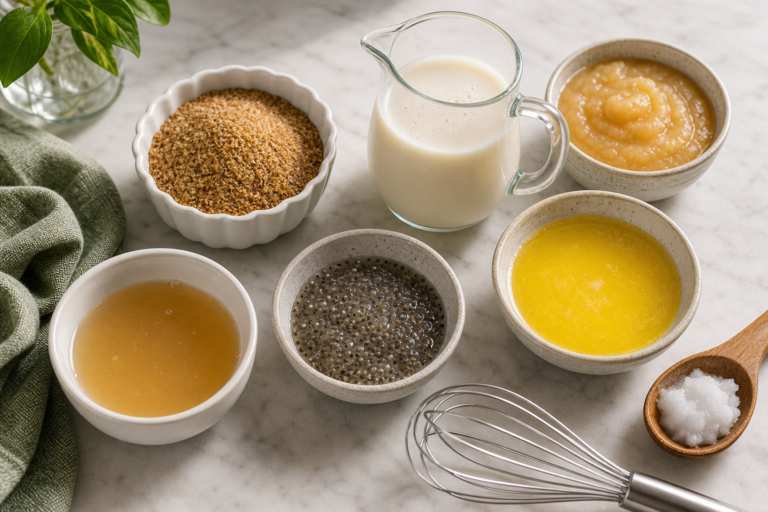
The Only Swaps You Need
Replace eggs, dairy, butter, and the rest by what they do, not what they are.
The Edit: Food
The vegan groceries worth keeping in the house.