Vegan Steakhouse Guide: What to Order and What to Ask
Sometimes the steakhouse dinner is not your idea. It is a birthday, a client meal, a family reservation, a work trip, a date plan someone else made, or the only restaurant near the hotel with a table at 8:30. You are not going because you expect the menu to adore you. You are going because life with other people occasionally includes restaurants built around things you do not eat.
That does not mean the night is doomed. A vegan steakhouse order can be workable when you know where the traps are, ask for the right modifications, and decide ahead of time whether the restaurant is dinner or just the place where dinner-adjacent social life is happening.
The honest version is this: most steakhouses are better at plain potatoes, modified salads, and vegetables than they are at vegan entrees. Some chains publish useful allergen guides. Some kitchens can help if you call ahead. Some cannot. The trick is knowing the difference before everyone is looking at you over the bread basket.
Key Takeaways
- Check the official menu or allergen guide before you go.
- Do not assume vegetables are vegan just because they are vegetables.
- Ask about butter, cheese, egg, bacon, stock, honey butter, dressings, and fryer oil.
- Plain baked potatoes and plain sweet potatoes are often safer than mashed, loaded, or creamy sides.
- Fries are not automatic because shared fryers and animal fat can matter.
- At some steakhouses, the best move is to eat beforehand and treat the dinner as a social event.
First, Be Honest About the Vegan Steakhouse Assignment
A steakhouse is usually designed around meat, butter, dairy-rich sides, and service rituals. The menu is not simply "protein plus vegetables." It is steak brushed or topped with butter, potatoes finished with dairy, vegetables glossed with butter, salads built with cheese and bacon, bread served with honey butter, and sides that sound plant-based until the kitchen finishes them the steakhouse way.
That does not make the dinner impossible. It just means the order has to be built differently.
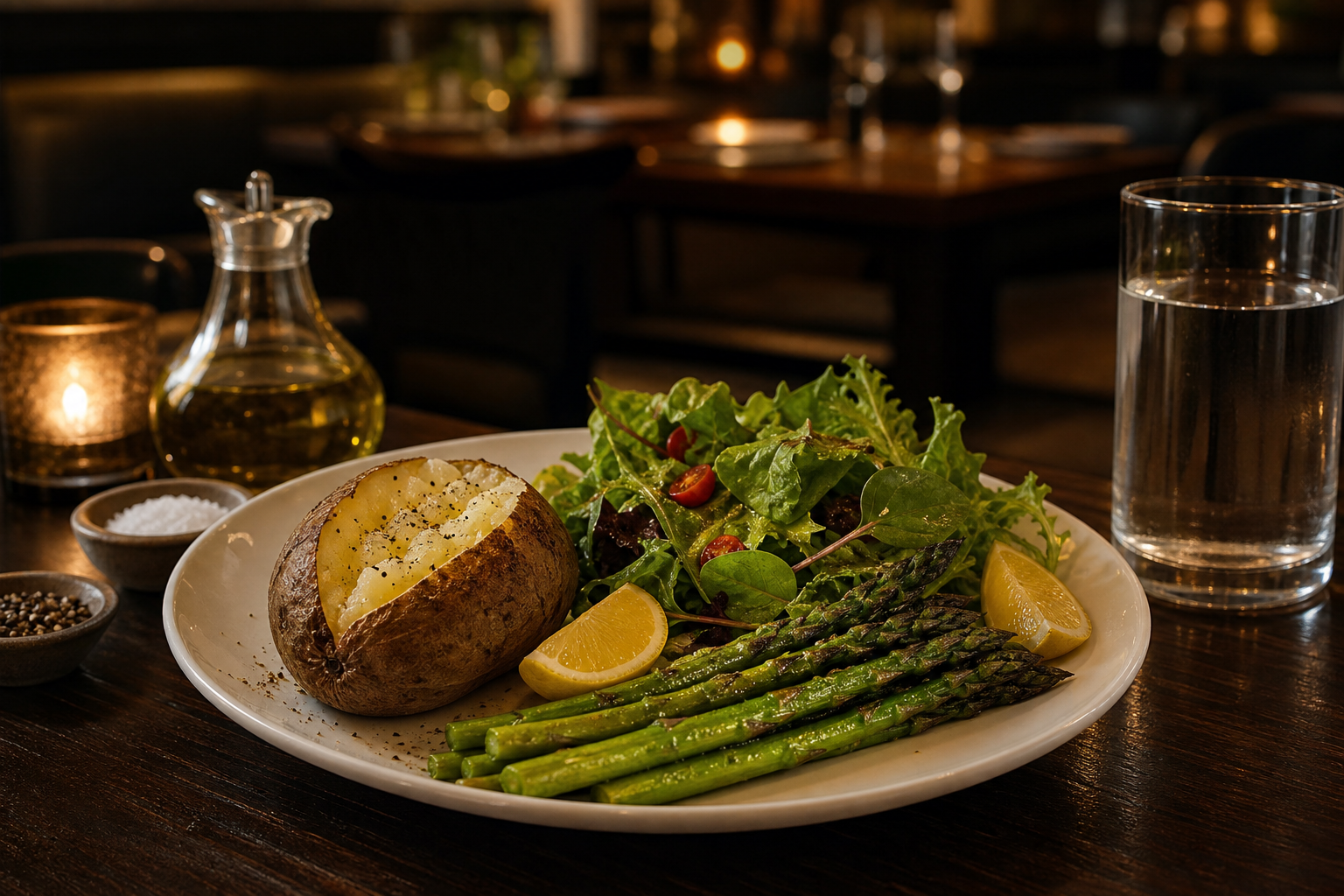
At a vegan-friendly restaurant, you might be choosing between dishes. At a steakhouse, you are usually building a plate from pieces: a modified salad, a plain potato, a vegetable prepared without butter, and a dressing or sauce that has been checked. Sometimes that plate is enough. Sometimes it is not.
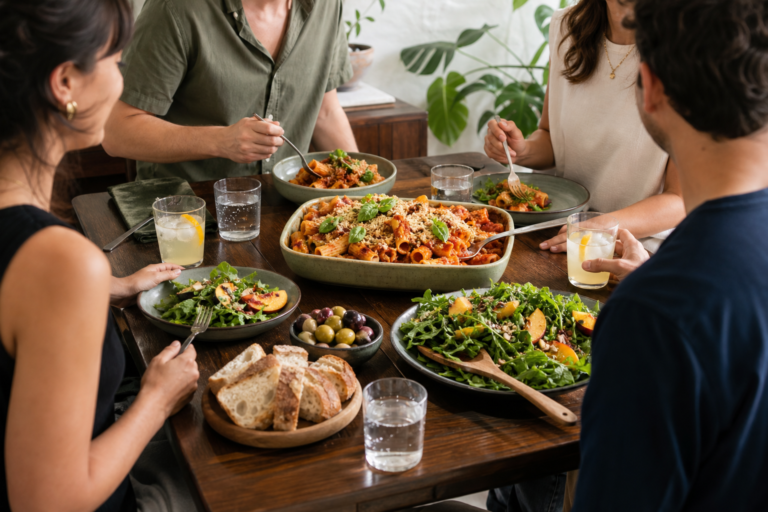
This is where the social context matters. At a work event, the goal may be to order something simple and keep the conversation moving. At a family birthday, the goal may be to participate without turning the whole night into a negotiation. When traveling, the goal may be to avoid being hungry and annoyed in a place where the kitchen cannot really help.
For the broader mixed-table skill, use Hosting a Mixed Table. The steakhouse version is practical: calm questions, realistic expectations, and enough taste to make the plate feel intentional.
The Steakhouse Order Pattern That Usually Works
Start with the official menu or allergen guide. Not a random comment thread. Not a five-year-old blog post. The current restaurant page if you can get it. Menus change, suppliers change, and a side that was fine once can become dairy-heavy after a recipe update.
Then build the plate in this order:
- A salad that can be modified cleanly: no cheese, egg, bacon, creamy dressing, or croutons unless the restaurant can confirm the croutons are dairy-free and egg-free.
- A plain baked potato or plain sweet potato: no butter, sour cream, cheese, bacon, honey butter, or cinnamon-sugar butter.
- A vegetable the kitchen can prepare without butter, parmesan, bacon, or animal stock.
- Fries only if the oil, fryer, and seasoning fit your own vegan line.
- Something for flavor: lemon, olive oil, vinegar, mustard, salsa-style toppings, grilled onions, chimichurri, or a checked vinaigrette.
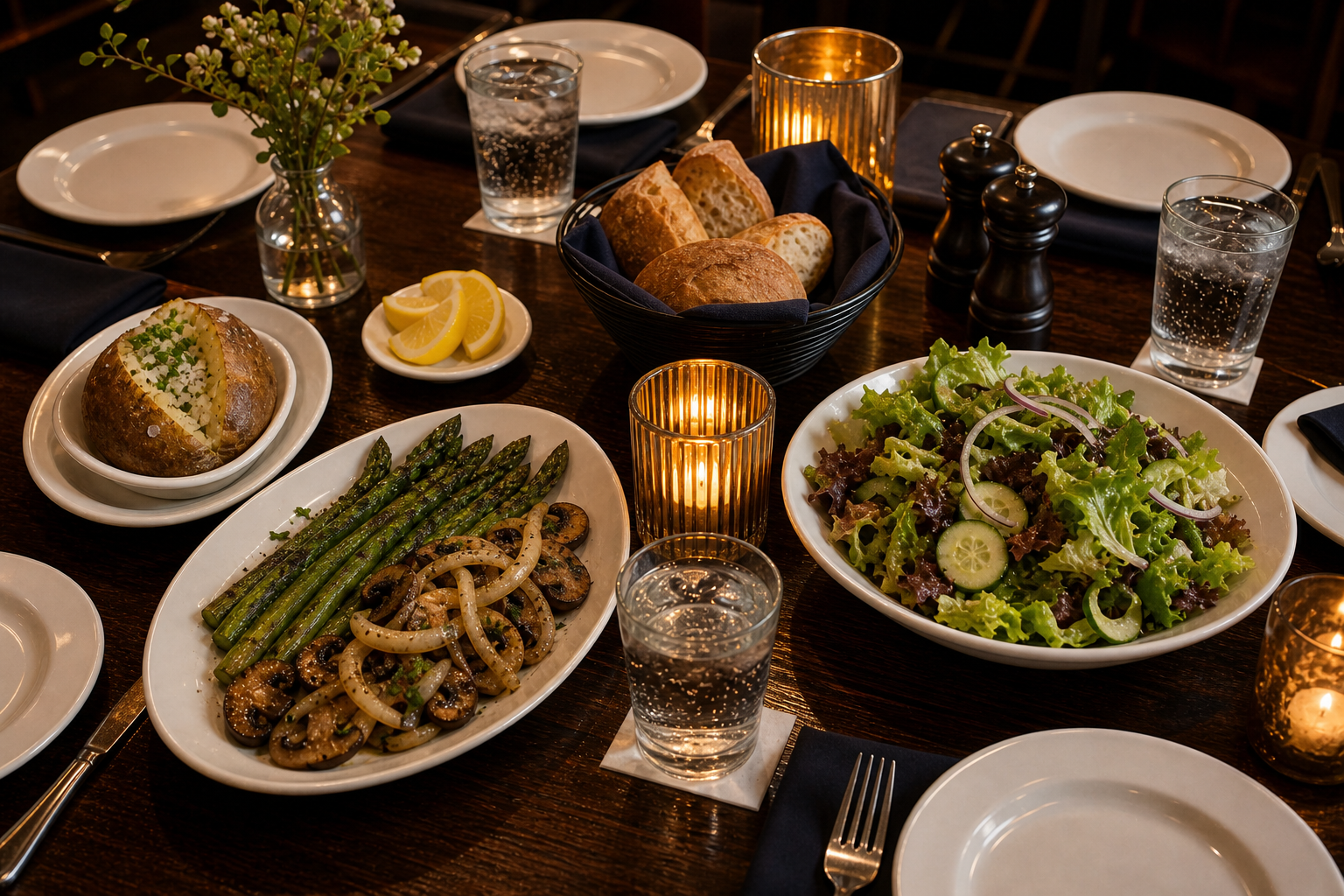
The best vegan steakhouse order is rarely a single menu item. It is a plate assembled with judgment. A house salad with vinaigrette, a plain potato, and vegetables with lemon and olive oil is not glamorous, but it can be satisfying enough when it is prepared cleanly and you know what you are asking for.
Chain Notes From Official Menus
These notes are examples of how to read a steakhouse menu, not evergreen ordering instructions. They come from official sources checked on July 3, 2026. Always recheck the exact restaurant and location before you go, especially if you have allergies or a stricter cross-contact line.
Outback Shows Why The Fryer Question Matters
Outback is useful as a chain example because its official allergen guide gives enough detail to build a plan. The Outback allergen guide lists some possible building blocks without milk, egg, or fish markers, including tangy tomato dressing, light balsamic vinaigrette, mustard vinaigrette, grilled onions, chimichurri sauce, asparagus, Aussie fries, and kids fries.
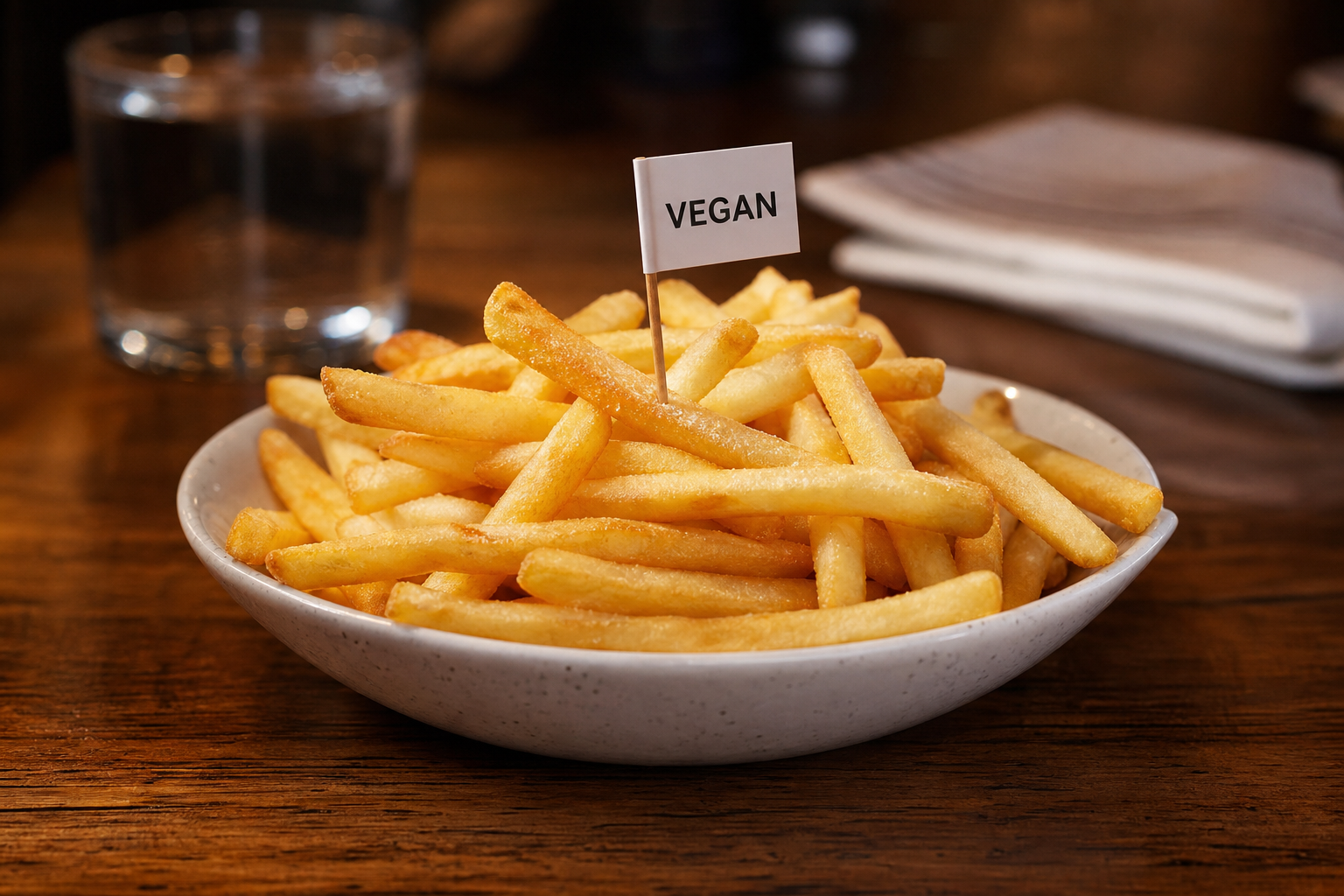
That sounds promising until you get to the fryer note. The same guide says deep-fried menu items are fried in a shared fryer with beef tallow. For many vegan diners, that makes the fries a no. For others, shared fryer and cooking-fat questions sit on a personal line. Either way, fries should not be treated as a clean default.
Outback's own Smart Dining page also suggests ordering dressing on the side, choosing vegetables instead of fries, and asking for plain preparation when managing seasoning. For vegan ordering, translate that into a clear request: no butter, no cheese, no bacon, no egg, no creamy dressing, and no animal-based cooking fat.
A realistic Outback direction might be a house salad without cheese or croutons, a checked dressing such as light balsamic or mustard vinaigrette, asparagus only if the kitchen can prepare it without butter, and possibly grilled onions or chimichurri if the current guide and location support them. Treat that as a starting script, not a standing promise.
LongHorn Is A Potato-First Example
LongHorn is a good reminder that even simple vegetables need checking. LongHorn's nutrition page says allergen information is based on supplier data, menu items are made fresh to order, and cross-contact can occur. That language matters because it makes the guide a starting point, not a guarantee.
The LongHorn Nutrition and Allergen Guide shows plain baked potato and plain sweet potato without common allergen markers. It also marks fresh steamed broccoli and fresh steamed asparagus with dairy, and it shows honey wheat bread and added butter as containing dairy and wheat.
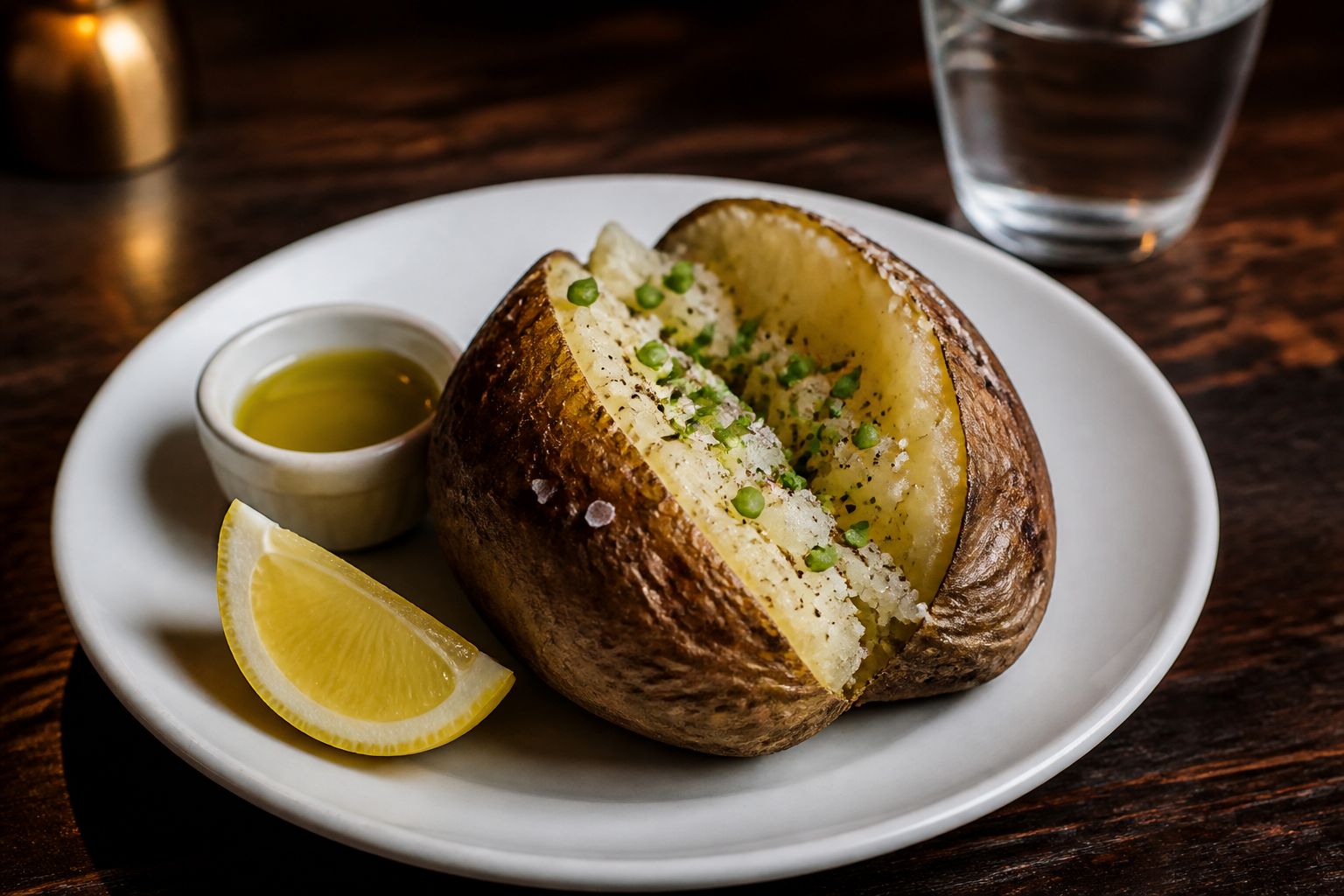
The practical LongHorn lesson is potato-first, then ask. A plain baked potato or plain sweet potato may be the cleanest base, but you still want no butter, sour cream, cheese, bacon, or cinnamon-sugar butter. Then ask whether any vegetables can be made without dairy or butter. Do not assume the broccoli is safe because it looks simple. Do not assume the bread is safe because it is bread.
Morton's Shows Why Upscale Sides Can Be Hard
High-end steakhouses can look easier because they have more sides. In practice, those sides can be built around butter, cream, cheese, bacon, or rich finishing sauces.
Morton's publishes an allergen dinner menu through its menu page. Its allergen information has shown many side and vegetable dishes with dairy markers, including examples such as Brussels sprouts, charred broccolini, creamed spinach, loaded baked potato, truffle fries with parmesan, asparagus, sauteed spinach and mushrooms, several potato sides, and corn. That does not mean a kitchen cannot modify anything. It means the printed side menu should not be treated as a list of easy vegan yeses.
This is why upscale sides deserve suspicion. "Broccolini" sounds safer than "loaded baked potato." "Sauteed spinach and mushrooms" sounds like vegetables. "Asparagus" sounds minimal. But if the restaurant's allergen menu marks the default preparation with dairy, the default preparation is not vegan.
At a place like Morton's, call ahead if the dinner matters. Ask whether the kitchen can prepare plain vegetables without butter, dairy, bacon, or stock. Ask whether a plain baked potato can be prepared cleanly. Ask whether any salad can be modified with a dairy-free, egg-free dressing. A nicer restaurant may be able to help, but the best time to find out is before service gets busy.
Fogo de Chao Has A More Intentional Vegan Path
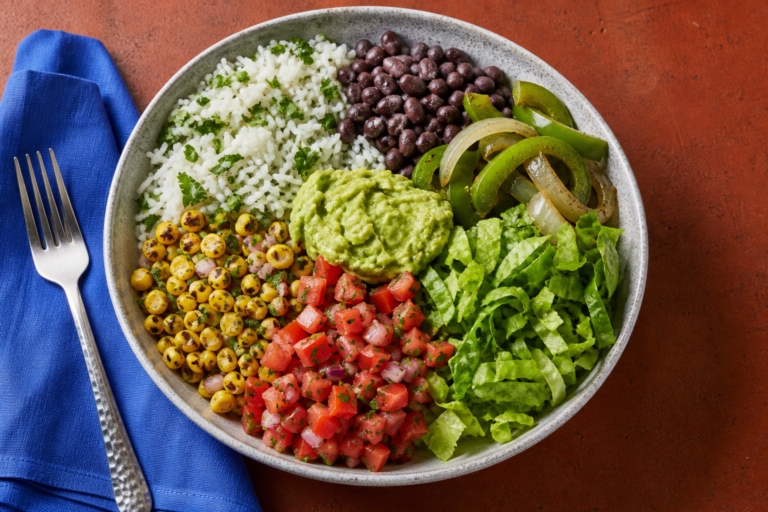
Fogo de Chao is a different case because the restaurant has explicit plant-based guidance. Its Healthy Dining page includes vegan and vegetarian language and lists plant-based options such as seared tofu with black bean pasta, roasted eggplant, power greens, fresh papaya, beet tartare, legumes, salads, and starchy vegetables.
That does not make every item vegan, and you still need to check the current location and preparation. But it changes the posture. Instead of building a meal from reluctant sides, the vegan diner has a more intentional path.
If you are choosing the steakhouse for a mixed group and Fogo is an option, it may be easier than a traditional steakhouse chain. The meat-eaters get the experience they want, and the vegan diner has a better chance at something more substantial than a plain potato.
If The Chain Is Not Clear, Do Not Improvise From Memory
Some restaurants make allergen information easy to find. Some bury it. Some local steakhouses handle questions by phone better than online. Some chain pages change by location or require interactive menu filtering that is not easy to cite.
If the official source is not clear, do not fill the gap with wishful thinking. Call the restaurant during a quiet time, ideally before the dinner day. Say, "I am vegan, so I avoid meat, dairy, eggs, fish, and animal-based stock. Is there a salad, potato, vegetable, or entree the kitchen can prepare without those?" That question is more useful than "do you have vegan options?" because many steakhouse teams are not trained to answer vegan as a category.
This is also where Is It Vegan? How to Actually Know becomes useful. You are not looking for perfect language. You are looking for the actual ingredients and preparation.
The Questions To Ask Without Sounding Like A Deposition
The best restaurant questions are specific, calm, and easy to answer. You are not asking the server to understand your entire worldview. You are asking them to help you avoid a few ingredients and preparation methods.
Use plain scripts:
- "Could the kitchen make the baked potato plain, with no butter, sour cream, cheese, or bacon?"
- "Are the vegetables finished with butter, or can they be steamed plain?"
- "Do any of the dressings have dairy, egg, honey, or anchovy?"
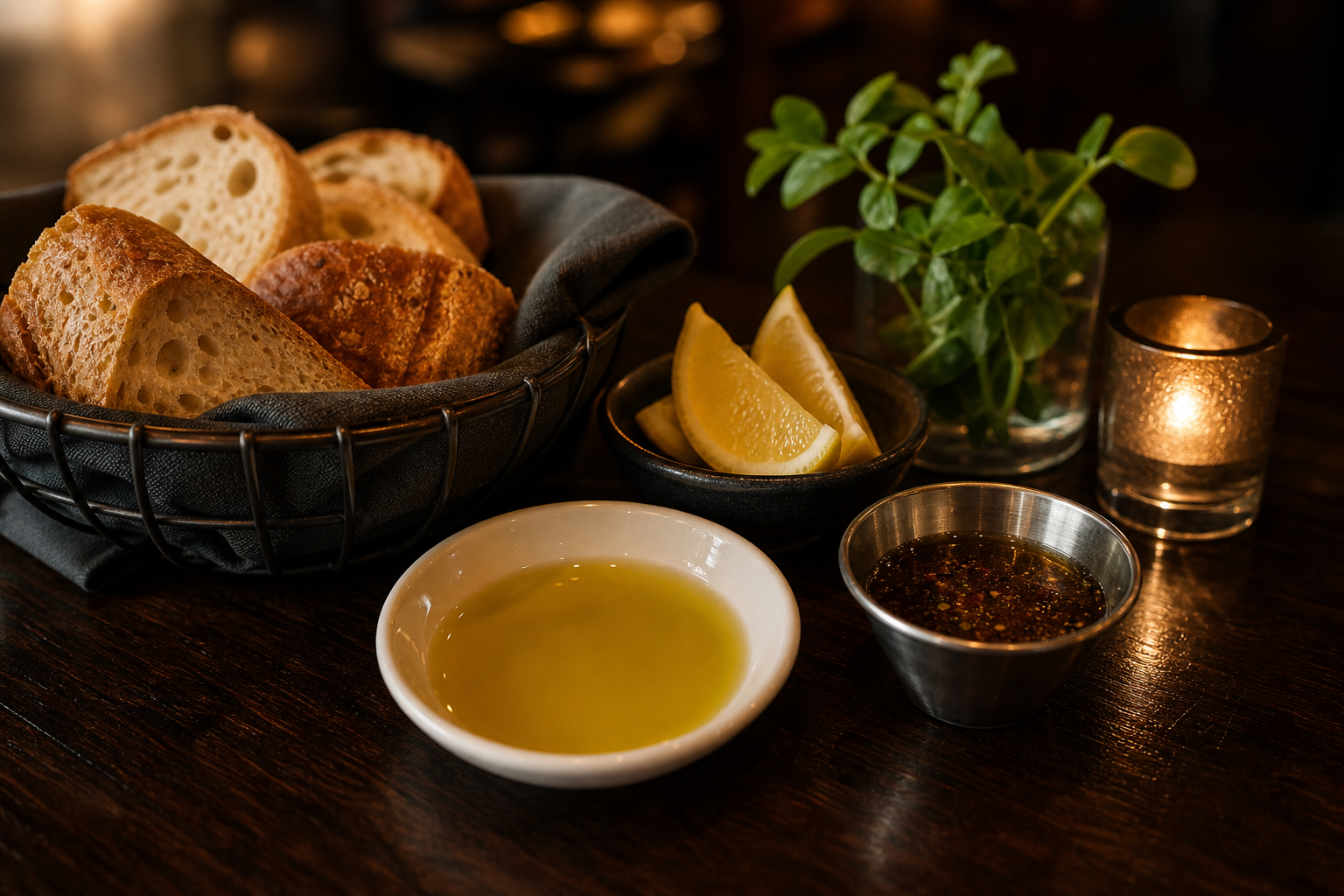
- "Is the bread brushed with butter or served with honey butter?"
- "Are the fries cooked in a shared fryer or animal fat?"
- "If there is no vegan entree, what combination of sides can the kitchen make without butter or dairy?"
The butter question matters most. Butter can land on vegetables, potatoes, mushrooms, onions, bread, rice, and sauces. A server may not think to mention it if you only ask whether something has meat.
The dressing question is next. A salad can fall apart fast when the only dressings are ranch, Caesar, blue cheese, honey mustard, or creamy house dressing. Vinaigrettes are often better candidates, but they still need checking for honey, dairy, egg, or anchovy.
Then ask the fryer question if fries, onion rings, fried pickles, or breaded appetizers are on your mind. Different vegans handle shared fryers differently, and a restaurant cannot guess your line for you. Specific questions get better answers than "what is vegan here?"
What To Avoid By Default
Some steakhouse items are technically modifiable, but they are usually not worth starting from.
Caesar salad is the obvious one. Traditional Caesar brings anchovy, cheese, and an egg-rich dressing into the conversation. Even when a restaurant's version is not classic, it is rarely the easiest vegan salad to modify.
Wedge salads are also trouble. They are often built around bacon, blue cheese, creamy dressing, and sometimes egg. Remove all of that and you may be left with cold lettuce, tomato, and very little pleasure.
Mashed potatoes are usually a no unless the restaurant can confirm otherwise. Butter, milk, cream, and sometimes chicken stock or dairy-heavy seasoning can be involved. Loaded potatoes are clearer: butter, sour cream, cheese, and bacon are usually the point.
Sweet potatoes can be excellent when plain, but many steakhouse versions come with honey butter, cinnamon butter, brown sugar butter, marshmallow-style toppings, or dairy-heavy finishes. Ask for plain.
Creamed spinach, mac and cheese, au gratin potatoes, scalloped potatoes, and lobster mac are not rescue projects. They are built around dairy.
Brussels sprouts, mushrooms, asparagus, corn, broccoli, and spinach need a prep question. They may be cooked with butter, bacon, parmesan, stock, or a sauce that includes dairy. Soups and fried appetizers need the same caution because stock, cream, eggy batter, dairy coatings, and shared fryers can all appear quietly.
How To Make The Plate Feel Better
The difference between "I survived dinner" and "I ate something decent" is often flavor management.
A plain baked potato is better with salt, black pepper, chives, olive oil, vinegar, salsa, mustard, or a confirmed vegan sauce. Plain grilled onions or mushrooms can make the potato feel more like a meal if the kitchen can cook them without butter. Chimichurri can help too, as long as the current version does not contain dairy or anchovy.
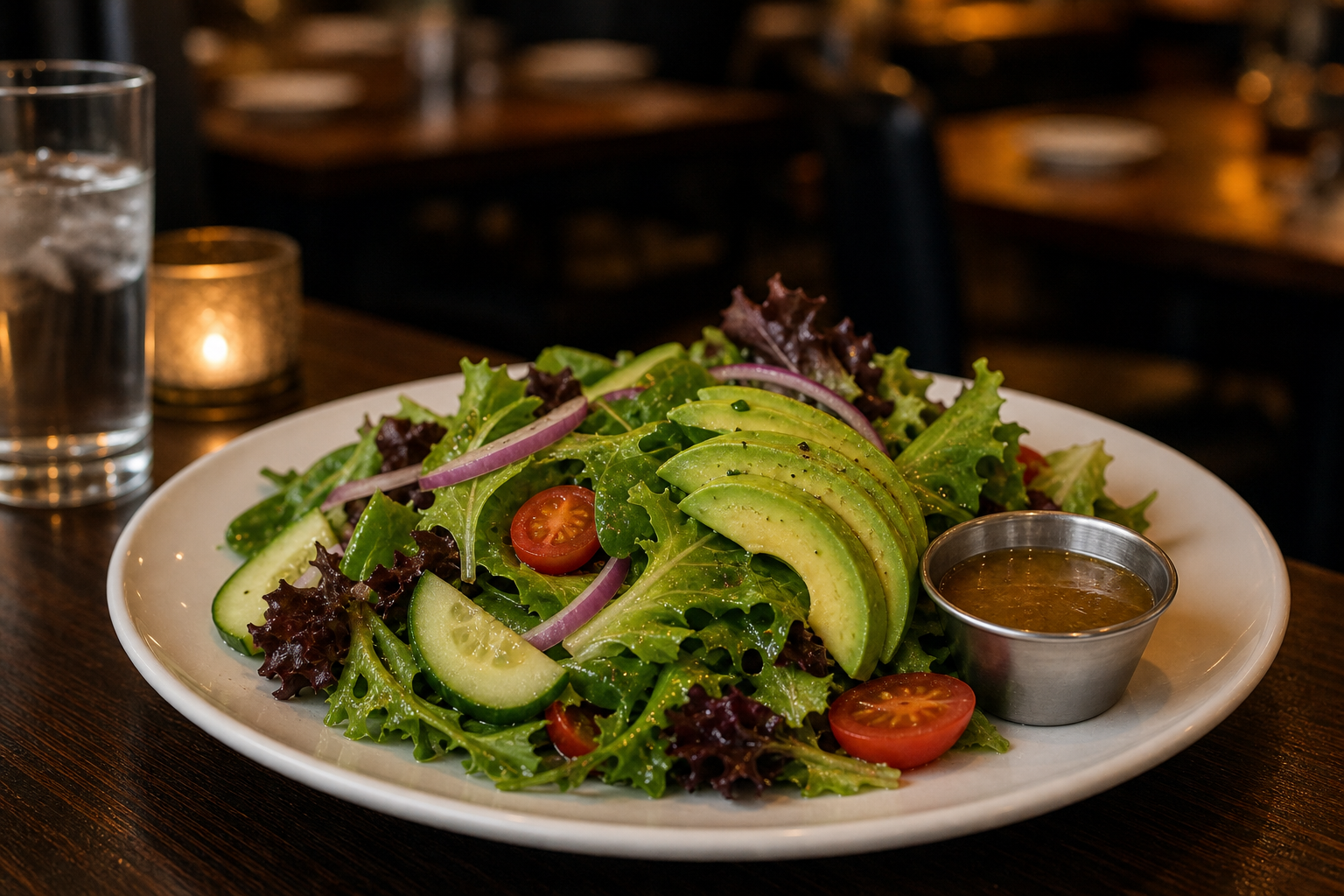
A modified salad is better when you ask for what can stay, not only what must leave. Tomato, cucumber, red onion, avocado if available, olives, roasted peppers, pickles, herbs, nuts, or fruit can make a side salad feel more intentional. A checked vinaigrette on the side gives you control.
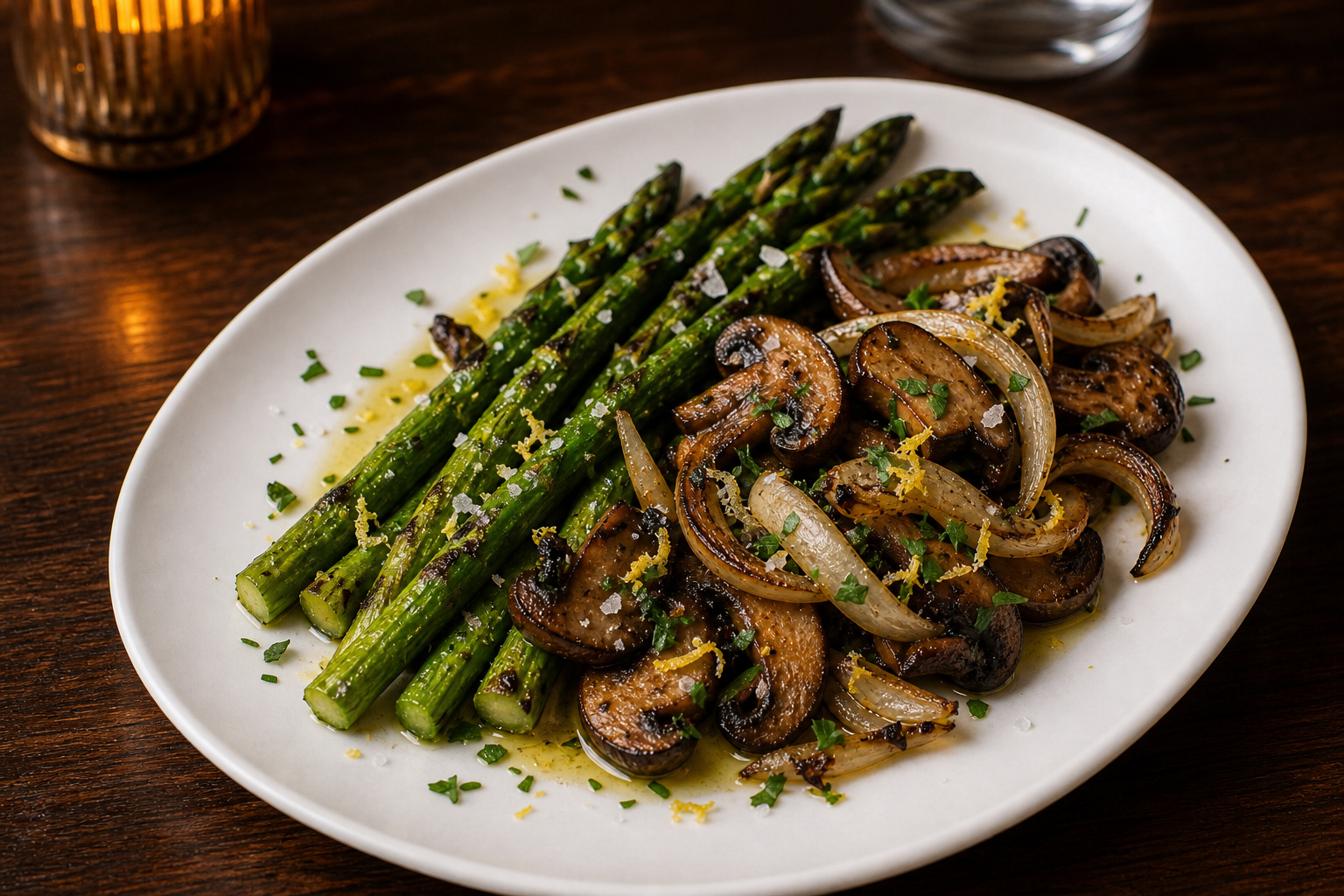
Vegetables need acid and salt. Lemon, vinegar, pepper, herbs, and olive oil can do more than you think. If the only option is plain steamed broccoli, ask for lemon wedges. If the bread checks out, lovely. If it does not, do not make bread the plan.
If the plate still looks thin, be honest. That may be a night to eat something before or plan a second stop after. A vegan life gets easier when you stop pretending every restaurant has to be the whole meal.
The Social Side Matters As Much As The Order
Steakhouse dinners are often about people, not food. That is why the vegan steakhouse order has to fit the occasion.
At a work dinner, check the menu before you go. Choose the simplest viable order and ask the server quietly. You do not need to explain veganism to the whole table while everyone is deciding between ribeye and salmon. If the restaurant has no real meal for you, eat beforehand and order a salad or potato. The point is to stay present and professional, not to make the menu the centerpiece.
At a family birthday, communicate early if you need to. A quick text can help: "I checked the menu and I can probably make a salad and potato work if they can do them without butter. No need to change the reservation." That lets the host know you have handled it.
On a date, keep the read generous but honest. One steakhouse dinner is not a referendum. But it is fair to notice whether someone is willing to make a shared plan, listen to what you need, and avoid treating your food as a nuisance. Family, Dating, and the People is the bigger guide for that kind of social pattern.
When traveling, do not rely on the steakhouse alone. Hotel-area restaurants can be limited late at night. Have a snack, know a second stop, or check whether the restaurant has a nearby delivery option for later. The How to Eat Well Anywhere guide is built for exactly this kind of practical backup thinking.
When To Eat Before Or After
Eating before a steakhouse dinner is not defeat. It is logistics.
Eat before if the official allergen guide looks grim, the dinner is late, the only likely plate is a plain potato, or the setting is one where you do not want to negotiate at length. Plan a second stop if the dinner is social but not food-satisfying.
This is one of the more freeing vegan habits: not every table has to feed you perfectly. Some tables are for people. Some are for logistics. Some are for patience. You can still have standards without making every dinner carry your whole appetite.
What to Order by Steakhouse
At Fogo de Chao, start with the vegan and plant-based guidance. Seared tofu, roasted eggplant, power greens, legumes, fruit, and vegetable-forward options make it more promising than the usual steakhouse side scramble, as long as the current location confirms the details.
At Outback, check the current allergen guide before leaving. Look for a modified salad, a checked dressing such as light balsamic or mustard vinaigrette, asparagus or other vegetables only if they can be prepared without butter, and possibly grilled onions or chimichurri if the guide and location support them. Do not assume fries are vegan because of the shared fryer and beef tallow note.
At LongHorn, think potato-first. A plain baked potato or plain sweet potato is the most obvious base from the allergen guide. Then ask whether any vegetables can be made without butter or dairy.
At Morton's or another high-end steakhouse, call ahead. The side menu may look abundant, but dairy can be everywhere. Ask about plain vegetables, a plain baked potato, a modified salad, and a dairy-free vinaigrette before assuming the kitchen can improvise during service.
At a local steakhouse with unclear information, call during a quiet hour and ask one simple question: "Can the kitchen make a vegan meal from a salad, potato, and vegetables with no meat, dairy, eggs, fish, butter, or animal stock?" If the answer is hesitant, eat beforehand and treat the reservation as social time.
If vegan life feels harder around other people, you are not the only one. Subscribe and get The Things Nobody Tells You, plus new guides for making this feel easier.
Conclusion
A steakhouse is not where vegan food usually shines. That is fine. You are allowed to be realistic about the room you are in.
The calm path is simple: check the official menu, look for plain potatoes and modified salads, ask about butter and fryer oil, and do not assume vegetables are safe by default. If the restaurant can make a real plate, lovely. If it cannot, eat before, order what works, and let the dinner be about the people.
Vegan living gets easier when you stop needing every restaurant to prove something. Sometimes the win is a good meal. Sometimes the win is not being hungry. Sometimes the win is moving through the night with your values and your mood intact.
FAQ
Can vegans eat anything at a steakhouse?
Often, yes, but the options may be limited. The most realistic vegan steakhouse order is usually a modified salad, a plain baked potato or sweet potato, and vegetables only if they can be made without butter, dairy, bacon, or animal stock.
Are steakhouse fries vegan?
Not automatically. Fries may be cooked in shared fryers, animal fat, or oil used for non-vegan items. They may also have dairy-containing seasoning, so ask before ordering.
Is a baked potato vegan at a steakhouse?
A plain baked potato can be vegan, but the toppings usually are not. Ask for no butter, sour cream, cheese, bacon, or honey butter, and ask what is used if the potato is pre-oiled or seasoned.
What should I ask the server at a steakhouse?
Ask whether the potato can be plain, whether vegetables are finished with butter, whether dressings contain dairy, egg, honey, or anchovy, whether bread is brushed with butter, and whether fries are cooked in animal fat or a shared fryer.
What if the steakhouse has no vegan entree?
Build the best side plate you can, or eat before and treat the dinner as a social event. That is a reasonable plan for a restaurant that was not designed around vegan food.