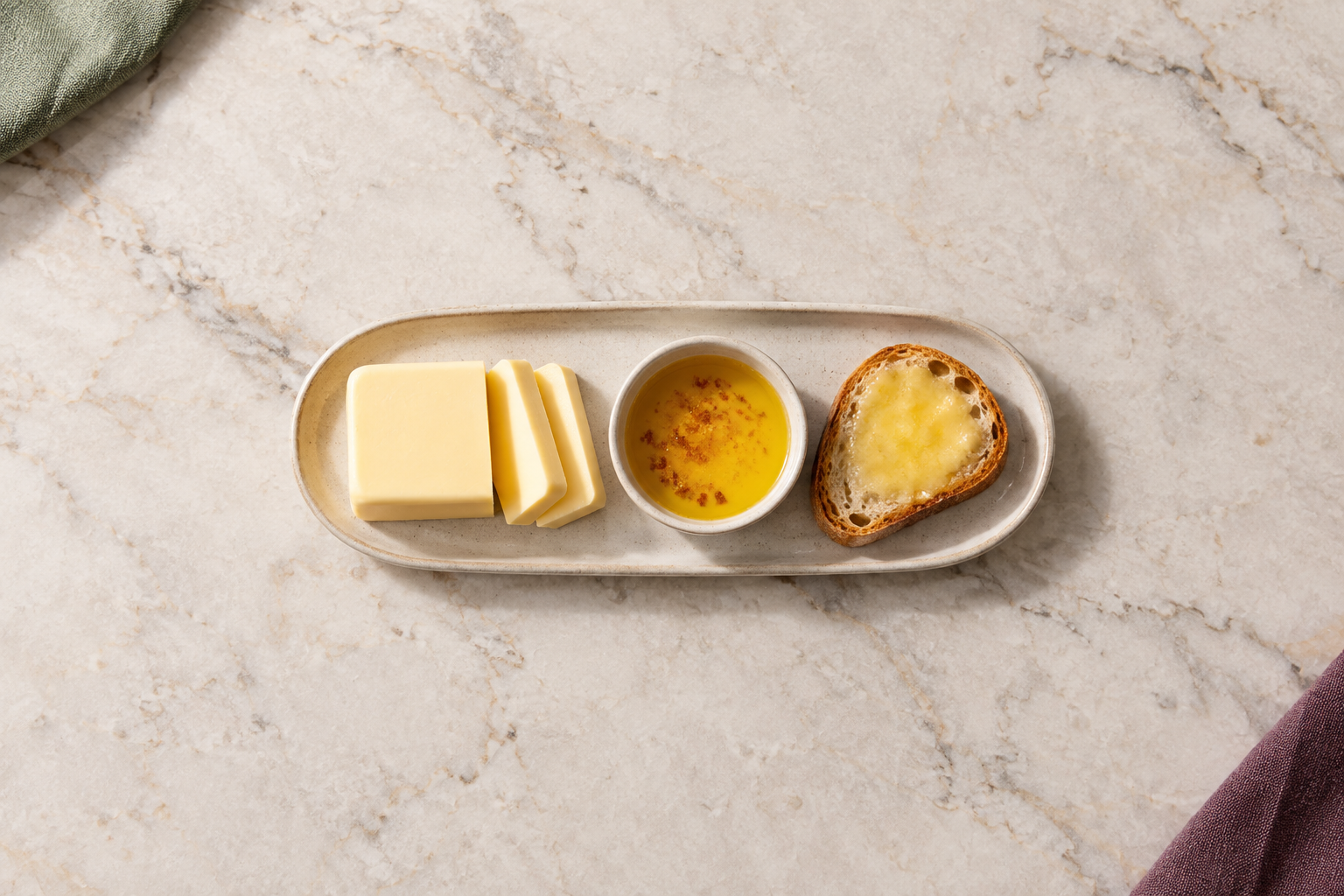
How to Choose Vegan Butter for Baking, Browning, and Spreading
A butter that slides beautifully across toast may be the wrong choice for a pie crust. A firm baking stick may suit cookies but bring more salt than you want in vanilla frosting. Choosing vegan butter gets easier when you start with what you plan to make, then match the format and formula to that job.
This guide compares five familiar or specialist products for baking, browning, and everyday cooking. Our recommendations come from published ingredients, manufacturer instructions, and independent baking research. We have not tested these five products in our kitchen. The aim is to help you make a sensible purchase and understand what to do when a substitution behaves differently.
Key takeaways
- For cookies and cakes, start with plant butter sticks or a block whose manufacturer supports baking. Follow the recipe’s instructions for cold, softened, or melted fat.
- For pie dough and frosting, firmness and salt control matter. An unsalted product gives you more control over the finished flavor.
- For browned-butter flavor, choose an exact product with manufacturer browning guidance. Melting or foaming alone does not establish that it will brown.
- A soft tub makes sense for toast and everyday cooking. Check its stated baking uses before treating it as a substitute for every stick or block.
- Read the package you are buying. Vegan status, ingredients, allergens, and suggested uses can differ between products from the same brand.
Choose vegan butter by the recipe, then the format
Begin with the recipe’s first instruction for the butter. Does it ask you to cream softened fat with sugar, cut cold cubes into flour, or stir melted fat into a batter? Those are different jobs. Plant butter sticks make portioning straightforward; a firm block is convenient to cube; a tub offers easy spreading. The packaging gives you a starting point, rather than a guarantee of performance.
For creamed cookies, look for a baking product that stays pliable without becoming oily. For pie dough, choose something you can cut and keep cold. For a pan sauce, decide whether you want richness from melted fat or the more specific flavor of toasted solids. For toast, choose by spreadability and the flavor you actually enjoy. You may reasonably keep one baking product and one breakfast tub rather than finding a single butter for everything.
The nutrition panel helps you compare formulas, but it cannot tell you exactly how a dough will behave. In this group, the published fat amounts range from 9 to 11 grams per 14-gram serving. Equal fat numbers still leave room for different oils, water, plant solids, salt, and melting behavior. Do not calculate a precise water percentage by subtracting fat from the serving weight; the rest includes ingredients besides water.
A food-science review of fats in cookies explains that solid-fat content and melting behavior influence aeration, dough consistency, and cookie spread. This is general baking context, rather than a ranking of these products. It helps explain why a liquid oil, soft spread, and chilled block need not give identical results even when you measure the same amount.
If you are adapting a family recipe, change the butter first while keeping the other ingredients consistent. If you also need to replace eggs and milk, a recipe developed to be vegan is often an easier starting point than several simultaneous substitutions. Our guide to The Only Swaps You Need puts those choices in the context of a useful everyday kitchen.
Vegan butter for cookies, cakes, and frosting
Creaming means beating fat and sugar together to incorporate air. King Arthur’s creaming guide shows why fat that is too hard or too warm can produce a dense or greasy mixture. For vegan butter, judge the texture rather than automatically leaving it out for the time you would use for dairy butter. Some plant formulas soften quickly.
For a creamed recipe, the fat should take a gentle fingertip impression while holding its shape. Give a hard stick time to become workable; chill a shiny, slumping one. Follow the recipe’s mixing instructions and scrape the bowl so the mixture is evenly combined. Do not assume that beating longer will repair melted fat.
A recipe that starts with melted butter asks less of the product’s ability to hold air, but its fat, water, and salt still matter. Use the stated amount and let hot melted fat cool if the recipe requires it. Adding extra flour to compensate for every soft dough changes another part of the recipe; first check the dough’s temperature and prescribed chilling time.
Frosting makes flavor and softness particularly obvious. We would begin with an unsalted product for a plain vanilla buttercream, then judge the finished frosting at the temperature where the cake will be served. A bowl that firms up in the refrigerator may soften again in a warm room. Before decorating a cake that must travel, make a small batch with the intended butter and test its ability to hold the design.
King Arthur compared two vegan butters with dairy butter in 2021, including pastry, cookies, cake, and frosting. Several textures were similar, while flavor, color, and softness differed; Miyoko’s frosting was particularly soft. The tested Earth Balance product was a stick, not the tub below. These observations concern older products and recipes, and cannot establish identical performance for today’s formulas.
Country Crock Plant Butter Sticks with Avocado Oil: a salted baking option
Country Crock is the familiar-brand option for a measured, salted stick. We would consider it for ordinary cookies, cakes, and savory baking when soy is acceptable and the recipe can accommodate its salt. It also has exact-product browning guidance, giving it a second use beyond everyday baking.
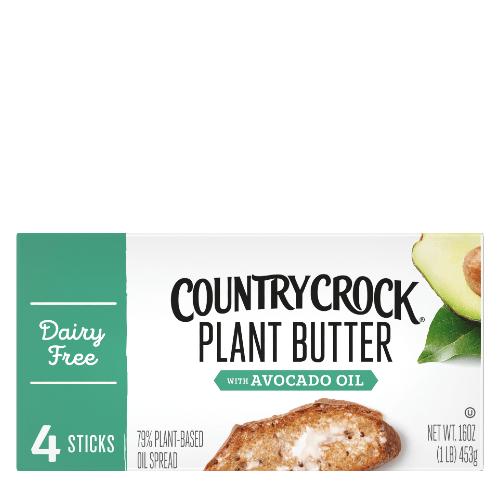
The current Avocado Oil sticks page shows four sticks in a 16-ounce package. Its current ingredient list includes palm fruit, palm kernel, avocado, and canola oils, water, salt, pea protein, glucose, sunflower lecithin, and flavoring. The nutrition panel lists 11 grams of fat, 5 grams of saturated fat, and 110 milligrams of sodium per 14 grams. Avocado oil is one part of the blend; the name does not mean the product consists mainly of that oil.
The ingredient list has changed from the earlier panel used for this article. The current page still explicitly says “Contains Soy,” despite listing sunflower lecithin. Treat it as unsuitable for a soy-free purchase unless the exact package and manufacturer resolve that discrepancy. The product photograph identifies the sticks; it is not a substitute for reading your current box.
Country Crock identifies its Plant Butters as vegan and supports one-for-one replacement in cooking and baking. That is useful manufacturer guidance, not a promise that every dough will spread or taste exactly as it did with dairy butter. For a familiar cookie recipe, use the same quantity and method, then judge the cooled result before changing anything else.
These are salted sticks. If your recipe specifies unsalted butter, compare their sodium with the butter you usually use and adjust the recipe’s added salt thoughtfully. For a delicate frosting or shortbread where you want full control, the unsalted products below are simpler choices. For ordinary cooking, the existing salt can be convenient, provided you taste before adding more.
Melt Organic Unsalted Sticks: an option without the top nine allergens
Melt Organic is worth considering when you need an unsalted baking stick and the manufacturer’s top-nine-allergen claim fits your household’s needs. Its purpose here is salt control and a different allergen profile. We would not buy it expecting proven superiority in cookies or a documented browning method.
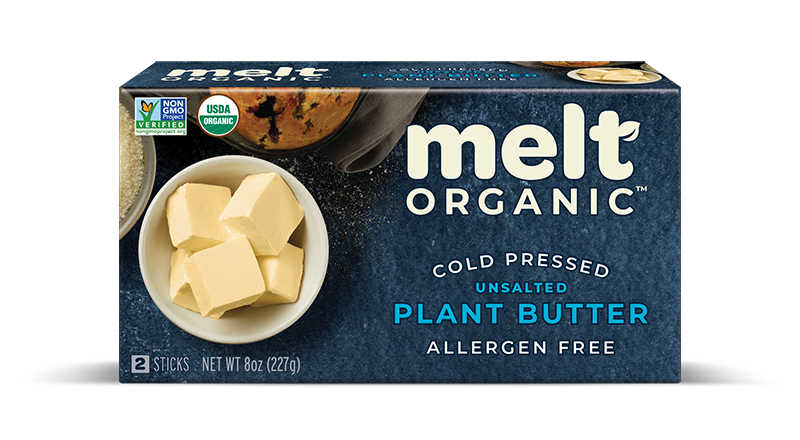
Melt’s product page describes two four-ounce unsalted sticks and recommends one-for-one baking, cooking, melting, and spreading. The blend includes organic coconut, high-oleic sunflower, and palm-fruit oils, water, sunflower lecithin, natural flavor, tocopherols, and annatto. Its published nutrition label gives 9 grams of fat, 4.5 grams of saturated fat, and 0 milligrams of sodium per 14 grams.
The company FAQ says its plant butter is free of the top nine allergens. That statement is narrower than “safe for everyone”: coconut oil is an ingredient, and an individual may react to an ingredient outside that group. Check the exact package and contact the manufacturer about cross-contact if that is part of your allergy requirements. Vegan status and allergy suitability are separate decisions.
Melt also lists Vegan as a dietary claim for its unsalted-stick foodservice formula. We describe the product as vegan; we do not turn that claim into a separate certification. Neither the ingredient list nor the allergen statement tells us how you will like its flavor in a plain buttercream.
For cakes, cookies, and frosting, the unsalted format lets you add the recipe’s stated salt yourself. Start with the prescribed butter quantity, even though this label lists less fat per serving than several other products here. Do not try to “correct” the formula by adding oil: that changes its balance and may make the dough harder to manage. If you need plant butter sticks for a specific occasion, check local stock before settling on the recipe.
Vegan butter for pie dough: keep the fat distinct
Pie dough asks the fat to remain in separate pieces while you bring flour and water together. If the fat melts or smears through the flour too early, you lose control over that structure. Choose a firm baking block or stick, cut it while cold, and follow the recipe’s instructions for the size of the pieces.
Keep the measured fat chilled until you need it. In a warm kitchen, pause when the dough becomes greasy or the fat starts smearing; refrigerate it before continuing. Add water gradually as the recipe directs. You want dough that holds together, rather than a wet mass created by pouring in the entire allowance at once.
A block is convenient, but shape alone does not establish that it will make good pastry. A manufacturer’s pastry recommendation, relevant testing, and the product’s behavior in your kitchen are more useful than a general “bakes like butter” phrase. For pie dough that matters, such as a holiday dessert, use a product and recipe you have already tried together or allow time for a small trial.
Miyoko’s Unsalted Cashew Milk Butter: a cultured block for pastry and browning
Miyoko’s European Style Cashew Milk Butter Unsalted is the cultured block in this group. Its manufacturer supports baking and browning, and King Arthur’s historical test provides relevant pastry context. We would consider it for pie dough or a browned-butter sauce when cashews are acceptable; we would test its softness before using it for a warm-weather decorated cake.
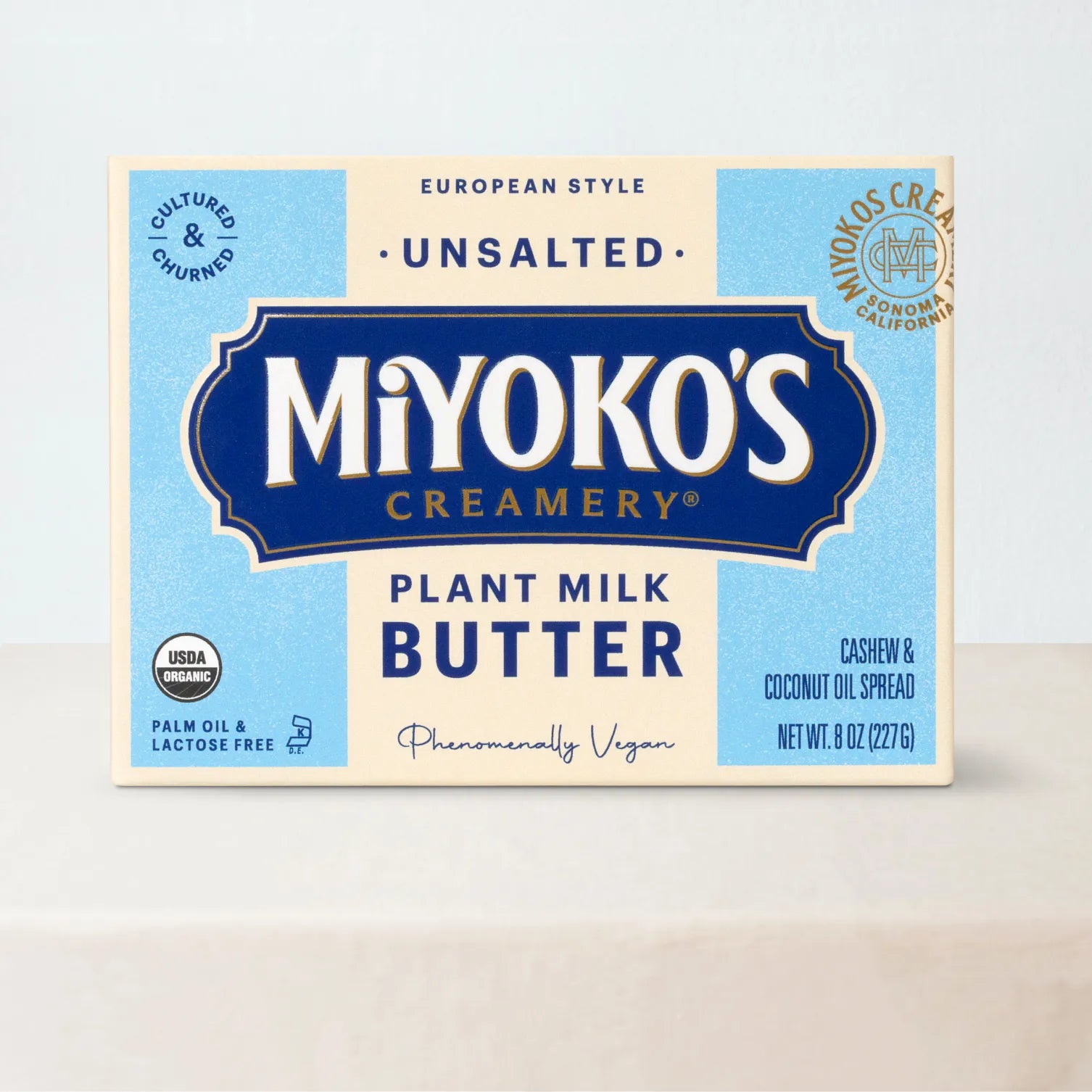
The current unsalted eight-ounce block contains organic coconut oil, cultured cashew milk, water, sunflower oil, sunflower lecithin, and natural flavors. The panel lists 10 grams of fat, 8 grams of saturated fat, and 0 milligrams of sodium per 14 grams. It contains cashew. Choose by the full name and panel, because salted and unsalted versions are different purchases.
Miyoko’s states that all its butter products are vegan. Its ingredient guide attributes browning to cultured cashew milk solids. Those are manufacturer statements, rather than findings from our kitchen. They provide a reason to choose this block for that technique without claiming it outperforms another product.
For pastry, cut the cold block into the pieces your recipe requires and watch its texture as you work. A product that softens quickly may need more refrigerator pauses. The unsalted format gives you control over seasoning in pie dough, shortbread, and plain frosting; the cultured ingredient also makes flavor worth considering before you use it in a very neutral bake.
For browning, follow the product-specific guidance below and judge color and aroma as you cook. We have no current independent comparison between Miyoko’s and Country Crock, so there is no basis for naming a browning winner. Miyoko’s is the unsalted, cashew-containing route; Country Crock is the salted route with a soy warning. Those are useful differences you can act on.
Browning vegan butter: watch the solids, not just the foam
Browned-butter flavor comes from toasting solids, rather than simply heating oil until its color deepens. King Arthur’s brown-butter guide explains the dairy version, where milk solids brown as water evaporates. The relevant technique is a light-colored pan, moderate heat, frequent stirring, and prompt transfer out of the hot pan. Its dairy timing and water-replacement advice are not universal instructions for vegan formulas.
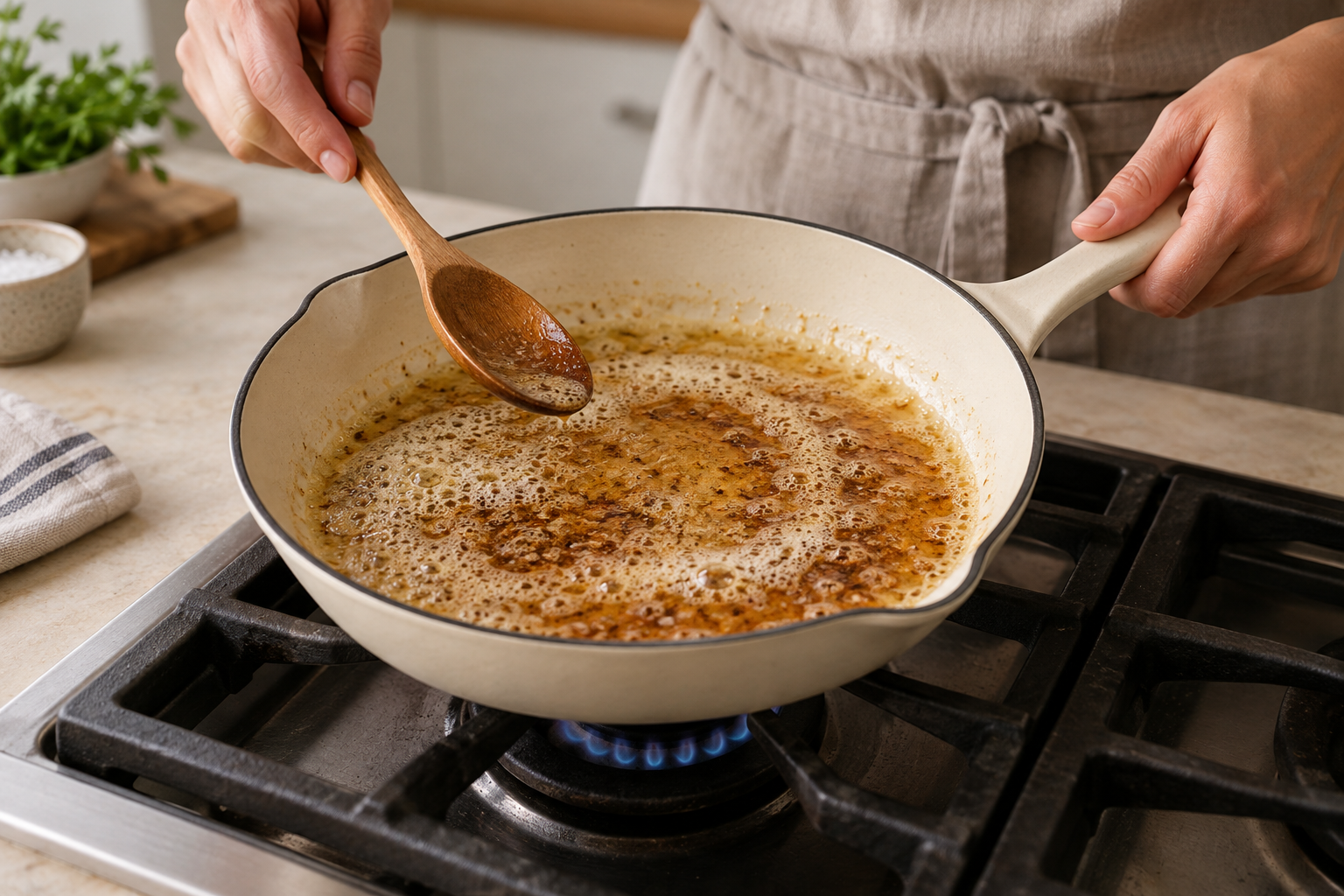
Country Crock’s Vegan Brown Butter Sweet Potato Casserole uses its exact Avocado Oil sticks. It directs cooks to stir and swirl over medium heat until the butter foams, browns, and smells nutty, with about five to seven minutes given as guidance. Miyoko’s separately supports browning through its cultured cashew solids. Neither source means every vegan butter will follow the same sequence or take the same time.
Have a heatproof bowl ready before you start. Cut the product into even pieces, use a pan where you can see the bottom, and stay with it as it melts. Stir or swirl so particles do not remain against one hot spot. Watch for golden or amber solids and a toasted aroma. Once it reaches the desired stage, transfer it immediately; removing the pan from the burner alone leaves residual heat working on the fat.
Foam is a sign to pay attention, not proof of successful browning. If a product lacks specific browning support, do not keep heating it indefinitely in pursuit of particles that may never appear. Blackened bits and a sharp burnt smell mean the batch has gone too far. Use a documented product for a browned-butter recipe; use an ordinary spread simply to add richness when that is all the dish needs.
Browning also removes moisture. For a sauce over cooked pasta or vegetables, you can judge the final consistency directly. For cookies or cake, use a recipe developed for browned vegan butter or follow instructions for the exact product. Do not borrow a fixed water replacement from a dairy recipe when the plant product’s original water content is unknown. Also observe whether the recipe asks for the browned fat warm, cooled, or firm again.
Soft tubs for toast and everyday cooking
A refrigerated tub is a sensible choice when the goal is spreading, topping, or enriching dinner rather than forming pastry layers. Think warm toast, corn, mashed potatoes, rice, or a quick pan sauce. For everyday cooking, choose the product by ingredients, salt, stated uses, and whether you want its flavor in the dish.
Use moderate heat when melting a spread and expect some bubbling or spitting from its water. The ability to melt does not establish browning performance. If your recipe calls for a high-heat oil, use the appropriate oil rather than assuming a buttery spread is interchangeable. A spoonful stirred into cooked vegetables can do its job without a long trip through a hot skillet.
Earth Balance Original Buttery Spread: an all-purpose tub
Earth Balance Original is the familiar tub for spreading and everyday cooking. The brand says everything it makes is vegan. We would choose this product for toast, vegetables, and routine meals, while looking to a firm baking format first for pastry. It should not inherit the results of tests carried out with Earth Balance sticks.
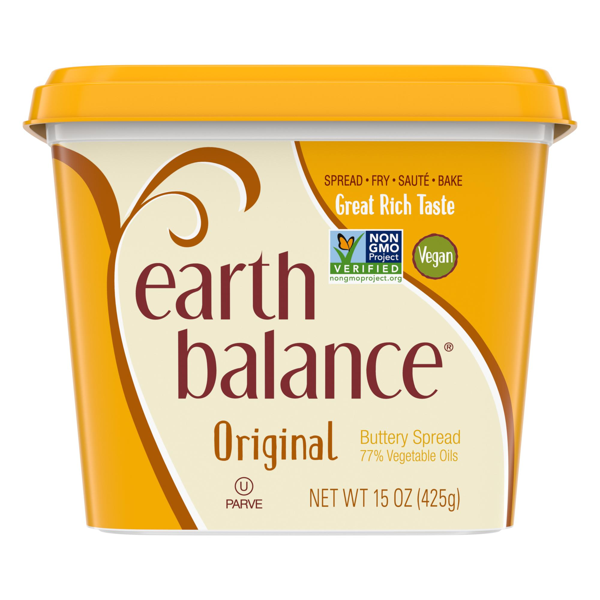
The exact 15-ounce product’s SmartLabel identifies a 77-percent vegetable-oil spread, with palm, canola, soybean, and flaxseed oils followed by water and smaller ingredients. These include salt, natural flavor, pea protein isolate, sunflower lecithin, olive oil, lactic acid, and annatto. Its listed update is April 26, 2025. “Current page” should not be confused with a freshly updated physical package.
The manufacturer’s nutrition panel gives 11 grams of fat, 3 grams of saturated fat, and 105 milligrams of sodium per 14 grams. Its product instructions explicitly list spreading, frying, sautéing, and baking. We use this exact manufacturer record rather than combining different retailer ingredient lists into one formula. Read the tub you are buying and ask the manufacturer if a relevant detail differs.
For everyday cooking, the soft format is convenient and its salt should be part of your seasoning decision. For baking, confirm that the exact use suits the recipe: a general baking claim does not establish cold firmness for pie dough or toasted solids for browning. The official allergen tab says the product contains none of the nine common allergens, while soybean oil appears in its ingredients. Those are distinct disclosures, not grounds for inventing a “Contains Soy” warning or promising individual allergy suitability. Resolve a relevant soy question with the manufacturer.
Land O Lakes Plant-Based Creamy Spread: refrigerator convenience
Land O Lakes Plant-Based Creamy Spread makes sense for breakfast and everyday cooking when you want a tub that spreads directly from the refrigerator. Its manufacturer also permits most baking, with specific exclusions. Those exclusions are more useful than a blanket promise that a plant-based spread can do everything dairy butter does.
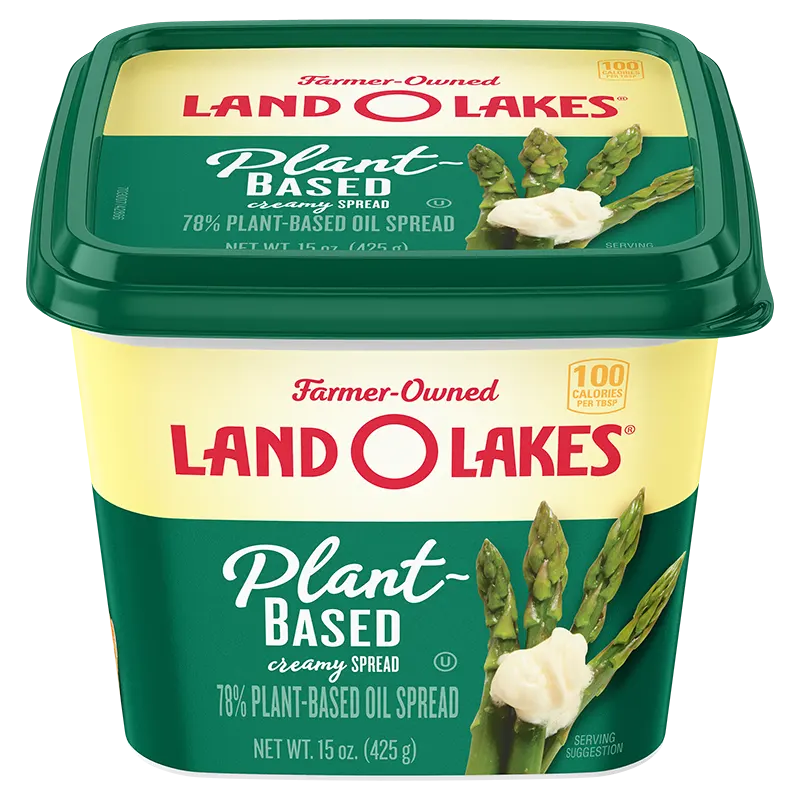
The 15-ounce product page labels this spread Vegan and lists soybean and palm oils, water, salt, soy lecithin, mono- and diglycerides, natural flavor, lactic acid, vitamin A palmitate, and beta carotene. It contains soy. The nutrition panel gives 11 grams of fat, 3 grams of saturated fat, and 105 milligrams of sodium per 14 grams.
The product FAQ supports spreading, topping, cooking, and most baking but excludes pastry and candy made with boiled syrup. We would use that distinction when choosing: toast, pancakes, potatoes, and ordinary cooking fit its role; pie dough and temperature-sensitive candy call for a different product. There are no product-specific browning directions in the sources used here.
If you are choosing between this tub and Earth Balance for everyday cooking, compare the package and local availability rather than expecting a proven taste winner. We have not compared them in our kitchen. Both published panels contain salt and list the same fat amount per serving, but that does not establish identical flavor, firmness, or performance in a particular bake.
Read the label for salt and the top nine allergens
Keep three questions separate: Is the exact product vegan? Does it fit the recipe? Does it meet your household’s allergy needs? A brand’s vegan statement can answer the first question while leaving the other two open. Use the complete product name, format, ingredients, nutrition panel, and allergen information rather than relying on the word “plant” alone.
The FDA identifies nine major food allergens: milk, eggs, fish, crustacean shellfish, tree nuts, peanuts, wheat, soybeans, and sesame. “Free of the top nine allergens” refers to that defined group, not to every possible food allergy. Check ingredients beyond that group if they matter to you, and resolve relevant package or cross-contact questions with the manufacturer.
For salt, compare like serving sizes and consider the amount in the entire recipe. Eight tablespoons of a salted spread contribute more sodium than one swipe on toast. Unsalted vegan butter gives you a simpler starting point for a delicate bake. With a salted product, do not automatically remove all the recipe’s salt; compare it with the intended ingredient and adjust deliberately.
For measuring, weigh the butter when the recipe provides grams. Plant butter sticks may have useful wrapper marks, but do not assume every package has the same stick size. A tub needs measuring rather than an estimated scoop. Consistent quantities make it easier to tell whether a difference came from the formula, the temperature, or your method. Our guide to checking vegan claims explains how to put a product statement alongside its ingredient evidence.
Try a new product in the dish you actually make
You do not need a full home testing program to buy vegan butter. If it is mainly for toast, taste a little on plain bread and decide whether you enjoy the salt, texture, and any coconut or cultured notes. If it is for everyday cooking, try it in a familiar simple dish before committing it to a strongly seasoned meal where differences are harder to notice.
For cookies, use a small batch of a plain recipe you already trust. Keep the portion size, pan, oven setting, and prescribed dough temperature consistent. Judge the cookies after cooling: look at spread and thickness, then taste the edge and center. If the dough was visibly warm or greasy, correct that specific issue on the next batch rather than changing flour, sugar, and fat all at once.
For pie dough, notice whether the cold pieces remain manageable as you mix and roll. For frosting, test the finished texture at its serving temperature. For browning, choose a product with documented instructions and start with a modest batch. The useful question is whether this exact product works for your recipe and routine, rather than whether it wins every possible comparison.
Conclusion
Buy vegan butter for a defined job. Plant butter sticks are convenient for measured baking; an unsalted stick or cultured block offers salt control; a soft tub suits toast and everyday cooking. For pie dough, keep firmness and temperature in view. For browning, choose documented product guidance and watch the toasted solids closely.
Country Crock offers salted sticks and an exact-product browning recipe. Melt offers unsalted sticks with a manufacturer claim about the top nine allergens. Miyoko’s offers an unsalted cultured cashew block. Earth Balance and Land O Lakes give you two recognizable tub options, with different published limits. Read the current package, choose by your recipe and ingredients, and give an unfamiliar formula one sensible small trial before an important bake.
FAQ
Can every vegan butter replace dairy butter one-for-one?
No. Some manufacturers support that substitution for their exact product, but the recipe and physical format still matter. Begin with the stated amount and follow the recipe’s temperature instructions. Plant butter sticks intended for baking are a sensible starting point for cookies and cakes; a soft tub needs more caution in pastry. If you also replace eggs or milk, use a tested vegan recipe when possible rather than assuming the butter alone determines the result.
Why does one vegan butter brown while another only melts?
The browned flavor depends on solids that toast, not just liquid fat or foam. Miyoko’s identifies cultured cashew milk solids as its browning component, while Country Crock publishes directions using its Avocado Oil sticks. Choose an exact product with that support. Watch the color and aroma in a light pan, transfer it promptly, and do not keep heating an unsupported spread in the hope that browned bits will eventually appear.
Is unsalted butter necessary for pie dough and frosting?
It is the simplest starting point when you want control over salt, but it is not a guarantee of good texture. Pie dough also needs workable cold fat, and frosting needs the right consistency at serving temperature. A salted product may suit a particular recipe if you account for its sodium. For a lightly flavored frosting or pastry, we would choose an unsalted vegan butter and add the recipe’s salt ourselves.
Does a claim about the top nine allergens mean a product is safe for everyone?
No. The top nine allergens are a defined group, and people can react to ingredients outside it. Melt’s unsalted formula includes coconut oil. Miyoko’s includes cashew; Country Crock’s current page retains a soy warning; Land O Lakes contains soy. Read the physical package and resolve any relevant discrepancy or cross-contact requirement before buying. A vegan statement does not answer an allergy question.
Can I bake with the tub I already use on toast?
Check that exact tub’s instructions and the recipe. Earth Balance describes baking uses, while Land O Lakes permits most baking but excludes pastry and boiled-syrup candy. A recipe that uses melted fat may be a more suitable place to start than one requiring firm cold cubes. For pie dough or a creamed recipe developed around a stick, use an appropriate baking product or a recipe specifically developed with your spread.