Vegan Handbags: How to Choose One That Looks Polished and Lasts
A handbag can look beautiful in a photograph and become a nuisance the moment you load it. The opening is too narrow, the strap slips over a coat, or the empty bag already weighs more than you want to carry. Choosing vegan handbags well means bringing style and everyday function into the same decision.
Start with a shape you want to wear. Then look at the materials, finishing, size, weight and purchase terms that make that shape useful. This guide explains those checks through four different black bags: a structured work tote, a compact crossbody, a small chain bag and a lightweight weather-conscious shoulder bag. We have not carried or wear-tested these products; our judgments come from their disclosed specifications and official photographs, which cannot establish years of durability.
Key takeaways
- Choose the silhouette for your clothes and routine. A clean shape and restrained hardware can matter more to the overall look than a leather-like grain.
- Inspect seams, edges, closures and strap attachments. Photographs show visible finishing, while hidden reinforcement and long-term wear remain unknown.
- Compare vegan handbag materials by the exact exterior, lining and trim. A vegan leather label alone does not describe the whole construction.
- Check useful capacity, empty weight and strap length before checkout. A laptop screen diagonal is not an internal bag measurement.
- Read warranty exclusions and return costs, then try the bag indoors while it is eligible for return. A high price does not make an uncomfortable bag worth keeping.
Choose a shape for the way you dress and carry things
Before comparing vegan handbags, decide what the bag needs to do on an ordinary day. A work tote might carry a laptop, charger, notebook and bottle. A compact shoulder bag might need only a phone, keys and small wallet. A dinner bag can reasonably hold less if that limited capacity is deliberate. Write down the essentials rather than imagining that every new bag must cover every occasion.
For a vegan work tote, look for a broad enough opening and handles that suit the load. A firm base and controlled top line give a large bag a more tailored appearance. Interior divisions can stop small items from disappearing around a computer, but they also break up the available space. A single wide compartment and three narrower ones are different solutions even when the exterior dimensions match.
For a vegan crossbody bag, consider where the body will sit and whether the strap adjusts to your clothes. A simple rectangle with one clasp can look polished without much decoration. A curved shoulder bag may feel more relaxed. Neither needs to imitate a conventional leather bag to work with a wool-free coat, trousers or a dress; choose a silhouette that belongs with your actual wardrobe.
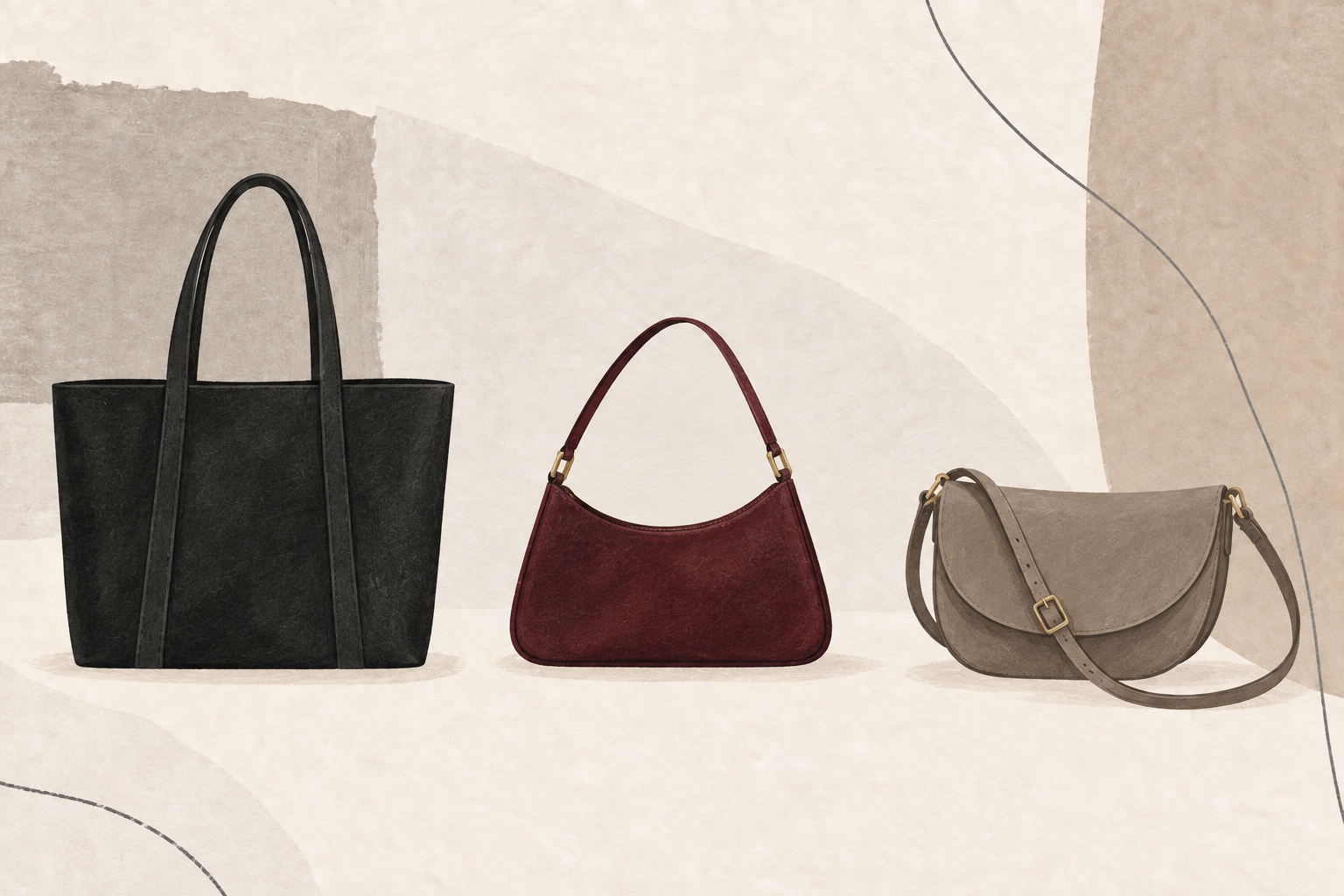
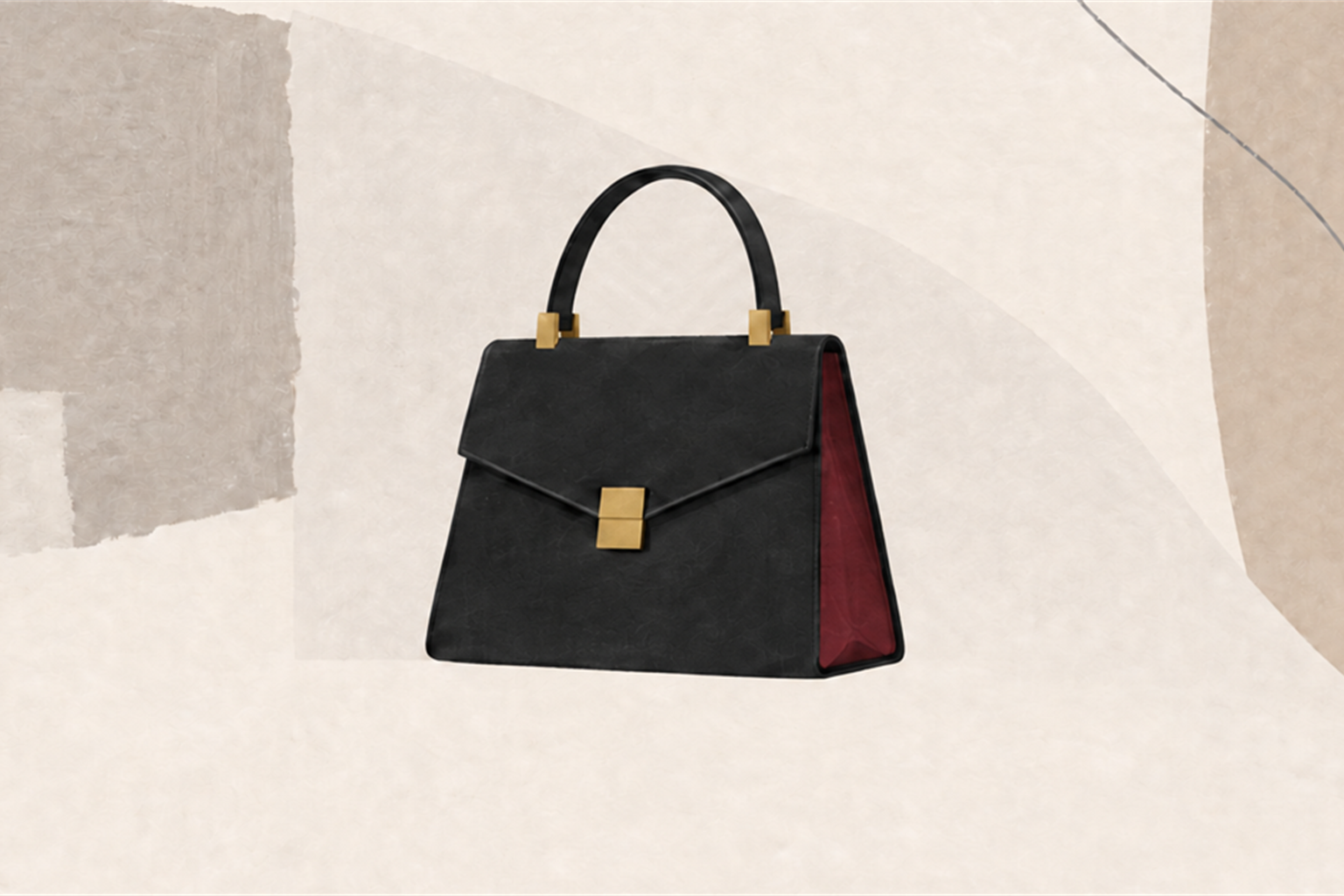
When comparing vegan handbags, study the front, side and on-body photographs. The front shows the top line, handle placement and proportion of the clasp. The side shows useful depth and how the expandable panel folds. An on-body image helps with scale, but styling and camera distance can be misleading; put the listed measurements beside a bag you already know.
Softness can be part of the design. A draped bag can look controlled when the opening, seams and strap attachments follow the intended curve. A rigid bag can look awkward when its corners, handles or hardware are out of proportion. The useful question is whether the whole object looks resolved, not whether every panel stands up by itself.
Look closely at finishing before judging the material story
Good finishing is easier to assess when you know where to look. Begin with the places that move or carry weight, then examine the details you touch each time you open the bag. Do not let an attractive front photograph do all the work: a close view of a strap, flap edge and interior can change the purchase decision.
At the handles and strap anchors, look for a neat attachment that spreads tension into the surrounding panel. A stitched tab, folded extension or substantial hardware mount can show a thoughtful design. A photograph cannot reveal every hidden layer of reinforcement, so treat these as visible construction clues rather than a proof of strength. Rivets are not automatically better than stitching; each depends on the material around it.
Follow the seams through corners and changes of direction. Even spacing and a consistent distance from the edge help the panels look intentional. Loose ends, visible puckering or an uneven junction deserve a closer look. Decorative topstitching can improve appearance, but it does not tell you how the structural seam underneath was made.
Painted edges should appear smooth and even, without ridges, exposed backing or coating smeared onto the adjacent surface. Folded edges can look just as refined when the fold is tidy. Pay particular attention to the underside of a strap and the corners of a flap, because the main product image may show only the most flattering face.
The closure should make sense for the shape. A zipper needs a path you can move through without forcing it. A magnetic opening should meet without pulling the top edge crooked. A push lock needs surrounding structure so the clasp and flap stay aligned. A beautifully minimal bag becomes frustrating if access takes both hands and constant adjustment.
Hardware on vegan handbags also changes the visual balance. One consistent finish is an easy route to a clean look, while deliberate mixed metals need to feel designed rather than accidental. Inspect the rings, hinges and clasp as closely as a decorative chain. Then remember weight: a substantial chain may look appealing and still be the reason a small bag feels heavy.
Finally, look inside. Check the lining, pocket seams and interior zipper rather than assuming they match the exterior’s care. A bright lining can make keys easier to find; a dark one may suit your taste and hide marks. If the seller never shows the interior, ask for a photograph before paying for organization you cannot see.
Understand what vegan handbag materials tell you
“Vegan leather” describes an animal-free claim, not one standardized substance. The FTC’s Leather Guides address misleading composition claims and disclosure of nonleather content when a material resembles leather. For a handbag, you still need to read the actual exterior, lining and trim description. Two bags with the same broad label may use very different constructions.
Among vegan handbag materials, a coated textile can give you a smooth, lightly grained or matte surface. Its appearance depends on the backing, coating, color and way the panels are assembled. A fine grain can keep attention on the silhouette; a heavy embossing can dominate it. Smooth finishes make ripples and dents easier to see, which is a reason to inspect photographs closely rather than a reason to reject them automatically.
Proprietary terms such as “ultrafiber” need their own explanation. They are not a common specification you can compare across every brand. Read what the seller discloses, how it recommends cleaning the material, and what the warranty excludes. A scratch-resistance claim does not mean the bag cannot scratch, and a plant-derived ingredient does not establish superior durability.
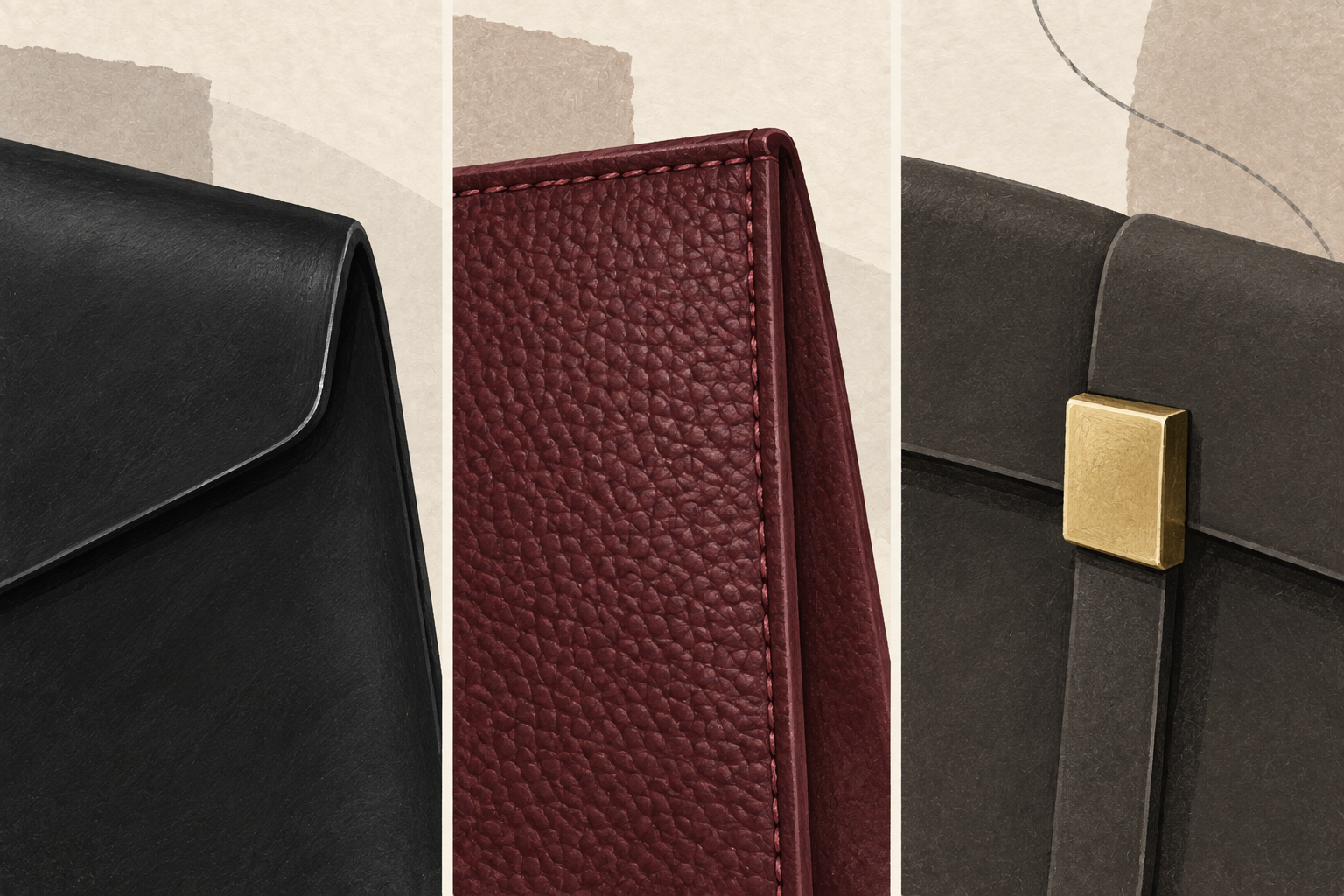
Coated polyester or nylon offers a different aesthetic from a structured vegan leather composite. A matte technical surface can look sharp with a restrained shape and quiet hardware. It may be the right choice for a commute that involves rain, provided the exact product states a relevant weather limit. A rain-associated brand name alone is not a performance specification.
Woven vegan handbag materials can also look refined through a tight weave, clean binding and precise hardware. Instead of ranking all synthetics against all plant-content composites, compare the complete bag: its finish, usable shape, care demands and disclosed composition. Our materials guide explains the broader alternatives, but your buying decision belongs to the exact product and color.
Check lining and trim as well as the main exterior. A nonleather shell can still have a leather tab, silk lining or animal-derived decoration. For a practical way to read a whole-product statement alongside its components, see Is It Vegan? How to Actually Know. You do not need to turn every ordinary synthetic fabric into a certification question; you do need to notice a separately listed animal material.
Four vegan handbags that illustrate different choices
These four worked examples give the checks above a concrete purpose. Their price, capacity and organization suit different routines. Product and policy information was refreshed on October 8, 2026; stock and terms can change. We would use the disclosed facts to decide which bag to consider, then judge fit and finish during the permitted try-on period. These are not rankings from a long-term wear test.
Freja Paloma Tote in Black: organization with substantial empty weight
The Freja Paloma Tote is the structured vegan work tote in this group. Its firm base, restrained light-gold hardware and simple exterior offer a tailored way to carry a relatively large load. The published $368 price buys a 19-by-10-by-5-inch bag with a 10.5-inch handle drop and 0.8-inch straps. A zipped center compartment, two magnetic side compartments and six pockets give small items defined places.
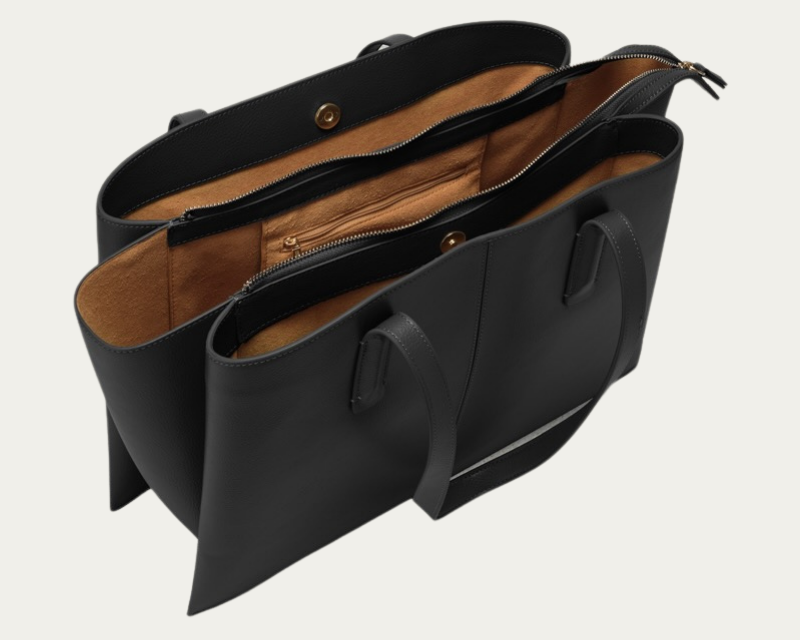
Freja describes both the pebbled exterior and merlot lining as vegan ultrafiber. The interior photograph shows the division of space, which is more useful for this purchase than another closed front view. The listing says the center fits laptops measured up to 16 inches diagonally. Before buying a vegan work tote for a particular computer, confirm its actual width, thickness and ability to pass through the opening with a case on.
The practical drawback is 2.6 pounds of empty weight. That may be acceptable if you want this structure and organization; it is a poor starting point if the problem you are trying to solve is a heavy commute. Add the weight of the laptop and other essentials before deciding that a more substantial vegan work tote will feel more luxurious in daily use.
Freja’s FAQ gives a one-year defect warranty while excluding normal scuffs, chips, peeling, stains and other appearance changes. Unused U.S. returns must be sent back within 14 days of delivery for a refund or 28 days for store credit, with packaging, tag and dust bag retained. The $15 fee per returned item is waived for store credit. Those terms make a prompt indoor fit check important. We would consider the Paloma for its organized structure, and pass if low empty weight or a longer refund window matters more.
Confirm Black availability before relying on it for a particular date: the product page displayed a notification prompt at our refresh. The FAQ also reports a warehouse move adding two to four business days of processing; free U.S. shipping now starts at $250. The published price helps you plan, but it is not a promise of stock or an arrival day.
JW PEI Mini Flap Crossbody in Black: a compact shape that needs a fit check
The JW PEI Mini Flap Crossbody offers a simple rectangle, narrow border and one silver push lock at a published $99. The exterior is listed as vegan leather and the lining as polyester. Two interior pockets and a zipped pocket provide some separation inside a compact body. This vegan crossbody bag’s clean outline is the reason to consider it, rather than an expectation of luxury construction at this price.
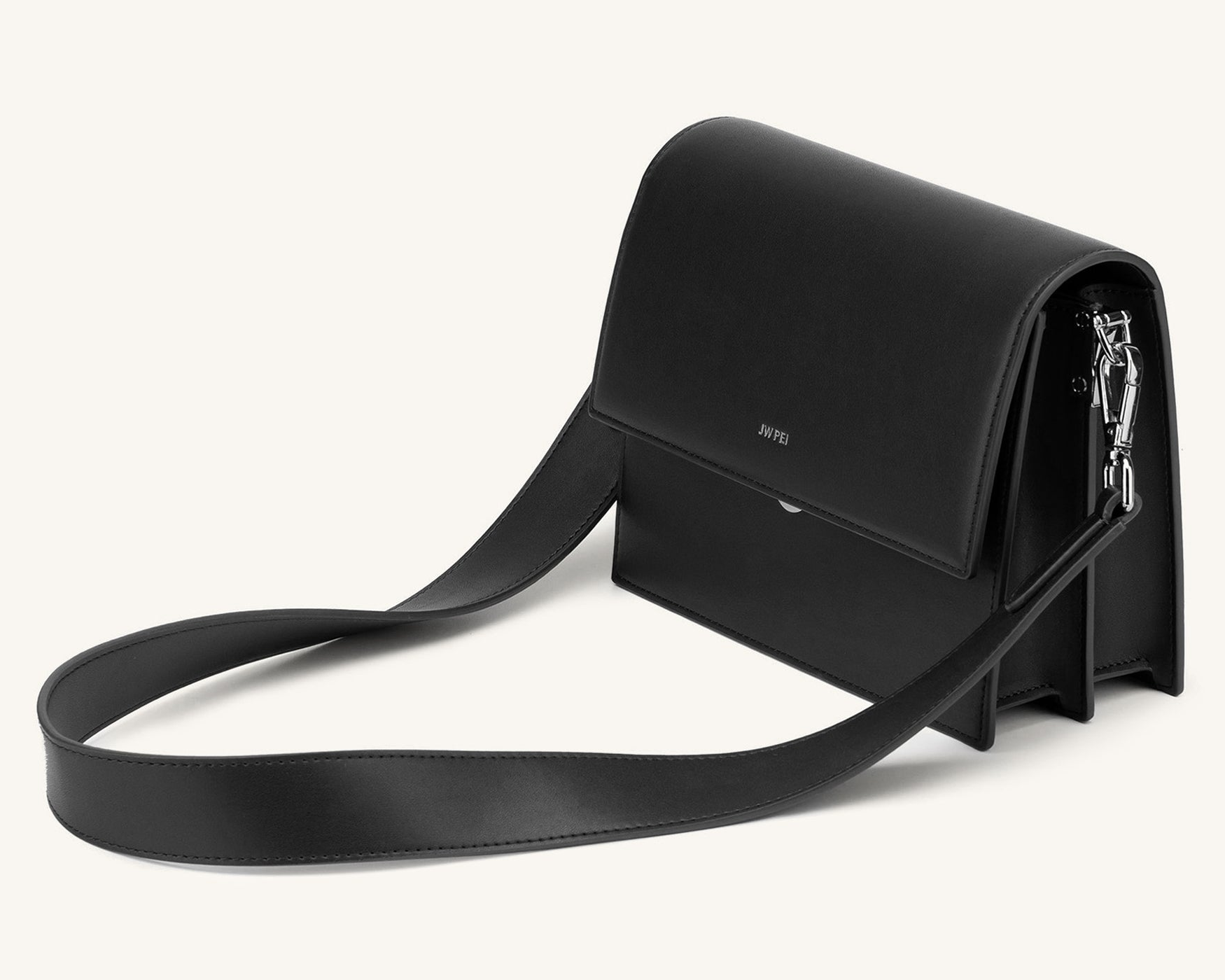
The listing labels the dimensions 7.9 inches wide, 6.1 inches deep and 3.1 inches high. The height and depth appear likely to be reversed, but we would ask the seller to confirm them rather than silently rewriting its specifications. If you have a larger phone or a particular wallet, that distinction matters more than the neat front photograph.
Its detachable strap is nonadjustable, with a stated 16.9-inch drop. For a vegan crossbody bag, fixed length deserves an on-body check: the same strap can sit comfortably over a light shirt and awkwardly over a coat. The listing does not give empty weight, exact polymer composition, detailed care instructions or a product warranty. Those are disclosure limits, not evidence that the bag has failed a durability test.
JW PEI’s return policy allows most unused full-price items to be returned within 30 days, generally with return postage paid by the customer; discounted and clearance items are final sale. We would consider this vegan crossbody bag for its compact silhouette if the seller confirms capacity and the strap suits the wearer. We would choose another design if adjustment or fuller material disclosure is essential.
Ashoka Paris Mini Paname Uppeal in Black: a deliberate small chain bag
The Ashoka Mini Paname Uppeal is the dressier, very limited-capacity choice. At a published $490, it measures 7.9 by 6.3 by 1.6 inches and weighs one pound. Tone-on-tone stitching, a custom clasp and consistent nickel-finished hardware keep the surface controlled. The removable 110-centimeter brass chain and burgundy microsuede lining add detail without multiple competing metal finishes.
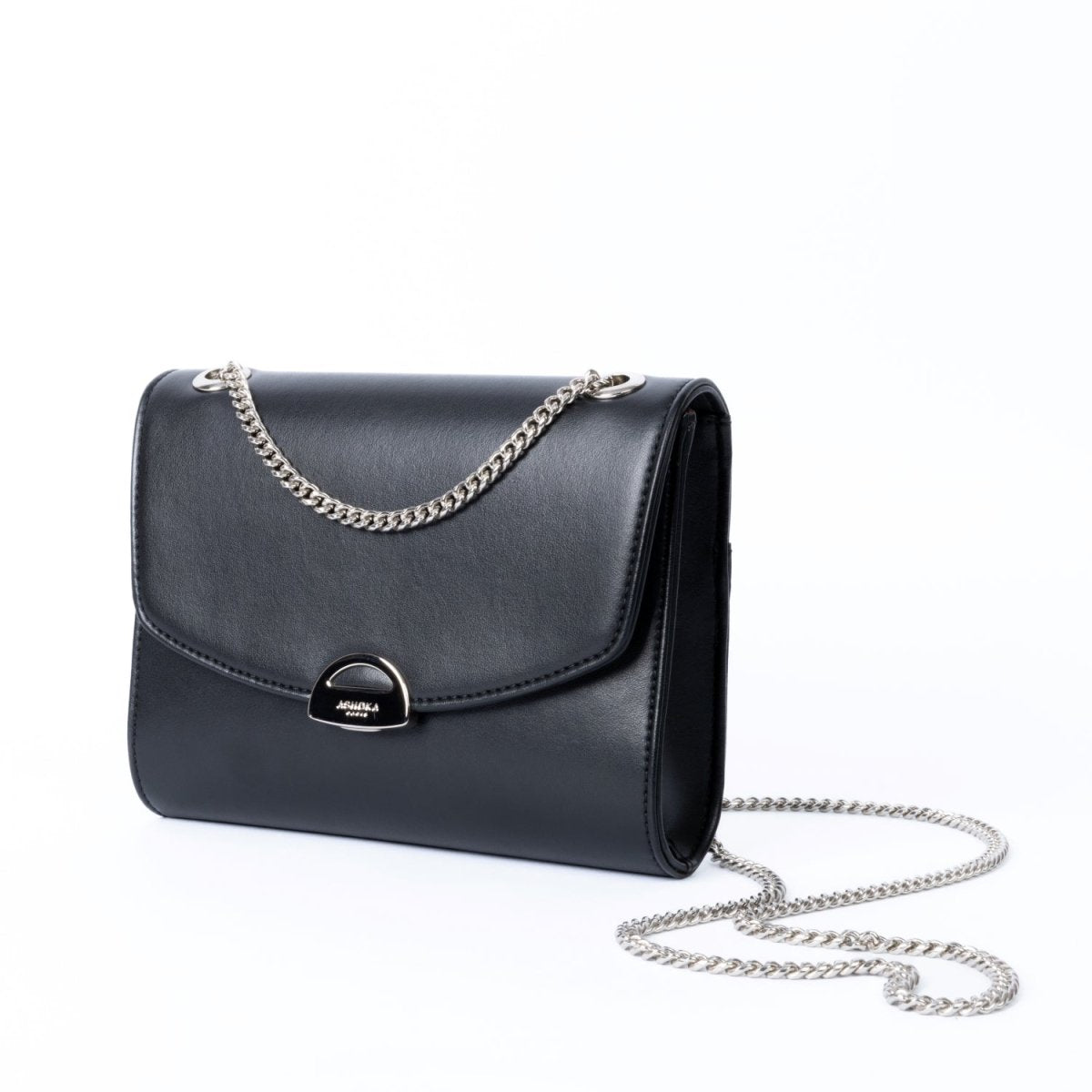
Ashoka describes Uppeal as a coated material made partly with apple residue and states that its bags contain no animal-derived materials. The disclosed lining is polyester. That supports the animal-free choice without making the apple component a reason to expect a longer lifespan. For vegan handbags at this price, the visible finish, proportions and purchase terms need to suit your routine.
The published capacity is a phone, cardholder and lipstick. One pound is substantial for that small amount of useful space, and a chain can feel different from a soft fabric strap against the body. We would treat this as a deliberate occasion bag, not buy it hoping that a wallet, sunglasses case and daily extras will somehow fit.
Ashoka’s U.S. refund policy establishes a worldwide one-year commercial manufacturing-defect guarantee, separate from the two-year statutory conformity rights described for EU buyers. The product’s “2-year + 1-year” banner does not mean a three-year U.S. warranty. For an ordinary U.S. return, notify the brand within 14 days, retain packaging and protective pieces, and budget for international shipping and any re-import charges. Choose it for this exact compact shape and finishing if the small capacity is welcome; pass if you need a light everyday bag or an inexpensive way to return it.
Rains Valera Shoulder Bag in Black: light weight and a quieter technical surface
The Rains Valera Shoulder Bag is the lighter, more casual route. The published $140 bag measures 13.8 by 8.7 by 3.9 inches, holds 7.7 liters and weighs 330 grams, about 11.6 ounces. Its curved black body, matte surface, coated zipper and brushed-silver hardware let the technical material sit comfortably beside ordinary clothing. An adjustable webbing strap with a detachable extension offers shoulder or crossbody wear.
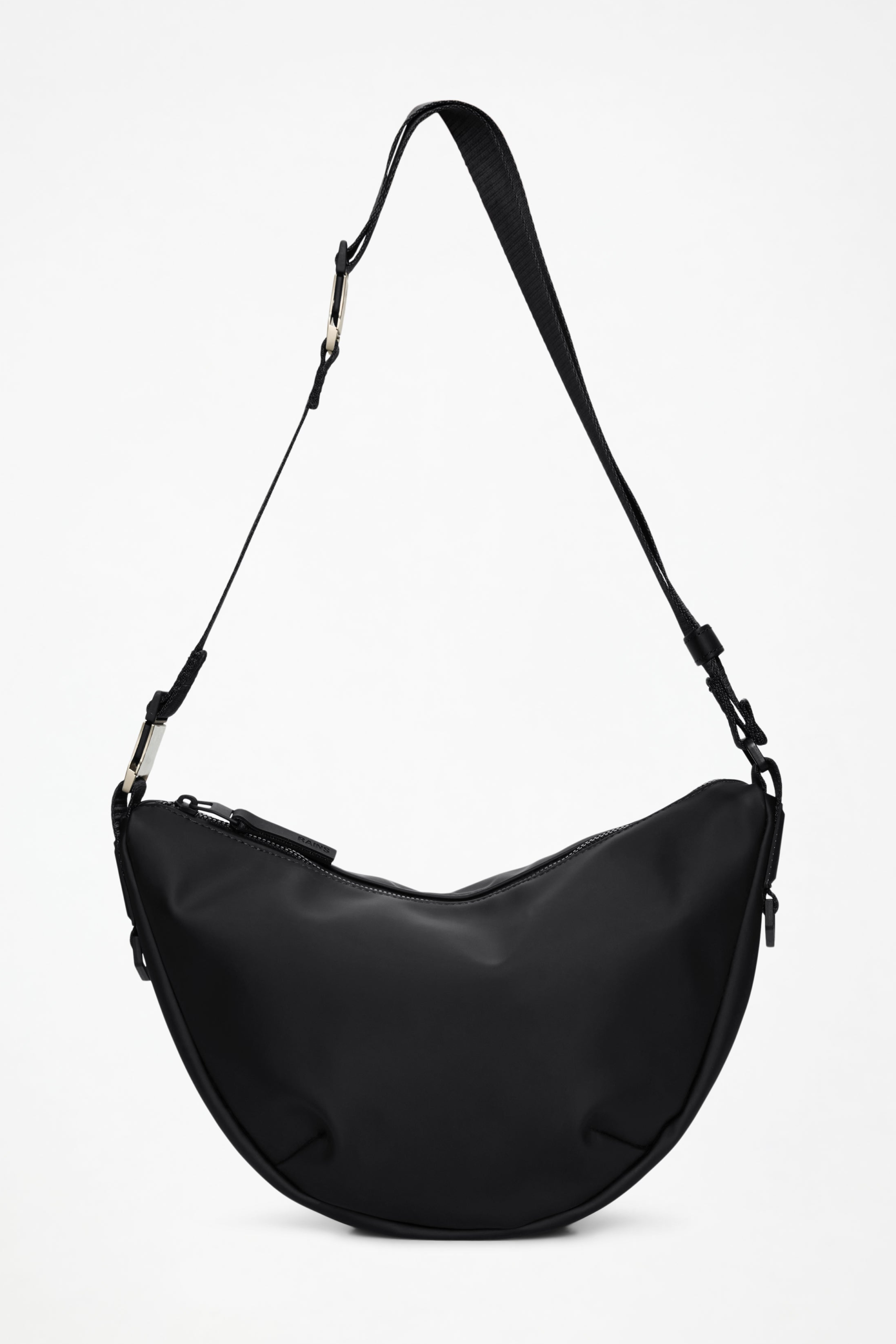
The exact listing discloses polyester with a polyurethane coating, metal hardware and silicone branding, with no leather listed. Rains’ historical *Light the Way* report, which discusses goals around 2021, describes its wider bags and accessories as vegan-friendly. That older range statement supplies context alongside the current synthetic-material description; it is not a current certificate for this exact model. Ask the brand for an updated whole-bag statement if you require that confirmation before ordering.
Rains defines the product’s W3 rating and 8,000-millimeter water-column measure as protection from light rain. That is a useful limit, not permission to immerse the bag or a promise about every downpour. Inside, one main compartment and one slip pocket offer much less organization than the Paloma. A pouch may suit that open layout, provided you account for its extra weight and space.
Rains’ warranty terms give two-year coverage for purchases from Rains; stockist purchases go back to the stockist for a claim. Its U.S. return terms allow intact items to be returned within 30 days of receipt, with a $5.99 fee per returned order when using a Rains label. Online orders cannot be returned to a Rains shop. The product’s care instructions prohibit washing and other intensive cleaning. We would consider the Valera when low weight and stated light-rain protection matter most. We would pass when a tailored silhouette, multiple built-in compartments or a more finished strap is the priority.
Check usable space and carrying comfort
To compare vegan handbags for capacity, begin with the largest awkward item, not the most optimistic label. Measure a laptop in its case, a long wallet or a sunglasses case, then ask how it enters the bag. Exterior measurements include panels and structure. A divided interior or narrow zipper opening can reduce useful space even when the main body looks large enough.
For a vegan work tote, include the empty bag in the carrying calculation. Put your usual essentials on a scale if the total is unclear. A broad, soft handle may distribute pressure more pleasantly than a narrow edge, but it does not erase weight. Compare a proposed purchase with a bag you already carry comfortably rather than accepting a heavy tote because you like its appearance unloaded.
For a vegan crossbody bag, compare the strap drop with your current favorite while wearing similar clothes. Drop is the vertical distance between the top of the strap and top of the bag, rather than the complete strap length. Check the available adjustment range and where a buckle or connector will rest. Detachable and adjustable are separate features.
Think about access as well as capacity. Can you reach a phone without opening every compartment? Does the closure suit crowded transport or a quick errand? Will a bottle tip into an open side section? These are routine preferences, so there is no universally correct layout. Choose the one that reduces the small frustrations you already know.
Use the return window for a realistic indoor try-on
Before ordering vegan handbags online, read the full return terms. The FTC’s online-shopping advice recommends checking the refund deadline, return postage and fees, including different conditions for sale goods. Save the policy that applies to your order. A 14-day refund window, store credit and a customer-paid international return are meaningfully different purchase risks.
Keep tags, films and packaging intact until you know the permitted try-on conditions for vegan handbags. If the policy allows it, load your normal clean belongings and walk indoors on a clean surface. Try the bag over the coat you actually wear, operate the closure, and notice whether hardware presses against your arm or side. Avoid forcing a zipper or stuffing in an item that does not fit.
Set the loaded bag down and examine its shape. Some movement is expected in a soft design. A sharply bowed base, a top edge dragged into a V or a clasp that no longer meets easily is information about how the bag handles your load. Reassess the contents or return the bag while it is eligible rather than assuming discomfort will improve because the purchase was expensive.
Make care, repair and price part of the decision
Vegan handbag materials need product-specific care. Freja permits mild soap and warm water with a lint-free cloth. Ashoka’s Uppeal care guide recommends a soft cloth slightly dampened with clean water and prompt drying for routine cleaning; avoid harsh cleaners, alcohol and abrasives. Rains’ coated fabric has its own cleaning restrictions. Those differences are a reason to read the instructions before choosing a cleaner, not to apply a traditional leather conditioner to every leather-like surface.
Store the bag in the way its maker recommends, with chains and sharp hardware kept from pressing into the panels. Freja advises upright storage rather than hanging or stacking. Ashoka recommends dry storage with light stuffing. If you need a bag to tolerate rough handling and frequent cleaning, those care requirements belong in the selection process rather than becoming a surprise afterward.
Ask about repair before relying on a vegan leather bag’s warranty. A manufacturing-defect guarantee may exclude ordinary scuffs, peeling or appearance changes, and it may not supply a replacement strap or clasp. Find out whether the brand offers parts, how a claim is handled and whether an outside repair affects coverage. You need an answer about this construction, not a general promise that vegan leather lasts.
A higher price should correspond to details you value: useful organization, precise finishing, clear disclosures or access to meaningful service. An agricultural byproduct, recycled-content percentage or luxury name does not establish those qualities by itself. Compare vegan handbag materials alongside the complete construction and service offered. A simpler, less expensive design may be the better purchase when the fit, finish and return terms are clear. We would pay for a bag that improves the routine, not for a material story that leaves the practical questions unanswered.
Conclusion
Choose vegan handbags with the same attention you would give the rest of your wardrobe: a shape you enjoy, a finish that suits it and enough practical information to make a confident purchase. For a vegan work tote, give weight and handle comfort as much attention as laptop capacity. For a vegan crossbody bag, confirm usable depth and strap length. For rain, choose a stated performance limit and appropriate closure.
Vegan handbag materials are one part of that judgment. Check the exact exterior, lining and trim, then bring construction, care, warranty and returns into the decision. Keep a bag because it works with your clothes and contents, rather than because its animal-free label excuses a disappointing fit or finish. The Edit: Fashion has more direct shopping guidance.
Want better vegan buying shortcuts? Subscribe for smart finds, useful updates, and a free copy of The Things Nobody Tells You.
FAQ
Do vegan leather handbags last?
There is no reliable lifespan for everything sold as vegan leather. The coating, backing, panel construction, carried load, care and storage all matter. An official photograph shows a new sample, while a warranty tells you only what the seller agrees to cover. Look for specific exclusions and repair options. We have not wear-tested the four examples here, so we would choose by their disclosed construction and practical fit without promising a number of years.
Which vegan handbag materials look most polished?
Vegan handbag materials work with the silhouette rather than determining polish alone. A fine-grained coating can suit a structured tote; a smooth surface can highlight a simple clasp; a matte technical fabric can look sharp on a restrained curved bag. Look at the complete object from several angles, including the seams, handles and interior. Choose the surface you like, then judge whether its finishing and proportions support that choice.
What should I check beyond the exterior?
Read the lining, trim, strap and decorative-material disclosures, and confirm whether a vegan statement applies to the whole bag. Then examine seams, edges, strap anchors, closures and the interior. Finish with measurements, empty weight, care and purchase terms. This gives vegan handbags a useful buying standard without treating an attractive nonleather shell as proof of every component or a guarantee of lasting quality.
How do I know whether a work tote will fit my laptop?
Measure the device with its usual case and compare its width, height and thickness with the usable compartment and opening. A screen diagonal alone is not enough. Ask the seller for internal measurements when the fit is close, especially if a zipper or divider narrows the space. During an allowed indoor try-on, confirm that the computer enters without force and that the loaded vegan work tote remains comfortable to carry.