Vegan Suits for Men: The Animal-Free Shopping Guide
Vegan suits for men are rarely hiding behind a big vegan label. Most of the time, the better move is simpler: stop walking straight toward the wool rack.
Traditional men's suiting still leans hard on wool, silk, cashmere blends, horn buttons, leather trim, and old menswear language that treats animal materials as the default. That can make an animal-free suit feel rare before you have even checked the tag. Once you shop by material instead of prestige, the map opens up: performance suits, travel blazers, wedding separates, warm-weather linen-look suits, and affordable department-store finds that can look much better than old polyester jokes suggest.
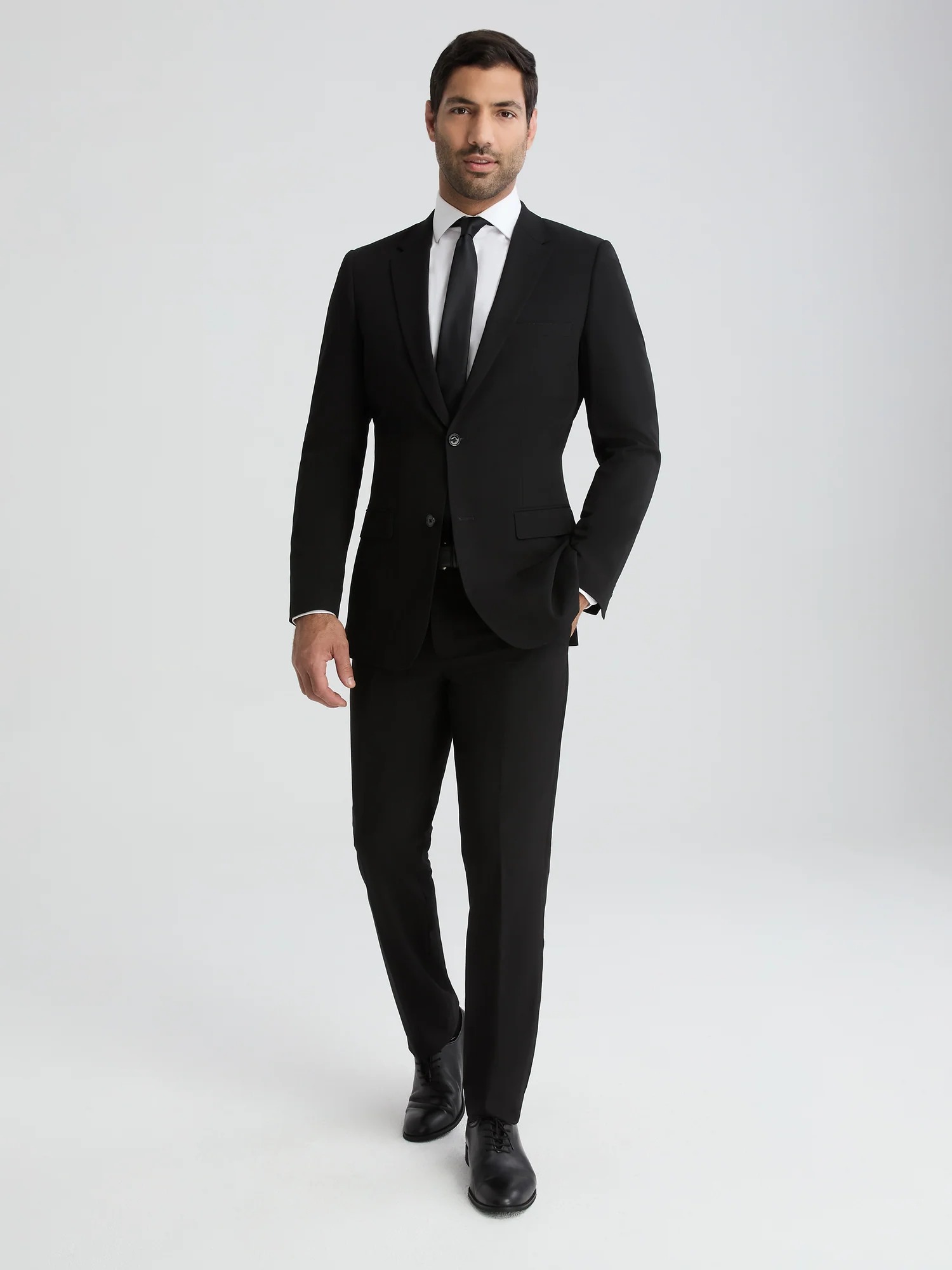
For this guide, a vegan suit means no obvious animal-derived material in the suit itself: no wool, silk, leather, suede, cashmere, mohair, alpaca, camel hair, animal hair blends, horn, shell, bone, mother-of-pearl, or animal trim. A certified vegan label is useful when it exists, but most people will not buy suits that way. A cotton shirt does not need to announce itself as vegan. A polyester blazer does not need a speech either.
The real question is more practical: what is the suit made of, does it fit, and does it look right in the room?
Key Takeaways
- Vegan suits do not need a special vegan label. They need to avoid animal-derived materials.
- The main materials to skip are wool, silk, leather, suede, cashmere, mohair, alpaca, camel hair, animal hair blends, horn, shell, bone, and mother-of-pearl.
- For ordinary ready-to-wear suits, the fiber label does most of the work.
- For tuxedos, bespoke tailoring, vintage suits, luxury pieces, and formalwear details, ask more questions about facings, buttons, trim, and inner construction.
- The strongest shopping lanes right now are performance suiting, travel blazers, wedding separates, and affordable suit lines that use polyester, rayon, viscose, linen, cotton, nylon, or stretch blends.
- Twillory, Perry Ellis, Ministry of Supply, UNIQLO AirSense, Bluffworks, SuitShop, Kenneth Cole, Nordstrom Rack, Zara, and similar routes are shopping lanes, not blanket vegan guarantees.
- Fit matters as much as fiber. A wool-free suit still has to hang cleanly, photograph well, and feel appropriate for the occasion.
Start With the Shopping Lane, Not the Word Vegan
If you need a vegan suit soon, do not start with luxury tailoring and hope the wool disappears. Start where animal-material-free fabrics already show up often.
For a work or travel suit, look at performance suiting first. Twillory, Ministry of Supply, and Bluffworks are built around stretch, movement, packing, washability, and repeat wear. That is where wool-free fabric is not a compromise. It is part of the product.
For an affordable suit, look at Perry Ellis, Kenneth Cole, JCPenney, department-store sale racks, and Nordstrom Rack. These are not vegan brands. That is fine. They are places where polyester, rayon, viscose, linen, nylon, cotton, and stretch blends show up often enough to make the search worthwhile.
For a wedding or coordinated event, SuitShop belongs near the top. It is built around colors, matching separates, group orders, and event timing. The suit has to photograph well and fit the dress code before it has to impress a tailoring purist.
For budget or fast-fashion searching, use Zara, H&M, UNIQLO, and similar stores with your hand on the material label. These stores can carry linen, polyester, cotton, viscose, and stretch suits. They can also carry wool blends, cotton-wool blends, leather details, and unclear formalwear trim. The exact garment decides.
For more material judgment beyond suiting, keep the Wear room and The Materials Truth close. A good vegan wardrobe is not built from slogans. It is built from labels, fit, use, and taste.
What Vegan Suits Should Mean in Real Life
The Vegan Society's definition of veganism includes avoiding animal exploitation in clothing where possible and practicable. For suiting, that matters because wool, silk, leather, cashmere, mohair, alpaca, horn, shell, and animal hair are all plausible in formalwear.
That does not mean every suit needs certification. It means the material check needs to be honest.
For ordinary ready-to-wear shopping, start with the disclosed fiber content. The FTC's textile and wool labeling guidance explains that most textile and wool products must disclose fiber content, country of origin, and the responsible business. That makes the label your first useful source, not an afterthought.
If the shell is polyester, recycled polyester, rayon, viscose, linen, cotton, nylon, Tencel, elastane, spandex, or another non-animal fiber, and the lining, trim, and buttons do not list obvious animal materials, you have a practical candidate. If the suit is a tuxedo, bespoke piece, vintage find, full-canvas jacket, or luxury garment, ask more. Traditional construction can bring in silk facings, horn buttons, horsehair canvas, wool canvas, or other animal-derived details.
The cleanest phrase is animal-material-free. It says what we can actually verify without pretending we audited every adhesive, dye, and hidden input in mass-market apparel. For everyday suit buying, that precision is more useful than chasing a perfect label that may not exist.
The Label Check That Actually Matters
A suit earns a closer look in stages. Start with the shell, then check the parts that change the answer.
Check these:
- Shell fabric: skip wool, silk, cashmere, mohair, alpaca, camel hair, leather, suede, and animal hair blends.
- Lining: look for silk in higher-end jackets. Polyester, viscose, acetate, cupro, and recycled synthetics are common non-wool, non-silk possibilities, but read the actual listing.
- Buttons: resin, plastic, metal, corozo, or fabric-covered buttons are easier than horn, bone, shell, or mother-of-pearl.
- Trim: check for leather tabs, suede patches, leather labels, contrast trim, and decorative animal details.
- Tuxedo details: lapel facings, side stripes, waistbands, and covered buttons may involve silk or wool.
- Structure: for bespoke, vintage, luxury, or full-canvas tailoring, ask whether the canvas or interlining uses horsehair, wool, or other animal fiber.
This is where the standard stays practical. A basic polyester suit separate with a polyester lining is usually not a mystery novel. A tuxedo with satin facings and no material details deserves a question. A vintage jacket with unknown inner construction deserves a question. A bespoke garment deserves several.
The suit also has to look good. Vegan status clears the first gate. Fit clears the second.
A Copyable Question for Brands and Tailors
For tuxedos, bespoke suits, vintage pieces, premium tailoring, and anything expensive enough to deserve extra scrutiny, ask directly.
Copy this:
Can you confirm whether the shell, lining, lapel facing, trouser stripe, waistband, buttons, trim, and inner canvas or interlining are free from wool, silk, leather, suede, cashmere, mohair, alpaca, camel hair, animal hair, horsehair, horn, shell, bone, and mother-of-pearl? We are looking for a suit with no animal-derived materials.
That question is more useful than asking, "Is it vegan?" A salesperson may not know what vegan means in tailoring. They are more likely to know, or be able to ask, what the shell, lining, buttons, and facings are made from.
If the brand cannot answer, decide how much uncertainty you are willing to carry. For a cheap, clearly synthetic ready-to-wear suit, you may be comfortable with the visible label. For a tuxedo or a $1,000 jacket, we would rather have a clean answer or choose something else.
Why the Luxury Suit Rack Is Usually the Wrong First Stop
High-end menswear still loves wool. That is not a moral surprise. It is how the category has been built for decades: wool suiting, cashmere blends, silk details, horn buttons, canvassing, tuxedo satin, and heritage fabric language.
There are exceptions and experiments. Vogue has covered Giorgio Armani's involvement in a recycled-plastic formalwear project in a conversation about fashion's future. That kind of example matters because animal-free formalwear is possible. It is not very helpful if you need a navy suit in your size this month.
For most people, the real choice is not "luxury vegan suit versus luxury wool suit." It is more like this:
- a beautiful wool suit you do not want to wear;
- a rare designer experiment you cannot easily buy;
- a performance, travel, wedding, or department-store suit that exists, ships, and can be tailored.
That can feel like a downgrade until you start using the suit. A $150 to $500 animal-material-free suit may be easier to replace, easier to pack, easier to tailor, and easier to buy in the color the event actually requires. It may not last decades. It may not have old tailoring romance. But it can get you through work, weddings, travel, dinners, graduations, interviews, funerals, and the ordinary occasions where you need to look dressed.
The shift is freeing: stop looking for the animal-free version of the exact luxury object menswear taught you to want. Look for the suit that does the job beautifully enough.
Polyester Is Not the Old Punchline
Polyester still carries an old reputation: shiny, hot, cheap, stiff, and strange. Some polyester suits still earn that reputation. A bad synthetic suit can look plasticky, trap heat, wrinkle oddly, and make a formal outfit feel disposable.
Modern synthetic suiting is broader than that. Polyester can be matte, textured, stretchy, washable, quick-drying, wrinkle-resistant, and convincing enough for real events. Rayon and viscose can soften the hand. Elastane or spandex can add movement. Linen blends can give warm-weather suiting a lighter look without wool.
The label only answers the animal-material question. It does not tell you whether the suit is handsome.
Check the suit in normal light. Does the fabric look matte or shiny? Does the jacket hold its shoulder? Do the lapels sit cleanly? Do the pants hang instead of cling? Can you sit, walk, dance, drive, eat, and breathe? Does the color fit the event? Can a tailor clean up the sleeve, waist, seat, or trouser break?
That is the better conversation. Not "is polyester fancy?" but "does this animal-material-free suit look good on this body, for this event, at this price?"
Twillory for the Practical Performance Suit
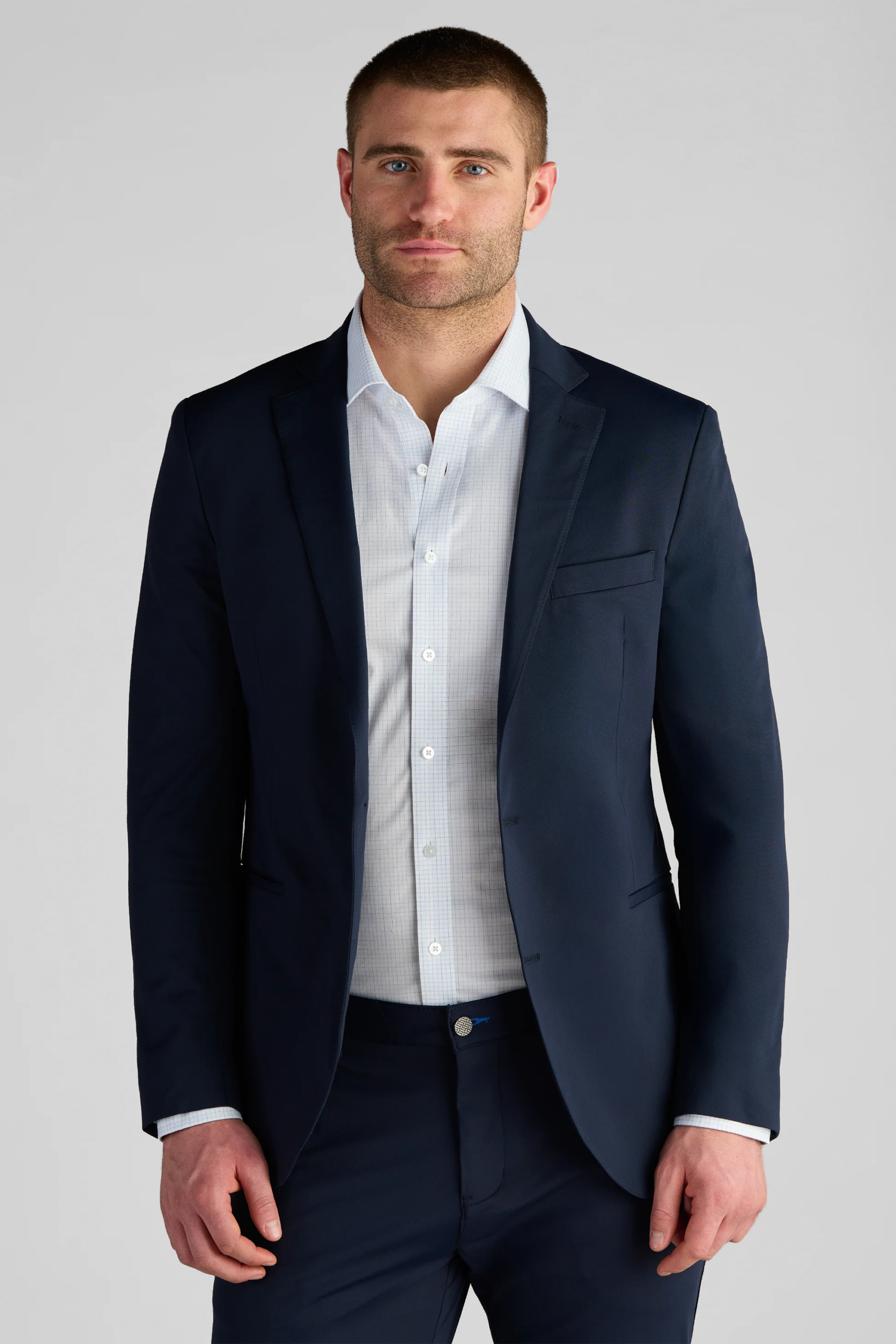
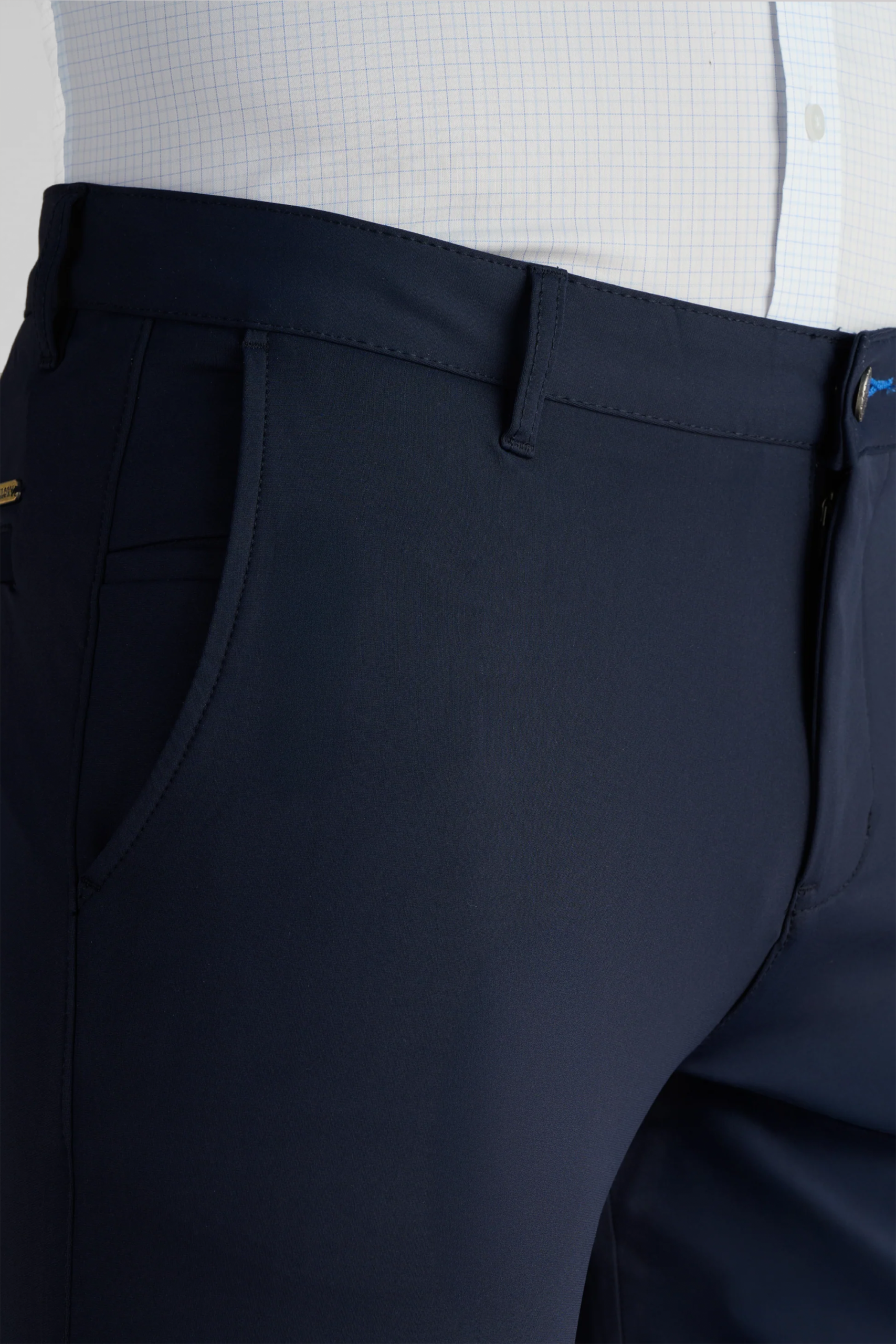
Twillory is one of the clearest places to start because performance suiting is already the point. The Twillory Performance Blazer page lists machine washability, four-way stretch, non-iron fabric, breathability, double vents, and 100% polyester fabric and care details. The matching Twillory Performance Pants page also lists 100% polyester.
This is the lane for a suit that has to move through real life: work travel, conferences, client dinners, a wedding that requires packing light, or an office wardrobe where the jacket and pants will be worn more than once a year.
Twillory is best for:
- work trips;
- office-to-dinner days;
- lightweight suit separates;
- men who want machine-washable tailoring;
- movement, comfort, and repeat wear.
Check the exact color, jacket, and pants before buying. Twillory also sells other suit categories, including hybrid wool suits, so do not treat the brand name as the answer. Treat the exact product page as the answer.
The main caution is formality. Performance suiting can look sharp, but it can also drift casual. Try it with the shirt, belt, shoes, and tie you plan to wear. If it only looks right with sneakers, it may not be the wedding suit you meant to buy.
The Twillory AIR Caution
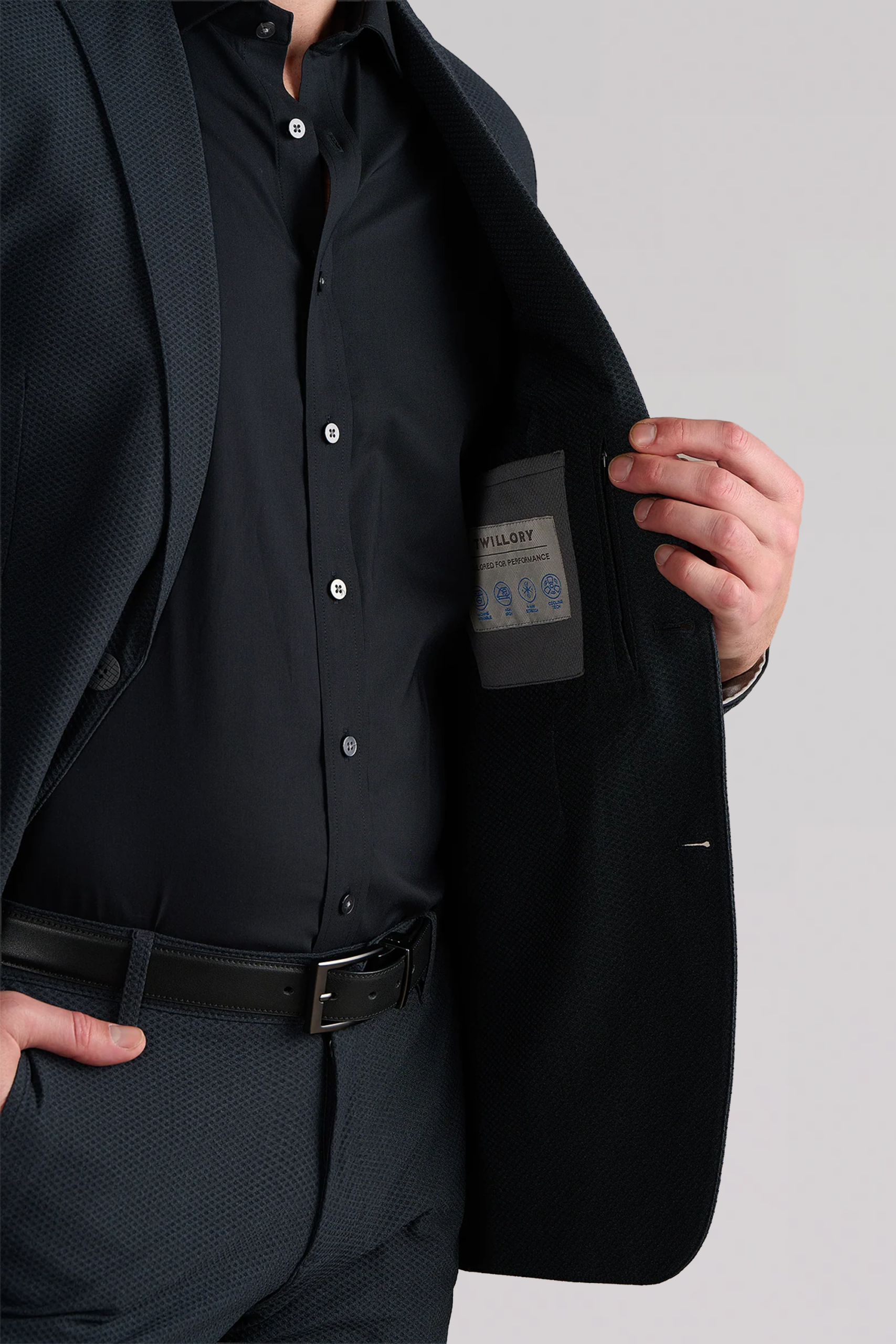
The Twillory AIR Blazer is a useful caution because the vegan-material question and the suit-formality question are different. The current page emphasizes airflow, stretch, washability, and breathability.
Our own returned AIR order cleared the broad material direction, but the hand and texture did not feel like the right suit for most formal occasions. The fabric felt too open and technical, closer to a summer performance piece than a classic jacket.
That does not make AIR wrong for everyone. If you run hot, have an outdoor summer event, and like technical texture, it may be worth trying. But it proves an important rule: when replacing animal materials, do not accidentally replace the formality too.
A suit still needs to read as a suit. The lapel has to behave. The pants have to hang. The fabric should not make the outfit feel like a performance experiment unless that is the look you are choosing on purpose.
Perry Ellis for Affordable Suit Separates
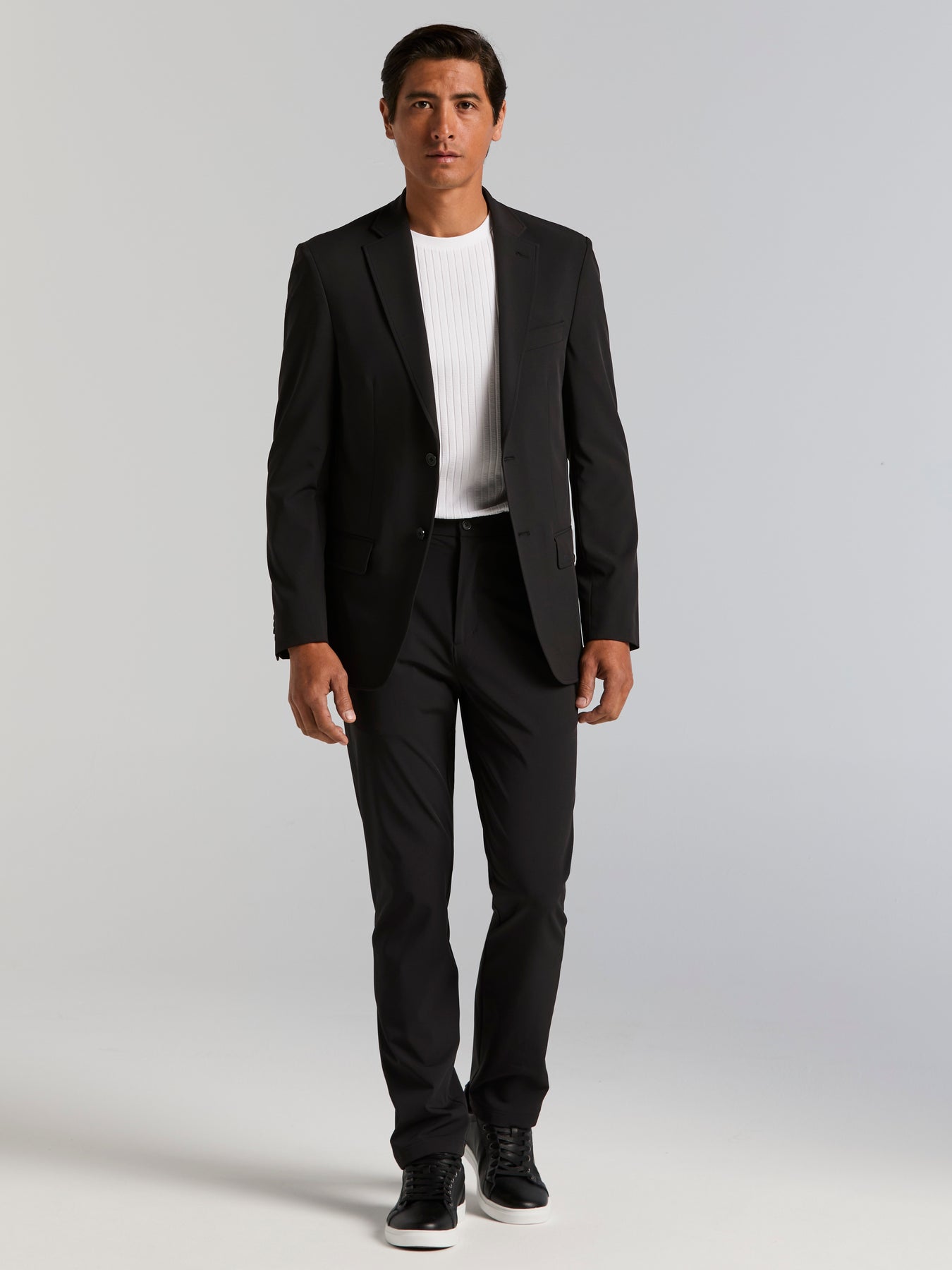
Perry Ellis is one of the most useful value routes because the category is broad and the material listings can be straightforward. The Perry Ellis Tech Suit Jacket page lists 88% recycled polyester and 12% elastane, and the broader Perry Ellis suits collection includes suit separates, performance suits, wedding suits, and tuxedo options.
This is exactly where many vegan shoppers should look sooner. Perry Ellis is not trying to be old-world luxury. It is offering accessible suiting in a lane where synthetic and stretch fabrics are common.
Perry Ellis is best for:
- a first animal-material-free suit;
- weddings where a conventional dark suit is enough;
- shoppers trying to stay out of luxury pricing;
- suit separates that can be ordered, tried, returned, and tailored;
- tuxedo-adjacent searching when the details check out.
The caution is the same as always: exact product, exact label. One Perry Ellis suit may be animal-material-free while another seasonal option may contain wool or unclear formalwear details. The brand is a useful starting place, not a permanent guarantee.
Also use your eyes. Affordable suit photos can make everything look cleaner than it will in a harsh hallway mirror. Order early enough to try sizes, compare light, and tailor what is worth keeping.
Ministry of Supply for the Polished Technical Bridge
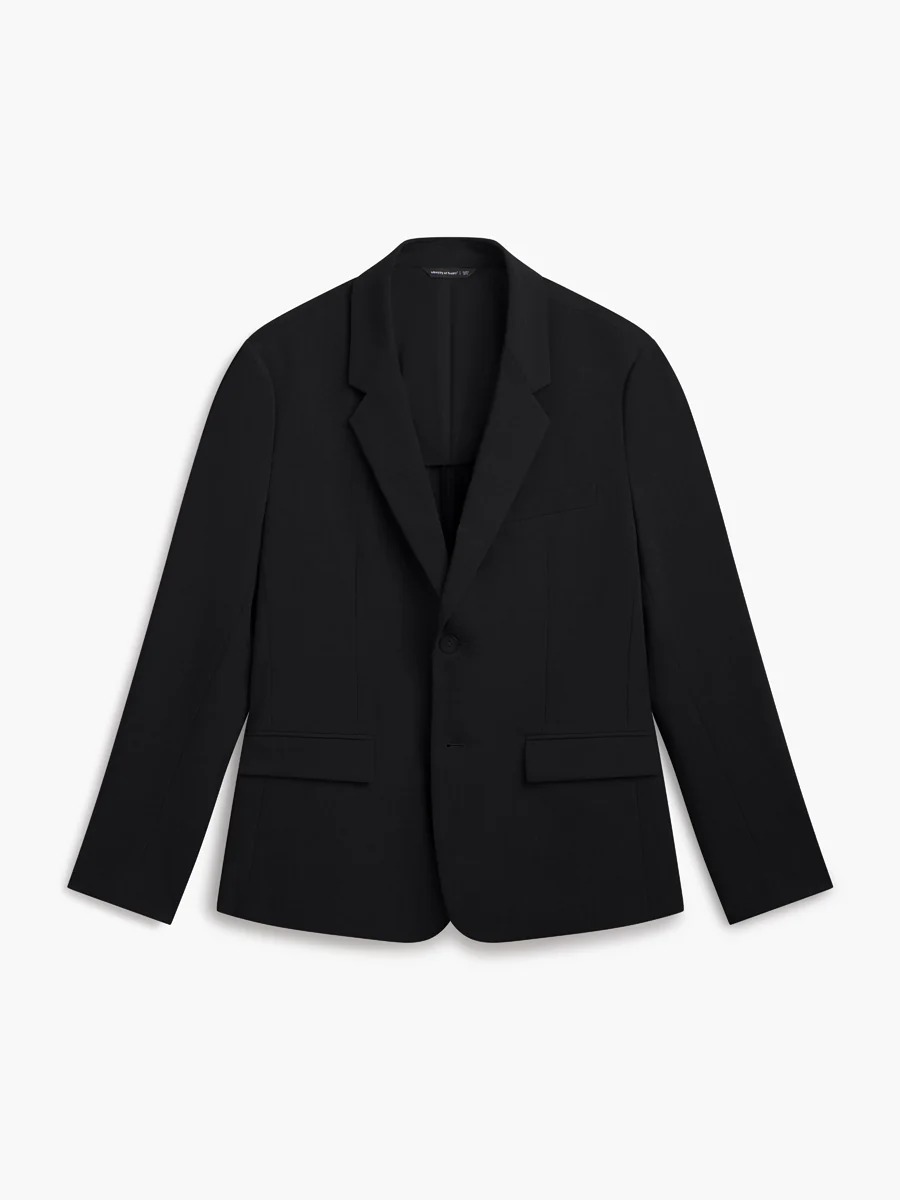
Ministry of Supply is the higher-end technical lane. It costs more than many entry-level suit separates, but it can look cleaner and more intentional than cheap mall formalwear.
The Ministry of Supply Velocity Suit Jacket page lists a machine-washable, wrinkle-resistant jacket with 61% polyester, 33% rayon, 6% elastane, and a 100% polyester lining. The Kinetic Blazer page lists 100% Solotex or Primeflex warp-knit polyester with 15% corn-based content.
This is not the budget answer. It is the bridge for someone who wants a cleaner technical suit or blazer without wool.
Ministry of Supply is best for:
- polished workwear;
- frequent travel;
- a more refined technical look;
- men willing to pay more for fabric performance;
- a blazer-and-trouser wardrobe rather than one emergency suit.
The phrase "looks like wool" is useful but not magic. If you need a conservative formal suit, inspect the fabric in person if possible. If you need a sharp work, travel, or dinner jacket that avoids wool, Ministry of Supply becomes much more interesting.
UNIQLO AirSense for Lightweight Budget Dressing
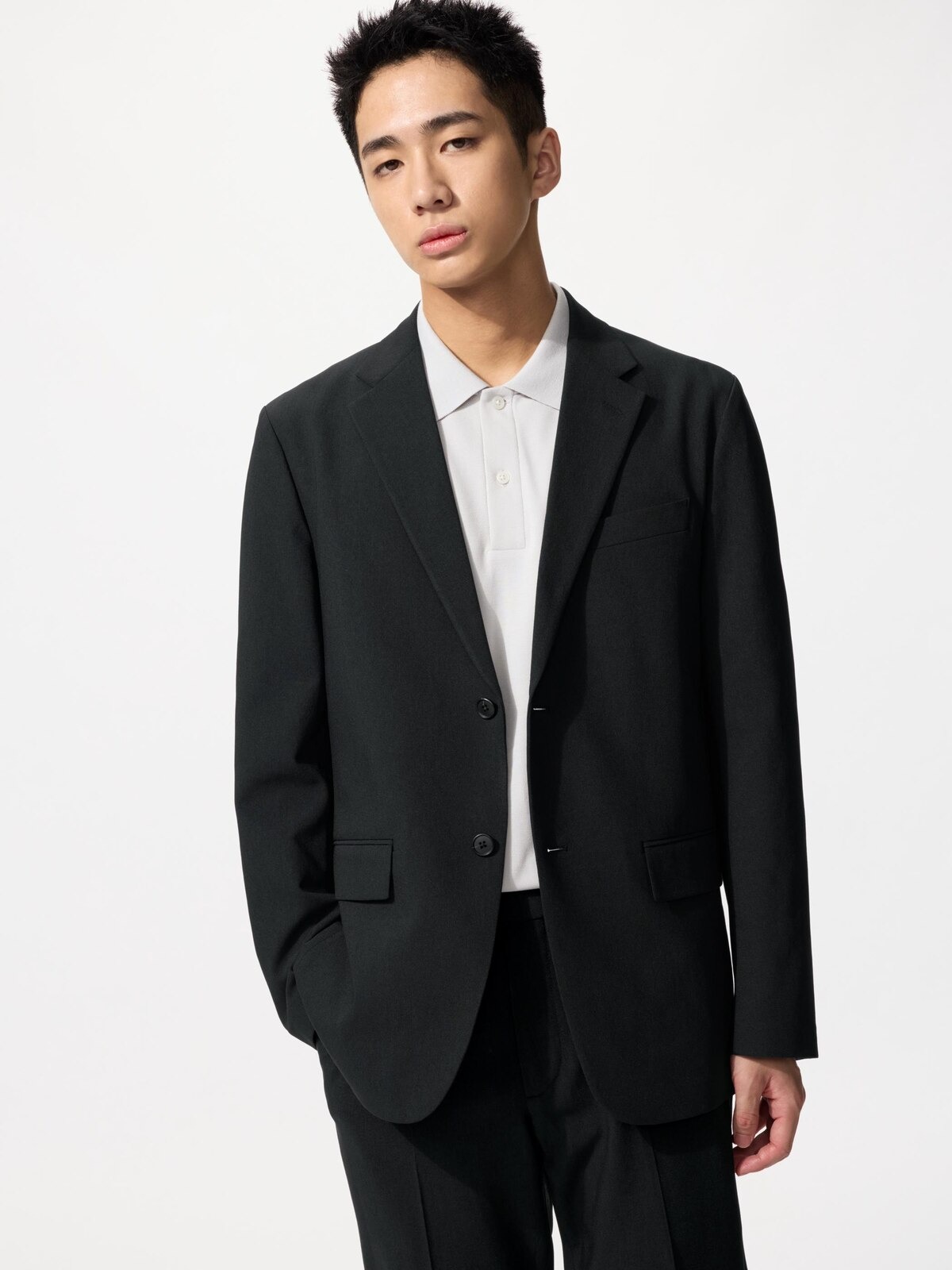
UNIQLO is not a formalwear specialist, but AirSense deserves a place on the map because the material proof can be clean and the price is approachable. The UNIQLO AirSense Blazer Wool-Like page lists shell 100% polyester and lining 100% polyester. The Unisex AirSense Blazer page also lists shell 100% polyester and lining 100% polyester.
This is not the suit lane for every wedding. It is the lane for warm-weather offices, travel days, smart-casual dressing, and anyone who wants a jacket that feels cleaner than a cardigan without pretending to be a luxury suit.
UNIQLO AirSense is best for:
- budget-conscious shoppers;
- warm weather;
- travel;
- smart-casual offices;
- trying a lighter jacket before spending more.
The name "Wool-Like" can look alarming at first, but the material listing is the part that matters. "Wool-like" describes appearance, not fiber content, on the checked page.
The caution is structure. UNIQLO can make very useful clothing, but not every AirSense jacket has enough formality for a wedding, interview, or dressy event. If you need a true suit, confirm the matching pants, color match, return policy, and silhouette before you treat it as formalwear.
Bluffworks for Travel First, Suit Second
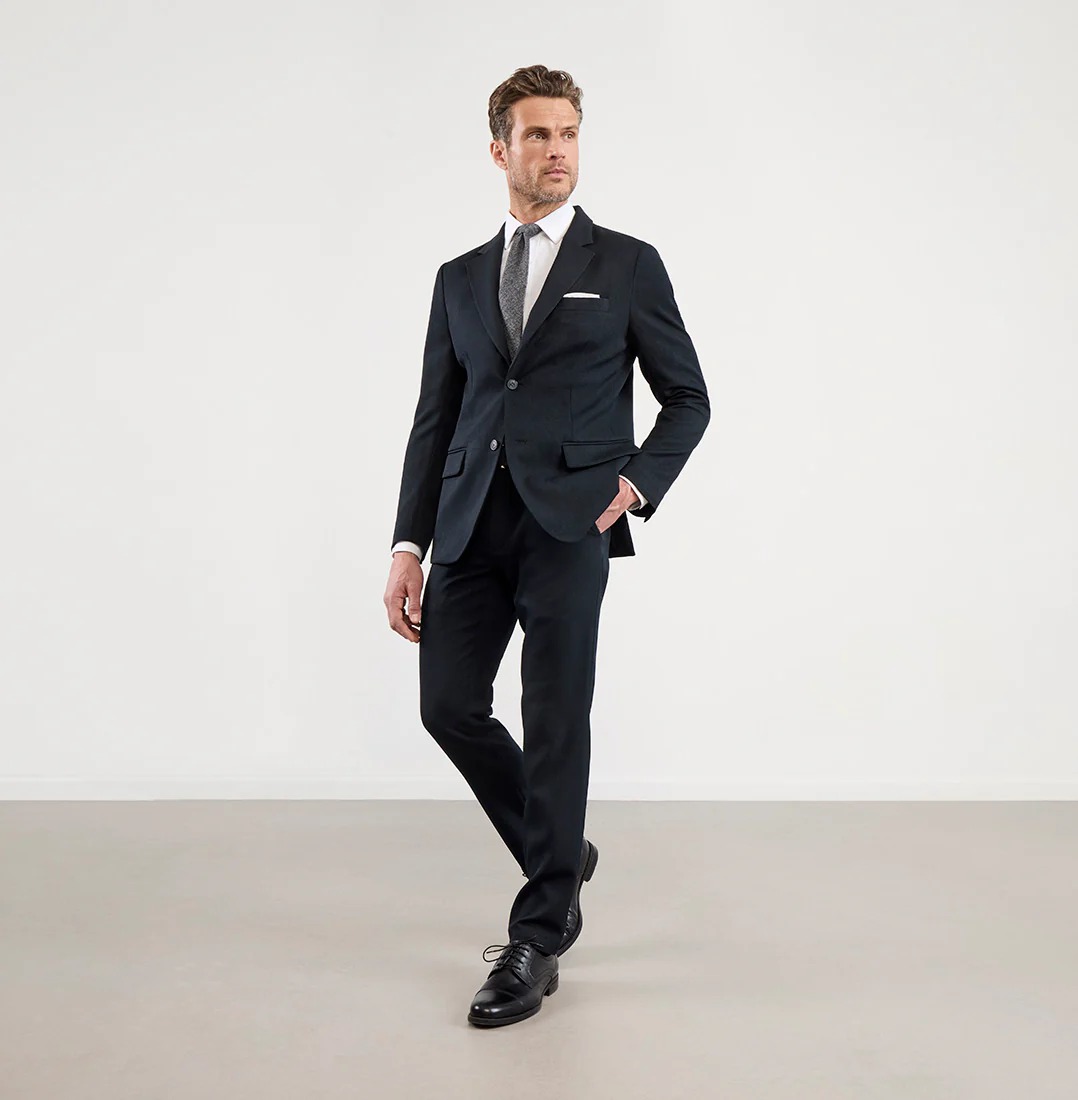
Bluffworks is the travel lane: pockets, washability, wrinkle resistance, and useful durability. The Bluffworks Gramercy Blazer 2.0 page describes a machine-washable travel blazer that looks like wool and lists lightweight 100% polyester fabric. The Gramercy Blazers collection also points shoppers toward matching pants.
This is not a romantic suit. It is a practical one.
Bluffworks is best for:
- travel;
- work trips;
- carry-on dressing;
- men who want pockets;
- business casual that can survive airports and hotels.
Bluffworks is not the right answer for every formal wedding or black-tie-adjacent event. It is the right answer when real life includes sitting, walking, packing, sweating, moving through terminals, and still needing to look decent at dinner.
This is one of the places animal-material-free clothing can genuinely improve the experience. A washable polyester travel blazer is not trying to replace wool on wool's terms. It is solving a different problem.
SuitShop for Weddings, Events, and Color
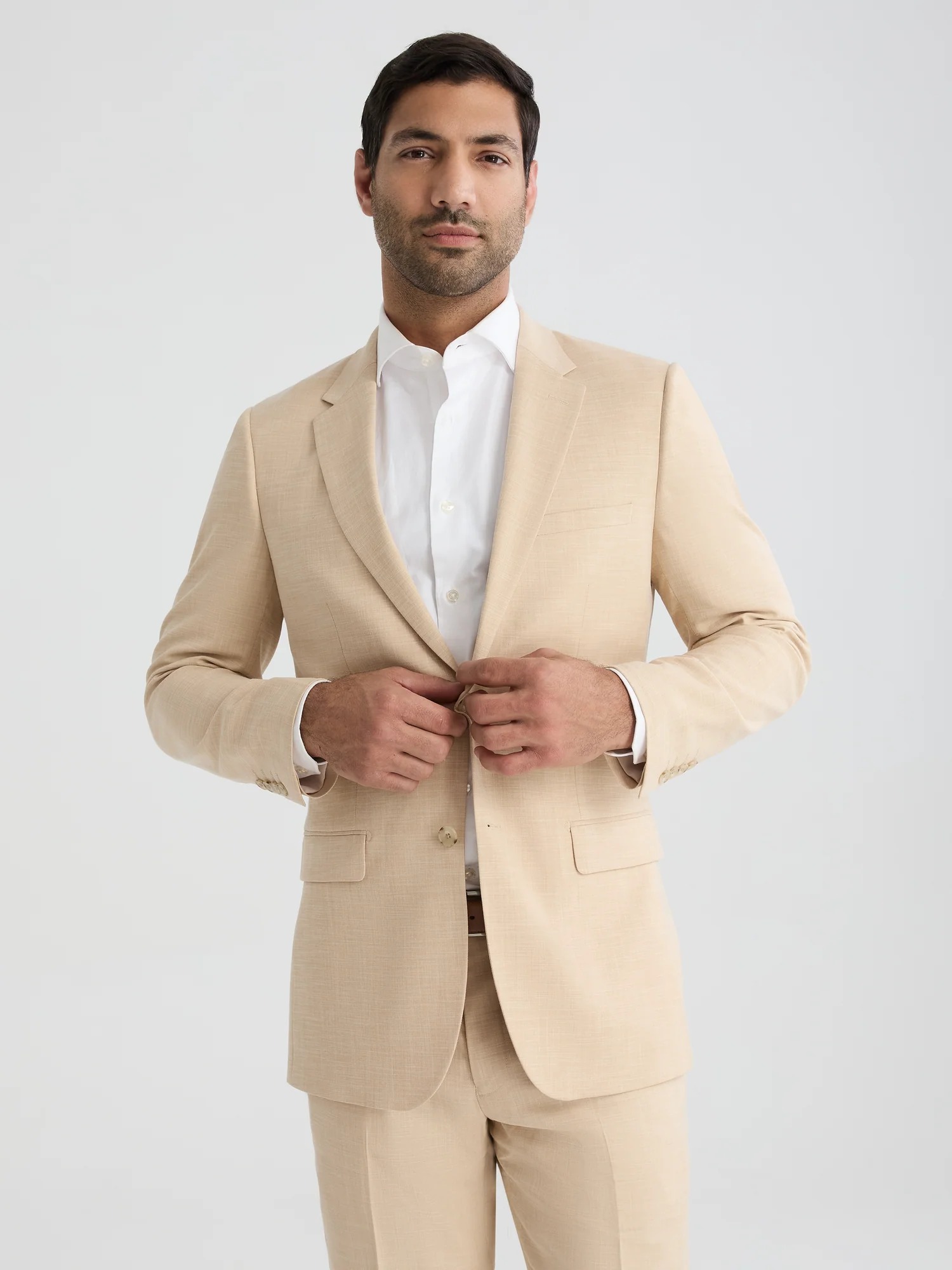
SuitShop fills the event gap. The SuitShop Men's Black Suit Jacket page lists 38% recycled poly, 38% poly, 19% rayon, and 5% spandex. The SuitShop Men's Linen-Look Sand Suit Jacket page lists 84% poly, 15% rayon, and 1% spandex.
That is useful because wedding and event shopping is not the same as buying a travel blazer. A wedding suit has to coordinate, photograph cleanly, arrive on time, and fit a dress code. SuitShop is built around that reality.
SuitShop is best for:
- weddings;
- groomsmen;
- coordinated event dressing;
- summer suits;
- color-specific formalwear;
- shoppers who want fit tools, group ordering, and matching separates.
The caution is care and construction. These are event-friendly suits, not heirloom tailoring. Some pieces are dry-clean only. That may be fine. Buy SuitShop when you need an animal-material-free event suit in a specific color and do not want to gamble on whatever is hanging locally.
Kenneth Cole, Michael Kors, Zara, and the Rack Lane
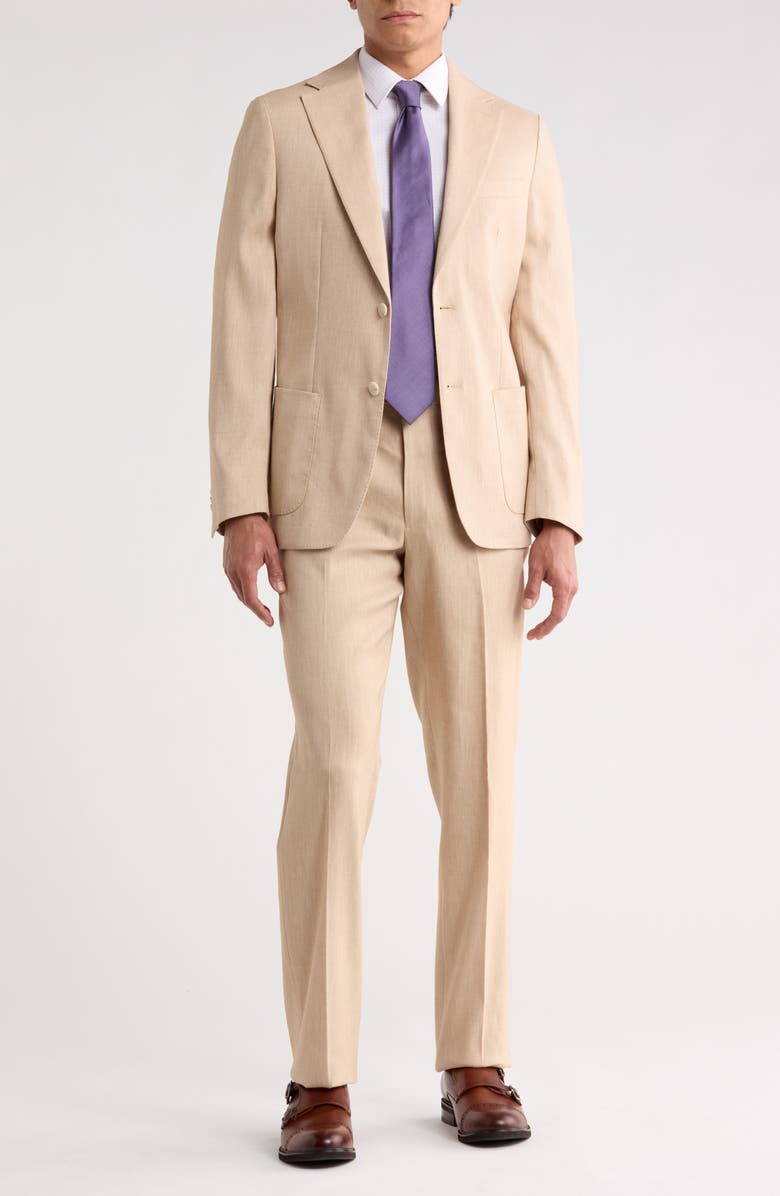
Some of the best vegan suit finds are not from vegan brands. They are ordinary suits that happen to use non-animal fabrics.
Kenneth Cole direct is a useful example. The Kenneth Cole Slim-Fit Stretch Suit Separate Jacket page lists a fully lined jacket made from 68% polyester, 30% rayon, and 2% spandex. That is good evidence for that exact jacket. It does not cover every Kenneth Cole garment.
Kenneth Cole Reaction belongs in the same shopping lane, but with care. A current Kenneth Cole Reaction dress pant at Nordstrom Rack lists 100% polyester. Pants alone do not prove a complete suit, so we would not present that as a full suit pick. It does show why the line is worth checking.
Michael Kors works the same way. A current Michael Kors linen blend suit at Nordstrom Rack lists 54% linen, 29% polyester, 15% rayon, and 2% spandex. That exact suit is worth considering if the size and cut work. It does not make all Michael Kors suits animal-material-free.
Zara is useful but mixed. The current Zara men's suits page shows linen suits, comfort suits, wool-blend suits, cotton-wool suits, and 100% wool suits in the same broader category. That is the whole Rack and fast-fashion lesson in one place: there may be good animal-material-free options, but the label decides.
Use these lanes when you want options:
- Nordstrom Rack for multi-brand searching and material filtering;
- Kenneth Cole direct when an exact product page gives clear non-animal fiber content;
- Kenneth Cole Reaction when the exact jacket and pants both check out;
- Michael Kors when the exact suit listing avoids wool, silk, leather, and animal trim;
- Zara, H&M, and similar stores for budget colors, summer suits, and fast availability, with strict label reading.
Brand names get you into the aisle. The material label makes the decision.
Red Flags on the Tag
You do not need to memorize bad brands. Learn the stop words.
Pause or skip when you see:
- wool;
- merino;
- woolmark;
- wool blend;
- cashmere;
- mohair;
- alpaca;
- camel hair;
- silk;
- silk lining;
- silk facing;
- horn buttons;
- shell buttons;
- mother-of-pearl;
- bone;
- leather trim;
- suede patches;
- animal hair;
- vague "luxury fabric blend" without composition;
- tuxedo satin with no material listing.
For ordinary ready-to-wear, the label usually gets you most of the way there. If the jacket and pants list polyester, recycled polyester, rayon, viscose, linen, cotton, nylon, Tencel, elastane, or spandex, and do not list animal materials, you have a practical animal-material-free candidate.
For tuxedos, vintage suits, bespoke tailoring, high-end jackets, and unclear formalwear, ask more. The fancier and more traditional the suit, the more hidden animal materials become plausible.
What to Choose by Occasion
If you need one vegan work suit: Start with Twillory, Ministry of Supply, Perry Ellis, or Kenneth Cole direct. Navy, charcoal, or black will do the most work. Prioritize fit, returns, and whether replacement pants are available.
If you need a wedding suit: Start with SuitShop, then compare Perry Ellis, Twillory, Kenneth Cole, and department-store options. A wedding suit has to photograph well and fit the dress code before anything else.
If you need summer formalwear: Compare SuitShop's linen-look options, UNIQLO AirSense, Twillory's lighter lines, and animal-material-free linen blends from Zara or Nordstrom Rack. The risk is looking too casual, so inspect the jacket structure.
If you travel constantly: Start with Bluffworks, Twillory, and Ministry of Supply. Washability, pockets, wrinkle resistance, and movement matter more when the suit lives in a carry-on.
If you need a tux: Do not assume. Check the lapel facing, trouser stripe, waistband, buttons, jacket shell, lining, and any satin details. Tuxedos are where silk and wool can hide.
If you are shopping in person: Read the material tag before falling for the color. Then try more cuts than you think you need. Slim, skinny, athletic, classic, modern, relaxed, and big-and-tall fits can look completely different on the same body.
Tailoring Is Not Optional If You Want It to Look Good
The fastest way to make an affordable animal-material-free suit look better is tailoring. A $250 suit with clean sleeves and a proper trouser break will usually beat a pricier suit that swallows your hands and pools over your shoes.
Prioritize:
- shoulders that sit correctly;
- sleeve length that shows a little shirt cuff;
- a jacket waist that shapes without pulling;
- trouser waist that stays put without strain;
- seat and thigh comfort when sitting;
- a trouser break that matches the shoe;
- lapels that lie cleanly;
- enough room to move without looking sloppy.
Do not spend the entire budget on the garment and leave nothing for alterations. Budgeting for tailoring can be the difference between "cheap suit" and "surprisingly good suit."
The shoes matter too. A good animal-material-free suit can fall apart visually if the shoes look flimsy or the belt is wrong. For the next layer, Shoes That Last is the natural companion.
The Better Way to Shop for Vegan Suits for Men
The best vegan suits for men are not always the ones with the loudest vegan claim. The best ones clear the material check, fit the body, suit the occasion, and do not make anyone feel like they are wearing an apology.
For many shoppers, that means changing the map. Less time in wool-centered luxury tailoring. More time in performance suiting. More suit separates. More wedding retailers. More department-store filtering. More attention to labels, fit, returns, and tailoring.
That is not a sad trade. It can be practical and even freeing. You can own the color the event needs. Replace worn pants. Travel lighter. Buy something washable. Tailor an affordable suit instead of preserving one expensive wool suit you never wanted to wear.
Want better vegan buying shortcuts? Subscribe for smart finds, useful updates, and a free copy of The Things Nobody Tells You.
Conclusion
A vegan suit does not need to be mysterious. It needs a clear material check, a good fit, and enough formality for the room.
The current market is not perfect. High-end animal-free tailoring is still too rare, and many brands make shoppers do more label reading than they should. But practical vegan suits are easier to find than the old wool-centered menswear map suggests. Twillory, Perry Ellis, Ministry of Supply, UNIQLO, Bluffworks, SuitShop, Kenneth Cole, Michael Kors, Zara, Nordstrom Rack, and similar routes give vegan shoppers real places to start, as long as the exact product page supports the claim.
Read the tag. Skip the wool. Ask more questions when the suit is formal, vintage, bespoke, or expensive. Then care about the thing that will make the suit actually work: fit.
FAQ
Does a suit have to say vegan to be vegan?
No. For ordinary clothing shopping, a suit does not need an explicit vegan label if the disclosed materials avoid animal-derived fibers and trim. A vegan certification can help, but most animal-material-free shopping relies on fiber content, lining details, buttons, trim, and construction questions when needed.
What materials should we avoid in a vegan suit?
Avoid wool, silk, leather, suede, cashmere, mohair, alpaca, camel hair, animal hair blends, horn, shell, bone, and mother-of-pearl details. For tuxedos and premium tailoring, also check lapel facings, trouser stripes, linings, buttons, and inner canvas.
Are polyester suits good enough for weddings?
Some are. Polyester alone does not tell you whether a suit looks good. Check the cut, drape, color, lapel, lining, and how it photographs. SuitShop and Perry Ellis are especially worth checking for event-oriented animal-material-free options.
Are Kenneth Cole Reaction and Michael Kors good vegan suit brands?
They are useful shopping lanes, not blanket vegan brands. Open the exact jacket and pants, read the fiber content, and skip anything with wool, silk, leather, suede, horn, shell, animal hair, or unclear formalwear trim.
Can Nordstrom Rack help with vegan suits?
Yes, if you use it as a material-filter search rather than a guarantee. Look for polyester, linen, rayon, viscose, cotton, nylon, and stretch blends, then open each product page and verify the exact jacket and pants.
What is the best vegan suit brand for travel?
For travel, start with Bluffworks, Twillory, and Ministry of Supply. They lean into washable, wrinkle-resistant, movement-friendly fabrics. The right choice depends on whether you need a full suit, a blazer-and-pants setup, or a more formal event suit.
Should we worry about glue or hidden construction materials?
For everyday ready-to-wear suits, the practical first check is the listed fabric, lining, buttons, and trim. For bespoke, luxury, vintage, tuxedo, or full-canvas tailoring, it is reasonable to ask about horsehair, wool canvas, silk facings, horn buttons, and other hidden animal-derived construction details.