Leather, Wool, Silk, and Down: What Vegan Shoppers Need to Know
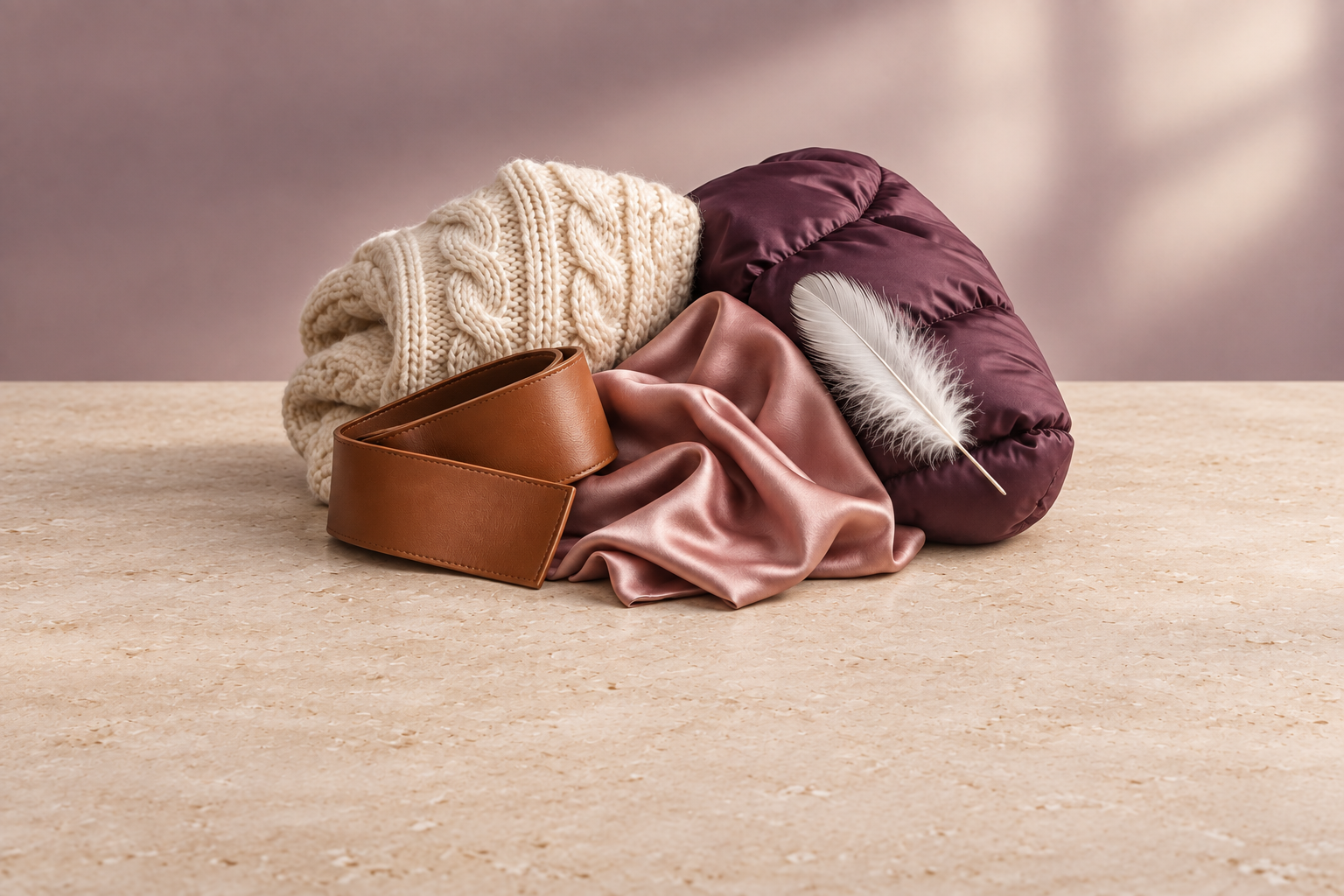
Leather, wool, silk, and down are animal-derived materials. Claims about responsible, recycled, organic, vegetable-tanned, or peace production may describe sourcing, processing, welfare, or environmental standards. They do not change what the material is made from.
Vegan shoppers still need to look beyond the largest material named on a product page. A coat can have a polyester shell and down fill. A shoe can have a synthetic upper and a leather insole. A cotton sweater can have a wool blend, a leather patch, or animal-derived trim. The safest habit is to check the shell, lining, fill, trim, backing, reinforcement, and small components before buying.
Learn the material names, check every component, and send the retailer a precise question when the listing is incomplete. For a broader introduction to fibers and performance, read The Materials Truth.
Animal-Derived Materials: Key Takeaways
- Leather, suede, nubuck, shearling, wool, cashmere, mohair, alpaca, silk, down, and feathers are animal-derived.
- Vegetable-tanned leather and chrome-free leather are still animal skin. Bonded and recycled leather still contain leather fiber.
- Recycled wool, organic wool, Responsible Wool Standard wool, recycled down, and Responsible Down Standard down remain animal-derived.
- Satin is a weave, so it can be made from silk or an animal-free fiber. Read the fiber label.
- Check every product section: shell, upper, lining, sock or insole, sole, fill, trim, backing, reinforcement, and decoration.
- A certification should be read for its stated purpose. A chemical-safety, organic, recycled-content, or animal-welfare standard does not automatically certify a product as vegan.
- You do not need to throw away usable animal-derived items you already own. Keep, repair, repurpose, sell, or donate them, then choose verified animal-free replacements when replacement is needed.
What to Do With Animal-Derived Items You Already Own
You do not need to throw out a usable coat, shoe, bag, blanket, or silk shirt tonight. A rushed purge can create waste, cost money, and leave you replacing items before you have found versions that work as well.
Stop buying new animal-derived materials, then decide deliberately what to do with the items already in your home. Some people keep an item until it wears out. Some sell or donate it because they no longer want to wear it. Some repurpose a damaged item rather than sending it to a landfill. The right choice depends on what you can use, what you are comfortable carrying or wearing, and whether another person can use the item.
Keep and repair what still serves you
Keeping an existing pair of boots or a winter coat does not create demand for a new product. Repairing a sole, replacing a zipper, mending a lining, or patching a tear can extend its useful life. The U.S. Environmental Protection Agency includes reuse and donation among its recommendations for clothing and textiles in its consumer recycling guidance.
That waste argument does not make the material vegan. It simply explains why immediate disposal is not required. You can describe an old leather bag as something you already own while deciding that future bags will be animal-free.
Sell, donate, or repurpose what you will not use
If an animal-derived item makes you uncomfortable or no longer fits your life, choose a useful exit. Sell it, donate it to a credible organization, offer it through a local reuse group, or repurpose the material if you have a specific use. Check what a donation center accepts before dropping it off. Worn-out shoes, pillows, and damaged textiles may need a specialized recycling route rather than a general donation bin.
Avoid replacing everything in one expensive sweep. Start with the items that are worn out, no longer safe, or no longer useful. A planned replacement gives you time to compare durability, care, warmth, weather resistance, and cost.
Name secondhand animal materials accurately
Secondhand leather, wool, silk, and down remain animal-derived. Buying used may reduce demand for one new item and keep an existing product in use, but it does not make the material vegan. Treat secondhand purchasing as a separate waste and personal-values decision.
Our shopping recommendation is straightforward: skip animal-derived materials both new and secondhand when a suitable animal-free option is available. If you decide differently for a used item, name the tradeoff plainly rather than relabeling the product.
Is Leather Vegan?
No. Leather is made from animal hide or skin. Suede, nubuck, patent leather, shearling, full-grain leather, top-grain leather, split leather, and corrected-grain leather are also animal-derived.
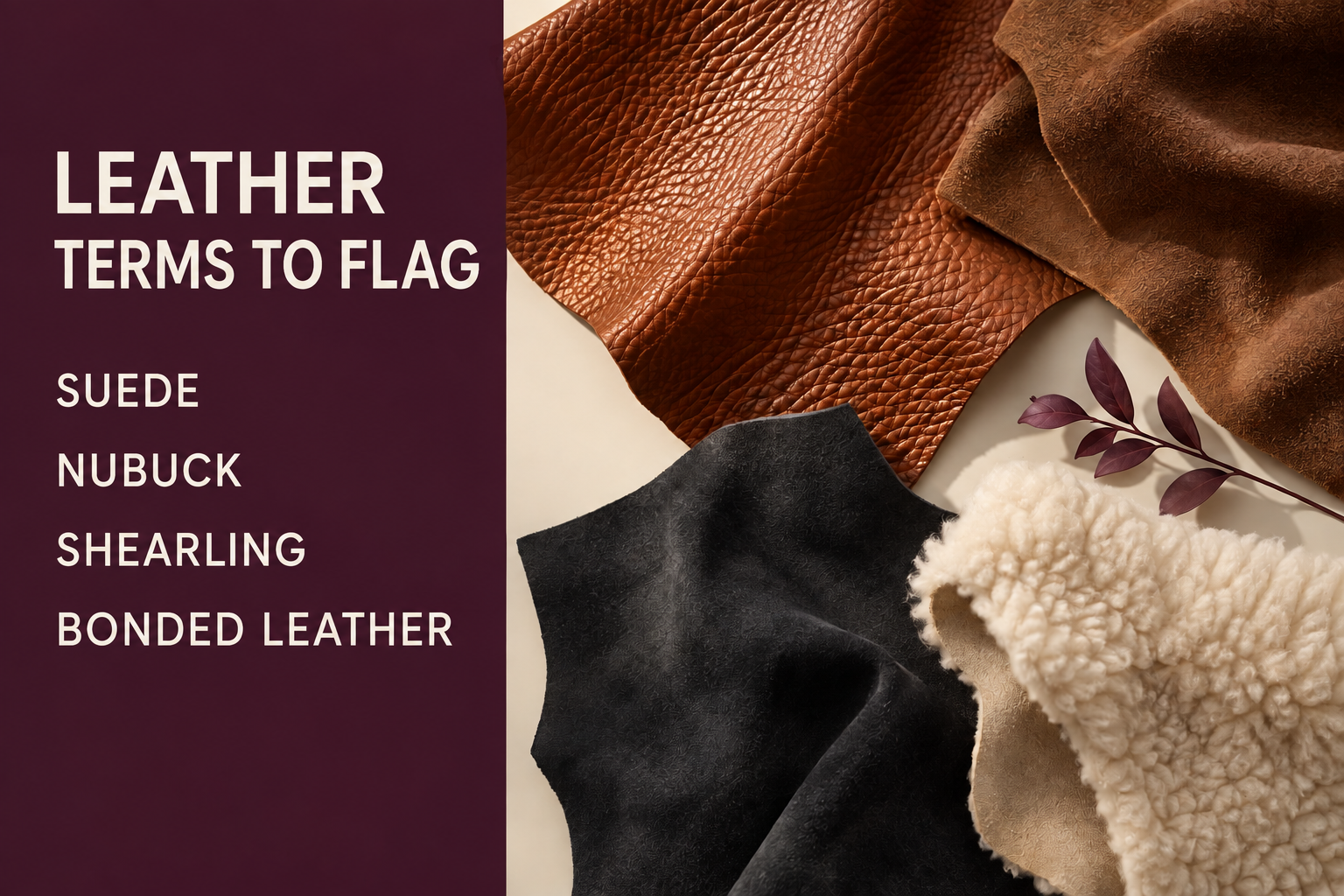
The U.S. Federal Trade Commission's Leather Guides say that an unqualified leather claim should describe a product made in all substantial parts from leather. Material that looks like leather but is not leather should be identified as non-leather, imitation leather, simulated leather, vinyl, plastic, or a similarly clear term. The same guidance explains that ground, pulverized, shredded, reconstituted, and bonded leather contain leather fibers. You can read the definitions and footwear component rules in 16 CFR Part 24.
Vegetable-tanned and chrome-free leather are still leather
Vegetable-tanned leather is animal skin tanned with plant-derived tannins. Chrome-free and metal-free leather use different processing chemistry. Those labels can matter when comparing tanning methods, chemical exposure, or manufacturing standards, but the base material remains animal hide.
The same applies to an environmental or facility certification. The Leather Working Group explains that its audits assess leather-manufacturing facilities and that certification is not assigned to an individual consumer product. Its claims guidance does not turn leather into an animal-free material.
If a retailer uses terms such as bio-leather, eco-leather, plant leather, apple leather, cactus leather, mushroom leather, or vegan leather, look for a complete composition. Some alternatives are plant-based composites. Others use polyurethane, PVC, polyester, or a blend of plant material and plastic. A catchy material name does not tell you how much of each component is present or how the product will wear.
Bonded, reconstituted, and recycled leather contain leather fiber
Bonded leather is not a vegan alternative. It combines leather fiber with binders or other materials. Reconstituted, shredded, pulverized, and recycled leather use animal-derived leather as an input even when the product contains a substantial non-leather portion.
Read the percentage when it is provided. If a product page only says recycled leather, ask whether that means recycled animal leather or a recycled synthetic material designed to look like leather. The word recycled describes a material's history, not its biological origin.
Check every part of shoes and bags
A shoe description can refer to the upper while leaving the lining, insole, outsole, adhesives, or trim unresolved. The FTC Leather Guides divide footwear into the upper, lining and sock, and outersole for disclosure purposes. Mixed construction makes a component-by-component check essential.
For a shoe, ask about:
- the upper;
- the lining;
- the sock liner or insole;
- the outersole;
- reinforcement pieces and heel counters;
- decorative patches, tabs, and piping;
- adhesives, coatings, dyes, and finishes.
For bags and belts, check the face material, backing, lining, trim, handles, patches, and decorative pieces. A synthetic body can still have a leather logo patch or handle wrap. Our Shoes That Last guide explains how to compare animal-free footwear after the material check is complete.
Is Wool Vegan?
No. Wool is an animal fiber. The familiar version comes from sheep and lambs, but clothing labels use several other animal-fiber names that shoppers need to recognize.
U.S. FTC guidance explains that covered textile and wool products generally identify fiber content, country of origin, and the responsible manufacturer or marketer. Its textile and wool labeling guide also describes important exclusions and sectional disclosures. Those details explain why a fiber label can be accurate without serving as a full inventory of every component.
Cashmere, mohair, alpaca, camel, llama, and vicuña are animal fibers
Cashmere comes from goats. Mohair comes from Angora goats. Alpaca, camel, llama, and vicuña fibers come from the named animals. Angora usually refers to rabbit fiber in clothing, although the word can create confusion because Angora goats produce mohair. Yak hair, horsehair, rabbit hair, and other named animal hairs are also animal-derived.
Shearling combines skin and fleece, so it belongs in both the leather and wool conversations. Felt identifies a construction. Its fiber can be wool, synthetic, plant-derived, or blended. Read the fiber content rather than deciding from the texture.
Watch for broad terms such as hair, animal hair, fur fiber, wool blend, luxury fiber, or natural insulation. Ask for the exact fiber name and percentage when the listing is unclear.
Recycled, organic, and responsible wool remain animal-derived
Recycled wool has been returned to a fibrous state after earlier use. Its reuse may matter in a waste calculation, but the fiber still came from an animal. Organic wool concerns agricultural and processing requirements. The U.S. Department of Agriculture explicitly recognizes wool in its organic textile claims guidance, which shows why organic cannot be used as a synonym for plant-based or vegan.
The Responsible Wool Standard addresses sheep welfare, land management, and chain of custody. Textile Exchange describes the standard as covering wool from certified farms through the supply chain in its RWS overview. That may help a shopper compare animal-welfare or sourcing claims, but it confirms that the material is wool from sheep.
A fiber label may not list every component
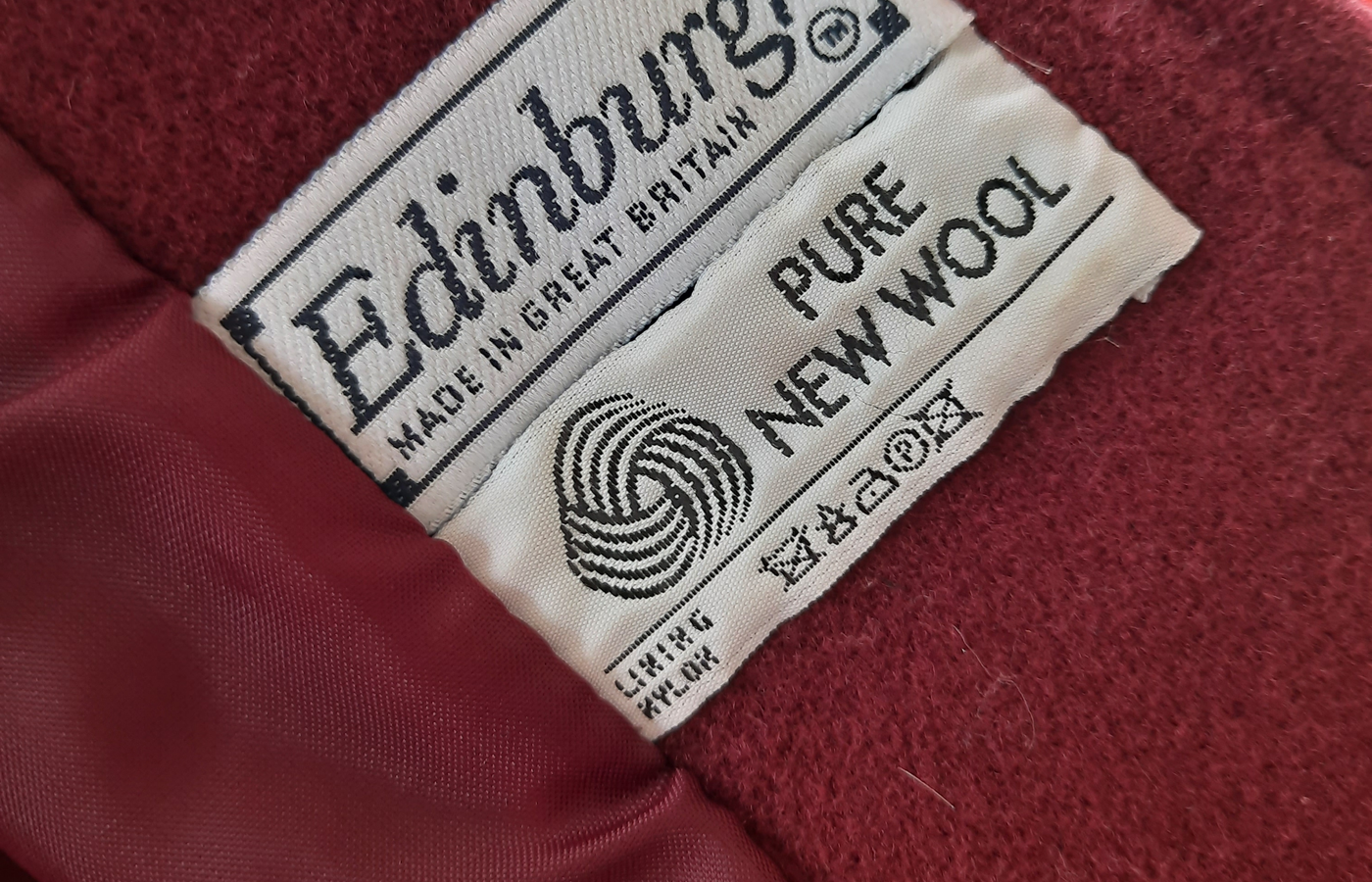
A label that says 100 percent cotton or 100 percent polyester may describe the counted textile fiber while excluding some nonfibrous parts, trims, decorations, structural components, or other exempt elements. Leather patches, buttons, zippers, sewing thread, and some structural linings can fall outside the main fiber statement under U.S. rules. A lining, interlining, filling, or padding used for warmth generally has separate disclosure requirements, while structural uses can be treated differently.
Wool receives special treatment: wool and recycled wool must be identified by percentage even when they make up less than five percent of the fiber weight in a covered product. Other minor fibers may sometimes be grouped as other fiber or other fibers. That phrase leaves the identity unresolved. Ask the retailer what it includes.
Hangtags and online listings can also be abbreviated. A hangtag may spotlight one fiber while directing the shopper to the full label. Request a clear photograph of the sewn-in composition label for online purchases, especially when the page says cashmere blend, wool touch, soft natural fibers, or mixed materials without percentages.
Is Silk Vegan?
No. Silk is an animal-derived protein fiber produced by insects, most commonly domesticated silkworms. The Central Silk Board's sericulture overview describes rearing silkworms, producing cocoons, and reeling silk filament. Its official cocoon-processing guidance describes stifling the pupae and using heat or boiling to prepare cocoons for reeling.
Silk may appear in dresses, blouses, ties, scarves, lingerie, sleepwear, suit linings, embroidery, upholstery, and bedding. It can also appear as a small blend percentage added for hand feel or sheen. Check the composition even when the product name emphasizes cotton, linen, or cashmere.
Raw, wild, peace, Ahimsa, and eri silk are not animal-free
Raw silk is silk at an early processing stage. Wild silk generally refers to silk from non-mulberry or less-domesticated silkworm species. Peace silk and Ahimsa silk describe approaches intended to avoid killing the insect during cocoon harvesting. Eri silk can be spun from open-ended cocoons rather than reeled from an intact cocoon.
Those distinctions may matter to a shopper evaluating a production method. They do not change the fiber's source. The Central Silk Board's eri silk description identifies it as silk produced by the eri silkworm. A material produced by an insect is not animal-free under a vegan standard.
Be careful with brands that use cruelty-free for peace silk. Cruelty-free is not a standardized synonym for vegan across fashion. Ask what the fiber is and what the claim covers.
Satin can be silk or an animal-free fiber
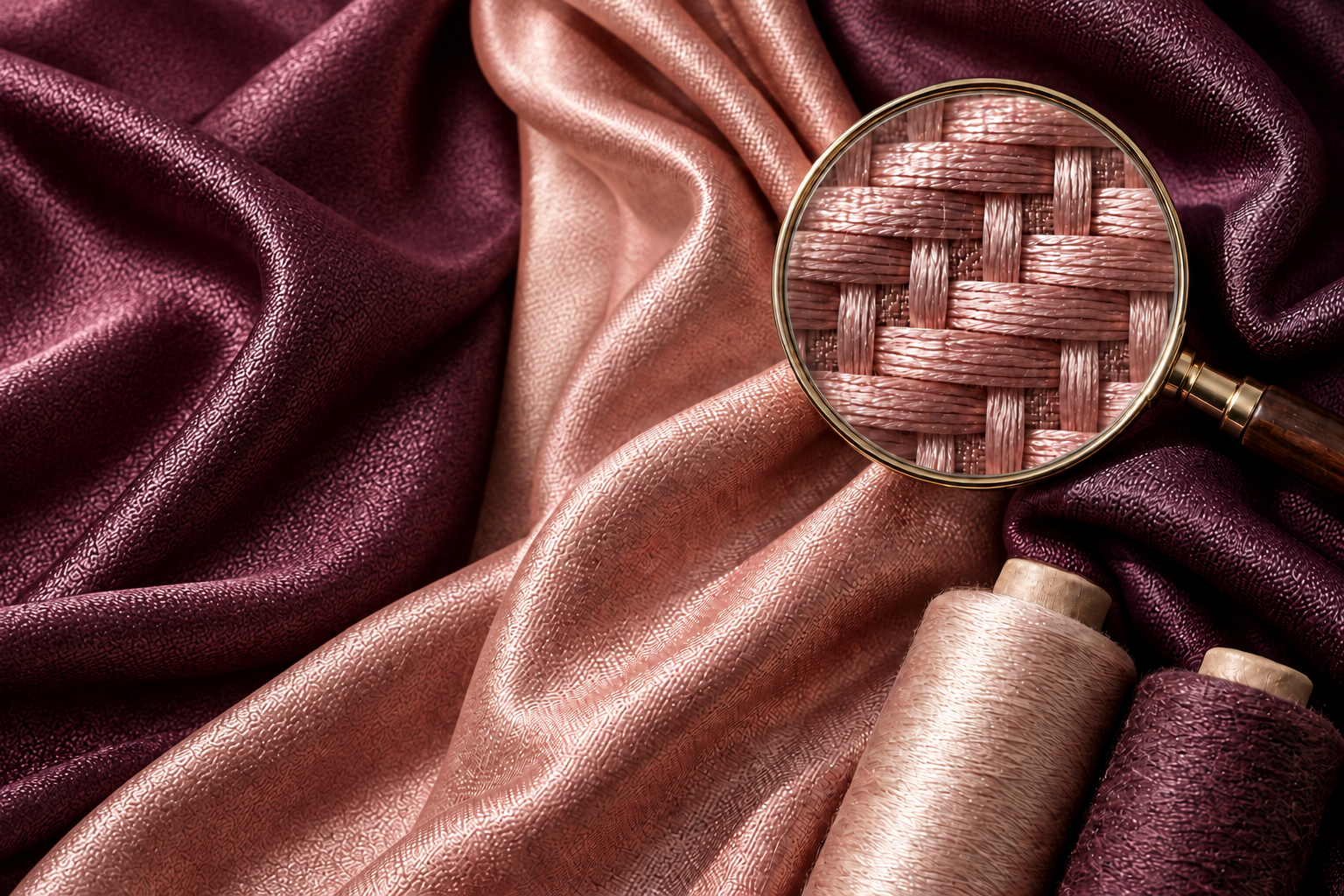
Satin describes a weave that creates a smooth, lustrous face. It does not name a single fiber. Silk satin is animal-derived. Polyester satin, acetate satin, and some viscose or rayon satins can be animal-free at the fiber level.
The same distinction applies to chiffon, organza, velvet, charmeuse, crepe, and brocade. These words often describe fabric structure, surface, or style rather than a guaranteed fiber source. Read the label for silk, wool, cotton, polyester, polyamide, viscose, rayon, acetate, lyocell, or blends.
Match silk alternatives to drape, shine, and care needs
Choose the replacement based on why you wanted silk:
- For fluid drape, compare viscose, rayon, lyocell, modal, and cupro.
- For high shine and a crisp hand, compare acetate or polyester satin.
- For breathable warm-weather clothing, compare lightweight lyocell, viscose, cotton voile, or linen blends.
- For washable sleepwear, compare care labels closely. Some glossy synthetics tolerate routine washing better than delicate regenerated-cellulose fabrics.
- For a suit or coat lining, check friction, breathability, seam strength, and static as well as fiber content.
An animal-free fiber can still involve environmental or labor concerns. Viscose sourcing and chemical processing vary. Polyester is fossil-fuel based and can shed microfibers. Acetate and cupro have their own processing demands. Decide vegan status first, then compare durability, care, sourcing, and impact among the animal-free options.
Is Down Vegan?
No. Down is the soft plumage beneath the exterior feathers of ducks and geese. Feathers and down are both animal-derived. They appear in jackets, vests, sleeping bags, comforters, pillows, cushions, and insulated accessories.
Check the fill or insulation field rather than stopping at the shell. A product described as recycled nylon, organic cotton, or polyester can still contain down. Look for phrases such as down fill, feather fill, duck down, goose down, down cluster, feather blend, or a percentage split between down and feathers.
Responsible Down Standard down is certified animal down
The Responsible Down Standard addresses duck and goose welfare and chain of custody. Textile Exchange says the standard prohibits live plucking and force-feeding and tracks certified material through the supply chain in its RDS overview. The certification may answer a welfare-sourcing question. It also tells you that the fill is down or feathers from birds.
A label can therefore be meaningful and still fail a vegan-material check. If your requirement is animal-free insulation, move to a product with a clearly identified non-animal fill.
Recycled down remains animal-derived
Recycled down has been recovered from an earlier product or waste stream. Reuse can reduce demand for some new input, but the material remains bird plumage. The Recycled Claim Standard and Global Recycled Standard focus on verified recycled content and chain of custody, as described by Textile Exchange. They do not certify that the recycled input is plant-based or vegan.
Ask what material is recycled. Recycled insulation could mean polyester, down, a mixed fill, or multiple materials in different product sections.
Synthetic fill trades compressibility for wet-weather performance
Polyester synthetic fill is the most common down alternative. It usually retains more insulation when damp and dries faster than down. Down is often lighter, more compressible, and warmer for its weight. REI's down and synthetic comparison summarizes these performance differences for outdoor gear.
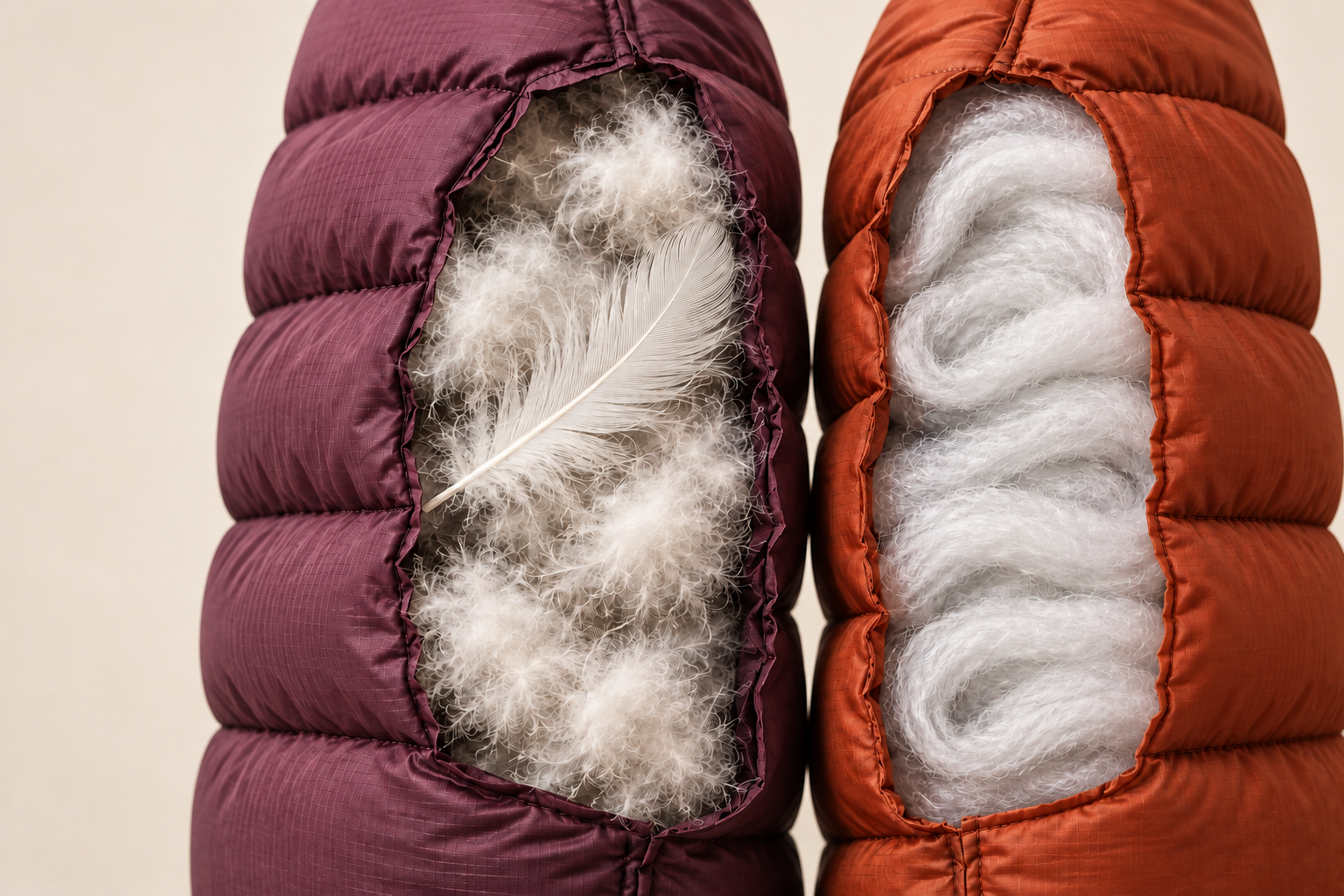
Choose for the conditions you will face:
- For wet commutes, damp climates, or easier care, synthetic fill is often the practical choice.
- For ultralight packing, compare the weight and packed size rather than assuming every synthetic performs the same.
- For bedding, compare warmth, loft, washing instructions, noise, and temperature regulation.
- For allergies, confirm the complete materials and care needs instead of relying on an unqualified hypoallergenic claim.
Synthetic fill alone does not make the complete item vegan. Check wool-blend cuffs, leather zipper pulls, suede patches, silk linings, feather trim, adhesives, coatings, and every listed component.
Check the Shell, Lining, Fill, Trim, and Small Parts
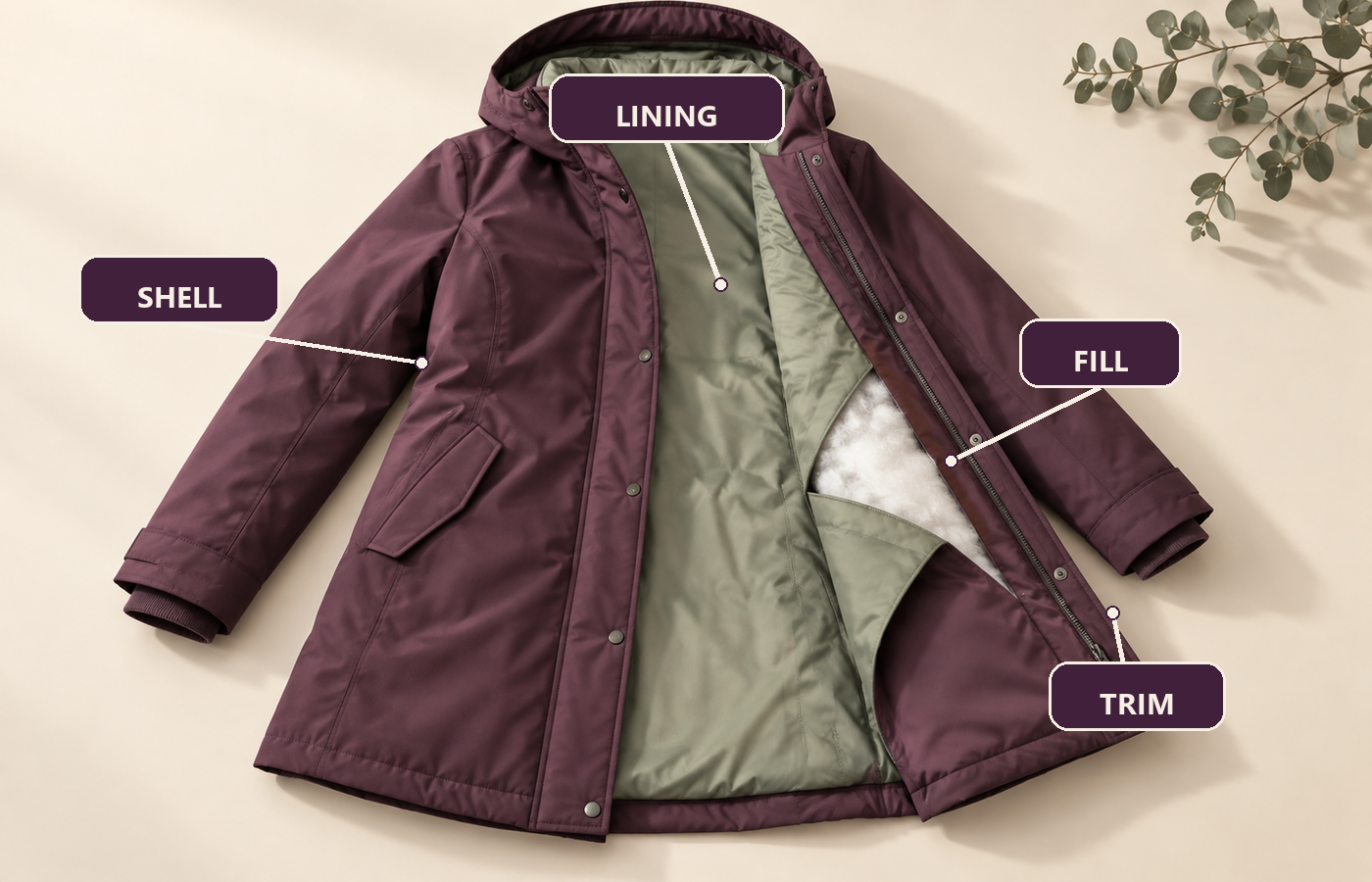
A product can pass the main-fabric check and still contain an animal-derived lining, patch, trim, fill, or hidden input. Complex products deserve a fixed order of inspection so nothing depends on memory.
Read the sewn-in label and product-page details
Start with the materials or composition panel. Then expand every collapsed product-detail section and inspect care information, technical specifications, and sustainability claims. For online shopping, compare the product title, bullet points, and full specifications. If they disagree, ask the retailer before ordering.
Use this sequence:
- Main body or shell
- Lining
- Fill, insulation, or padding
- Trim and decoration
- Backing and reinforcement
- Footwear upper, lining, insole, and outsole
- Adhesives, coatings, dyes, finishes, and hardware treatments
A label can answer many fiber questions without proving every manufacturing input. A credible whole-product vegan claim or a direct manufacturer answer becomes more valuable when glue, dye, coating, or finish information is not printed on the product.
Ask what other fibers includes
Do not treat other fibers as evidence of animal content. Treat it as missing information. Ask for the fiber names and percentages. If the retailer cannot identify them, decide whether the uncertainty matters for that purchase and whether a comparable product gives a clearer answer.
Blends deserve the same care. A coat listed as 90 percent polyester and 10 percent other fibers is unresolved. A sweater listed as 95 percent cotton and 5 percent cashmere is clearly animal-derived. A product called wool feel or silk touch may be animal-free, but only the composition can establish that.
Confirm adhesives, dyes, coatings, finishes, and hardware treatments
Shoes, bags, belts, tailored garments, and technical outerwear can contain inputs that never appear in the main fiber percentages. Ask whether the brand's vegan claim covers:
- adhesives and binding agents;
- dyes, pigments, and finishing sprays;
- waxes and protective coatings;
- anti-odor and softening treatments;
- horn, shell, bone, pearl, or leather buttons and toggles;
- zipper pulls, logo patches, tabs, piping, and reinforcement;
- every component in the exact color and SKU.
Product construction can change across colors, seasons, factories, or sizes. A clear answer about one SKU should not be extended to the whole brand.
What Common Certifications Do and Do Not Verify
Read a certification for the attribute it covers. Ask what the mark verifies on the exact product.
| Claim or standard | What it addresses | What it does not establish |
|---|---|---|
| Vegan Trademark | Animal-derived ingredients and materials, animal testing, and cross-contamination under the certifier's standard | That every product from the brand is covered |
| Responsible Wool Standard | Sheep welfare, land management, and chain of custody | Animal-free fiber |
| Responsible Down Standard | Duck and goose welfare and chain of custody | Animal-free insulation |
| GOTS | Organic fibers plus environmental and social processing criteria | Vegan status, because qualifying wool and silk are permitted |
| RCS or GRS | Recycled-content verification and chain of custody | The biological origin of every recycled input |
| OEKO-TEX Standard 100 | Testing textile components for specified harmful substances | Animal-free content |
| Leather Working Group | Environmental and manufacturing performance at leather facilities | Vegan status or automatic certification of a consumer product |
The Vegan Society's Vegan Trademark standards exclude animal products, by-products, and derivatives within the registered product standard. Verify that the mark applies to the exact item. A brand can sell a mix of registered and unregistered products.
The current GOTS standard permits certified organic animal fibers, including wool and silk. OEKO-TEX explains that STANDARD 100 tests textile components for harmful substances. Both labels can provide specific information, and neither serves as a general vegan certification.
Our Labels and Logos, Decoded guide can help when a package or product page presents several marks at once.
Choose an Alternative for the Job
Start with the performance you need, then verify the whole product. No single replacement fiber wins every comparison.
Leather alternatives for shoes, bags, and outerwear
For frequently worn shoes, prioritize flex points, abrasion resistance, sole attachment, lining durability, and repairability. A thin polyurethane coating can peel even when the product looked polished on day one. A dense microfiber or well-built coated textile may last longer. Plant-content composites vary widely, so ask for the full composition and care instructions.
For bags and belts, inspect edge finishing, stitching, stress points, hardware attachment, and backing. A material with a lower plastic percentage is not automatically more durable. If a bag will carry a laptop every day, construction matters as much as the surface material.
For outerwear, compare water resistance, breathability, seam construction, coating care, and cold-weather stiffness. A material that works for a dress belt may be a poor choice for a rain jacket.
Wool alternatives for warmth, structure, and softness
For sweaters, compare cotton, recycled cotton, acrylic, polyester, nylon, viscose, and blended animal-free knits. Cotton can feel breathable but may be heavy and slow to dry. Acrylic can provide loft at a lower price but may pill. Polyester and nylon can add strength and faster drying. Viscose can add drape but may need gentler care.
For tailored coats and trousers, look at fabric weight, weave density, lining, recovery, and wrinkle behavior. A structured recycled-polyester blend may hold a shape that a soft cotton knit cannot. For base layers, compare polyester or nylon technical fabrics and check odor control, drying time, and skin feel.
For hats, gloves, and scarves, check whether warmth comes from thickness, loft, wind blocking, or a separate lining. The warmest option in a windy climate may be a tightly knit synthetic with a soft animal-free lining rather than a bulky loose knit.
Silk alternatives for drape and shine
Lyocell, viscose, rayon, modal, cupro, acetate, and polyester can each produce smooth or fluid fabrics. Read the construction and care label because fiber name alone does not predict performance.
Choose lyocell or a well-made viscose for fluid dresses and shirts when breathability and drape matter. Consider acetate or polyester satin when shine and shape retention matter. For pillowcases and sleepwear, compare seam quality, heat, static, washability, and surface smoothness. Avoid paying a premium for a vague silk-like claim without a clear fiber composition.
Down alternatives for warmth and wet conditions
Synthetic-fill quality varies by fiber shape, loft, density, and construction. Compare the finished product's temperature rating, total weight, baffle design, fill distribution, and washing instructions. A technically strong synthetic jacket can outperform a poorly constructed down jacket in damp use even if it is heavier in a pack.
For comforters and pillows, check whether the fill clumps after washing, whether the casing is tightly woven, and whether the product can be dried safely at home. For sleeping bags, use the tested temperature rating and fit rather than making a decision from fill type alone.
A 60-Second Vegan Material Check
Use the same five steps for clothing, footwear, bags, bedding, and outdoor gear.
- Read every listed material. Flag leather, suede, nubuck, shearling, wool, cashmere, mohair, alpaca, silk, down, and feathers.
- Expand the check by component. Find the shell, lining, fill, trim, backing, reinforcement, and footwear sections.
- Clarify ambiguous terms and blends. Ask about other fibers, mixed materials, natural insulation, recycled insulation, and proprietary material names.
- Read certifications for their stated scope. Identify whether the standard covers vegan content, welfare, organic production, recycled content, chemicals, or a manufacturing facility.
- Confirm the exact SKU or choose another item. Save the retailer's answer when a hidden input matters. If a comparable product gives a clear complete answer, choose the clear one.
Questions to Send the Retailer
Copy the questions that match the product:
- Does this exact SKU and color contain leather, suede, nubuck, shearling, wool, cashmere, mohair, alpaca, silk, down, feathers, fur, shell, horn, bone, or another animal-derived material?
- What are the shell, lining, insulation or fill, trim, backing, reinforcement, interlining, and decoration made from?
- For this shoe, what are the upper, lining, sock or insole, and outersole made from?
- What does other fibers include, and what percentage does each fiber represent?
- Are the adhesives, dyes, finishing sprays, coatings, and hardware treatments free from animal-derived ingredients?
- Is this exact product independently certified vegan, and can you provide the certification record?
- When you say responsible, organic, or recycled, which material and attribute does the certification cover?
- Is the insulation entirely synthetic, or does it contain any down or feather blend?
Ask for the answer in writing when possible. A complete response names the exact product, color, components, and scope. A generic statement about the brand is weaker than a component list for the item you are buying.
The Buying Rule
Buy when the material information is clear, the complete item meets your needs, and the construction justifies the price. Skip when a named animal-derived material appears. When a component remains unresolved, compare the cost and performance of a clearer option before accepting the uncertainty.
Separating vegan status from every other product question makes shopping faster. First identify the material. Then judge durability, comfort, weather performance, care, environmental impact, labor, and price. A product can perform well on one measure and poorly on another.
Want better vegan buying shortcuts? Subscribe for smart finds, useful updates, and a free copy of The Things Nobody Tells You.
Frequently Asked Questions
Is satin vegan?
Satin can be vegan. Satin is a weave rather than a fiber. Silk satin is animal-derived, while polyester, acetate, viscose, or other animal-free satin can pass the fiber check. Verify the lining, trim, dyes, finishes, and other components too.
Is peace silk vegan?
No. Peace silk, Ahimsa silk, eri silk, and similar terms may describe different cocoon or harvesting practices, but the fiber is produced by insects. Treat it as animal-derived.
Is Responsible Down Standard down vegan?
No. Responsible Down Standard certification addresses welfare and chain of custody for down and feathers from ducks and geese. It does not indicate animal-free insulation.
Is recycled down vegan?
No. Recycling changes the material's lifecycle, not its origin. Recycled down remains bird plumage. Check whether a product uses recycled down, recycled polyester fill, or a blend.
Should I throw away leather, wool, silk, or down I already own?
No immediate purge is required. Keep and repair useful items, or sell, donate, or repurpose items you will not use. Replace them with verified animal-free options when replacement is needed.
Is secondhand leather or wool vegan?
No. Secondhand leather and wool remain animal-derived. Buying used may reduce demand for a new item and keep an existing product in use, but it is a waste-reduction choice rather than a vegan material choice.