How to Check Vegan Claims on Food, Cosmetics, and Clothing
A food can say non-dairy and still contain a milk ingredient. A cosmetic can have suitable ingredients while leaving its animal-testing policy unanswered. A shoe can have a synthetic upper and an animal-derived lining. When deciding how to check vegan claims, match the claim to the part of the product it describes, then inspect what remains.
We would skip a formula with a clearly animal-derived ingredient. We would distinguish a precautionary warning from an ingredient, ask about an undisclosed component when its source matters, and choose a clearer alternative when the answer stays open. An exact vegan assurance or recognized certification can help answer questions the ingredient list or materials description leaves unresolved.
Key Takeaways
- Coffee mate Original powder contains a disclosed milk derivative despite its non-dairy description. That ingredient is enough to rule out the specified formula.
- A precautionary milk warning describes possible cross-contact. Read it separately from the recipe ingredients, and keep allergy precautions separate from vegan shopping.
- For cosmetics, establish the ingredient answer first. Assess testing policy for a formula that remains under consideration.
- For shoes, inspect the upper, lining, sole and other relevant components. A statement about the upper does not describe every part.
- Use an exact vegan claim, certification or focused manufacturer answer to resolve a specific uncertainty. Leave an unconfirmed product unconfirmed when you choose something else.
Match vegan claims to the product you want
Before relying on a product page, match the name, flavor or shade, size and country of sale to the item you are considering. A vegan statement about a different formula does not answer your question. If the package and website disagree, ask about that discrepancy before buying.
Look at the wording of the claim. A statement that a company offers vegan products needs a list of which ones it covers. A materials description headed “upper” covers that component. An animal-testing assurance supplies information about testing practices; you still need the ingredients.
Ordinary unprepared vegetables need little checking. A product with several ingredients or components can require more information. Read the full ingredient list or materials description before deciding which question remains unanswered.
The product information for Coffee mate comes from its official US page. The other examples below are hypothetical buying situations.
Coffee mate Original powder: a non-dairy claim with a milk ingredient
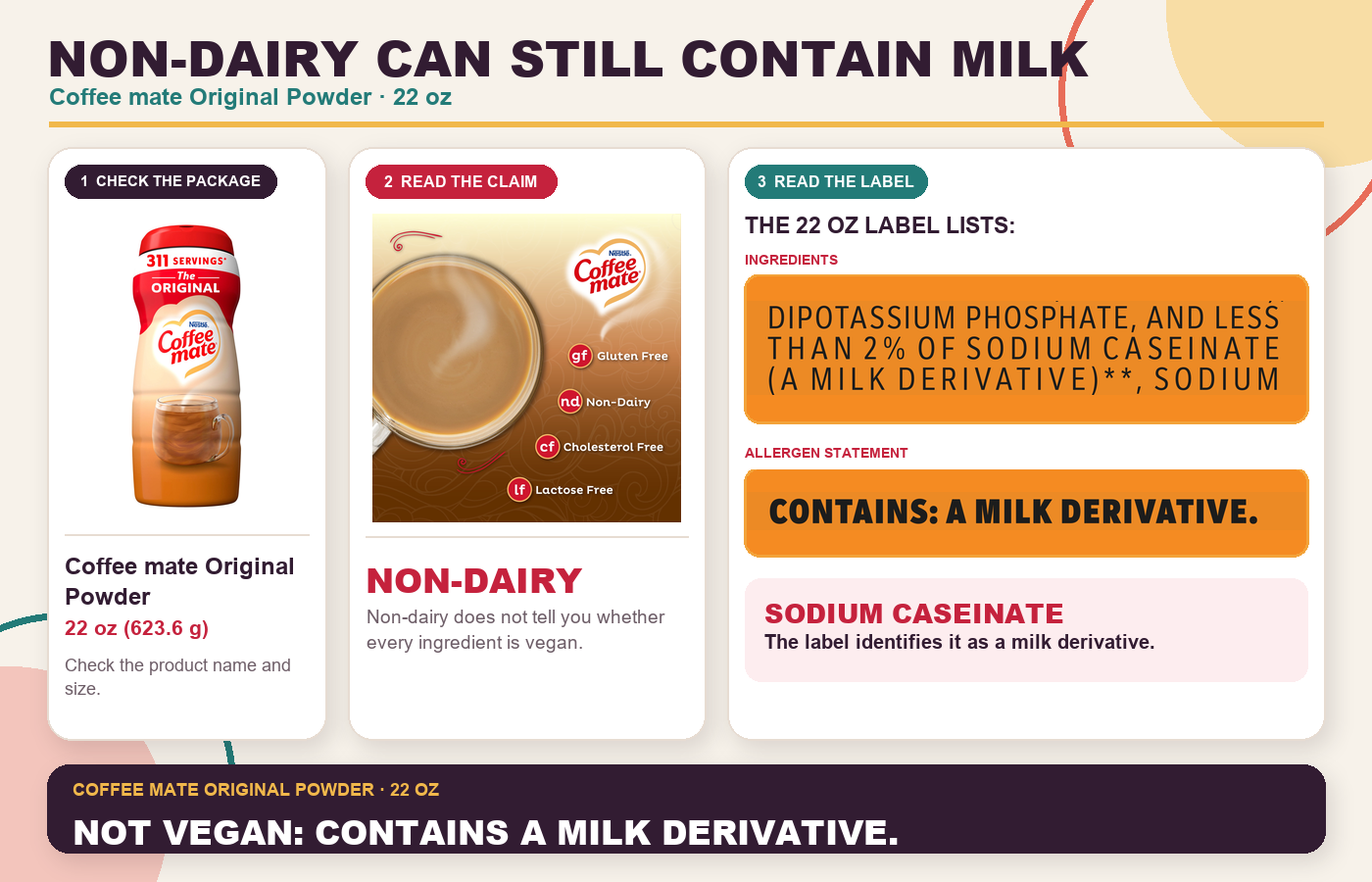
The official US page for Coffee mate The Original Powder Coffee Creamer, 22 ounces describes the product as non-dairy and lactose-free. Its ingredient list includes sodium caseinate, identified there as a milk derivative, and its allergen information names milk. This formula contains milk, so we would skip it.
Read the ingredient list behind the claim
The non-dairy description can lead a shopper looking for a vegan creamer to consider this product. Continue to its ingredient information before choosing it. In this case, the maker identifies the animal source directly; there is no need to guess what sodium caseinate means or contact customer service about its origin.
The ingredient finding also ends the vegan buying decision for this formula. Whether another listed ingredient has a plant source cannot remove the disclosed milk derivative. A manufacturer's answer about shared equipment would not change an ingredient that the company says it uses to make the creamer.
Treat lactose-free wording with the same care. It does not, by itself, say that every ingredient is free of an animal source. Here, the milk-derivative disclosure gives the information needed to choose another formula. This ingredient check does not establish suitability for a medical dietary restriction.
Choose a different formula
Look for a creamer whose own ingredient list and vegan assurance answer the vegan question. Apply the milk finding to this specified Original powder, rather than extending it to every product under the Coffee mate name. A different flavor, liquid formulation or market version requires its own information.
When comparing two creamers online, open the ingredient section for each. If one says only that it is a plant-based alternative, read on for its complete formula or an exact vegan confirmation. If one explicitly lists a milk ingredient, remove that choice from consideration. Keep comparing the remaining options on the features you want, such as whether the creamer is sweetened or intended for hot coffee.
You do not need to learn every labeling term before making this purchase. You do need to read enough of the product information to distinguish a front claim from a disclosed ingredient. Our hidden animal ingredients guide can help identify a term when the maker has not already explained its source.
A milk warning on a plant ingredient list
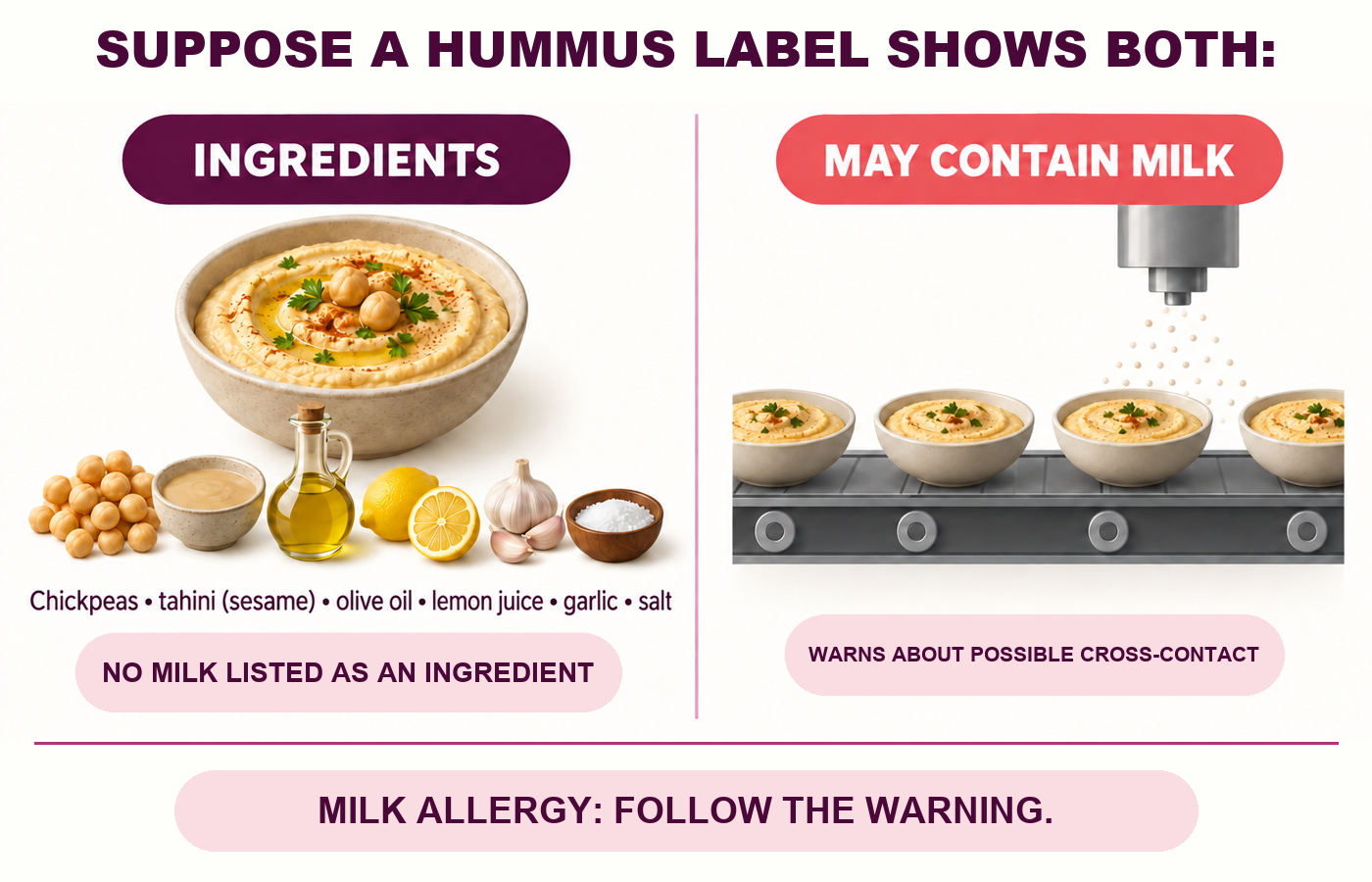
Consider this hypothetical hummus example, written for explanation and not copied from a commercial label:
- Ingredients: chickpeas, tahini (sesame), olive oil, lemon juice, garlic and salt.
- Allergen statement: contains sesame.
- Precautionary statement: may contain milk.
The listed recipe ingredients are plant-derived. The milk wording appears in a separate precautionary statement. Those two observations support a different decision from the Coffee mate example, where the formula itself includes a milk derivative.
Separate the recipe from possible cross-contact
The FDA explains that precautionary allergen statements concern potential cross-contact. They can address unintended introduction through shared equipment or other manufacturing conditions. They are voluntary and do not replace manufacturing controls.
For an ingredient-based vegan purchase, we would not turn the hummus's precautionary statement into a claim that milk was deliberately added to the recipe. The disclosed ingredients support choosing it on that basis. If you require vegan certification or confirmation about production practices, check for that assurance before buying. The text example itself establishes only the ingredient list and the stated warning.
Now change one line in the example: add yogurt to the ingredients. That creates a different answer. The formula would then include an animal ingredient, and we would skip it for a vegan purchase. The reason is the yogurt in the recipe, regardless of what any separate precautionary statement says.
An allergen summary is also an incomplete vegan screen. “Contains sesame” identifies an allergen; it does not describe every ingredient's origin. FDA consumer guidance lists the nine major food allergens, which do not include every animal-derived ingredient. Read the full formula even when its allergen statement names no milk or eggs.
Keep allergy decisions separate
A vegan ingredient judgment is not a statement that the hummus is safe for someone with a milk or sesame allergy. A precautionary warning does not establish that no milk is present, and a vegan mark does not supply that assurance either. The Vegan Society explicitly separates its Trademark from suitability for people with animal-product allergies.
If you are buying for someone with an allergy, let them assess the complete label using their allergy precautions and clinical advice. Keep the original packaging and warnings available. Do not tell them that your ingredient-based vegan choice resolves their separate safety question.
For your own ethical purchasing preference, a shared-equipment question can still matter. Ask about that specific practice if it affects your choice. If the maker cannot answer and you need the information, choose a product with clearer disclosure. Avoid reporting “milk is an ingredient” when the only evidence you have is a warning about possible cross-contact.
Check a cosmetic's ingredients before its testing policy
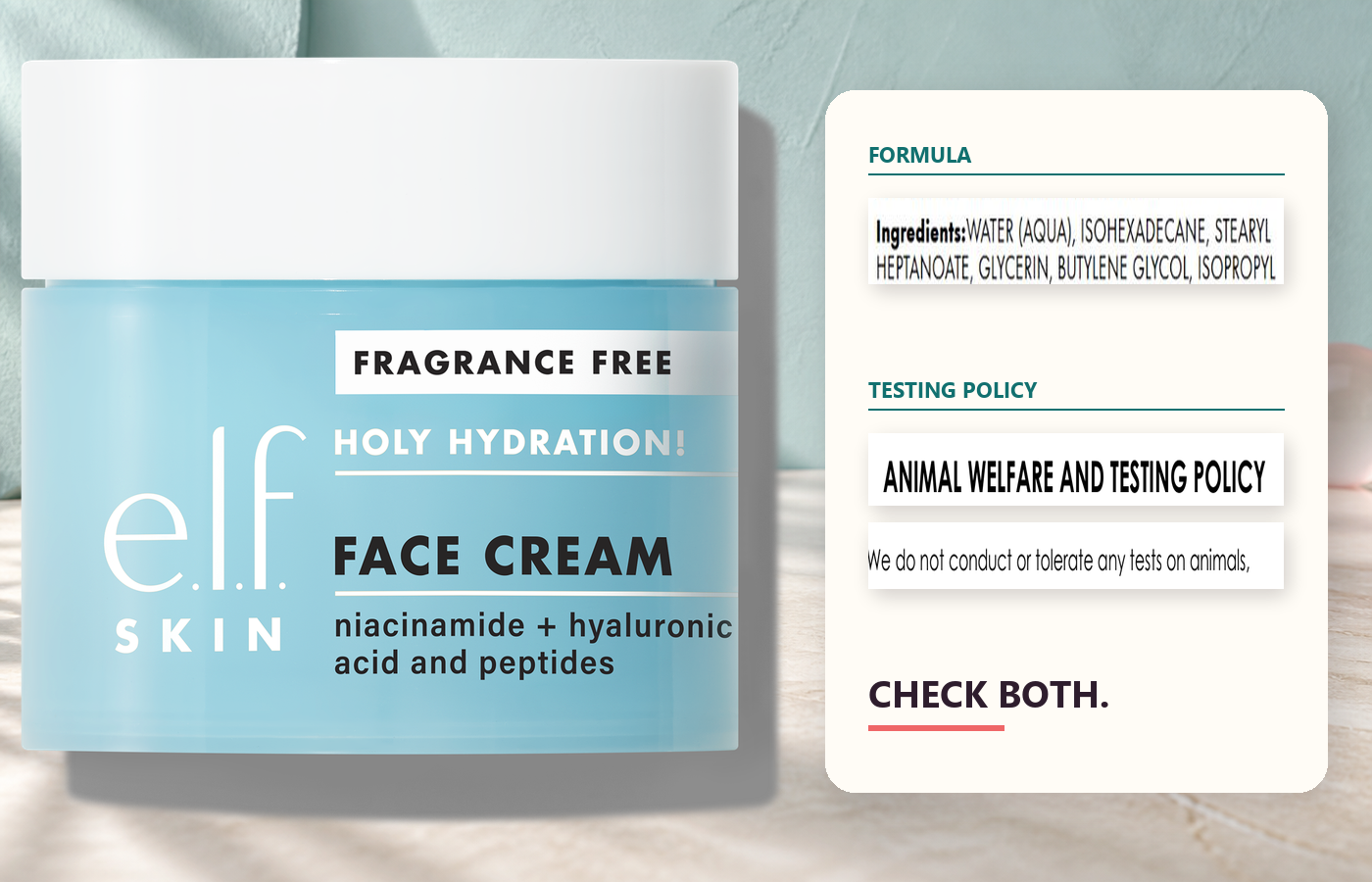
Read the ingredient information before deciding whether to buy a cosmetic. An animal-derived ingredient can settle the purchase immediately. When the ingredients remain suitable for your vegan purchase, assess any separate animal-testing requirements you want the product to meet.
Hypothetical text example: You are considering two lip-care formulas. Balm A lists beeswax. Balm B lists glycerin without identifying its source; assume its other disclosed ingredients raise no animal-origin question.
Skip the formula with beeswax
The Vegan Society's ingredient guidance identifies beeswax as animal-derived. Its presence in Balm A rules out that formula for a vegan purchase. We would choose another formula.
That completes Balm A's ingredient check. A favorable animal-testing policy would not remove the beeswax. You do not need to investigate that policy to decide whether to buy this balm, because its ingredients have already answered the purchase question.
If a shop assistant points out that the maker offers vegan products, ask which alternative formula they mean. That could lead you to another option. It does not change the ingredient list you have just read. Keep Balm A out of consideration while examining a different product.
Ask about the glycerin in the other formula
Balm B remains under consideration. Its unresolved ingredient is glycerin. Vegan Action's ingredient reference explains that some ingredients on its list, including glycerin, can have sources suitable for vegans. The name alone does not establish the source used in this hypothetical formula.
Look for a vegan statement covering Balm B or information identifying its glycerin source. If that information is absent, the question is specific: “Is the glycerin in this formula animal-derived?” You can also ask whether the maker confirms the whole formula is suitable for vegans, which may resolve questions beyond that individual ingredient.
If the maker confirms a suitable source, the glycerin concern is resolved. That answer concerns glycerin; it does not establish independent certification or an animal-testing policy. If the reply says only that the product is cruelty-free, the source question remains open. Ask for the ingredient answer or choose another formula with clearer information.
If the maker cannot establish the source, leave Balm B unconfirmed. The absence of an answer does not prove animal origin. You can still decide against buying it because you lack the information you need.
Check testing evidence for the remaining formula
Suppose Balm B's ingredient questions have now been resolved satisfactorily. Any testing-policy inquiry concerns Balm B, the different formula still under consideration. Balm A remains excluded because it contains beeswax.
Cruelty Free International explains that its approval programme addresses animal testing and advises shoppers to check vegan products separately. Ingredient information and testing-policy evidence therefore answer different questions. A cruelty-free claim cannot establish what Balm B contains, and its suitable ingredients cannot establish the maker's testing practices.
Read the maker's current testing policy and any evidence supporting its stated approval. Check whether that evidence covers the product or company you are assessing. If the maker refers to an approval programme, use the programme's own information to understand what its approval covers. Treat unclear or unsupported wording as an unanswered testing question.
We would consider buying Balm B when its ingredients and the testing evidence meet our requirements. If the testing evidence falls short, choose another product or ask about that specific gap. Our guide to cruelty-free and vegan beauty explains the testing-policy distinction in more detail.
Check the lining before buying synthetic shoes
An upper description leaves other parts of a shoe unanswered. Read the lining, footbed, sole, and trim information alongside it. The Vegan Society's fashion guidance explains why looking beyond the exterior matters: hidden animal materials, adhesives, dyes, and finishes can affect whether an item is vegan.
Synthetic upper, wool lining: skip the pair
Hypothetical product description: “Upper: polyurethane. Lining: wool. Sole: rubber.”
We would skip this pair because it contains wool. The synthetic upper does not change that finding. The same decision applies if the description names a leather lining or leather footbed. You have found a disclosed animal material, so there is no need to ask about the glue before deciding against this shoe.
Pay attention to which component each word describes. “Synthetic upper” tells you about the upper; it leaves the lining open. “Textile lining” is less specific than a named fiber. We would look for the fiber name in the materials details or ask which fiber the lining uses. Do not fill that gap by assuming the lining matches the exterior.
An online photo can help you locate a lining, a heel patch, or decorative trim, but we would use the written material description to identify it. If a page gives material information only for the upper, the rest of the shoe still needs an answer. Check the details for the exact version you intend to buy.
Suitable disclosed materials, unspecified glue: ask about the adhesive
Hypothetical product description: “Upper: cotton canvas. Lining and insole cover: cotton. Insole: synthetic foam. Outsole: synthetic rubber. Laces: polyester. No leather, wool, or silk trim. Adhesive: not specified.”
These disclosed materials give us no reason to reject the pair on that list. The adhesive remains unresolved. The Vegan Society notes that some adhesives use animal-derived ingredients. That does not establish what this hypothetical shoe's maker uses. We would ask one question about the missing component:
Does the adhesive used to assemble this exact shoe contain any animal-derived ingredients?
Include the product link and chosen version so the question identifies the pair. A response that only repeats “synthetic upper” leaves the adhesive unanswered. A clear answer about the glue adds information that the materials list was missing.
- Buy: If the maker confirms animal-free adhesive and no other disclosed component conflicts with that answer, we would consider the pair suitable on that information.
- Skip: If the maker identifies animal-derived glue, choose another pair.
- Choose a clearer alternative: If the maker cannot answer, leave this pair unconfirmed and look for one with a product-specific vegan claim or certification covering the complete shoe.
An ingredient or material judgment is limited to the information you have. It is not independent certification of the shoe or its production. If you want the broader checks described by the Vegan Society, choose a product registered under its standard rather than treating an exterior-material description as equivalent.
For clothing, check blends and separate components
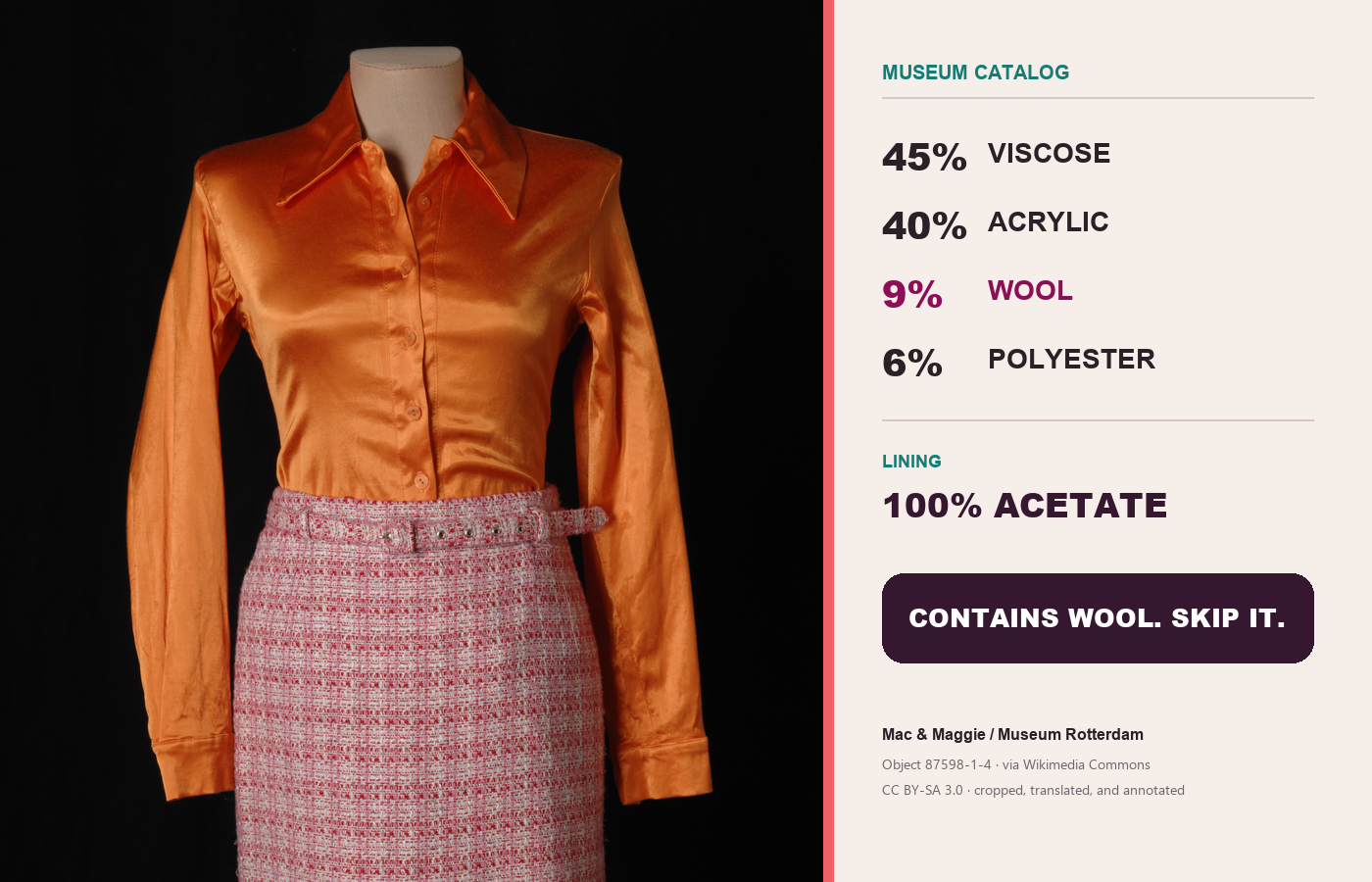
A small percentage of wool still matters when choosing a vegan garment. We would skip a cotton-and-wool blend rather than judging it by the largest percentage. For a lined or padded coat, check the lining and filling separately from the outer fabric, including any silk or wool those parts contain. If an otherwise suitable garment leaves its trim material unspecified, ask about that trim. A stated animal material already gives you the decision.
What vegan certification adds
An ingredient list describes a formula. Vegan certification can also address requirements beyond what a shopper can identify from those names. The Vegan Society's Trademark standards cover animal-derived ingredients and specified development, testing and production practices. Vegan Action publishes its Certified Vegan criteria. Consult the issuing organization's criteria when you need to know what its mark covers.
For a complicated cosmetic formula or a shoe with undisclosed components, recognized vegan certification can reduce the questions you need to send to the maker. Check that the assurance covers the product you intend to buy. Registration of one item does not establish the status of everything the company sells.
A maker's own vegan statement can also resolve an ingredient or component question. Describe that evidence accurately: manufacturer-confirmed or independently certified. An ingredient-based conclusion covers disclosed ingredients. It does not establish independent certification or the origin of an unlisted processing aid.
If an unfamiliar leaf symbol appears on a package, identify who issues it before relying on it as certification. If there is no certifier, look for the maker's explanation of the claim. You can then decide whether that information supplies the assurance you want for the purchase.
When to choose another product
Choose another product when an animal-derived ingredient or component rules out the one you wanted. No follow-up is needed to ask whether a disclosed wool lining or milk ingredient could qualify as vegan.
Also choose another when a relevant question remains unresolved and you need the answer before buying. A maker may be unable to confirm the source of an ingredient or adhesive. That leaves the product unconfirmed; it does not prove an animal source. Use that distinction when describing your decision to someone else.
Keep one short note for a purchase you expect to repeat: exact item and version, date, source or reply, and the answer it supplied. For example, record a manufacturer's confirmation about an adhesive as that specific confirmation, rather than converting it into approval of the whole brand. Recheck a familiar item's ingredients or materials when its formula or description changes.
Restaurant orders need kitchen questions

An ingredient list on a retail product cannot answer how a restaurant prepares a dish. Ask the kitchen about the stock, cooking fat, sauce and garnish for the meal you want. Ask separately about shared equipment if it affects your choice, and communicate an allergy explicitly. The Vegan Society recommends checking vegan options before booking. For a brief general shopping checklist, use our quick guide to checking whether something is vegan.
Conclusion
Read the ingredient or component information behind the claim. Skip a disclosed animal ingredient, distinguish a cross-contact warning from a recipe, and ask about a specific missing source when its answer would change your choice. For cosmetics, assess testing policy for the formula still under consideration.
Choose the item whose disclosed contents and supporting assurance meet your requirements. If a necessary answer is missing, buy a clearer alternative.
Subscribe for new posts, seasonal guides, smart finds, and a free copy of The Things Nobody Tells You.
FAQ
Does vegan certification cover every product from a brand?
No. Check the exact product or the clearly identified range covered by the certification. A company can sell certified and uncertified items. A different flavor or shade may need its own confirmation, particularly when the brand's statement specifies only some options.
Can natural flavors have an animal source?
Yes. The US definition of natural flavor includes plant and animal sources. Check for an exact vegan assurance before assuming which source a formula uses. If the source matters and the information is absent, ask the manufacturer about that ingredient. The unfamiliar name alone proves neither a plant nor an animal origin.
Does “contains” mean the same thing as “may contain”?
No. In the situations discussed here, a “Contains” statement identifies major allergens used in the food, while “may contain” warns about possible cross-contact. Read both alongside the full ingredient list. Neither wording turns a vegan shopping check into a personal allergy-safety assessment.
Can cruelty-free cosmetics contain animal ingredients?
Yes. A testing-policy claim does not establish the ingredient source of a formula. A beeswax ingredient is enough to rule out that formula for a vegan purchase. Check a different product's ingredients, then examine its testing policy if it remains a candidate. Keep the two answers attached to the products they describe.
Is a synthetic upper enough to make shoes vegan?
No. That description covers the upper. Inspect the lining, sole and other disclosed components, and ask about a missing adhesive or other relevant material when its source matters to your choice. An unanswered component question leaves the shoe unconfirmed. An exact vegan assurance can provide information that a brief materials summary omits.