
The Vegan Home Edit: Candles, Bedding, Sofas, and the Small Print
Start a vegan home edit with the product page, then check the sewn-in tag, certificate, and brand FAQ. Read each claim for the part it describes. Soy blend names part of a candle wax. 100% cotton cover identifies a cover. Performance fabric describes upholstery without identifying every sofa component.
Check the named wax, outer fabric, hidden fill, barrier, backing, and trim before buying vegan home products. Beeswax, leather, wool, silk, down, feather, and animal hair give you a clear reason to skip a new purchase. When a specification stops early, ask about the missing component in writing. Keep sound items already in your home, then use this check when repair, reupholstery, or replacement is due.
Key Takeaways
- Read what a percentage or certification modifies when comparing vegan home products. 100% cotton cover clears the cover only.
- Check vegan candles for every wax in the blend. Skip beeswax or animal fat, and ask for the source of stearin or stearic acid because stearic acid can come from animal or vegetable fat.
- Check vegan bedding by section: shell, fill, quilting, fire barrier, core, and trim.
- Check vegan sofas by assembly: upholstery, cushion core, wrap, loose fill, decking, backing, and trim.
- Treat vegan furniture as a whole assembly rather than relying on one upholstery claim.
- The Responsible Down Standard covers down and feathers, the Responsible Wool Standard covers wool, and CertiPUR-US covers flexible polyurethane foam. None of those marks certifies a whole home product as vegan.
- A current Vegan Trademark registration for the exact product gives a stronger answer. Match the product name and version before relying on it.
Begin a vegan home edit with what you already own
Owning an item and choosing a new item are separate decisions. A vegan home can keep a sound sofa, duvet, or candle holder in use. Clean it, mend it, replace a worn removable cover, or repair the part that failed. A well-made slipcover can extend the useful life of a sofa. A new cushion insert can fix a flattened seat without replacing the frame.
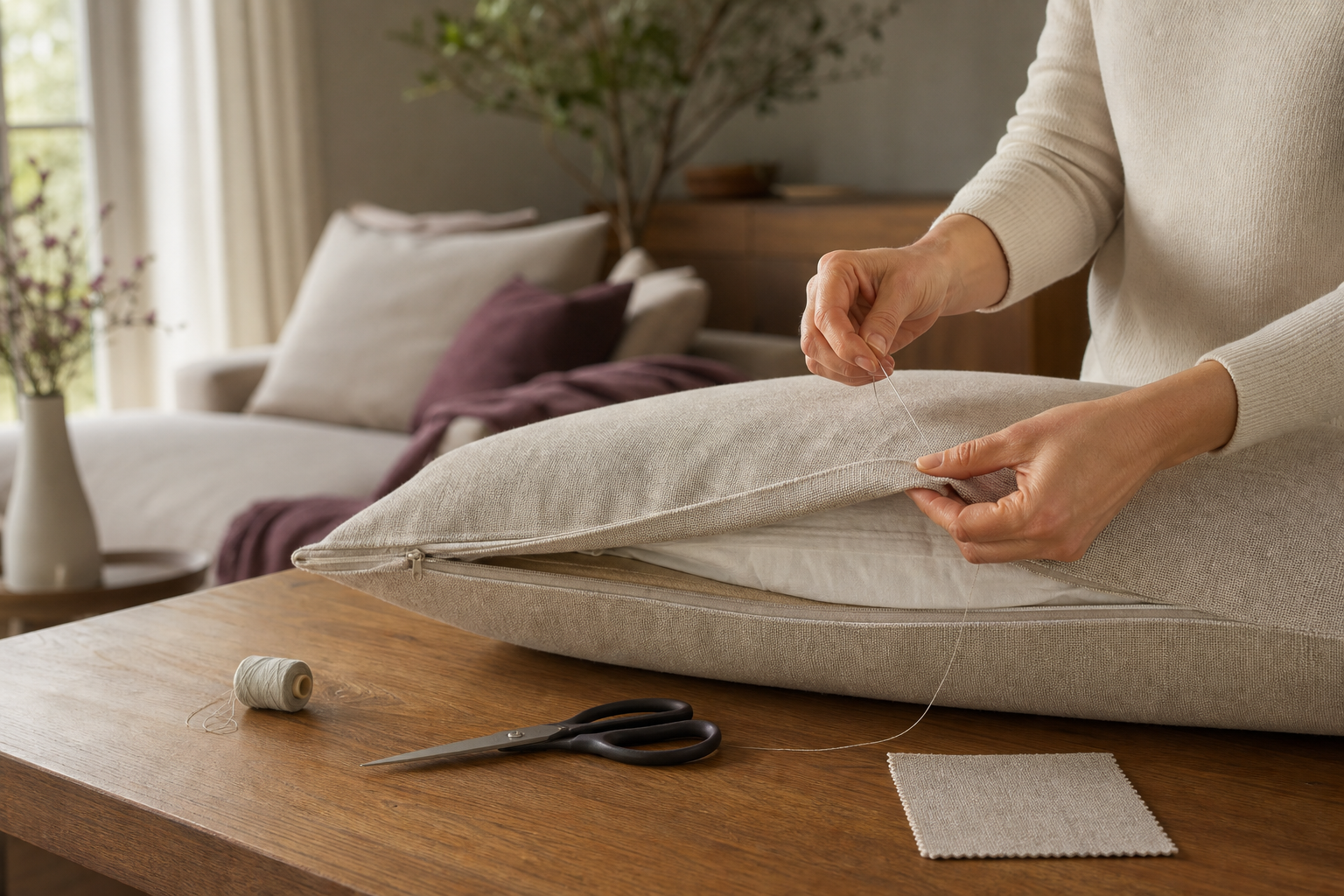
Apply the material check to anything you add during the repair. For vegan furniture, ask what is inside a replacement cushion core and wrap. For reupholstery, specify the new fabric, backing, felt, piping, thread, and trim. Ask the upholsterer to list any materials that will stay inside the frame. An antique or restored piece deserves the same written inventory: which original fillings, adhesives, finishes, and trim will remain, and which new materials will be added?
Reupholstery makes the most sense when the frame is sound, the shape still works for the room, and the repair cost fits the expected use. A broken frame, unsafe construction, or a piece that no longer meets the household's needs can justify replacement. A vegan home does not require a rushed purge. Apply the screen when repair or replacement becomes necessary.
Use The Vegan Home for the broader household guide. Choose one item that is wearing out and write down the materials you would add if you repaired it. That list is the starting point for a useful quote from a repairer or a cleaner product search.
Vegan candles: check the whole formulation
Check every wax in the blend
Current candle waxes include paraffin, beeswax, soy, palm, gels, synthetic waxes, and manufacturer-specific blends, according to the National Candle Association. A listing that says beeswax, 100% beeswax, or beeswax blend gives a clear animal-derived answer. We would skip it when buying new. The same decision applies if a maker discloses tallow or animal fat.
Soy wax, palm wax, vegetable wax, and paraffin identify the named wax source. They do not identify every other material in the finished candle. Vegan candles still need a full blend disclosure. Soy blend, wax blend, and made with soy leave at least one wax unnamed. Ask the maker to list every wax in the blend before treating the wax portion as resolved.

This vegan check identifies animal-derived materials. Health and environmental rankings require different evidence. Here, the decision is narrower: identify the material source, then move to the rest of the formulation.
Ask where stearin and stearic acid came from
Stearin and stearic acid need a source answer because stearic acid can be produced from animal or vegetable fats. Vegan candles can use vegetable-derived stearic acid, but the source still needs a clear answer. Accept a current product-specific vegan registration or a written statement that covers the exact scent and size.
The reply should state whether the stearin or stearic acid comes from animal or vegetable fat. Plant-based is still broad if the company cannot identify whether the statement applies to the stearic acid, the wax blend, or the finished candle. Ask the company to confirm the exact component you named.
Read safety and fragrance claims by their scope
A candle's warning label answers a safety question. The U.S. Consumer Product Safety Commission's candle guidance covers lead limits and certification for metal-cored candlewicks and candles that use them, hazardous-substance cautionary labeling, and voluntary fire-safety standards. For vegan candles, a burn warning does not disclose the wax blend or certify the formulation.
Fragrance is a separate formulation component. The National Candle Association fragrance guide describes fragrance materials as part of scented-candle production. Vegan candles still need an answer for fragrance, dye, wick treatment, adhesive, and processing aids. Hand-poured, lead-free wick, natural fragrance, and essential oils do not answer whether every finished-candle input is animal-free.
Do not expect the retail package to supply a complete formula. The Federal Trade Commission's Fair Packaging and Labeling Act summary describes baseline disclosures such as product identity, net contents, and the responsible company's name and place of business. The Act does not, by itself, require a complete ingredient list for every household product. A candle can meet those package-label requirements while leaving formulation questions unanswered.
Send one exact candle question
Tie your question to the exact scent and size. Copy this:
Please confirm that this exact finished candle, including every wax in the blend, stearin or stearic acid, fragrance, dye or colorant, wick and coating, adhesive, and processing aid, contains no animal-derived ingredient or by-product.
A reply that says only no beeswax leaves the other named components unresolved. Ask once more for a complete answer. The strongest evidence for vegan candles covers the finished formulation, not one wax. If the maker still gives a broad slogan or repeats the wax claim, choose a candle with a complete material disclosure or a current exact-product vegan registration.
Save the dated response with the product name, scent, size, and formula version when one is available. Check vegan candles again before buying a changed scent, package, or version. A short written record is more useful than trying to remember which part of the candle a past answer covered.
Vegan bedding: read the cover, fill, and hidden layers
Vegan bedding requires more than the fabric you can see. Read sheets and blankets by fiber content. Read pillows, comforters, and duvets by shell and fill. Read a mattress from its cover through its fire barrier and core.
Read each textile section separately
The FTC textile and wool labeling guide covers many household textiles, including sheets, blankets, comforters, pillows, quilts, pads, and cushions. Covered products generally identify their fibers by generic name and percentage. When a product has separate shell, lining, or fill sections, those sections can receive separate disclosures.
Read each section on its own. For vegan bedding, 100% cotton cover clears the cover only. It does not identify a comforter fill, mattress batting, fire barrier, core, adhesive, tufting, handle, or trim. The FTC guide also explains that non-fibrous parts such as leather, some structural filling and padding, and mattress or box-spring outer coverings can fall outside the standard textile-fiber statement. A neat percentage line may therefore describe only one visible part of a much larger product.
Stop on explicit animal-material terms, including:
- wool, recycled wool, cashmere, mohair, alpaca, camel hair, llama, vicuna, and angora;
- silk or silk fill;
- down, goose down, duck down, eider down, feathers, or waterfowl feathers;
- horsehair, cattle hair, or another named animal hair;
- leather, suede, or shearling trim.
Material names can also need translation. The FTC guidance on bamboo textiles explains that most soft textiles made from bamboo are rayon or viscose made from bamboo. Look for that generic finished-fiber name and its percentage. Bamboo alone does not give you the complete fiber disclosure.
For help decoding material names across home goods and clothing, keep The Materials Truth open while you compare specifications.
Check the fill and the white law tag
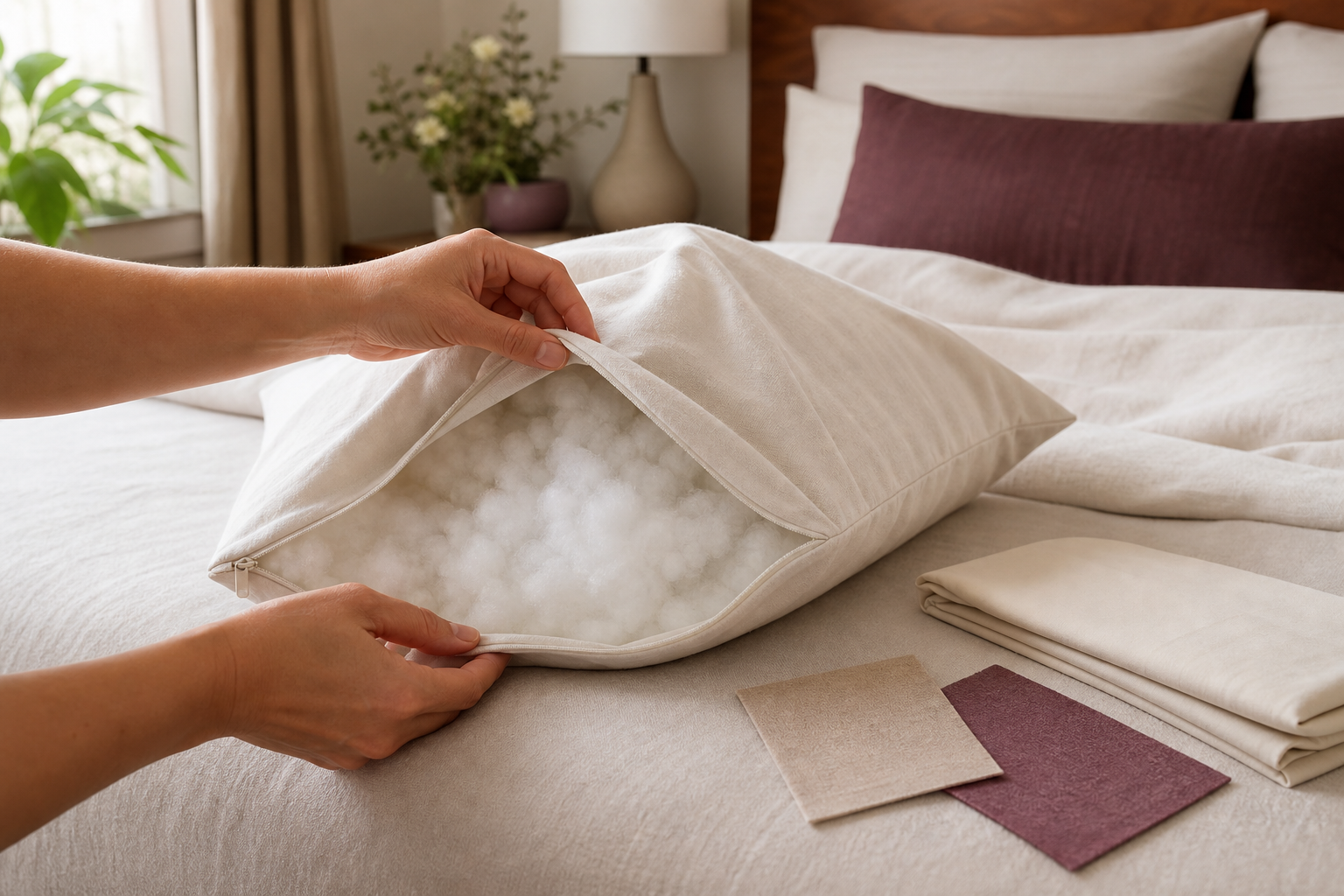
Pillows, duvets, and comforters need two reads: the textile shell and the material inside it. The FTC's down and feather guidance explains that terms such as down, goose down, and percentage mixtures carry specific content meaning. Any percentage of down or feather remains animal-derived. A blend that is 90 percent non-animal fiber and 10 percent feather is still an easy skip for a new vegan purchase.
Find the white law tag when the item has one. The International Association of Bedding and Furniture Law Officials tracks state requirements for stuffed and filled products, so the exact tag format varies by jurisdiction. The tag can reveal a fill that a marketing page leaves vague. ALL NEW MATERIAL means the filling is new rather than reused. Read the generic material listed after that statement before making a decision.
Treat down alternative as a prompt to keep reading. The phrase does not name the substitute. Vegan bedding needs a specific fill such as polyester fiberfill, cotton, kapok, or lyocell, plus a check for separate chambers, decorative trim, or another fill section. If the product page and tag disagree, ask the manufacturer about the exact item before buying.
Request every mattress component
A mattress description can lead with a cotton cover or certified foam while leaving the batting and fire barrier unnamed. Vegan bedding claims for a mattress need the complete build. Federal textile rules do not guarantee a complete inventory of mattress stuffing and structural materials. Request the components in order: cover, quilting, batting, fill, fire barrier or sock, foam or latex layers, coils, adhesives, tufting, handles, and trim.
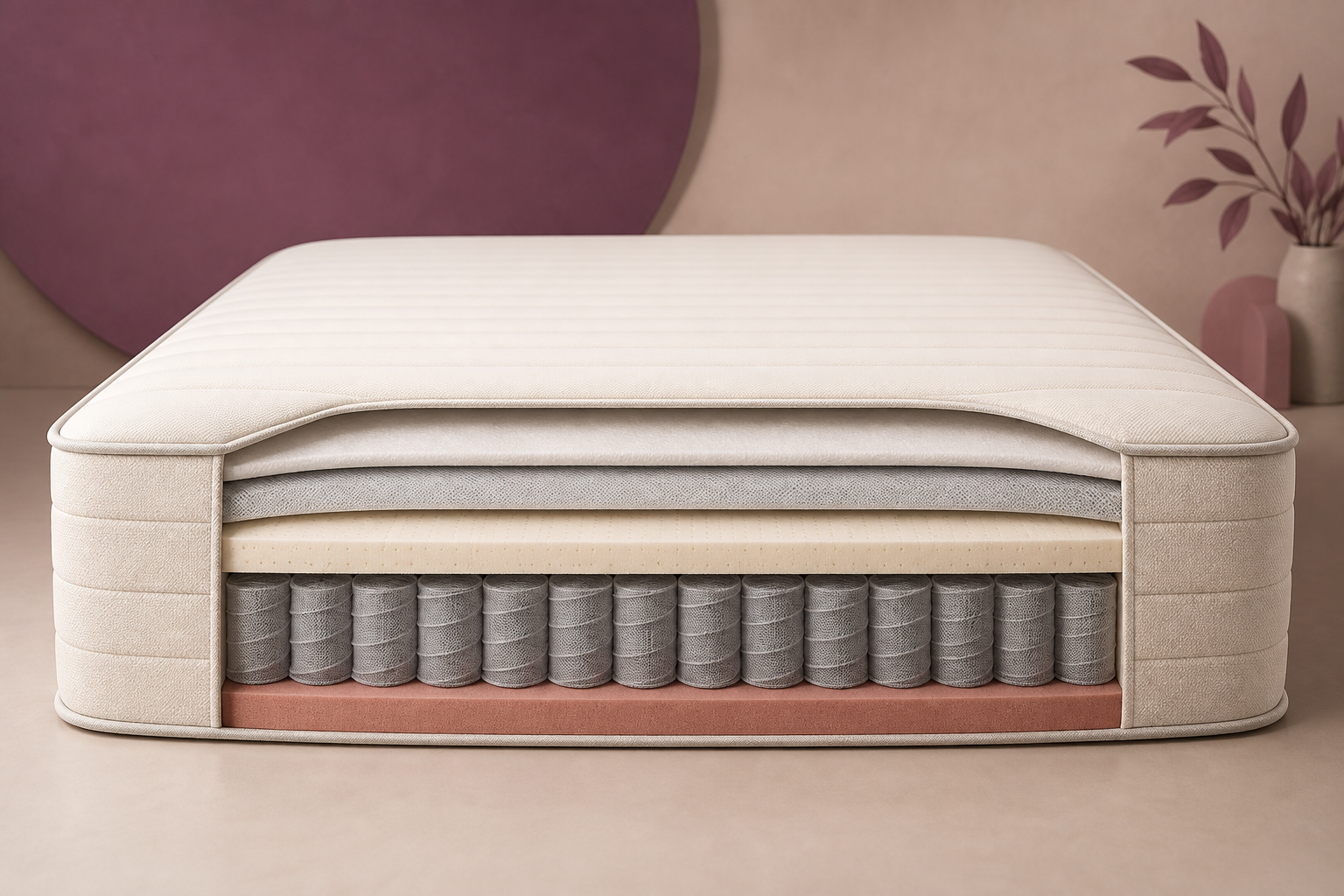
Use the exact model, size, firmness, and version in your request. Two mattresses from the same collection can have different layer constructions. Copy and adapt this question:
Please confirm that this exact model and configuration, including the cover, quilting, batting, fill, fire barrier or sock, foam or latex layers, adhesives, tufting, handles, and trim, contains no wool or animal hair, down or feathers, silk, leather, suede, shearling, or other animal-derived material or processing aid.
A reply that confirms the foam but skips the fire barrier is incomplete. Ask the missing-component question once more. For an expensive purchase, save the dated response with the model name and receipt.
Choose materials with complete specifications
Straightforward vegan bedding options are easier to assess because every material is named. For sheets and blankets, investigate cotton, linen or flax, hemp, lyocell, rayon or viscose, and polyester. For pillows and comforters, look for an expressly identified polyester fiberfill, cotton, kapok, or lyocell fill. For mattresses, require a model-specific construction that names the cover, batting, cushioning, support core, fire barrier, and trim.
These material routes still need a whole-product check. A cotton shell can surround wool batting. A latex or polyurethane foam layer leaves the fire sock unidentified. After identifying a plant-derived fill, check piping and handles separately for silk or leather. Choose the item whose maker supplies the complete specification instead of filling gaps with assumptions.
Read bedding certifications by scope
For vegan bedding, match each certificate to the component it names. Then check the shell, fill, batting, fire barrier, core, adhesive, and trim that fall outside its scope. Do not treat a component certificate as a whole-product answer.
Vegan sofas: inspect the upholstery and everything beneath it
Check the cover, cushion core, wrap, and trim
Vegan sofas need a material answer for the whole assembly. Start with the upholstery. Leather, suede, nubuck, shearling, wool, mohair, cashmere, alpaca, and silk are clear animal materials. Then move inside. Down, feathers, wool batting, horse hair, hog hair, cattle hair, and goat hair can appear in cushion or body fill.
Check the frame, seat cushions, and back cushions separately. A foam seat can still have a feather wrap. A polyester-filled back cushion says nothing about the felt, decking, or upholstery. Ask about the backing, piping, welt, cushion covers, decking, felt, webbing, suspension straps, thread, and decorative trim when the product specification does not name them.
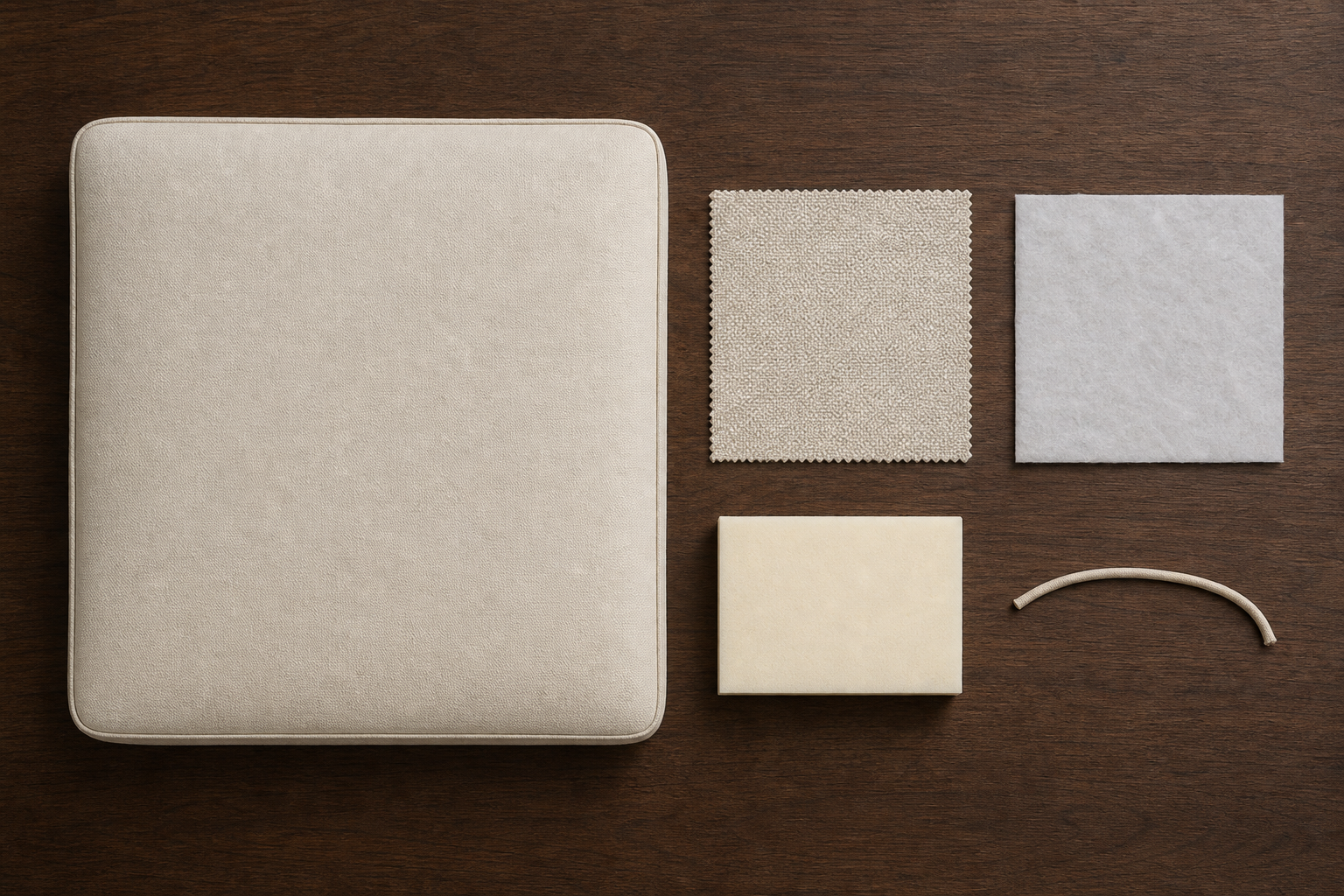
Match every answer to the exact SKU, fabric, color, cushion package, and configuration. Vegan furniture can change by sectional layout or cushion option within the same collection. Save the dated specification or written response with the receipt.
Use the hidden-fill tag when it is available
A law tag can answer questions the product page skips. The California furniture law-label guide requires generic names and percentages for concealed filling materials on furniture sold in California. When checking vegan sofas, read the body, seat cushions, and back cushions separately.
Animal-derived entries include down, feathers, wool, horse hair, hog hair, cattle hair, and goat hair. Entries such as polyurethane foam pad, shredded polyurethane foam, polyester fiber batting, cotton, kapok, and coir identify non-animal material in the named section. Vegan furniture still needs separate answers for the cover, backing, trim, and every cushion layer.
The permanent federal statement saying a piece complies with U.S. upholstered-furniture flammability requirements has a different job. The CPSC upholstered-furniture guidance says it confirms compliance with the TB 117-2013 smolder-resistance standard. It does not inventory the materials.
Do not expect a garment-style fiber label to fill every gap. The FTC textile-labeling guide excludes upholstered-furniture outer coverings and new, non-reused upholstery stuffing from its general fiber-label requirements. Request the upholstery percentages and complete cushion build when the listing stops at a trade name.
Treat performance fabric and vegan leather as partial descriptions
Performance fabric, performance velvet, linen-look, and boucle describe a look or claimed performance. They do not identify the fiber. Vegan sofas require the percentage of every fiber or polymer in the face fabric, coating, substrate, and backing.
Give vegan leather, faux leather, PU leather, plant-based leather, and bio-based leather the same treatment. Vegan furniture made with a coated textile needs a disclosure for the coating, substrate, backing, and every panel. A plant-content claim may cover one ingredient in a coating rather than the complete upholstery.
Bonded leather is a clear stop term for a new vegan purchase. The FTC Leather Guides describe it as material containing leather fibers plus non-leather substances. The guides do not expressly name furniture upholstery in their formal scope. The material itself still contains animal hide. Leather match and leather seating surfaces also call for a panel-by-panel map covering the seats, arms, sides, and back.
Ask about restored and artisan construction separately
Antique, restored, traditional, and artisan furniture needs one extra question: which original materials will remain, and which new materials will be added? A vegan furniture repair plan should identify retained stuffing, felt, webbing, adhesives, finishes, and trim before work begins. Specify each replacement fabric, cushion core, wrap, and finish in writing.
Research did not establish that animal-derived glues, finishes, or traditional stuffing are common in current mass-market sofas. Keep this expanded construction check for pieces whose age or making method gives you a reason to ask.
Pair material checks with service-life evidence
Vegan sofas still need to hold up. Ask whether an upholstery abrasion result uses Wyzenbeek double rubs or Martindale cycles. The Association for Contract Textiles warns that the methods do not correlate and that very high abrasion numbers alone do not predict a longer service life.
Check pilling, seam slippage, cleaning code, warranty exclusions, and whether replacement covers and cushion cores are available. A fully specified woven cover with polyurethane or latex cushioning and polyester, cotton, or kapok wrap can work for vegan sofas. A coated textile can work when the coating, substrate, and backing are all confirmed. Judge the exact construction and care requirements rather than assuming one fiber name will last longest.
Certifications answer one stated question
Read the noun after the claim
The noun following a percentage, adjective, or certification tells you what the claim covers.
- 100% soy wax describes the wax.
- 100% cotton cover describes the cover.
- CertiPUR-US certified foam describes flexible polyurethane foam.
- CPSC compliant furniture describes compliance with a safety requirement.
List every component outside that noun. A cotton cover leaves the fill open. Certified foam leaves the wrap, barrier, upholstery, and trim open. A safety statement does not provide a material list.
Separate animal-welfare, organic, foam, and vegan standards
Certification is useful when its scope matches your question. The Responsible Down Standard applies to down and feathers from ducks and geese, while the Responsible Wool Standard applies to wool. Both describe animal-derived material.
GOTS is an organic textile standard, and its Materials, Processes and Products Classification v1.1 includes wool, silk, alpaca, cashmere, and mohair. An organic certification does not establish that a textile is vegan.
The CertiPUR-US FAQ says the program certifies flexible polyurethane foam rather than a whole mattress, sofa, product line, or company. Check everything around the foam.
A current product-specific certification can answer the whole-product question when it covers the finished item. The Vegan Trademark standards exclude animal products, by-products, and derivatives from product manufacture and development, and household items can qualify. For vegan furniture, match the registration to the exact product and current version. A logo on a brand page is not enough.
Check one planned purchase from top to bottom
Use the first disclosure to find the next missing component.
| Purchase | First disclosure | Hidden component | Exact follow-up |
|---|---|---|---|
| Candle | Wax statement | Fragrance, color, wick coating, adhesive | Ask for the complete finished formulation for the exact scent and size. |
| Sheets or blanket | Fiber percentages | Trim or ornamentation | Ask what any excluded section contains. |
| Pillow or comforter | Shell and fill | Separate chambers and concealed fill | Read the law tag when present and request every fill by percentage. |
| Mattress | Cover claim | Batting, fire barrier, core, adhesives, tufting, trim | Request the layer-by-layer build for the exact model, size, firmness, and version. |
| Vegan sofas | Upholstery claim | Wrap, loose fill, decking, felt, backing, trim | Request separate specifications for the body, seats, and backs. |
| Vegan furniture repair | New fabric | Materials retained inside the frame | Approve a written bill of materials before work starts. |
A precise written answer fits the broader product-checking guide. Name the missing component, keep the response, and recheck if the model or formula changes.
Choose a disclosed option when the answer stays vague
A company that cannot identify a key component has not supplied enough information for a confident purchase. Mark the item unconfirmed. Silence does not prove that it contains an animal material. It leaves the product unresolved, so you do not have to spend money on it.
Choose a product with complete material specifications, a current exact-product vegan certification, or a maker willing to answer in writing. Let a lower-cost purchase go when the research becomes disproportionate. For a sofa or mattress, keep the written response, tag photographs, certificate number, warranty, and exact configuration with the receipt.

Want better vegan buying shortcuts? Subscribe for smart finds, useful updates, and a free copy of The Things Nobody Tells You.
Check the material, fill, and claim scope before buying
Start with the named material. Check the hidden fill, backing, barrier, and trim. Then read what each percentage or certification covers. Beeswax, leather, wool, silk, down, feathers, and animal hair give you a clear answer. A partial claim needs one component-specific question.
Keep sound items in use. Repair or reupholster them when that makes sense, and screen every new material added during the work. Use the same material check for every planned purchase: identify the outer material, fill, backing, barrier, and trim.
FAQ
Are soy candles always vegan?
No. Soy wax may describe only the wax base. Check every wax in a blend plus the fragrance, color, wick coating, adhesive, and processing aids. A current product-specific vegan certification can answer the finished-product question.
Does 100% cotton bedding mean the whole product is vegan?
Read what the phrase modifies. 100% cotton cover clears the cover and leaves the fill, batting, fire barrier, core, trim, and other components unresolved. A sheet labeled 100% cotton presents a simpler construction than a mattress carrying the same cover claim.
What does down alternative mean?
The phrase points away from down without naming the replacement. Find the generic fill, such as polyester fiber, cotton, kapok, or lyocell. Then check the shell, separate chambers, trim, and the rest of the product.
Does CertiPUR-US mean a mattress or sofa is vegan?
No. CertiPUR-US certifies flexible polyurethane foam against its program criteria. It does not certify the cover, cushion wrap, fire barrier, fill, trim, finished item, product line, or company as vegan.
Can vegan leather appear on a sofa that is not fully vegan?
Yes. The phrase may describe the visible upholstery while the cushion wrap, loose fill, felt, trim, backing, or another component remains undisclosed. Ask for the coating, substrate, backing, and complete sofa assembly.
Should I replace leather, wool, or down that I already own?
A sound item can stay in use. Maintain, repair, or reupholster it when appropriate. Specify animal-free materials for anything newly added, and apply the complete material check when replacement is due.